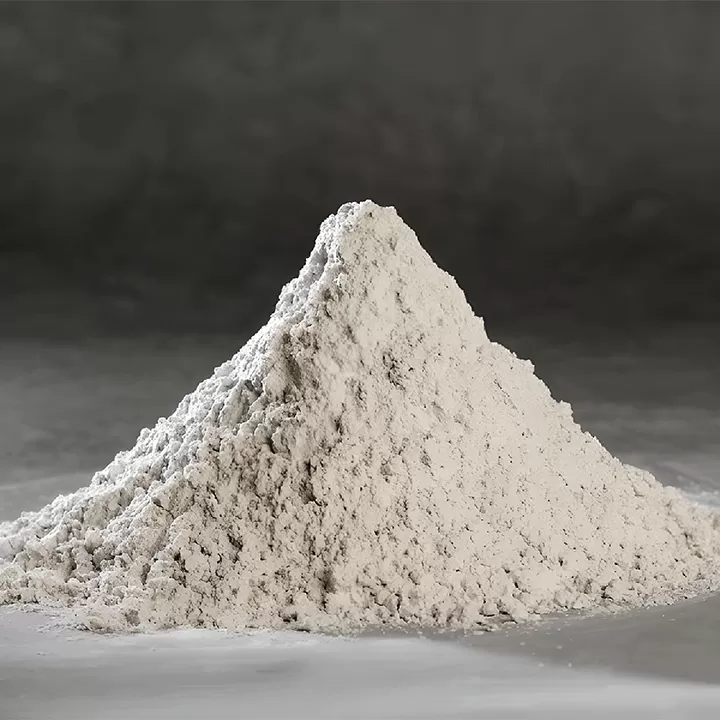
When planning a residential build—whether a new foundation, a basement wall, a driveway, or a garden retaining structure—the material selection goes far beyond ordinary Portland cement. Engineers, contractors, and informed homeowners now ask: what makes a cement for home truly reliable over decades of service? The answer lies in the binder chemistry, supplementary materials, and resistance to real-world degradation mechanisms. This article provides a deep technical analysis of performance criteria, application-specific solutions, and the role of ground granulated blast furnace slag (GGBS) in producing superior residential concrete. As a B2B material expert specializing in ultrafine GGBS, I will reference proven industrial insights while avoiding generic claims. Golden Fortune supplies high-reactivity GGBS that elevates the durability profile of any residential concrete mix.
Why Standard Portland Cement Often Falls Short in Residential Environments
At first glance, ordinary Portland cement (OPC) appears adequate for homes. However, field data and material science reveal several weak points when OPC is used alone for foundations, garage floors, or exterior slabs:
High heat of hydration – In thick sections (footings, thick basement walls), temperature differentials cause early-age thermal cracking, compromising long-term tightness.
Sulfate vulnerability – Many soil types contain soluble sulfates that attack tricalcium aluminate (C₃A) in OPC, leading to expansion and spalling.
Chloride ingress – For homes near coastal zones or de-icing salt applications (driveways), OPC concrete’s permeability allows chlorides to reach reinforcement, initiating corrosion.
Carbon footprint – Portland cement production emits roughly 0.9 t CO₂ per ton of clinker; a concern for green building certifications and low-carbon housing projects.
These limitations push specifiers toward a blended system. The ideal cement for home is not a single material but a tailored combination of Portland cement and supplementary cementitious materials (SCMs). Among SCMs, GGBS (ground granulated blast furnace slag) offers unparalleled chemical and physical benefits. When activated by cement hydration products, GGBS transforms the microstructure of hardened concrete into a denser, more durable matrix.
The Technical Role of GGBS in Upgrading Cement for Home Applications
GGBS is a latent hydraulic material – a glassy silicate/aluminate structure that reacts with calcium hydroxide (CH) released during cement hydration. This secondary reaction produces additional calcium silicate hydrate (C-S-H) gel, the primary binding phase. The effects are measurable and directly relevant to residential structures:
Microstructural Refinement and Reduced Permeability
The pozzolanic and hydraulic reactions of GGBS consume CH, which is otherwise prone to leaching and carbonation. The extra C-S-H fills capillary pores, lowering the pore size distribution. For a home foundation, this means water penetration depth decreases by up to 60% compared to OPC concrete (typical results at 28 days with 50% slag replacement). Lower permeability directly translates to freeze-thaw resistance and protection against aggressive groundwater.
Significant Suppression of Sulfate Attack and Alkali-Silica Reaction
Residential slabs and basement walls frequently encounter sulfate-bearing soils. GGBS-based cement for home reduces the available calcium hydroxide and alumina content, thereby limiting the formation of expansive ettringite and gypsum. For moderate to high sulfate exposure (class S2 or S3 according to ACI 318), a blend with 50-70% GGBS outperforms Type V Portland cement. Furthermore, GGBS lowers the alkalinity of pore solution, mitigating alkali-silica reaction (ASR) when reactive aggregates are unavoidable.
Lower Hydration Temperature – Preventing Cracks in Mass Elements
For thick residential elements (raft foundations, retaining walls), replacing a portion of OPC with GGBS reduces the peak hydration temperature. This minimizes the risk of thermal cracking without requiring expensive cooling methods. Data indicate that a 50% GGBS blend lowers the adiabatic temperature rise by roughly 30-40% compared to OPC alone.
Golden Fortune manufactures ultrafine GGBS with a specific surface area exceeding 600 m²/kg (Blaine). This ultrafine fraction accelerates the early-age reaction, overcoming the common drawback of slower strength gain in standard slag cements. Homebuilders and ready-mix producers can achieve 7-day strengths comparable to OPC while enjoying superior long-term durability.
Critical Residential Scenarios That Demand Engineered Cement for Home
Different parts of a house impose distinct mechanical and chemical demands. Below I break down five common applications and specify the recommended GGBS blend ratio, based on international guidelines (EN 206, ASTM C1157, and BS 8500).
1. Basement Walls and Below-Grade Structures
Hydrostatic pressure, soil sulfates, and humidity create a aggressive environment. The cement for home in basements must provide low permeability and sulfate resistance. Ideal blend: 50-65% GGBS with Portland cement (CEM III/B or equivalent). Water-cement ratio ≤0.45. This mix reduces water ingress and efflorescence, keeping interiors dry and preventing steel reinforcement corrosion.
2. Driveways, Garage Floors, and Exterior Pavements
These elements experience de-icing salts in winter, vehicle loads, and freeze-thaw cycles. A 40-50% GGBS blend improves resistance to scaling and chloride penetration. The slightly slower early strength is not an issue as long as proper curing (7 days wet covering) is applied. Additionally, the lighter colour of GGBS concrete reduces heat absorption in summer.
3. Foundations on Sulfate-Bearing Soils
Many clay soils contain gypsum or other sulfates. For such sites, standard Portland cement can fail within 5-10 years. Use a blend with 50-70% GGBS and maintain a low water-cement ratio (≤0.50). This composition ensures compliance with sulfate resistance class DS3 or DS4 as per Eurocode 7. No additional protective coatings are required.
4. Swimming Pools and Water Tanks in Home Projects
Long-term watertightness and resistance to chlorine or acidic water are paramount. A 50% GGBS blend significantly reduces water absorption (often below 0.5% by volume) and improves resistance to chemical attack. Precast pool sections and shotcrete linings benefit from the reduced heat of hydration, minimizing shrinkage cracks.
5. Render, Screed, and Architectural Finishes
For exterior wall renders and floor screeds, GGBS can reduce efflorescence because it consumes free calcium hydroxide. A 30-40% GGBS replacement, combined with a suitable polymer admixture, gives a smooth, less porous surface. This is particularly valuable for visible home finishes.
Formulation Guidelines: How to Design GGBS-Based Cement for Home Mixes
Producing reliable residential concrete with GGBS is straightforward if you follow key mix design principles. Below are actionable steps for concrete producers or home builders working with ready-mix suppliers. (Always conduct trial batches.)
Replacement level by mass: For most above-ground home elements (floors, pathways, light-duty slabs) use 30-40% GGBS. For below-grade or aggressive exposures, increase to 50-65%. Golden Fortune ultrafine GGBS allows higher replacement levels without sacrificing early strength.
Water-to-binder ratio (w/b): Keep w/b between 0.40 and 0.50 for durability. GGBS increases water demand slightly; adjust superplasticizer dosage accordingly.
Curing regimen: Extended moist curing (minimum 7 days, preferably 10-14 days for high-slag blends) is required to activate the pozzolanic reactions. Use wet hessian, curing compounds, or plastic sheeting. This is not a disadvantage but a standard quality practice.
Setting time: Higher GGBS levels may prolong initial setting by 30-90 minutes. In hot weather, this can be beneficial. In cold weather, use accelerating admixtures or reduce GGBS to 30%.
Air entrainment: For freeze-thaw susceptible regions, add air-entraining admixtures (target 4-6% air). GGBS does not interfere with air entrainment.
One frequent concern is the colour of hardened concrete. GGBS produces a lighter, bluish-grey finish compared to OPC’s grey-brown hue. Many home owners prefer this cleaner look for exposed aggregate or polished floors.
Environmental and Compliance Aspects of Modern Cement for Home
Residential construction accounts for a significant portion of global cement consumption. By shifting to GGBS-based cement for home, builders can reduce embodied carbon by 40-60% compared to pure OPC. GGBS is a byproduct of iron production; its use diverts material from landfills and avoids clinker calcination. For projects pursuing LEED, BREEAM, or passive house certifications, a high-slag binder contributes directly to material and resources credits (e.g., recycled content, low carbon footprint).
From a regulatory standpoint, GGBS blends are fully covered under ASTM C989 (slag cement), EN 15167-1, and BS 8500. For residential structural concrete, compliance with building codes is straightforward when following standard mix design practices. Always request mill certificates for GGBS that guarantee reactivity index (e.g., 28-day activity index ≥ 100% when compared to OPC).
FAQ – Technical Questions About Cement for Home with GGBS
Q1: Is cement for home containing GGBS suitable for cold climates with repeated freeze-thaw cycles?
A1: Yes, it performs excellently. The densified microstructure from GGBS reaction reduces water absorption and critical pore size, making concrete more resistant to freeze-thaw damage. However, you must incorporate an air-entraining admixture (target 5% air volume) as per ACI recommendations. Field studies in northern Europe and Canada confirm that GGBS blends with proper air entrainment outlast OPC in freeze-thaw conditions.
Q2: What is the maximum GGBS replacement level for residential foundations without losing early strength?
A2: With standard GGBS (400-450 m²/kg Blaine), the practical maximum is 50% for structural elements if you require 7-day strengths above 20 MPa. Using ultrafine GGBS like that from Golden Fortune (600+ m²/kg), you can go up to 65% replacement while achieving 28-day strengths comparable to pure OPC. For non-structural backfill or low-stress slabs, 70% is feasible. Always test the specific mix with local aggregates and curing conditions.
Q3: Does GGBS cement for home increase the risk of efflorescence?
A3: The opposite – GGBS reduces efflorescence. Efflorescence is caused by calcium hydroxide migrating to the surface and reacting with atmospheric CO₂. Because GGBS consumes calcium hydroxide during the pozzolanic reaction, the available free lime is significantly lower. Consequently, GGBS-based concrete or mortar exhibits far less white surface deposits compared to OPC-only mixes.
Q4: Can I use GGBS cement for home repairs like patching spalled driveways or foundation cracks?
A4: Yes, but with caution. For thin patching (less than 25 mm thickness), the slower early hydration of GGBS may delay setting. Use rapid-hardening repair mortars that incorporate a high-early-strength Portland cement plus fine GGBS (< 20% replacement) and a shrinkage-compensating additive. For thicker repairs (over 50 mm), a 30-40% GGBS blend works well and provides better bond durability. Always prime the old concrete surface to ensure adhesion.
Q5: How do I verify the quality of GGBS supplied for my home project?
A5: Request a mill test certificate conforming to ASTM C989 (Grades 80, 100, or 120) or EN 15167-1. Key parameters: specific surface area (≥ 400 m²/kg for standard, >600 for ultrafine), sulfide content (< 2.0%), and activity index at 7 and 28 days (grade 100 requires ≥ 75% at 7 days, ≥ 95% at 28 days). Also check that the material is free from unground slag and metallic iron. For residential use, grade 100 or higher is recommended. Golden Fortune provides full traceability and third-party tested ultrafine GGBS that exceeds grade 120 standards.
Q6: Does GGBS cement for home require special finishing or curing compared to regular concrete?
A6: The key difference is extended moist curing. GGBS blends do not bleed as much as OPC concrete, so the surface can dry out faster. Start curing immediately after finishing – use liquid membrane-forming compounds or wet burlap and polyethylene sheets. Maintain curing for at least 7 days (10 days for mixes with >50% GGBS). Also, avoid finishing while bleed water is present because GGBS concrete sets slower. These practices prevent plastic shrinkage cracks and ensure full strength development.
Final Recommendations and Expert Inquiry
Selecting a robust cement for home is not about choosing a single bag from a hardware store. It is a systematic decision based on exposure conditions, structural demands, and sustainability goals. GGBS-based blended cement consistently outperforms ordinary Portland cement in sulfate resistance, chloride barrier performance, thermal cracking control, and long-term durability. Residential builders, concrete contractors, and material distributors should adopt high-quality GGBS, especially the ultrafine variant, to produce concrete that remains serviceable for over 50 years with minimal maintenance.
Are you planning a residential development or looking to supply superior concrete for housing projects? The team at Golden Fortune provides technical datasheets, mix design consultation, and bulk ultrafine GGBS shipments worldwide. Move beyond obsolete cement standards and build homes that withstand chemical attacks, water ingress, and thermal stresses.
Send your inquiry today – include your project type, required GGBS grade, and delivery location. Our B2B experts will respond within 24 hours with a customized quotation and technical support plan. Click here to submit your inquiry or email directly. Let’s engineer the next generation of residential concrete together.