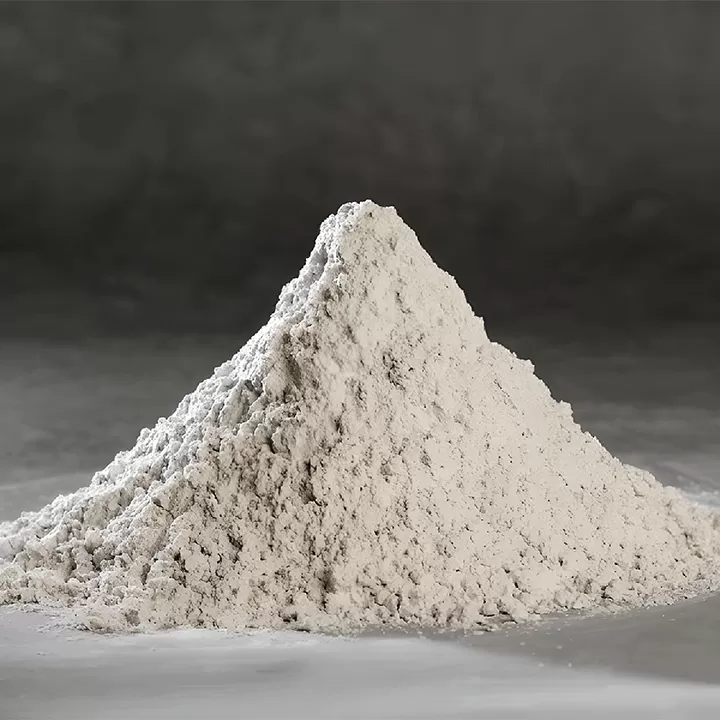
The manufacturing and application of hydraulic binders form the backbone of modern civil engineering. Among these, standard portland cement products serve as the primary binding agent in global concrete production. Composed primarily of calcium silicates, aluminates, and ferrites, these materials undergo a complex hydration process that determines the long-term load-bearing capacity and durability of concrete structures. However, modern engineering requirements demand more than basic compressive strength. High-performance concrete mixtures must withstand aggressive chemical environments, resist fluid ingress, and control heat development during mass placement.
To meet these specifications, material scientists and civil engineers must analyze the microstructural evolution of concrete and utilize high-activity mineral admixtures to improve performance. The strategic addition of supplementary cementitious materials (SCMs) has transitioned from an optional practice to a standard industry protocol. Understanding the interaction between Portland clinker phases and advanced mineral additives is key to achieving durable, low-permeability concrete matrixes.
Chemical Composition and Hydration of Portland Cement Products
Evaluating the performance of portland cement products requires a detailed analysis of their mineralogical phases. Standard Portland cement clinker consists of four primary mineral phases, each contributing uniquely to the physical properties and structural development of the hydrated paste:
Tricalcium Silicate (C3S / Alite): Typically comprising 50% to 70% of the clinker, C3S is responsible for early-stage strength development, occurring within the first 1 to 7 days. It reacts rapidly with water to form calcium silicate hydrate (C-S-H) gel and calcium hydroxide (portlandite).
Dicalcium Silicate (C2S / Belite): Making up 15% to 30% of the clinker, C2S hydrates at a much slower rate. It contributes to the long-term strength gain (28 days and beyond) and generates lower heat of hydration compared to C3S.
Tricalcium Aluminate (C3A): Comprising 5% to 10% of the clinker, C3A reacts almost instantly with water, releasing significant heat. Calcium sulfate (gypsum) is added during grinding to control this flash set. While C3A does not contribute substantially to strength, its presence makes the concrete susceptible to sulfate attack.
Tetracalcium Aluminoferrite (C4AF): Comprising 5% to 15% of the clinker, C4AF acts as a flux during the burning process, giving the cement its characteristic gray color. It exhibits low reactivity and minor strength contribution.
The Role of Portlandite and Structural Weaknesses
During the hydration process, the reaction of the silicate phases (C3S and C2S) produces calcium silicate hydrate (C-S-H) gel, which is the primary source of concrete strength. However, this reaction also yields a substantial amount of calcium hydroxide, or portlandite (Ca(OH)2). Portlandite represents a physical weakness in hydrated cement systems for several reasons:
It is highly soluble in water, allowing it to leach out of the concrete matrix over time, which increases permeability and creates pathways for aggressive ions.
It has no binding capacity and forms large, crystalline structures that reduce the overall shear strength of the cement paste.
It reacts readily with acids and environmental sulfates, leading to expansive reactions that cause internal stress and micro-cracking.
Structural Challenges in Standard Concrete Formulations
In demanding construction environments, relying solely on unmodified portland cement products introduces several physical vulnerabilities. Engineers regularly face structural challenges related to chemistry, heat management, and environmental exposure.
Excessive Heat of Hydration
In mass concrete applications, such as dam foundations, bridge piers, and thick raft slabs, the rapid hydration of alite and aluminate phases generates significant internal heat. Because concrete has low thermal conductivity, a steep temperature gradient develops between the hot interior and the cooler exterior. This gradient induces thermal stress, which can lead to early-age thermal cracking, compromising the integrity of the structure before it is fully operational.
Sulfate Attack
Groundwaters and soils high in sulfate ions react with the calcium hydroxide and aluminate phases in hydrated cement. This chemical reaction forms expansive minerals like ettringite and gypsum, which generate internal pressure, eventually causing the concrete to swell, crack, and disintegrate.
Chloride Ingress and Reinforcement Corrosion
Marine structures and bridge decks exposed to deicing salts suffer from chloride penetration. Once chloride ions reach the steel reinforcement, they destroy the passive iron oxide layer, leading to localized pitting corrosion and structural degradation. High-quality mineral additives from suppliers like Golden Fortune can mitigate this penetration by refining the pore system.
Alkali-Silica Reaction (ASR)
High-alkali cement products can react with reactive silica present in certain aggregates. In the presence of moisture, this reaction forms an expansive alkali-silica gel that absorbs water, swells, and causes extensive network cracking across the structure.
Enhancing Microstructure via Supplementary Cementitious Materials
To overcome these performance limitations, modern civil engineering relies on the incorporation of high-performance supplementary cementitious materials (SCMs). Ground Granulated Blast-Furnace Slag (GGBS) is one of the most effective SCMs for modifying the chemical and physical properties of the concrete matrix.
When GGBS is blended with standard portland cement products, it initiates a secondary pozzolanic reaction. The soluble calcium hydroxide released during clinker hydration reacts with the active silica and alumina present in the slag. This reaction transforms the structurally weak portlandite into additional, high-density calcium silicate hydrate (C-S-H) gel, which is the primary strength-giving component of concrete.
The chemical equation representing this transformation is outlined below:
Ca(OH)2 (Portlandite) + SiO2 (Reactive Silica from SCMs) + H2O → C-S-H (Calcium Silicate Hydrate Gel)
The benefits of this mineralogical modification are comprehensive:
Pore Refinement: The formation of secondary C-S-H gel fills the capillary pores within the cement paste. Consequently, the capillary porosity in hydrated portland cement products is significantly reduced, limiting the penetration of water, chloride ions, and sulfates.
Reduction in Hydration Heat: GGBS hydrates at a slower rate than Portland cement clinker. By replacing a portion of the cement with slag, the peak temperature rise is minimized, preventing thermal cracking in mass concrete structures.
Chemical Resistance: By consuming calcium hydroxide and diluting the tricalcium aluminate content, the blended matrix becomes highly resistant to sulfate attack and chemical degradation.
The Role of Ultrafine GGBS
While standard GGBS provides excellent long-term durability, projects requiring high early strength and extreme durability demand specialized mineral additives. Ultrafine ground granulated blast-furnace slag (U-GGBS) manufactured by Golden Fortune provides an optimal solution to optimize concrete performance at a microstructural level.
With a significantly higher specific surface area (Blaine value) compared to standard slag, ultrafine mineral products act through two primary mechanisms:
Micro-Filler Effect: The sub-micron particles of ultrafine GGBS fit into the interstitial spaces between Portland cement grains and aggregate interfaces. This physical packing increases the packing density of the fresh concrete paste, reducing initial water demand and bleeding.
Accelerated Pozzolanic Reactivity: Because of the high surface area, the secondary pozzolanic reaction occurs far more rapidly than with standard slag. This ensures that the concrete achieves high early compressive strength while maintaining the long-term durability and low permeability characteristic of slag-blended binders.
Industrial Application Scenarios
The performance properties of standard portland cement products can be enhanced and optimized for diverse industrial applications through appropriate SCM blending:
Marine and Coastal Infrastructure: Seawalls, harbors, offshore wind turbine foundations, and dry docks are constantly exposed to high concentrations of chlorides and sulfates. Blended binders prevent chloride-induced steel corrosion and chemical erosion, extending the service life of marine concrete.
Mass Concrete Foundations: High-rise building foundations, subterranean subway stations, and heavy machinery bases utilize high-volume slag cement to control hydration heat and avoid thermal cracking.
Precast Concrete Elements: Prefabricated pipes, railway sleepers, and structural panels benefit from the improved rheology and rapid early-strength development provided by ultrafine mineral additions, accelerating formwork turnaround times.
Underground and Mining Structures: Tunnels, shotcrete linings, and shaft walls require low permeability to prevent acidic groundwater from leaching the cement matrix and causing structural collapse.
Procurement and Specification Considerations
For industrial buyers, cement manufacturers, and commercial ready-mix concrete suppliers, procuring the right binding components involves careful evaluation of physical and chemical parameters. When sourcing supplementary cementitious materials to blend with Portland cement, procurement officers should focus on several parameters:
Particle Size Distribution (PSD): A narrow particle size distribution ensures optimal packing density and consistent reaction kinetics.
Activity Index: The 7-day and 28-day activity indexes indicate the reactivity of the slag when combined with cement. High-grade ultrafine slag ensures early strength development.
Chemical Consistency: Consistent levels of silicon dioxide, aluminum oxide, and calcium oxide are necessary to maintain uniform setting times and concrete rheology across large projects.
Frequently Asked Questions
Q1: How does the incorporation of ultrafine GGBS affect the setting time of Portland cement mixtures?
A1: Blending standard Portland cement with mineral admixtures typically extends the initial and final setting times slightly due to the slower hydration of slag compared to clinker. However, when using ultrafine GGBS, the high surface area accelerates the hydration rate compared to standard slag, resulting in setting times that are comparable to pure cement mixtures while offering superior microstructural density.
Q2: Can ultrafine slag completely replace Portland cement in structural concrete?
A2: No, ultrafine GGBS cannot completely replace cement because it is a latent hydraulic binder that requires an activator to initiate hydration. The calcium hydroxide released by the hydration of Portland cement clinker serves as the primary activator. Typical replacement rates range from 30% to 70% depending on the structural and durability requirements of the project.
Q3: Why is calcium hydroxide considered a weakness in hydrated cement paste?
A3: Calcium hydroxide is chemically unstable, water-soluble, and structurally weak. It does not contribute to the strength of concrete and can easily leach out, leaving porous networks that allow water and aggressive chemical agents to penetrate. It also reacts with sulfates to cause expansive cracking. Transforming it into C-S-H gel via pozzolanic reactions is key to high-performance concrete.
Q4: How does ultrafine GGBS mitigate the alkali-silica reaction (ASR)?
A4: Ultrafine GGBS mitigates ASR by consuming the free alkalis (sodium and potassium) within the pore solution and reducing overall concrete permeability. This limits the movement of moisture and alkali ions, preventing the formation of the expansive silica gel that leads to concrete fracturing.
Q5: What standard testing methods are used to evaluate the quality of blended Portland cement binders?
A5: Binders are evaluated using standards such as ASTM C150, ASTM C595, and ASTM C989, or European standards EN 197-1 and EN 15167. These tests measure specific surface area (Blaine value), compressive strength activity index, setting times, chemical composition via X-ray fluorescence, and sulfate resistance.
Inquiry and Custom Formulations
For construction projects demanding high-durability concrete and customized binder formulations, identifying the correct material proportions is vital. To optimize your custom blends of portland cement products, consult with the engineering department at Golden Fortune to optimize your custom blends. Our engineering consulting team provides physical assessments, material datasheets, and laboratory evaluations tailored to your specific performance standards. Submit an inquiry today to discuss your project requirements and receive a detailed physical analysis of our mineral solutions.