For concrete producers and civil engineers working with high-performance cementitious systems, the choice of supplementary cementitious materials (SCMs) directly influences mechanical performance and long-term durability. Among the available SCMs, undensified silica fume occupies a distinctive position due to its fine particle size and high pozzolanic reactivity. This article examines the physical and chemical attributes of undensified silica fume, its effect on concrete properties, practical mixing considerations, and the criteria that procurement specialists should evaluate when selecting a supplier.
Defining Undensified Silica Fume and Its Distinguishing Features
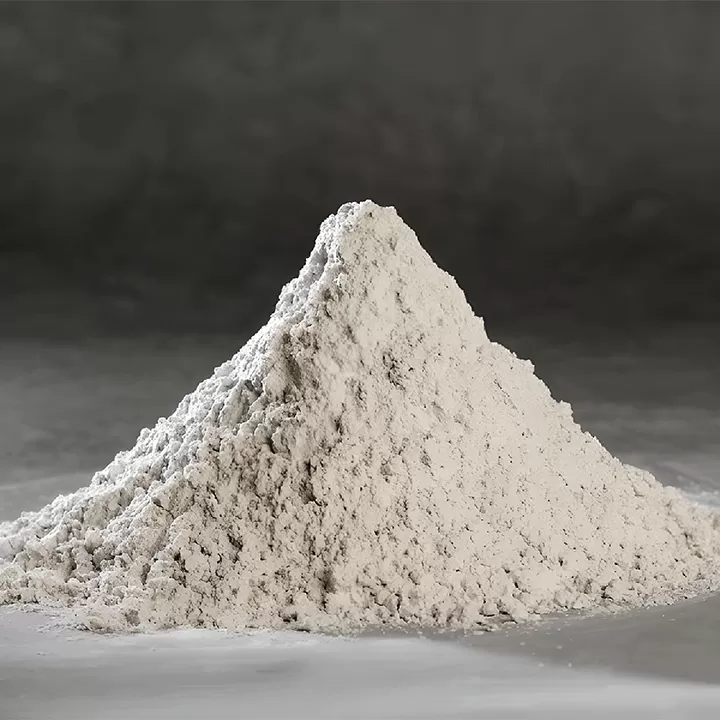
Silica fume, also known as microsilica, is a by-product of the silicon and ferrosilicon alloy production process. The term "undensified" refers to the material's as-collected state, where the particle structure remains loose and un-agglomerated. This stands in contrast to densified silica fume, which undergoes mechanical treatment to increase bulk density for transportation economy.
Physical Properties That Differentiate Undensified from Densified Forms
The most apparent distinction between undensified and densified silica fume lies in bulk density. Undensified silica fume typically exhibits a bulk density ranging from 200 to 350 kg/m³, whereas densified versions measure between 500 and 700 kg/m³. This lower bulk density directly affects handling, storage, and dispersion behaviour within concrete mixtures.
Particle morphology also differs. In the undensified state, individual spherical particles—with mean diameters around 0.1–0.3 μm—remain largely separate. This primary particle size is approximately 100 times finer than ordinary Portland cement. The specific surface area, measured via the BET method, falls between 15 and 30 m²/g, providing extensive surface area for pozzolanic reactions.
Chemical Composition and Pozzolanic Reactivity
High-purity undensified silica fume contains amorphous silicon dioxide (SiO₂) at levels of 85–98%. The amorphous nature is critical because crystalline silica does not exhibit the same pozzolanic activity. The high SiO₂ content reacts with calcium hydroxide (Ca(OH)₂) produced during cement hydration, forming additional calcium silicate hydrate (C-S-H) gel—the primary binding phase in concrete.
This pozzolanic reaction proceeds efficiently when the material is well dispersed. The reactivity index, determined according to ASTM C1240, frequently exceeds 110 % at 7 days, indicating that undensified silica fume contributes to early-age strength development when properly incorporated.
For construction professionals evaluating SCM options, undensified silica fume offers a combination of high purity and fine particle size that densified products cannot fully replicate, particularly in applications requiring rapid strength gain or extremely low permeability.
Performance Benefits of Undensified Silica Fume in Cementitious Systems
When incorporated into concrete mixtures, undensified silica fume modifies the microstructure and mechanical response of the hardened material. These modifications translate into measurable improvements across several performance metrics.
Mechanical Strength Enhancement Mechanisms
The primary strength-enhancing mechanism involves the conversion of calcium hydroxide—a weak and soluble hydration product—into additional C-S-H gel. This secondary C-S-H fills capillary pores and bonds more effectively with aggregate surfaces. The result is a denser, more cohesive matrix with higher compressive and flexural strength.
Concrete mixtures incorporating undensified silica fume at replacement levels of 5–15 % (by mass of cement) commonly achieve 28-day compressive strengths 20–40 % higher than plain cement concrete of equivalent water-to-cementitious ratio. The fine particles also act as nucleation sites for cement hydration, accelerating early-age reactions and reducing setting time in some formulations.
Durability Improvements Through Microstructural Refinement
The reduction in capillary porosity brought about by undensified silica fume has direct implications for durability. Key improvements include:
- Chloride ion penetration resistance: The refined pore structure obstructs the ingress of chloride ions, which is essential for protecting reinforcing steel in marine environments and de-icing salt zones.
- Sulfate attack resistance: Lower permeability reduces the transport of sulfate ions into the concrete matrix, mitigating the formation of expansive ettringite and gypsum.
- Freeze-thaw durability: The smaller and more uniformly distributed air-void system, when combined with proper air entrainment, enhances resistance to freeze-thaw cycles.
- Alkali-silica reaction mitigation: The high pozzolanic activity consumes alkalis and reduces pH in the pore solution, limiting the expansion associated with reactive aggregates.
These durability characteristics make undensified silica fume particularly suitable for infrastructure projects with extended design lives, such as bridge decks, tunnel linings, and offshore concrete structures.
Practical Application Considerations for Undensified Silica Fume
Translating the theoretical benefits of undensified silica fume into field performance requires attention to mix design, batching procedures, and quality control. The following sections address practical aspects that influence successful implementation.
Mix Design Adjustments for Optimal Performance
Replacing a portion of Portland cement with undensified silica fume alters the water demand and rheology of the concrete mixture. Because the particles are extremely fine, the specific surface area increases significantly, which can lead to higher water demand if the mix design is not adjusted.
The most effective approach involves the use of high-range water-reducing admixtures (HRWRAs) to maintain workability at reduced water-to-cementitious ratios. For typical mixtures, a water-to-cementitious ratio of 0.30 to 0.40 is recommended when incorporating undensified silica fume at 8–12 % replacement. This combination yields a cohesive, non-bleeding mix that remains pumpable and finishable.
Another important consideration is the timing of addition. In ready-mix operations, undensified silica fume is often added at the batch plant along with other cementitious materials. However, due to its low bulk density, it requires proper aeration and mechanical mixing to achieve uniform distribution within the dry blend.
Handling and Dispersion Characteristics
The low bulk density of undensified silica fume presents both opportunities and challenges. On the one hand, the loose, individual particle structure promotes rapid dispersion when mixed with water and superplasticizers. On the other hand, the material is prone to air entrainment during handling and can be difficult to convey through standard pneumatic systems.
For large-scale projects, pre-blending undensified silica fume with fine aggregates or cement can improve handling efficiency. Alternatively, slurry forms—where the silica fume is pre-mixed with water and a dispersant—offer a practical solution for ready-mix plants that lack dedicated powder handling equipment.
When evaluating suppliers, construction firms should assess the consistency of the material's particle size distribution and specific surface area. Batch-to-batch variation in these parameters can affect water demand and strength development, potentially compromising the reliability of the concrete produced.
Golden Fortune provides undensified silica fume with documented specification sheets that include particle size distribution, SiO₂ content, loss on ignition, and specific surface area, enabling concrete producers to fine-tune their mix designs with confidence.
Industry Pain Points Addressed by Undensified Silica Fume
Construction professionals face several recurring challenges when designing and placing high-performance concrete. Undensified silica fume directly addresses a number of these pain points.
Inconsistent early-age strength: For precast concrete producers, rapid strength development translates to faster form removal and increased production throughput. The high pozzolanic reactivity of undensified silica fume accelerates hydration, reducing the time required to achieve stripping strength while maintaining long-term performance.
Permeability-related durability failures: Structures exposed to aggressive environmental conditions—such as wastewater treatment plants, marine piers, and highway pavements—often suffer premature deterioration due to water and chemical ingress. The pore refinement achieved with undensified silica fume substantially reduces permeability, extending service life and reducing maintenance frequency.
Workability and finishability trade-offs: Many SCMs, including fly ash and ground granulated blast furnace slag, can reduce early-age strength or prolong setting times. Undensified silica fume, when properly dosed and combined with superplasticizers, maintains workability without sacrificing early strength, offering a balanced solution for demanding applications.
Dispersion difficulties with densified products: Densified silica fume, while more economical to transport, often requires intensive mixing to break down agglomerates. Inadequate dispersion leads to uneven strength distribution and localized durability issues. Undensified silica fume eliminates this concern by providing a material that readily disperses upon contact with mixing water.
Selection Criteria for Undensified Silica Fume Suppliers
Choosing a reliable supplier is as important as selecting the correct material grade. Procurement managers and quality control engineers should base their decisions on several objective criteria.
Consistency of quality: The supplier should provide certified test reports for each batch, covering parameters such as SiO₂ content, moisture content, loss on ignition, and specific surface area. Statistical process control data that demonstrates long-term consistency is a strong indicator of manufacturing discipline.
Technical support: A competent supplier offers application engineering support, including mix design assistance and troubleshooting for field issues. This capability reduces project risk and accelerates the learning curve for teams unfamiliar with undensified silica fume.
Logistical capability: Given the low bulk density of undensified silica fume, suppliers must have appropriate packaging and transportation solutions. Options include bulk bags, flexible intermediate bulk containers (FIBCs), and pneumatic tankers for larger volumes.
For concrete producers seeking a consistent supply of high-quality material, Golden Fortune offers undensified silica fume that meets ASTM C1240 and EN 13263 specifications. Their supply chain includes dedicated warehousing and logistics support for projects across multiple regions, which simplifies procurement for multi-site operations.
In addition to product quality, suppliers should demonstrate transparency regarding the source of the raw material and the production process. The origin of the silicon alloy furnace, the collection method, and the classification process all influence the final product characteristics.
For applications where very high early-age strength is required—such as repair mortars or shotcrete—a product with a finer particle size distribution and higher specific surface area may be preferred. Conversely, for standard ready-mix applications, a slightly coarser distribution may offer sufficient reactivity with lower water demand.
Undensified silica fume from reputable suppliers is accompanied by detailed technical datasheets that enable engineers to evaluate these trade-offs quantitatively. Comparing supplier data against project-specific requirements ensures that the selected material aligns with performance targets.
Another factor that distinguishes reliable suppliers is their quality assurance program. Regular sampling and testing at the production facility, combined with third-party verification, provide assurance that the material delivered to the job site matches the product specified in the mix design.
Frequently Asked Questions About Undensified Silica Fume
Q1: What is the main difference between undensified and densified silica fume?
The primary difference lies in bulk density and particle dispersion. Undensified silica fume has a bulk density of 200–350 kg/m³ and consists of individual, loosely packed particles. Densified silica fume is mechanically treated to achieve bulk densities of 500–700 kg/m³, forming agglomerates that require intensive mixing to disperse effectively in concrete. The undensified form offers superior dispersion characteristics and higher pozzolanic reactivity per unit mass.
Q2: What replacement level is typically recommended for undensified silica fume in concrete?
Recommended replacement levels range from 5 % to 15 % by mass of cement, with 8–12 % being the most common range for general high-performance concrete applications. Higher replacement levels (up to 15 %) are used in specialized applications such as ultra-high-performance concrete (UHPC) or repair mortars where very high strength and low permeability are required. The optimum level depends on the specific cement chemistry, aggregate characteristics, and performance targets.
Q3: How does undensified silica fume affect the workability of concrete?
Undensified silica fume increases water demand due to its high specific surface area. However, this effect is effectively managed through the use of high-range water-reducing admixtures (HRWRAs). A properly designed mixture with undensified silica fume exhibits cohesive, non-bleeding workability suitable for pumping and finishing. The mix design must account for the increased fines content to maintain the desired slump and flow characteristics.
Q4: What quality control tests should be performed on undensified silica fume deliveries?
Key quality control tests include determination of SiO₂ content (ASTM C1240), loss on ignition, moisture content, specific surface area (BET method), and particle size distribution. The material should also be tested for pozzolanic activity index at 7 and 28 days. Suppliers should provide certified test reports for each batch, and independent verification through third-party laboratories adds an extra layer of quality assurance.
Q5: Can undensified silica fume be used with other supplementary cementitious materials?
Yes. Undensified silica fume is frequently used in ternary blends with fly ash or ground granulated blast furnace slag (GGBS). These combinations allow engineers to balance early-age strength (from silica fume) with long-term durability and cost-effectiveness (from other SCMs). Careful mix design is required to account for the combined water demand and setting characteristics of the blended system.
Q6: What packaging options are available for undensified silica fume?
Undensified silica fume is typically supplied in 25 kg bags, 500 kg to 1,000 kg flexible intermediate bulk containers (FIBCs), or in bulk pneumatic tankers for large-volume deliveries. The choice of packaging depends on the project scale, handling equipment available at the batching plant, and the required storage conditions. The low bulk density of the undensified form requires careful consideration of packaging integrity to prevent moisture ingress and contamination.
Q7: How should undensified silica fume be stored on-site?
Storage should be in a dry, covered area protected from rain and excessive humidity. Moisture can cause pre-hydration or agglomeration, reducing the effectiveness of the material. Bags and FIBCs should be stored on pallets off the ground to prevent moisture absorption from the floor. For bulk storage in silos, the silo should be equipped with aeration systems to maintain flowability and prevent bridging of the fine material.
For detailed specification sheets, technical data, and supply chain information regarding undensified silica fume and other supplementary cementitious materials, contact the technical team at Golden Fortune. Inquiries regarding product availability, custom packaging, and project-specific mix design support are welcomed.