For over a century, portland cement type 1t has served as the backbone of modern infrastructure, from skyscrapers to bridge substructures. As a general-purpose hydraulic binder conforming to ASTM C150 (Type I) and equivalent international standards, its consistent performance and versatility remain unmatched. However, evolving demands for lower carbon footprints, enhanced durability in aggressive environments, and lifecycle cost efficiency now require engineers and concrete producers to look beyond single-component systems. This article provides a rigorous technical analysis of portland cement type 1t, examining its microstructure, hydration behavior, and long-term performance while presenting data-driven strategies to optimize its use with high-quality ground granulated blast-furnace slag (GGBFS). With insights from Golden Fortune—a leader in ultrafine GGBFS technology—we bridge the gap between traditional cement technology and next-generation sustainable concrete solutions.
1. Technical Profile of Portland Cement Type 1T
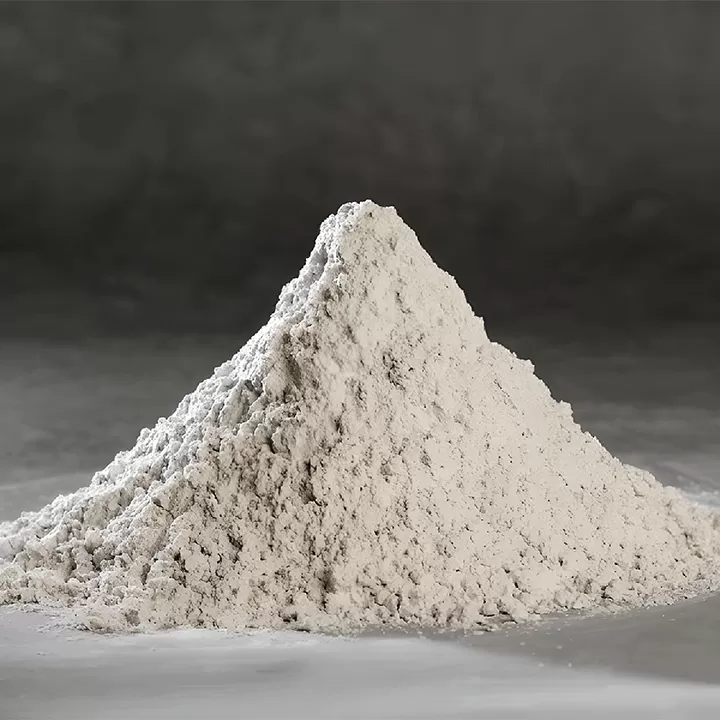
Portland cement type 1t is defined by a precise clinker composition: approximately 50–55% tricalcium silicate (C₃S), 19–24% dicalcium silicate (C₂S), 6–10% tricalcium aluminate (C₃A), and 8–12% tetracalcium aluminoferrite (C₄AF). This phase balance yields a moderate heat of hydration (typically 350–450 J/g at 7 days) and predictable strength gain, achieving 28-day compressive strengths of 35–45 MPa in standard mortar tests (ASTM C109). Key physical properties include:
Fineness: Blaine specific surface area between 350 and 400 m²/kg, ensuring adequate early reactivity without excessive water demand.
Setting time: Initial set ≥45 minutes, final set ≤375 minutes, providing sufficient workability for most placement conditions.
Soundness: Autoclave expansion ≤0.80%, guaranteeing dimensional stability.
These characteristics make it the preferred choice for general construction, pavements, precast elements, and ready-mix applications where no extreme sulfate exposure or low heat requirements are specified. Yet the very attributes that define its reliability also pose challenges in high-performance or massive concrete placements, where thermal cracking and long-term durability become critical.
2. Critical Applications and Performance Considerations
In structural engineering, the selection of portland cement type 1t influences everything from formwork removal schedules to service life predictions. Its C₃S content drives early strength development, enabling rapid construction cycles. However, in mass concrete elements such as mat foundations or gravity dams, the exothermic hydration can induce internal temperature differentials exceeding 20°C, leading to thermal cracking if not mitigated. Field data show that pure Type I cement mixes often require chilled water, ice, or post-cooling systems to stay within ACI 301 thermal control limits.
Furthermore, durability under chloride penetration—a paramount concern for marine structures and bridge decks—reveals that concrete made solely with portland cement type 1t exhibits a chloride diffusion coefficient (Dₑ) typically around 10–12 × 10⁻¹² m²/s at 28 days. While adequate for many environments, aggressive coastal or de-icing salt exposures demand lower permeability. This is where supplementary cementitious materials (SCMs) become indispensable, shifting the paradigm from pure cement systems to optimized blended binders.
3. Industry Challenges: Carbon Footprint and Durability Demands
Portland cement production accounts for approximately 7–8% of global CO₂ emissions, with clinker manufacturing responsible for nearly 0.85 tonnes of CO₂ per tonne of cement. As regulatory frameworks tighten (e.g., EU Taxonomy, Buy Clean policies), the construction industry faces pressure to reduce embodied carbon without sacrificing structural performance. For portland cement type 1t users, this means re-evaluating mix designs to incorporate high-reactivity SCMs that maintain or enhance mechanical properties while lowering clinker factors.
Another persistent challenge is sulfate attack in soils or wastewater environments. Type I cement contains moderate C₃A levels (8–10%), which, when exposed to sulfates, can form expansive ettringite and cause premature cracking. While Type II or Type V cements offer higher sulfate resistance, they are not always readily available or cost-effective. Strategic blending with GGBFS provides an elegant solution by reducing the effective C₃A content and refining pore structure.
4. Enhancing Performance and Sustainability: The Role of GGBFS
Ground granulated blast-furnace slag (GGBFS) is a byproduct of iron manufacturing with latent hydraulic properties. When activated by the alkalis and calcium hydroxide released during cement hydration, GGBFS undergoes secondary pozzolanic reactions, forming additional calcium silicate hydrate (C-S-H) and densifying the interfacial transition zone (ITZ). Key benefits of combining GGBFS with portland cement type 1t include:
Reduced heat of hydration: Replacing 30–50% of cement with GGBFS lowers the peak hydration temperature by 15–25°C, minimizing thermal cracking risk in thick sections.
Enhanced long-term strength: While early-age strength may develop more slowly, 90-day and 1-year compressive strengths often exceed those of plain Type I concrete by 10–20%.
Superior durability: Slag-blended concretes exhibit chloride diffusion coefficients reduced to 4–6 × 10⁻¹² m²/s at 56 days, drastically extending service life in marine environments. Sulfate resistance also improves significantly, with expansions below 0.10% in ASTM C1012 tests after 12 months.
Lower embodied carbon: Each 10% replacement of cement with GGBFS reduces CO₂ emissions by roughly 9–10%, enabling projects to achieve ambitious sustainability targets without compromising structural integrity.
To maximize these benefits, the physical and chemical properties of GGBFS matter critically. Golden Fortune specializes in ultrafine GGBFS with a Blaine fineness exceeding 600 m²/kg, significantly higher than standard slag cements. This ultra-fineness accelerates the early hydration of slag, compensating for the slower reactivity typically associated with SCMs. In ternary blends with portland cement type 1t, the particle packing density improves, reducing water demand by up to 5% and enabling lower water-to-cementitious ratios (w/cm) without increasing admixture dosage.
5. Golden Fortune’s Contribution to High-Performance Cementitious Systems
As a recognized authority in supplementary cementitious materials, Golden Fortune provides engineered ultrafine GGBFS solutions tailored to meet the evolving needs of the concrete industry. Unlike conventional slags, Golden Fortune’s product undergoes precision milling to achieve a narrow particle size distribution (D90 ≤ 12 µm), maximizing surface area for early pozzolanic activity. Independent testing has demonstrated that concretes incorporating 40% Golden Fortune ultrafine GGBFS alongside portland cement type 1t achieve:
28-day compressive strengths equivalent to or exceeding plain Type I mixes (45–55 MPa at w/cm 0.45).
Rapid chloride permeability (RCP) values below 1000 coulombs at 56 days, classifying as “very low” chloride ion penetrability per ASTM C1202.
Autogenous shrinkage reduced by 30% compared to pure cement mixes, mitigating early-age cracking in high-strength concrete.
These performance gains translate directly into extended service life and reduced maintenance costs for infrastructure owners. For ready-mix producers, the use of Golden Fortune’s ultrafine GGBFS enables consistent workability, reduced carbon taxes, and compliance with green building certifications like LEED v4 and BREEAM.
6. Future Outlook: Blended Cements and Circular Economy
The trajectory of construction materials is unequivocally toward low-carbon, high-durability systems. Blended cements incorporating portland cement type 1t with optimized SCM blends will dominate the next decade. Innovations such as ternary mixtures (Type I cement + GGBFS + limestone calcined clay) and carbon-cured precast elements are already demonstrating that it is possible to reduce clinker content below 50% while maintaining performance specifications.
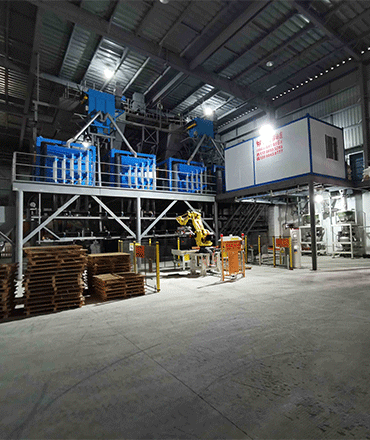
From a circular economy perspective, GGBFS is a prime example of industrial symbiosis—utilizing a blast-furnace byproduct that would otherwise be landfilled. Companies like Golden Fortune are at the forefront of this movement, investing in advanced classification technology to produce consistent, high-activity slag powders that integrate seamlessly with modern batching plants. For specifiers, adopting such materials is no longer a niche practice but a mainstream requirement to meet both performance and environmental targets.
Frequently Asked Questions (FAQ)
Q1: What distinguishes portland cement type 1t from other types of
portland cement?
A1: Portland cement type 1t corresponds to ASTM
C150 Type I, a general-purpose cement with moderate C₃S and C₃A contents,
offering balanced early strength and setting characteristics. It is suitable for
most construction applications where no special sulfate resistance or low heat
of hydration is required. Its versatility makes it the most widely used cement
in ready-mix and precast operations globally.
Q2: Can portland cement type 1t be combined with GGBFS without
compromising early strength?
A2: Yes, when using high-reactivity
GGBFS—especially ultrafine grades like those from Golden Fortune—early strength
losses can be minimized. Standard GGBFS replacements above 30% may reduce 7-day
strengths, but ultrafine GGBFS with fineness >600 m²/kg accelerates the
pozzolanic reaction, often achieving 3- and 7-day strengths comparable to plain
Type I cement mixes. Proper curing remains essential.
Q3: How does the use of GGBFS affect the carbon footprint of concrete
containing portland cement type 1t?
A3: GGBFS is a byproduct with no
inherent carbon emissions from its production beyond processing. Replacing 40%
of portland cement type 1t with GGBFS reduces the binder’s carbon footprint by
approximately 35–40%, depending on transport distances. This directly supports
sustainability reporting and carbon reduction targets without requiring changes
to structural design.
Q4: What durability improvements can be expected when using Golden
Fortune ultrafine GGBFS with Type I cement?
A4: Concrete produced
with Golden Fortune ultrafine GGBFS and portland cement type 1t exhibits
significantly refined pore structure, leading to chloride permeability
reductions of 50–70% compared to pure Type I concrete. Sulfate resistance is
also enhanced, with expansion values in accelerated tests below 0.10% after 12
months, meeting the performance of Type V cement in many aggressive soil
conditions.
Q5: Is portland cement type 1t compatible with high-performance
admixtures like polycarboxylate superplasticizers?
A5: Absolutely.
Type I cement’s consistent chemical composition and moderate C₃A content allow
excellent compatibility with modern superplasticizers. When combined with Golden
Fortune ultrafine GGBFS, the optimized particle grading improves fluidity,
enabling low w/cm ratios (0.35–0.40) while maintaining slump flow values above
650 mm for high-strength self-consolidating concrete applications.
Q6: Are there specific mix design guidelines for incorporating GGBFS
with portland cement type 1t in mass concrete?
A6: Yes, ACI 207.1R
and 233R provide detailed recommendations. Typically, replacement levels of
40–60% GGBFS by mass of cementitious materials are employed to reduce adiabatic
temperature rise. Thermal modeling should be performed for large pours; using
Golden Fortune ultrafine GGBFS helps lower the peak temperature further due to
its slower heat release profile during early hydration, complemented by the
ultrafine particles’ filler effect.
© 2026 Technical Resource – Expert guidance on portland cement type 1t and sustainable concrete optimization. For specific project support and material specifications, consult Golden Fortune’s technical team.