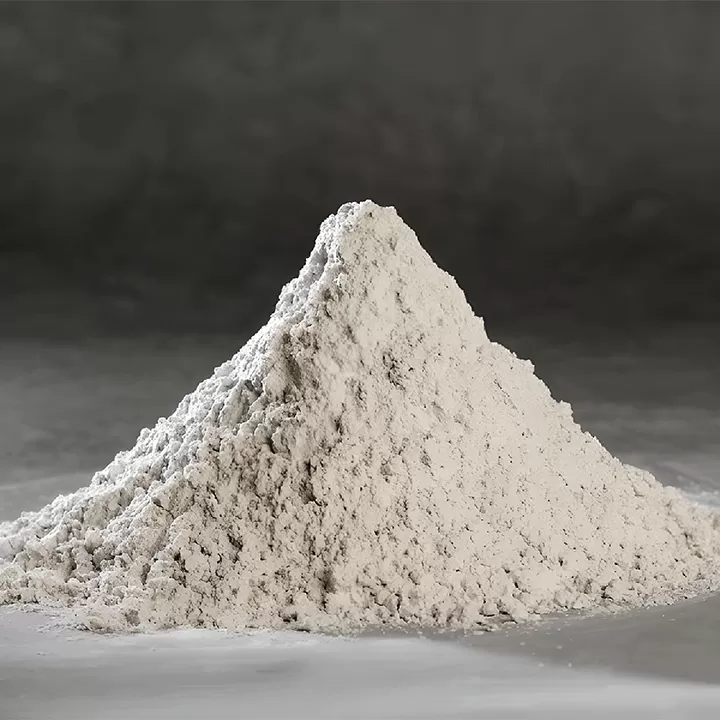
In the domain of high-performance construction materials, the strategic combination of traditional Portland cement with alumina-rich components—collectively referred to as aluminum portland binders—represents a paradigm shift in concrete durability and lifecycle performance. Unlike conventional binary blends, the aluminum portland system leverages the reactive alumina phase to fundamentally alter the hydration kinetics, pore structure refinement, and resistance against aggressive environmental agents. As a B2B content specialist and authority in supplementary cementitious materials (SCMs), this analysis dissects the mechanistic advantages, field-proven applications, and supply chain considerations for engineers, specifiers, and ready-mix producers seeking to optimize structural concrete.
At Golden Fortune, we have observed a consistent uptick in demand for binder systems that go beyond compressive strength—prioritizing chemical stability, sulfate resistance, and carbon footprint reduction. The following technical exposition provides a data-driven evaluation of aluminum portland formulations, their interaction with ground granulated blast furnace slag (GGBFS), and the subsequent impact on construction project ROI.
1. Hydration Chemistry: The Role of Reactive Alumina in Portland Systems
The defining characteristic of aluminum portland cementitious systems lies in the supplementary source of Al₂O₃, typically derived from calcium aluminate cement (CAC), metakaolin, or high-alumina industrial by-products. When combined with Portland cement (PC) and calcium sulfate, the ternary system facilitates the formation of ettringite (AFt) and monosulfoaluminate (AFm) phases beyond what standard PC hydration provides.
1.1 Early-Stage Hydration Control
In conventional Portland cement, tricalcium aluminate (C₃A) reacts rapidly with gypsum to form ettringite. However, in aluminum portland blends, the additional alumina from the secondary component shifts the phase equilibrium. This results in:
Extended setting time control: The formation of a denser ettringite coating on clinker particles retards initial hydration, allowing for longer workability retention in hot weather concreting.
Heat of hydration moderation: While high-alumina systems can be exothermic, precise proportioning reduces peak temperature rise—critical for mass pours and reducing thermal cracking risk.
Microstructural densification: The secondary formation of AFm phases fills capillary pores (>100 nm), reducing permeability by up to 60% compared to plain PC mixes (based on ASTM C1202 rapid chloride permeability tests).
2. Performance Advantages in Aggressive Environments
Infrastructure projects in marine environments, wastewater treatment facilities, and sulfate-rich soils demand binder systems that withstand chemical attack. The aluminum portland system exhibits superior resistance mechanisms:
2.1 Chloride Ingress and Rebar Corrosion Mitigation
One of the most critical durability parameters is the chloride diffusion coefficient. The refined pore structure in aluminum portland concrete reduces chloride ion penetration. Additionally, the increased AFm phases chemically bind chlorides through the formation of Friedel’s salt (3CaO·Al₂O₃·CaCl₂·10H₂O), effectively immobilizing chlorides before they reach the reinforcing steel. Field studies from tidal zone structures show a 40–50% reduction in corrosion current density when using blended binders with an Al₂O₃ content exceeding 5% by mass of total binder.
2.2 Sulfate Attack Resistance
Standard Type V Portland cement offers moderate sulfate resistance through low C₃A content. In contrast, aluminum portland systems with controlled CAC or slag addition exploit the formation of secondary ettringite under controlled expansion, avoiding the destructive delayed ettringite formation (DEF) while enhancing resistance to external sulfate solutions. The lower calcium hydroxide (CH) content—a byproduct of the pozzolanic reaction—also reduces gypsum formation, a primary driver of sulfate-induced expansion.
3. Synergy with GGBFS: A Holistic Binder Approach
As a specialist in GGBFS-based solutions, I emphasize that the combination of ground granulated blast furnace slag with aluminum portland binders yields superior performance metrics. Slag contributes latent hydraulic reactivity and additional alumina, while the aluminum portland component provides early-age strength development. This synergy addresses two common industry pain points: low early strength in high-slag mixes and long-term durability uncertainties.
3.1 Optimized Ternary Blends
Data from our technical collaboration with Golden Fortune supply projects indicate that a ternary blend of 50% PC, 30% GGBFS, and 20% aluminum-rich SCM yields:
28-day compressive strengths exceeding 65 MPa (9,400 psi) in standard cylinder tests.
Rapid chloride permeability (RCP) values below 1,500 coulombs—classified as “very low” per ASTM C1202.
Reduced autogenous shrinkage by 25–30% compared to high-early-strength PC mixes.
4. Application-Specific Engineering Solutions
Specifying aluminum portland blends requires a tailored approach based on project demands. Below are three common scenarios where this binder class excels:
4.1 Precast and Prestressed Concrete
Precast manufacturers require high early strength for formwork turnover combined with long-term dimensional stability. By calibrating the alumina source (e.g., using calcium aluminate cement at 5–10% replacement), the heat of hydration accelerates without compromising later-age strength gain. The reduced permeability also minimizes efflorescence, a cosmetic defect often problematic in architectural precast.
4.2 Marine and Port Infrastructure
In tidal zones, concrete faces cyclic wetting-drying with high chloride concentrations. The use of aluminum portland blends with a water-to-binder ratio (w/b) ≤ 0.40 has demonstrated service life extensions beyond 50 years in probabilistic modeling (Monte Carlo simulations based on Fick’s second law of diffusion).
4.3 High-Performance Repair Mortars
Repair materials must exhibit chemical compatibility with existing substrate, low shrinkage, and rapid strength gain. Aluminum portland-based repair mortars achieve bond strengths >2.5 MPa (pull-off) while maintaining modulus compatibility to prevent delamination.
5. Sustainability Metrics and Life Cycle Assessment
Environmental product declarations (EPDs) are increasingly mandated in public infrastructure tenders. Aluminum portland binders contribute to sustainability goals through:
Cement clinker factor reduction: Replacing PC with alumina-rich SCMs lowers CO₂ emissions by 20–40% per cubic meter of concrete, depending on replacement level.
Enhanced durability: Extended service life reduces the need for reconstruction, lowering lifecycle embodied carbon.
Utilization of industrial by-products: Many alumina sources (e.g., slag, fly ash with high Al₂O₃) are diverted from landfills.
At Golden Fortune, we integrate these sustainability principles with rigorous quality control, ensuring each shipment of GGBFS and complementary alumina materials meets EN 15167 or ASTM C989 standards, enabling precise aluminum portland mix designs.
6. Addressing Industry Pain Points: Workability, Compatibility, and Quality Assurance
Despite the advantages, adoption of aluminum portland systems is sometimes hindered by misconceptions regarding workability or compatibility with admixtures. The following solutions address these operational challenges:
6.1 Set Time Variability
Variations in alumina source reactivity can lead to unpredictable setting. Implementing isothermal calorimetry as a quality control tool allows ready-mix producers to predict setting behavior based on the specific blend. Polycarboxylate ether (PCE) superplasticizers with tailored backbone structures maintain slump life without retarding early hydration.
6.2 Admixture Compatibility
Certain lignosulfonate-based water reducers may interact with high-alumina systems, causing extended set retardation. Compatibility testing using the Marsh cone and mini-slump techniques ensures the chosen admixture suite aligns with the binder’s zeta potential.
6.3 Supply Chain Consistency
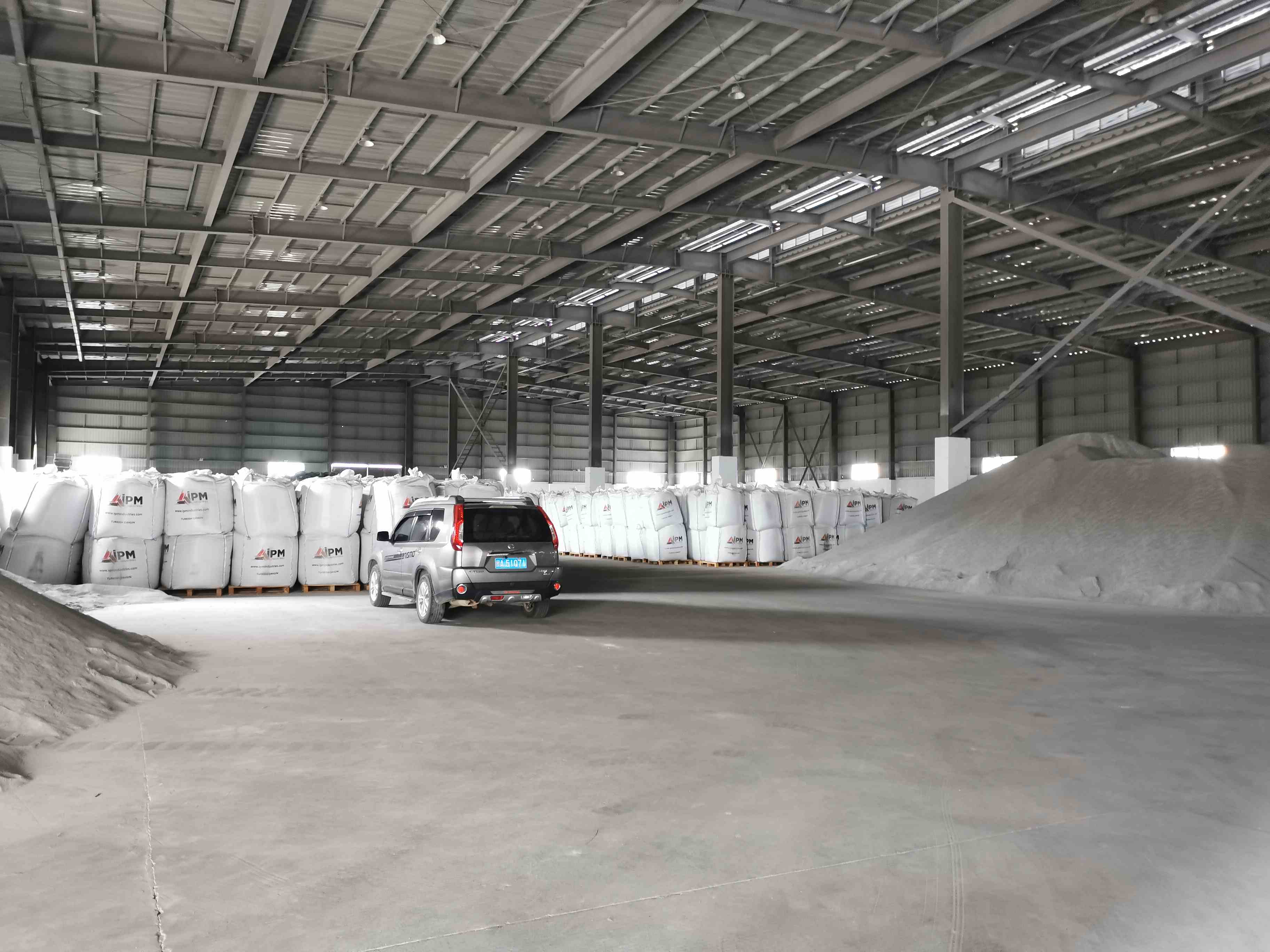
Given that alumina content in industrial by-products can fluctuate, sourcing from suppliers with dedicated blending facilities—like Golden Fortune—ensures chemical composition stability. We provide batch-specific oxide analysis to enable mix design adjustments prior to batching.
7. Technical Specifications and Standardization
Current standards such as ASTM C1157 (performance-based cement) and EN 197-1 (common cements) accommodate blended cements with aluminum-rich components. For project specifications, the following parameters are recommended to ensure performance:
Total Al₂O₃ content in the blended binder: 4–8% by mass.
Maximum water-to-binder ratio: 0.45 for moderate exposure, 0.40 for severe exposure.
Minimum 56-day compressive strength: 45 MPa (6,500 psi) for structural durability classes.
Rapid chloride permeability (ASTM C1202): ≤ 2,000 coulombs at 56 days.
Furthermore, incorporating aluminum portland binders into performance-based specifications shifts the focus from prescriptive limits to functional outcomes—aligning with modern infrastructure resilience goals.
8. Future Outlook: Next-Generation Binder Systems
As the industry moves toward carbon neutrality, the role of aluminum-rich supplementary materials will expand. Research into calcined clay-limestone cements (LC³) already demonstrates the efficacy of alumina in achieving clinker factors below 0.50. The aluminum portland concept is set to integrate with alkali-activated materials and hybrid cements, offering pathways to near-zero emission binders without compromising mechanical performance.
For B2B stakeholders—from precasters to government transportation agencies—investing in technical expertise to optimize aluminum portland mixes now will yield competitive advantages in both cost-efficiency and sustainable project delivery.
Frequently Asked Questions (FAQ)
Q1: What distinguishes aluminum portland cement from ordinary
Portland cement?
A1: Aluminum portland cement refers to a blended binder
where Portland cement is combined with a high-alumina component (such as calcium
aluminate cement, metakaolin, or certain slags). This increases the total
reactive alumina content, leading to enhanced chloride binding, refined pore
structure, and improved sulfate resistance compared to plain Portland cement.
Ordinary Portland cement typically relies solely on the C₃A phase for alumina
contribution, which is limited and can be detrimental to sulfate durability.
Q2: How does aluminum portland cement affect concrete setting time
and early strength?
A2: The effect depends on the
type and dosage of the alumina source. When using calcium aluminate cement,
setting times may shorten, and early strength accelerates. Conversely, blends
with metakaolin or slag may slightly extend initial set but improve workability
retention. Proper mix design and compatibility testing with chemical admixtures
allow engineers to tailor setting behavior to specific project needs—for
instance, extended setting for hot weather placements or rapid set for repair
applications.
Q3: Is aluminum portland cement suitable for precast concrete
operations?
A3: Yes, it is particularly well-suited
for precast operations where high early strength and dimensional stability are
required. By optimizing the alumina content and using supplementary cementitious
materials like GGBFS, manufacturers can achieve formwork stripping strengths
(typically >20 MPa) within 12–16 hours while reducing the risk of thermal
cracking and efflorescence. Many precast facilities have adopted this binder
approach to improve cycle times and product aesthetics.
Q4: Can aluminum portland cement be used in conjunction with standard
superplasticizers?
A4: Absolutely, but
compatibility must be verified. Third-generation polycarboxylate ether (PCE)
superplasticizers generally perform well with high-alumina binders, providing
high water reduction without excessive retardation. However, some
naphthalene-based or lignosulfonate-based admixtures may exhibit extended set
times. We recommend conducting a paste compatibility test (ASTM C1877) prior to
large-scale placement to confirm admixture-binder synergy.
Q5: What quality control measures are critical when using aluminum
portland blends?
A5: Key measures include: (1)
monitoring the total Al₂O₃ content of the binder through X-ray fluorescence
(XRF) analysis on incoming materials; (2) conducting isothermal calorimetry to
predict hydration kinetics and set time; (3) performing rapid chloride
permeability (RCP) testing at 56 days to confirm durability targets; and (4)
ensuring uniform blending of the alumina component to avoid localized
variations. Suppliers like Golden Fortune provide detailed mill certificates to support these quality protocols.
Q6: How does aluminum portland cement contribute to LEED or
sustainable construction credits?
A6: By enabling a
higher substitution rate of Portland cement with industrial by-products (such as
GGBFS or calcined clay), aluminum portland blends reduce
embodied carbon. This contributes to LEED v4 Materials and Resources credits
(e.g., Building Product Disclosure and Optimization—Environmental Product
Declarations). Furthermore, extended service life reduces maintenance-related
resource consumption, aligning with life-cycle assessment goals.
Q7: Where can I obtain technical support for designing aluminum
portland concrete mixes?
A7: Golden Fortune provides technical advisory services,
including mix design optimization, durability modeling, and on-site
troubleshooting for projects utilizing aluminum-rich supplementary cementitious
materials. Our team collaborates with engineers to align binder selection with
project-specific exposure classes and performance criteria.