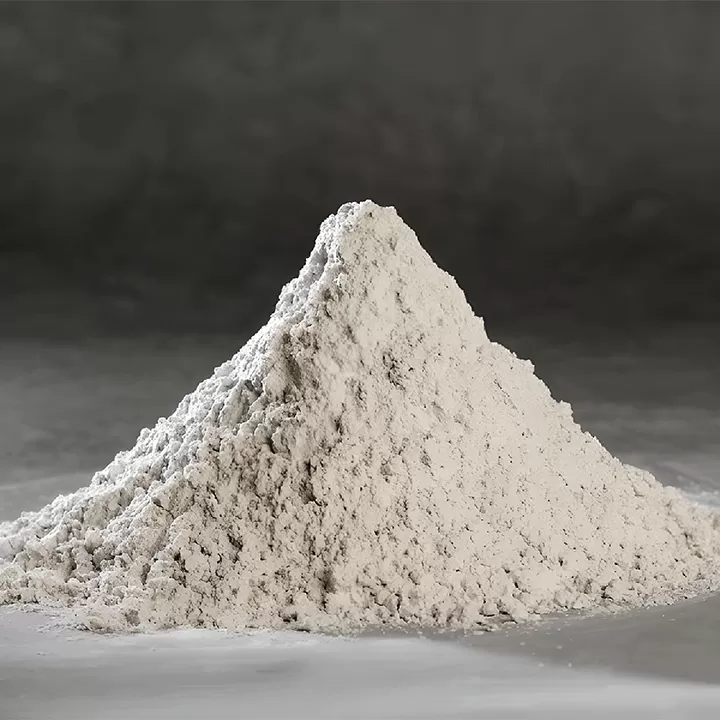
For over a century, portland cement has served as the backbone of modern infrastructure. However, the assumption that “cement is just cement” leads to premature failures, durability issues, and inflated life-cycle costs. Selecting the correct binder is a decisive engineering variable that directly influences concrete’s mechanical performance, resistance to aggressive agents, and thermal behavior. This article provides a rigorous, data-driven analysis of the types of portland cement and their uses according to ASTM C150, enriched with industry insights, common specification pitfalls, and advanced strategies involving supplementary cementitious materials (SCMs). Whether you are designing a high-rise foundation, a marine structure, or a fast-track pavement, understanding these nuances is non-negotiable for durability and cost efficiency.
1. Understanding the Classification System: ASTM C150 Framework
The American Society for Testing and Materials (ASTM) C150 standard categorizes portland cement into five primary types (I through V), each engineered to deliver specific performance characteristics. These classifications hinge on chemical composition—particularly the proportions of tricalcium silicate (C₃S), dicalcium silicate (C₂S), tricalcium aluminate (C₃A), and tetracalcium aluminoferrite (C₄AF). Minor adjustments in these phases dictate critical parameters: rate of strength gain, heat of hydration, and resistance to sulfate attack. Engineers and specifiers must map these attributes to project demands. Misalignment between cement type and exposure conditions remains a primary cause of concrete deterioration, accounting for nearly 30% of premature rehabilitation projects in aggressive environments, according to PCA data.
2. Type I Portland Cement: The General-Purpose Workhorse
Type I cement is the most widely manufactured and utilized variant, suitable for applications where no special exposure conditions exist. It offers a balanced performance profile: a 28-day compressive strength typically exceeding 28 MPa (4,000 psi) in standard mortar tests, with moderate heat evolution. Common applications include pavements, reinforced concrete buildings, precast elements, and non-aggressive soil foundations.
Technical characteristics:
C₃A content: generally between 8–12% – sufficient for normal sulfate exposure but inadequate for severe conditions.
Heat of hydration: approximately 70–85 cal/g at 7 days, requiring attention in mass placements to avoid thermal cracking.
Setting time: initial set around 45–90 minutes, final set within 4–6 hours.
Industry pain point: Often used as a default without verifying groundwater chemistry or structural mass. In massive pours, Type I can generate internal temperatures exceeding 70°C, leading to delayed ettringite formation (DEF). Mitigation includes substituting 25–40% of cement with GGBS, which reduces peak temperature by up to 15°C.
3. Type II Portland Cement: Moderate Sulfate Resistance and Controlled Heat
Type II cement occupies a middle ground, engineered to provide moderate sulfate resistance and a lower heat of hydration compared to Type I. It is specified for structures exposed to soil or water with moderate sulfate concentrations (150–1,500 ppm) and for mass concrete elements where thermal control is required without the extreme low-heat profile of Type IV. Key applications include drainage structures, retaining walls, large piers, and foundations in sulfate-bearing soils.
The cement achieves its resistance by limiting the C₃A content to ≤8% (often 5–7%). This reduction curbs the formation of expansive calcium sulfoaluminate phases upon sulfate attack. Additionally, total alkalis (Na₂O + 0.658 K₂O) are often restricted to mitigate alkali-silica reaction (ASR) when reactive aggregates are present. For contractors, Type II offers a practical balance between early strength and long-term durability, though in high sulfate environments (above 1,500 ppm), Type V remains mandatory.
4. Type III Portland Cement: High Early Strength for Rapid Construction
When project schedules demand accelerated formwork removal, early load application, or cold-weather concreting, Type III cement becomes the optimal choice. This type achieves approximately 70% of its 28-day strength within 7 days and often exceeds 21 MPa (3,000 psi) by 24 hours due to finer grinding and increased C₃S content. Typical applications include precast concrete production, high-rise construction with fast cycle times, repair works, and winter concreting.
Technical considerations: The increased fineness (typically 500–600 m²/kg Blaine) accelerates hydration, but also elevates the heat release rate. In thick sections, early-age thermal cracking risks are magnified. Combining Type III with SCMs like Golden Fortune’s ultrafine GGBS can moderate the heat peak while preserving early strength gains—a synergy increasingly adopted in fast-track infrastructure. Furthermore, specification must account for higher water demand; a well-graded admixture system is essential to maintain workability without compromising strength.
5. Type IV Portland Cement: Low Heat for Massive Structures
Type IV is a specialty cement designed for mass concrete applications where temperature differentials between core and surface must be tightly controlled. It contains a lower C₃S and higher C₂S content, reducing the total heat of hydration to less than 250 kJ/kg after 7 days—approximately 20–30% lower than Type I. Applications are dominated by large gravity dams, massive foundation mats, roller-compacted concrete (RCC), and bridge abutments where thermal cracking could compromise structural integrity.
Despite its advantages, Type IV is seldom stocked by ready-mix suppliers due to low demand. In practice, engineers achieve similar low-heat profiles by blending Type II with 50–70% GGBS or fly ash. This approach not only controls thermal gradients but also reduces embodied carbon, a growing sustainability mandate. For large-scale hydropower projects, Golden Fortune provides technical support in designing optimized blended systems that replicate Type IV performance while ensuring supply chain reliability.
6. Type V Portland Cement: High Sulfate Resistance for Aggressive Environments
In marine environments, wastewater treatment facilities, and soils with high sulfate concentrations (>1,500 ppm), Type V cement is the prescribed solution. It enforces a C₃A content of ≤5%, drastically reducing susceptibility to sulfate-induced expansion and cracking. Additionally, Type V often includes limitations on C₄AF and total alkalis to further enhance chemical resilience. Structures such as coastal defenses, sewer pipelines, and chemical plant foundations rely on Type V to achieve design lives exceeding 75 years without significant deterioration.
However, Type V typically exhibits slower early strength development, which can delay construction schedules. To offset this, contractors may incorporate accelerators or adopt binary blends with silica fume. Importantly, specifying the correct cement type is not enough—quality control of aggregates and water-cement ratio remain paramount. When evaluating types of portland cement and their uses, the interaction between cement chemistry and environmental exposure defines the service life of critical assets.
7. Specialty Variations: White Portland Cement and Performance Modifiers
Beyond the five standard types, white portland cement (produced with low iron oxide content) is utilized for architectural finishes, terrazzo, and colored concrete where aesthetic uniformity is demanded. Its technical properties align with Type I, though fineness is often higher to achieve brightness. Other specialized variants include air-entraining cements (Type IA, IIA, IIIA) that incorporate air-entraining agents to enhance freeze-thaw resistance. These are widely specified in northern climates and highway applications.
From a performance standpoint, modern concrete technology increasingly relies on binary and ternary blends rather than sole reliance on cement type. The shift is driven by both durability requirements and sustainability goals: replacing a portion of portland cement with SCMs can reduce CO₂ emissions by up to 40% while refining pore structure and lowering permeability.
8. Selecting the Right Cement: Addressing Industry Pain Points
One of the most persistent challenges in the construction industry is the disconnect between laboratory specifications and field conditions. Common pain points include:
Thermal cracking in mass elements: Specification of Type II or IV alone is insufficient without thermal modeling. Solutions include staged placement, cooling pipes, and SCM substitution.
Delayed ettringite formation (DEF): Caused by high internal temperatures during curing. Mitigation involves limiting peak temperature to <70°C through low-heat binders or blended systems.
Alkali-silica reaction (ASR): Reactive aggregates require low-alkali cement (<0.60% Na₂Oeq) and supplementary SCMs. Type II or V with low alkalis and 20–30% GGBS is a proven remedy.
Incompatibility with admixtures: Variations in C₃A and sulfate levels can cause false set or slump loss. Pre-qualification testing of cement-admixture combinations is essential.
Addressing these issues demands a holistic approach that integrates cement type selection, SCM usage, and mixture proportioning. Advanced practitioners increasingly rely on performance-based specifications rather than prescriptive mandates, allowing for innovation while safeguarding durability.
9. Synergies with Supplementary Cementitious Materials: Enhancing Performance and Sustainability
No discussion of modern binder systems is complete without addressing the role of SCMs, particularly ground granulated blast-furnace slag (GGBS). When used in combination with various types of portland cement and their uses, GGBS refines the microstructure, reduces permeability, and provides exceptional resistance to sulfate and chloride ingress. For instance, a blend of 50% GGBS with Type II or V cement can reduce chloride diffusion coefficients by an order of magnitude compared to plain Type I concrete—critical for bridge decks and marine piles.
Golden Fortune specializes in high-quality ultrafine GGBS that accelerates the pozzolanic reaction, offsetting the slower early strength typical of standard slag. Their products enable engineers to achieve the durability benefits of Type V or IV while maintaining construction schedules. Moreover, integrating SCMs aligns with low-carbon procurement policies, as each ton of GGBS utilized avoids approximately 0.9 tons of CO₂ compared to an equivalent amount of portland cement. For large-scale infrastructure owners, this synergy translates into tangible environmental credits and extended service life.
Case studies from coastal infrastructure projects in Southeast Asia demonstrate that replacing 40–60% of Type II cement with GGBS results in concrete with 60% lower chloride permeability and a predicted service life exceeding 100 years—outperforming conventional Type V mixtures. Such data reinforces that the future of cement selection is not merely choosing a type, but engineering a binder system.
10. Conclusion: Precision in Binder Selection Drives Performance
The classification of types of portland cement and their uses provides a foundational framework, yet modern concrete technology demands a more nuanced approach. Each project must evaluate exposure severity, thermal constraints, early strength requirements, and sustainability goals. By integrating appropriate cement types with high-performance SCMs like GGBS, engineers can mitigate classic failure mechanisms while achieving cost-effective, durable structures. Golden Fortune remains at the forefront of this evolution, offering tailored material solutions and technical expertise to support projects ranging from high-speed rail to hydropower developments. As the industry moves toward performance-based specifications, the ability to leverage both traditional cement types and innovative SCMs will define the next generation of resilient infrastructure.
Frequently Asked Questions (FAQ)
Q1: What is the primary difference between Type I and Type II portland cement?
A1: Type I is a general-purpose cement with moderate sulfate resistance (C₃A content typically 8–12%), while Type II offers moderate sulfate resistance by limiting C₃A to ≤8% and often has a lower heat of hydration. Type II is specified when soil or water contains moderate sulfate concentrations (150–1,500 ppm) or when moderate heat control is desired, such as in mass concrete foundations. For severe sulfate exposures, Type V is required.
Q2: Can I use Type V cement for all applications to be safe?
A2: While Type V provides maximum sulfate resistance, it is not universally optimal. Its low C₃A content slows early strength development, which can delay construction schedules and increase curing costs in cold climates. Additionally, Type V may not address thermal cracking risks in massive sections. A balanced approach—matching cement type to specific exposure and using SCMs like GGBS—often yields better overall performance and economy.
Q3: How does GGBS interact with different types of portland cement?
A3: GGBS (ground granulated blast-furnace slag) acts as a latent hydraulic material. When combined with portland cement, it reacts with calcium hydroxide to form additional calcium silicate hydrate (C-S-H), refining the pore structure and enhancing durability. With Type II or V cement, GGBS further improves sulfate and chloride resistance; with Type III, it tempers the high heat of hydration while maintaining early strength when ultrafine GGBS is used. Companies like Golden Fortune provide ultrafine GGBS optimized for synergy across all portland cement types.
Q4: Which portland cement type is recommended for cold weather concreting?
A4: Type III (high early strength) is the preferred choice for cold weather concreting because its rapid strength gain reduces the risk of freezing damage before the concrete develops sufficient resistance. However, proper insulation, heated forms, and use of accelerators are also critical. In some cases, blending Type III with a modest amount of GGBS can help control heat release while maintaining early strength, provided mixture design accounts for lower ambient temperatures.
Q5: Why is low-heat cement (Type IV) rarely used, and what are the alternatives?
A5: Type IV cement is manufactured in limited quantities because its low early strength and specialized production make it economically unattractive for producers and suppliers. As an alternative, engineers use binary blends of Type II or V cement with 50–70% GGBS or Class F fly ash to achieve comparable or even lower heat of hydration. These blends also improve long-term durability and reduce carbon footprint, offering greater supply chain flexibility. Golden Fortune supports such alternative designs with consistent GGBS quality and technical guidance.
For additional technical resources or to discuss custom binder solutions for your next project, explore our product specifications and engineering support services.