For the discerning homeowner or self-builder, the material choice for driveways, patios, foundations, or workshop floors often falls to conventional Portland cement. However, a paradigm shift is occurring in the residential sector. The question is no longer merely about strength, but about long-term durability, resistance to common household chemical attacks, and the environmental footprint of your project. This is where concrete at home can be re-engineered using Ground Granulated Blast Furnace Slag (GGBS/GGBFS), a material that brings industrial-grade performance to your residential application.
Why Traditional Residential Concrete Often Falls Short
Standard ready-mix concrete used for domestic projects typically relies on high Ordinary Portland Cement (OPC) content. While functional, this approach introduces several long-term issues that become apparent years after pouring. As an expert in supplementary cementitious materials, I observe three primary failure points in typical concrete at home mixes:
Thermal Cracking: Mass placements like garage foundations or thick garden walls generate significant internal heat from OPC hydration. The temperature differential between the core and surface leads to micro-cracks, compromising waterproofing and structural integrity.
Sulfate and Chemical Attack: Soil-borne sulfates, deicing salts, and even aggressive garden fertilizers can react with tricalcium aluminate (C₃A) in OPC, causing expansion, spalling, and loss of surface finish.
Efflorescence and Aesthetic Degradation: Free calcium hydroxide (lime) leaches to the surface, reacting with atmospheric CO₂ to form unsightly white deposits. This is a common complaint on exposed aggregate paths or block paving.
These are not theoretical issues but real-world outcomes observed across thousands of domestic installations.
The GGBFS Solution: Technical Mechanisms for Domestic Durability
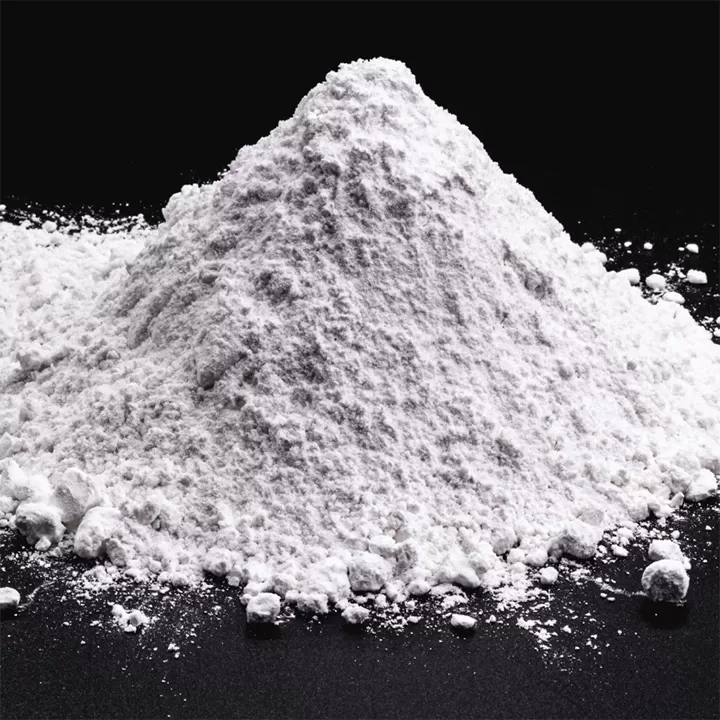
Ground Granulated Blast Furnace Slag (GGBFS) is a latent hydraulic binder, a by-product of iron production with a glassy, silico-aluminous structure. When activated by the alkalis in Portland cement and water, it undergoes a secondary pozzolanic reaction. This reaction consumes the problematic portlandite (calcium hydroxide) to form additional calcium silicate hydrate (C-S-H) – the primary binding phase in concrete. For your home projects, this translates into measurable advantages.
Microstructural Density and Reduced Permeability
The secondary reaction refines the pore structure of the hardened paste. Capillary pores are filled or disconnected, drastically reducing water and chloride ion ingress. A typical 50% GGBFS replacement mix can lower permeability by over 70% compared to a 100% OPC mix. For a domestic driveway, this means deicing salts cannot easily reach reinforcement (even in non-structural slabs, micro-reinforcement or mesh benefits). For a basement floor, it means lower humidity rising through the slab.
Alkali-Silica Reaction (ASR) Mitigation
Many regional aggregates contain reactive silica. ASR causes gel formation and expansion, leading to map cracking over years. GGBFS consumes alkalis (K⁺, Na⁺) and reduces the pH of the pore solution, effectively suppressing ASR. This is critical when using locally sourced gravel or recycled aggregates for concrete at home where aggregate reactivity is often unknown.
Improved Workability and Finishability
Due to its smooth, glassy particle shape, GGBFS acts as a lubricant. At equal water-to-cement ratios, GGBFS blends exhibit higher slump (better flow). This makes placement around rebar, under floor drains, or into formwork for curved garden edges easier. Additionally, the slower setting time (an advantage for hot weather pours) allows more time for proper floating and troweling – essential for achieving a dense, flat, and crack-free surface.
Overcoming Common Obstacles: Practical Solutions for the Home User
Adopting any technical material requires addressing practical concerns. Below are solutions to typical questions regarding GGBFS in a residential setting.
Concern: “Slower setting time delays my project.”
Solution: For cold weather or urgent repairs, use a lower replacement ratio (20-30% GGBFS) or add a non-chloride accelerator. For summer pours (above 25°C), the slower set is beneficial, preventing plastic shrinkage cracks. Plan your pour schedule accordingly.Concern: “I need a lighter final color.”
Solution: GGBFS produces a lighter, more uniform “lime” color compared to the grey-green of OPC. If a darker finish is desired, use integral color pigments designed for slag cements. The uniform matrix also reduces mottling.Concern: “My ready-mix supplier doesn’t offer GGBFS blends.”
Solution: Many suppliers can add GGBFS at the batch plant. Specify the replacement level (e.g., 40% by cementitious weight) and provide a mix design from an expert. Alternatively, use bagged GGBFS from specialized distributors and blend on-site for small batches.
Specification Guide: Blending GGBFS for Key Domestic Applications
To leverage the benefits of concrete at home, follow these technical guidelines for different structures. Always consult a local structural engineer for load-bearing elements.
| Application | Recommended GGBFS Replacement | Key Benefit |
|---|---|---|
| Driveways & Parking Areas | 40 - 50% | High resistance to deicing salts and oil stains |
| Patios & Walkways (Exposed Aggregate) | 25 - 35% | Reduced efflorescence, uniform color, higher wear resistance |
| Foundations & Retaining Walls | 50 - 60% | Lower heat of hydration, sulfate resistance, lower permeability |
| Workshop Floors (Heavy Load) | 40% | Higher ultimate strength, abrasion resistance, densified surface |
Note: Replacement levels are by total cementitious material weight. For example, a 50% replacement means 50kg GGBFS + 50kg OPC per cubic meter of concrete. Always test a mock-up area for color and finish.
The Sustainable Edge: Low Carbon Concrete for Your Home
Producing 1 ton of OPC releases nearly 1 ton of CO₂. GGBFS, as an industrial by-product, has an embodied carbon roughly 95% lower than OPC. By specifying a 50% GGBFS blend for your concrete at home project, you effectively halve the carbon footprint of the binder. For a typical 30m³ driveway foundation, this saves approximately 1.5 tonnes of CO₂ equivalent – matching the carbon sequestration of 60 tree seedlings grown for 10 years. This is a tangible contribution without compromising performance.
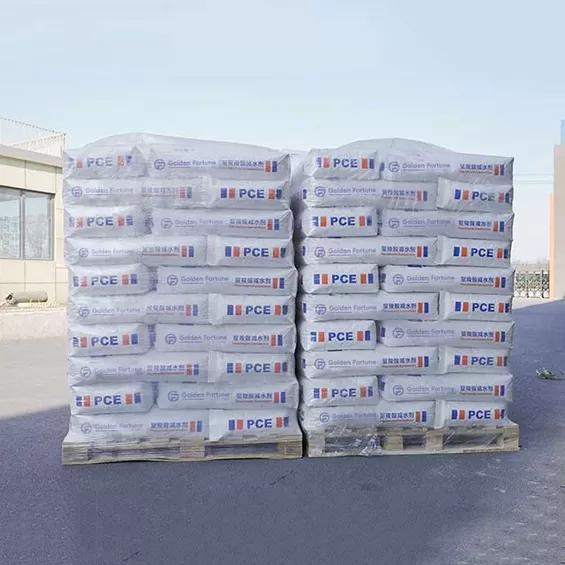
Leading suppliers of high-performance slag cements include Golden Fortune, which provides ultrafine GGBFS products optimized for rapid strength development and superior packing density. Their materials are engineered to achieve the densest microstructure, ensuring that your residential concrete not only performs but exceeds expectations for decades.
Frequently Asked Questions (FAQ) on GGBFS for Home Concrete
Q1: Can I use GGBFS in small, bagged concrete mixes for DIY
repairs?
A1: Yes. For small batches (e.g., repairing steps or fence
posts), you can replace 20-30% of the cement volume with GGBFS. Mix dry
materials thoroughly before adding water. Note that initial strength at 24 hours
will be lower than pure OPC, so avoid heavy loads on the repair for 3-5 days.
For best results, use a fine-grade GGBFS (such as Golden Fortune ultrafine
product) to ensure good dispersion without balling.
Q2: Will GGBFS concrete stain more easily than standard
concrete?
A2: On the contrary. The refined pore structure makes the
surface less absorbent. However, because GGBFS concrete has a lighter, more
uniform initial color, oil or rust stains may appear more visible until cleaned.
Apply a quality penetrating silane-siloxane sealer 28 days after pouring – this
is recommended for all domestic concrete, regardless of binder.
Q3: Do I need special curing procedures for GGBFS-based
concrete?
A3: Yes, curing is more important. The pozzolanic reaction
requires moisture for longer periods (typically 7-10 days minimum for GGBFS
blends vs. 3-5 days for OPC). For exposed slabs, use wet burlap and plastic
sheeting, or a spray-on curing membrane. In hot, windy conditions, start curing
immediately after finishing. Proper curing is the single most important factor
to achieve promised durability.
Q4: Is GGBFS safe to handle for a homeowner mixing their own
concrete?
A4: GGBFS has similar handling requirements to Portland
cement. It is alkaline and can cause skin irritation or burns when wet with
sweat or water. Always wear waterproof gloves, long sleeves, eye protection, and
a P95 respirator when handling dry powder. Wash any skin contact immediately
with pH-neutral soap. Keep out of reach of children and pets during mixing.
Q5: My local ready-mix plant said GGBFS concrete is weaker. Is this
true?
A5: This is a common misconception based on early (3-day)
strength. At 28 days, a 50% GGBFS mix typically equals or exceeds OPC strength.
At 56 days and 90 days, it is substantially stronger. If your plant tests
cylinders at 7 days, they will see lower numbers. Insist on 28-day and 56-day
testing for specification. For structural home elements (foundations, retaining
walls), the long-term strength and durability far outweigh any early strength
trade-off.
Conclusion and Next Steps for Your Project
Moving beyond traditional OPC for concrete at home is not about adopting a niche material – it is about applying industrial materials science to achieve a stronger, cleaner, and longer-lasting result. The evidence is clear: GGBFS reduces cracking, eliminates efflorescence, resists chemical attack, and lowers your carbon footprint. Whether you are a builder, architect, or motivated homeowner, specifying a GGBFS blend is a mark of professional-grade work.
To obtain certified mix designs, technical datasheets, or to locate a supplier of ultrafine GGBFS, please contact our engineering support team. We provide comprehensive assistance for projects of any scale – from a garden path to a complete residential foundation.
For
detailed technical specifications and to order your GGBFS for your next
concrete at home project, please send an inquiry to
our B2B desk.
Click Here to Submit Your Inquiry →