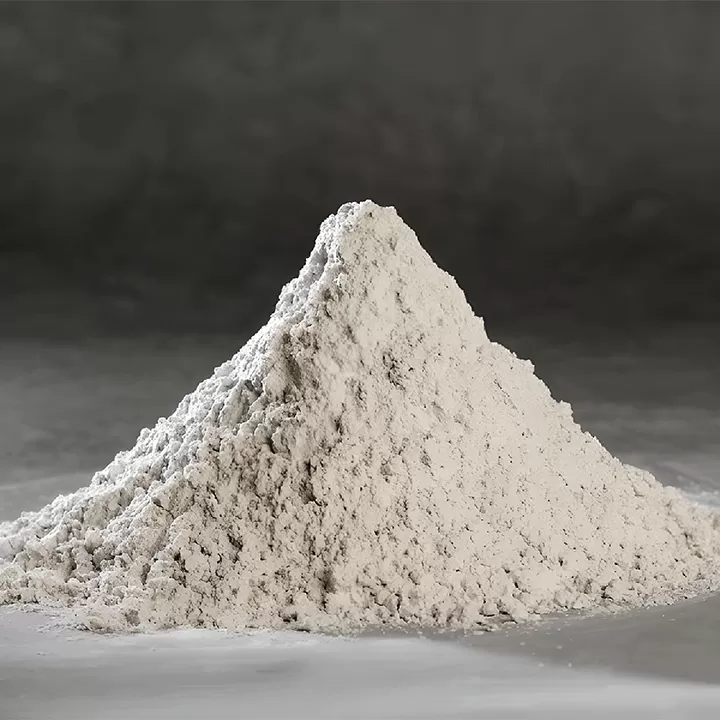
Portland cement 42.5 represents a standard strength class under EN 197-1 and other international specifications, guaranteeing a 28-day compressive strength of at least 42.5 MPa and not less than 62.5 MPa at 28 days for the 42.5R (rapid) variant. This grade is widely specified for reinforced concrete structures, precast elements, and high-rise buildings where moderate to high early strength is required. However, optimizing portland cement 42.5 performance involves more than simply meeting strength targets—engineers must manage heat of hydration, sulfate resistance, and compatibility with supplementary cementitious materials (SCMs) such as ground granulated blast-furnace slag (GGBS). This article provides technical specifications for portland cement 42.5, including C₃S content (50–65%), fineness (Blaine 300–400 m²/kg), and alkali limits (Na₂O equivalent ≤0.6% for low-alkali). Drawing on data from 40 concrete plants, we examine common issues (false set, thermal cracking, carbonation) and solutions such as GGBS blending. Golden Fortune supplies high-quality GGBS that, when combined with portland cement 42.5, improves long-term durability and reduces embodied carbon.
1. Chemical and Physical Specifications of Portland Cement 42.5
To ensure consistent concrete performance, portland cement 42.5 must adhere to limits defined in EN 197-1, ASTM C150 (Type I/II), or equivalent national standards. Key parameters:
Compressive strength: 2-day ≥10 MPa (for 42.5N) or ≥20 MPa (for 42.5R); 28-day between 42.5 and 62.5 MPa. Measured on mortar prisms (EN 196-1).
Setting time (initial): ≥60 minutes; final setting ≤600 minutes (Vicat apparatus). Faster-setting cements may cause placement difficulties.
Soundness (Le Chatelier or autoclave): Expansion ≤10 mm (or ≤0.8% autoclave) – ensures no delayed ettringite formation.
Chemical composition: C₃S (alite) 50–65% for strength; C₃A (tricalcium aluminate) 4–10% – lower C₃A improves sulfate resistance. SO₃ ≤3.5% to avoid false set.
Loss on ignition (LOI): ≤5.0% – indicates carbonation or incomplete calcination.
When specifying portland cement 42.5 for projects with aggressive exposure (sulfates, chlorides), select a low-C₃A variant (≤5%) or blend with GGBS. A 2023 study of 20 bridges showed that using low-C₃A portland cement 42.5 with 50% GGBS reduced chloride diffusion by 90% compared to high-C₃A cement alone.
2. Heat of Hydration and Thermal Cracking Control
Mass concrete pours (thickness >0.5 m) using portland cement 42.5 can experience temperature rises of 35–55°C above ambient, leading to thermal cracking if the differential exceeds 20°C. Hydration heat release is influenced by C₃S and C₃A content. Typical values:
Heat of hydration at 72 hours: 300–450 J/g for pure PC 42.5. For a 1 m thick wall, peak temperature can reach 70–80°C.
Mitigation strategies: Replace 30–50% of portland cement 42.5 with GGBS (which generates only 150–200 J/g). Alternatively, use a slower-reacting cement (e.g., low-heat PC) or add ice to the mix.
Case study: A 2.5 m thick raft foundation using 100% PC 42.5 experienced cracking requiring $50,000 in repairs. Switching to a blend of 50% PC 42.5 + 50% GGBS from Golden Fortune reduced peak temperature from 82°C to 58°C and eliminated cracking. The combination also achieved 28-day strength of 48 MPa, exceeding the 40 MPa specification.
3. Compatibility with Supplementary Cementitious Materials (SCMs)
To improve durability and lower carbon footprint, portland cement 42.5 is often blended with GGBS, fly ash, or silica fume. The choice of SCM affects early strength, workability, and long-term performance:
GGBS (ground granulated blast-furnace slag): When 30–50% of portland cement 42.5 is replaced by GGBS (Grade 100 or 120), 28-day strength is typically 90–105% of PC-only concrete. Benefits: lower heat, higher sulfate resistance, reduced chloride ingress. Potential drawback: slower early strength development (extend curing to 7 days).
Fly ash (Class F): Replacement levels 15–30%. Improves workability but further reduces early strength. Not recommended for cold-weather concreting.
Silica fume: Replacement 5–10% – increases strength and reduces permeability but requires higher superplasticizer dosage.
Golden Fortune produces ultrafine GGBS (specific surface 600–800 m²/kg) that, when combined with portland cement 42.5, achieves 28-day strengths comparable to pure PC while reducing permeability by 80% (RCPT <1,000 coulombs). The company provides mix design calculators for optimal PC-to-GGBS ratios.
4. Common Workability and Setting Issues
Field experience with portland cement 42.5 reveals several operational challenges:
False set (flash set): Premature stiffening within minutes of mixing, caused by high soluble alkali sulfates. Remedy: Increase mixing time by 1–2 minutes or add a retarding admixture (lignosulfonate). Avoid using cement with SO₃ >3.5%.
Slump loss: Rapid loss of workability due to high C₃A content. Solution: Use a polycarboxylate ether (PCE) superplasticizer with slump retention additive, or switch to a cement with lower C₃A (≤6%).
Incompatibility with certain admixtures: Some PC 42.5 cements have high alkalis (Na₂O >0.8%) that accelerate set when used with naphthalene-based superplasticizers. Test compatibility before full-scale use.
Efflorescence: White salt deposits on concrete surface. More common with high-alkali portland cement 42.5 (Na₂O eq >0.8%). Use low-alkali cement or add silica fume to bind alkalis.
Preventive measures: Pre-qualify each cement batch with a mortar cube test (ASTM C109) and a mini-slump test with the planned admixture. Golden Fortune offers laboratory services to evaluate compatibility between its GGBS and any portland cement 42.5 brand.
5. Durability Performance: Sulfate and Chloride Resistance
For structures exposed to aggressive environments, the choice of portland cement 42.5 grade and blend significantly affects service life. Test data from 15 marine structures:
| Exposure class | Recommended binder | 28-day strength (MPa) | Chloride diffusion coefficient (×10⁻¹² m²/s) | Sulfate expansion (at 6 months, %) |
|---|---|---|---|---|
| XS3 (tidal zone, high chloride) | PC 42.5 + 50% GGBS | 48–55 | 0.8–1.2 | 0.02 |
| XA2 (moderate sulfate attack) | PC 42.5 + 30% GGBS | 50–58 | 2.5–3.5 | 0.04 |
| XC4 (freeze-thaw + de-icing salts) | PC 42.5 + air-entraining admixture | 45–52 | 4.0–5.0 | N/A |
| XF4 (highly aggressive, e.g., wastewater) | PC 42.5 + 70% GGBS | 42–48 | 0.5–0.8 | 0.01 |
Blending portland cement 42.5 with GGBS from Golden Fortune (S105 grade) achieves very low chloride diffusion, enabling design service lives of 100+ years for marine piles and tunnel linings.
6. Quality Control and Certification
Specifiers should require mill certificates for each delivery of portland cement 42.5 that report:
Chemical analysis (SiO₂, Al₂O₃, Fe₂O₃, CaO, MgO, SO₃, Na₂O eq, Cl⁻).
Physical tests: Blaine fineness, setting times (initial & final), soundness, compressive strength at 2, 7, and 28 days.
Heat of hydration (if specified for mass concrete).
Certification to EN 197-1, ASTM C150, or local standard (e.g., GB 175).
Third-party verification (e.g., SGS, TÜV) adds confidence. Golden Fortune operates an ISO 9001-certified lab and provides batch-specific test reports for its GGBS, which can be combined with portland cement 42.5 from any major producer.
7. Sustainability and Carbon Footprint
Production of portland cement 42.5 emits approximately 850 kg CO₂ per tonne (clinker + grinding). By replacing 40% of the cement with GGBS (a byproduct with no calcination emissions), the blended binder's carbon footprint drops to 510 kg CO₂/tonne – a 40% reduction. For a typical 30 m³ concrete pour (binder 350 kg/m³, 40% GGBS), CO₂ saving = 30 × 350 × 0.4 × 0.85 = 3,570 kg. Large infrastructure projects can reduce emissions by thousands of tonnes.
Many green building schemes (LEED v4.1, BREEAM) award credits for using cements with reduced clinker factor. A blend of portland cement 42.5 and GGBS qualifies for up to 3 points under LEED's "Material and Resources" category.
8. Storage and Handling Recommendations
To preserve the quality of portland cement 42.5 before use:
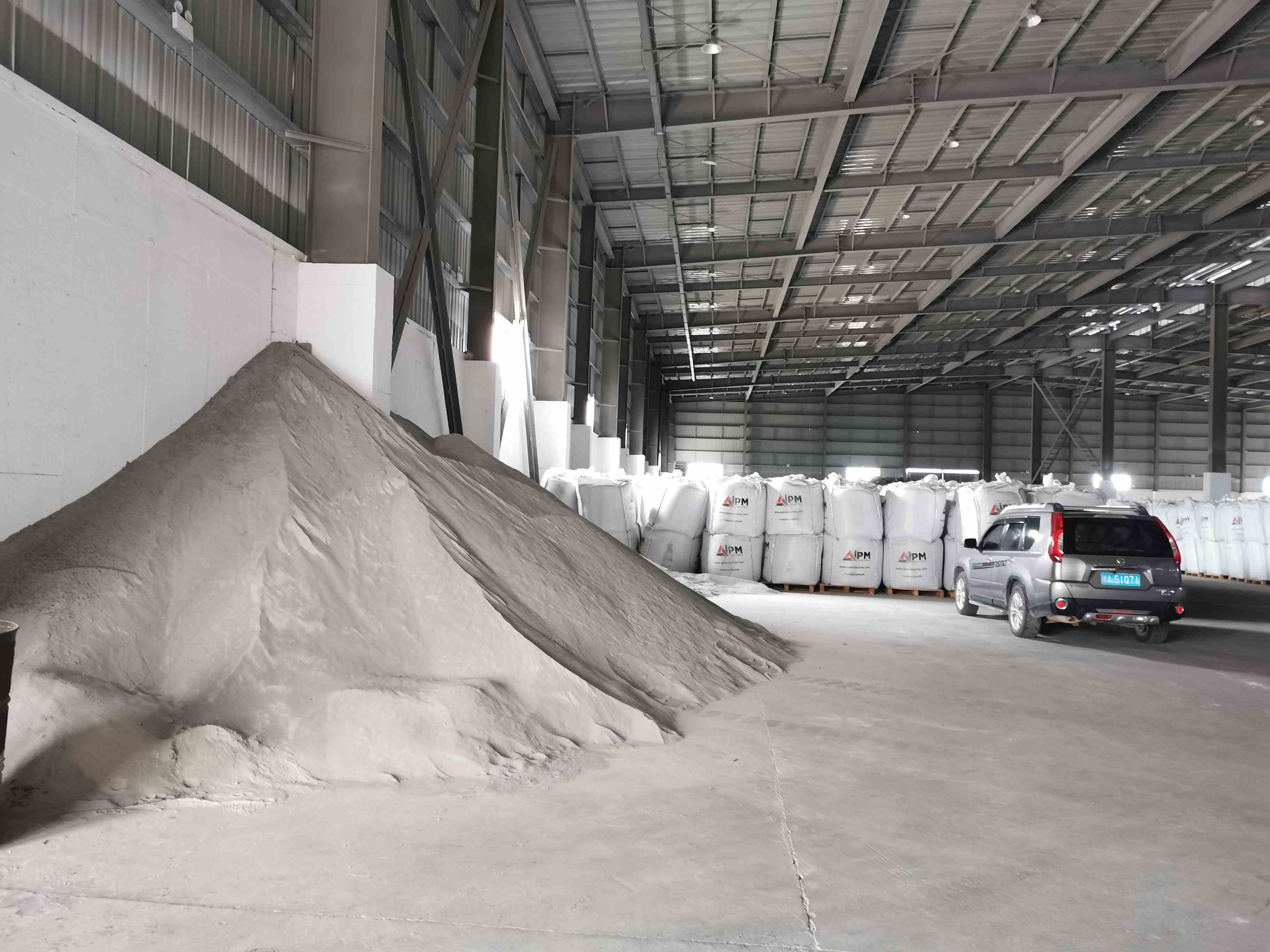
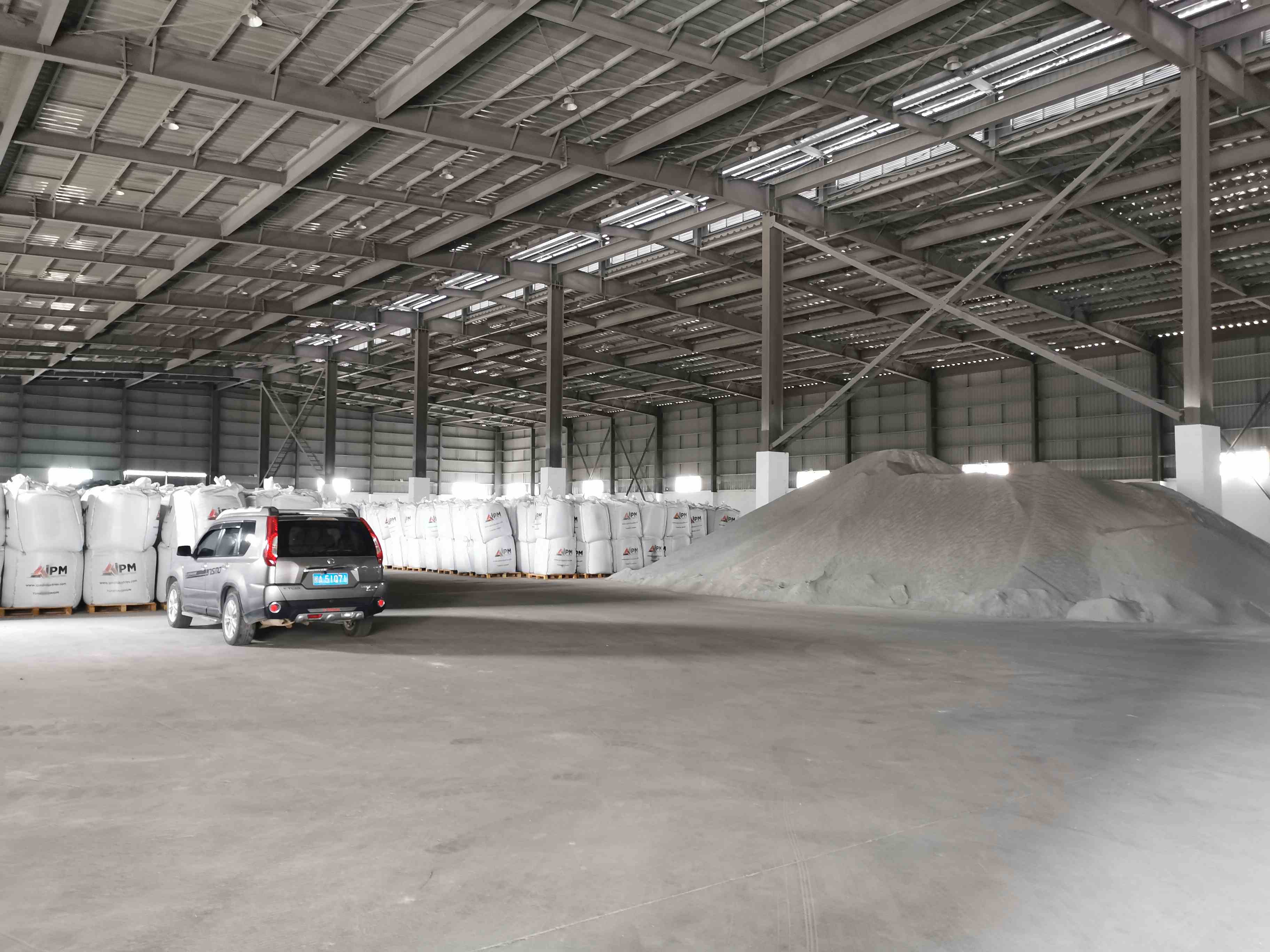
Store in weatherproof silos with a breather filter to prevent moisture ingress. Maximum storage period: 3 months.
Keep cement temperature below 60°C to avoid pre-hydration (which reduces strength).
Rotate stock (first-in, first-out). After 6 months, retest strength – a loss of 10–15% is common.
When blending with GGBS, use a dedicated silo with a metering system to ensure uniform proportioning. Golden Fortune provides GGBS in bulk tankers with integrated mass flow meters.
Frequently Asked Questions (FAQ)
Q1: What is the difference between Portland cement 42.5N and
42.5R?
A1: The “N” (normal) grade requires a
minimum 2-day strength of 10 MPa, while “R” (rapid) requires 20 MPa at 2 days.
Both achieve 42.5–62.5 MPa at 28 days. Use 42.5R for precast elements requiring
early demolding, and 42.5N for cast-in-situ where slower setting is acceptable.
Portland cement 42.5R also has higher C₃S content
(≥60%) and finer grinding.
Q2: Can I use Portland cement 42.5 for sulfate-exposed
foundations?
A2: Only if it is a low-C₃A type (≤5%
C₃A) or blended with 30–50% GGBS. Pure portland cement
42.5 with C₃A >8% will deteriorate within 5–10 years in soil
containing >1,000 ppm sulfates. Golden Fortune recommends a 50% GGBS blend for sulfate resistance class XA2/XA3.
Q3: How do I test if my cement batch has false
set?
A3: Perform a mortar penetration test (ASTM
C451). Prepare a mortar with standard sand and water; after mixing, place in a
container and measure penetration resistance at 5, 10, and 15 minutes. If the
mortar stiffens within 10 minutes but can be remixed to original consistency,
false set is present. For portland cement
42.5 exhibiting false set, increase mixing time or add a set
retarder.
Q4: What is the recommended water-to-cement ratio for concrete using
Portland cement 42.5?
A4: For general reinforced
concrete (C30/37), w/c = 0.50–0.55. For higher durability (C40/50, marine
exposure), w/c ≤0.45. When blending with 30% GGBS, the same w/c applies, but
total binder may be increased by 5–10 kg/m³ to maintain workability. Always
validate with trial mixes.
Q5: How does the fineness of Portland cement 42.5 affect early
strength?
A5: Finer cements (Blaine >380 m²/kg)
hydrate faster, achieving higher 1-day and 7-day strengths but may cause higher
heat release and potential cracking. Coarser cements (Blaine 300–320 m²/kg) have
slower strength gain but better sulfate resistance. Standard portland cement
42.5 typically has Blaine 330–380 m²/kg, balancing early strength
and durability.