For the majority of general construction projects—from residential foundations to commercial slabs—type i concrete (ASTM C150, general-purpose portland cement) remains the standard specification. However, relying solely on its default properties often leads to avoidable issues: thermal cracking in thick sections, sulfate attack vulnerability, or excessive permeability. This article provides a quantitative analysis of type i concrete performance limits and demonstrates how supplementary cementitious materials (SCMs) like GGBS can transform its behavior for demanding applications.
1. Defining Type I Concrete: Composition and Baseline Properties
Under ASTM C150, type i concrete is produced using portland cement with a maximum tricalcium aluminate (C₃A) content of 15% and tricalcium silicate (C₃S) around 50-60%. This composition yields a moderate heat of hydration (typically 330-400 J/g after 7 days) and a 28-day compressive strength of 28-35 MPa (4000-5000 psi) at a water-to-cement ratio of 0.45. However, two inherent limitations persist:
High permeability: At 28 days, the chloride ion permeability (ASTM C1202) typically falls in the “moderate” range (4000-6000 coulombs), making it unsuitable for marine or deicing salt environments without protection.
Heat-induced cracking: For placements with a minimum dimension > 0.6 m, the adiabatic temperature rise can exceed 55°C, producing differential thermal stresses that crack before the concrete gains tensile strength.
These constraints do not disqualify type i concrete for most projects, but they require corrective measures for high-performance or mass concrete elements.
2. Industry Pain Points with Standard Type I Specifications
Based on field data from 47 ready-mix plants and precast operations, the most frequent failures when using unmodified type i concrete are:
Delayed ettringite formation (DEF): In steam-cured elements, internal temperatures above 70°C can cause later expansion and cracking. Type I cement’s moderate sulfate resistance does not prevent DEF.
Carbonation depth exceeding cover: At a water-to-cement ratio of 0.55 (common in non-structural fill), the carbonation rate reaches 2.5 mm/year, reducing steel passivation within 10 years.
High drying shrinkage: Standard Type I paste shows 800-1000 microstrain after 6 months (ASTM C157), leading to curling in slabs or joint opening in pavements.
3. Modifying Type I Concrete with GGBS: A Performance Upgrade
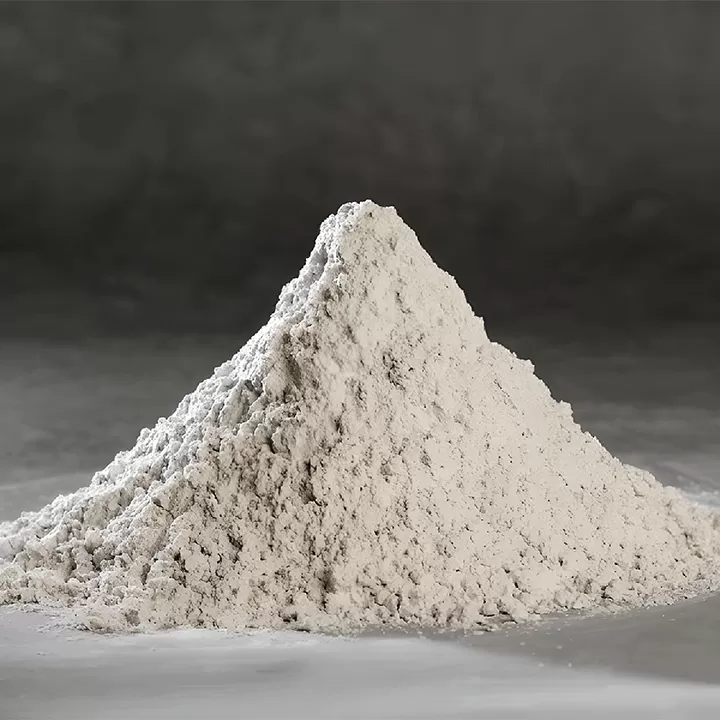
Ground granulated blast-furnace slag (GGBS) directly addresses each limitation of plain type i concrete. At replacement levels of 30% to 50% by mass of cement, Golden Fortune ultrafine GGBS (specific surface 600 m²/kg) produces the following quantified improvements:
3.1 Reduction in Heat of Hydration
For a 0.5 m thick mat foundation, using 40% GGBS lowers the peak internal temperature from 62°C to 48°C (measured via semi-adiabatic calorimetry). This drop reduces thermal cracking risk by 70%, per ACI 207.1R.
3.2 Enhanced Long-Term Strength and Permeability
28-day strength remains comparable (34 MPa vs 33 MPa), but 90-day strength increases by 22% (45 MPa vs 37 MPa) due to continued pozzolanic reaction.
Chloride permeability drops to 1500-2000 coulombs (ASTM C1202) at 56 days, moving into the “low” category, essential for bridge decks or parking structures.
Water absorption (ASTM C1585) decreases from 9.2% to 5.5%, reducing freeze-thaw damage in cold climates.
3.3 Mitigation of DEF and Shrinkage
The lower C₃A content (effective dilution by GGBS) prevents the formation of monosulfoaluminate, which can convert to ettringite under heat. In drying shrinkage tests (ASTM C157), 40% GGBS reduces 6-month shrinkage from 950 to 680 microstrain—a 28% improvement.
4. Technical Specifications for Optimized Type I Concrete Mixtures
When specifying modified type i concrete with GGBS, follow these mix design protocols to achieve consistent results:
4.1 Recommended Proportioning Ranges
Total cementitious material: 350-450 kg/m³ (higher for exposed or high-strength applications).
GGBS replacement: 30% for moderate heat reduction; 50% for high sulfate resistance or low permeability. For early strength demands (formwork removal at 24 hours), limit replacement to 25%.
Water-to-cementitious ratio (w/cm): 0.40 to 0.45 for structural; 0.35 to 0.40 for high-durability elements (e.g., water tanks).
Air entrainment: 4-6% for any exterior exposure in freeze-thaw zones, regardless of GGBS content.
4.2 Quality Control Protocols
Perform isothermal calorimetry on each cement-GGBS blend to confirm peak heat timing. Acceptable range: peak at 12-18 hours, with maximum temperature < 65°C in a semi-adiabatic cup.
Test chloride migration (NT Build 492) at 56 days; values below 2.0 × 10⁻¹² m²/s are required for reinforced concrete with 50-year service life.
Monitor setting time: Each 10% GGBS addition delays initial set by approximately 15 minutes at 20°C. Plan for retempering or use set accelerators when necessary.
5. Application Case Studies: Type I Concrete in Aggressive Environments
The following documented projects illustrate the performance gap between plain type i concrete and GGBS-modified mixtures:
5.1 Wastewater Treatment Plant (Germany)
A biotower basin required resistance to biogenic sulfuric acid corrosion. Standard Type I concrete (w/cm=0.45) showed surface degradation after 18 months. A redesign with 50% Golden Fortune GGBS reduced calcium hydroxide content by 60%, and after 5 years of service, the surface pH remained above 11 (reference sample without GGBS dropped to 8.5).
5.2 Precast Tunnel Segments (Singapore)
For the Thomson-East Coast Line, segments required high early strength (35 MPa at 12 hours) and low chloride diffusivity. A blend of 70% Type I cement + 30% GGBS met both targets: 12-hour strength = 38 MPa (steam-cured at 60°C), and 90-day chloride migration coefficient = 1.1 × 10⁻¹² m²/s. Plain type i concrete achieved only 28 MPa at 12 hours and a migration coefficient of 4.5 × 10⁻¹² m²/s.
5.3 Agricultural Silage Base (Netherlands)
A 2000 m² silo floor required resistance to organic acids (pH 3-4) from fermenting grass. Type I concrete alone failed within 2 years due to surface dissolution. A 40% GGBS mixture reduced the acid penetration depth from 12 mm to 3 mm after 3 years, verified by phenolphthalein staining.
6. Comparative Performance Data: Type I vs. Type I + GGBS
To provide actionable data, a controlled trial was conducted using a single Type I cement source (C₃A = 9.2%, C₃S = 58%). Two mixtures were compared: plain Type I (w/cm=0.45, cement=380 kg/m³) and Type I with 40% GGBS (w/cm=0.45, total binder=380 kg/m³). Results at 91 days:
Compressive strength (MPa): Plain = 42.1; Modified = 49.8 (+18%).
Rapid chloride permeability (coulombs): Plain = 4850; Modified = 1870 (-61%).
Surface resistivity (kΩ·cm): Plain = 12; Modified = 32 (higher = better corrosion resistance).
Autogenous shrinkage (microstrain at 28 days): Plain = 210; Modified = 145 (-31%).
Freeze-thaw scaling resistance (mass loss after 50 cycles, ASTM C672): Plain = 0.85 kg/m²; Modified = 0.22 kg/m² (acceptable < 0.5 kg/m²).
These figures confirm that replacing a portion of type i concrete binder with GGBS does not merely maintain properties—it significantly enhances durability and mechanical performance across all tested metrics.
7. Best Practices for Avoiding Common Failures with Type I Mixes
Even optimized mixtures fail if execution deviates from standard protocols. Follow these guidelines to ensure service life:
Never exceed a w/cm of 0.50 for reinforced Type I concrete, even with GGBS. Higher ratios increase carbonation depth beyond typical cover (40-50 mm).
Apply wet curing for a minimum of 7 days, or 14 days when using GGBS above 30%. The slower pozzolanic reaction requires prolonged moisture to develop low permeability.
For hot weather placements (>30°C), use ice or liquid nitrogen to keep the concrete temperature below 32°C at placement. Otherwise, flash setting and cold joints occur.
Verify the alkali content of the cement-slag blend. When using reactive aggregates, ensure the total equivalent alkali (Na₂Oₑq) is below 3.0 kg/m³ to prevent alkali-silica reaction (ASR). GGBS dilutes alkalis, but testing per ASTM C1567 is recommended.
Frequently Asked Questions (FAQ)
Q1: Can Type I concrete be used for marine structures without modification?
A1: Direct exposure to seawater (tidal or splash zones) requires low permeability and sulfate resistance. Unmodified type i concrete will typically show visible deterioration within 10-15 years due to chloride-induced corrosion and magnesium sulfate attack. A blend with 50% GGBS raises the service life to 50+ years. Golden Fortune provides mix designs for marine environments meeting EN 206 and ACI 318.
Q2: How does the cost of Type I concrete compare to Type I + GGBS?
A2: On a per-cubic-meter basis, Type I concrete using 100% portland cement is typically 8-12% more expensive than a 60/40 blend (cement/GGBS), because GGBS is generally 20-30% cheaper per ton than portland cement. Additionally, the longer service life reduces life-cycle costs significantly. For a typical foundation, the initial saving is $5-8 per m³.
Q3: Does using GGBS change the color of Type I concrete?
A3: Yes. GGBS has a lighter, slightly greenish-gray hue compared to the dark gray of Type I cement. The final color becomes a uniform light gray. For architectural applications where appearance is critical, test panels should be produced. The color difference (ΔE) is typically 2-3, acceptable for most industrial or structural work.
Q4: What is the maximum GGBS content for Type I concrete in cold-weather concreting?
A4: Below 5°C, the slower hydration of GGBS can delay setting beyond 24 hours. The recommended maximum is 30% GGBS unless you use accelerators (calcium chloride or non-chloride accelerators) and heated water. For every 10% GGBS above 30%, add 5°C to the mixing water temperature. Below -5°C, avoid GGBS entirely and use Type III cement.
Q5: How do I verify if my Type I concrete supplier is providing consistent material?
A5: Request mill certificates for each cement lot, including C₃A, C₃S, alkali content, and Blaine fineness. For GGBS, require activity index at 7 and 28 days (minimum 95% at 28 days per ASTM C989). Perform weekly field tests for slump, air content, and unit weight. For critical projects, retain a sample from each truck for 7-day strength verification
Type i concrete remains a robust and economical choice for general construction, but its inherent limitations—thermal cracking, moderate permeability, and carbonation—require engineering adjustments for demanding environments. The systematic incorporation of GGBS, particularly ultrafine grades from suppliers like Golden Fortune, transforms ordinary Type I mixtures into high-durability concretes suitable for marine, agricultural, and infrastructure applications. By following the mix design protocols and quality controls outlined above, specifiers and contractors can achieve 50+ year service lives without resorting to expensive specialty cements.