For specifiers, ready-mix producers, and precast manufacturers, the question is no longer simply about choosing a binder. The deeper technical inquiry is: if cement is the baseline, how can we systematically enhance its long-term performance while cutting the carbon footprint and controlling thermal cracking risks? The answer, proven across millions of cubic metres of infrastructure, lies in the engineered use of Ground Granulated Blast Furnace Slag (GGBS or GGBFS).
This technical analysis explores the material science behind slag-blended systems, addresses real-world placement challenges, and provides a decision framework for maximising value in mass concrete, marine structures, and high-durability applications. All solutions reference proven industry practices and the technical support offered by Golden Fortune, a specialist supplier of ultrafine GGBS materials.
1. The Binder Evolution: Why Engineers Replace a Fraction of Portland Cement
Standard Portland cement (CEM I) produces significant hydration heat and has a well-documented CO₂ burden (approx. 0.85–0.95 t CO₂/t clinker). Introducing GGBS, a latent hydraulic by-product from iron production, alters the reaction kinetics and pore structure. When if cement is partially substituted (typically 30–70% by mass), the following changes occur:
Reduced heat of hydration – peak temperature drops by 15–40 °C, minimising thermal cracking risks in thick sections.
Refined pore structure – secondary pozzolanic reaction consumes calcium hydroxide (CH) to form extra C-S-H gel, lowering permeability to chlorides and sulphates.
Longer-term strength gain – compressive strength at 28 days may be slightly lower, but beyond 90 days, slag mixes frequently exceed pure cement performance.
Alkali-silica reaction (ASR) mitigation – the reduced alkalinity and densified matrix limit ASR expansion.
2. Critical Technical Parameters for B2B Specifiers
2.1 Fineness and Reactivity Index
Not all GGBS performs equally. For high-durability applications, the specific surface area (Blaine) should exceed 400 m²/kg, and the 28-day activity index must be ≥95% relative to the control cement. Golden Fortune supplies ultrafine grades (>600 m²/kg) that accelerate early age reactions, addressing a common concern when using standard slag with lower early strength.
2.2 Setting Time and Workability Adjustments
Increasing the slag proportion slows initial and final set by 30–90 minutes, beneficial for large pours but requiring adjustments in cold weather. Practical solutions include:
Using a combination of ordinary Portland cement (OPC) + GGBS with a set-accelerating admixture (e.g., calcium nitrate or triethanolamine).
Reducing water-to-binder ratio (w/b) to 0.38–0.45 to maintain cohesiveness.
Specifying polycarboxylate ether-based superplasticisers for slump retention beyond 90 minutes.
3. Application-Specific Engineering Solutions
3.1 Mass Concrete Foundations and Dams
Thermal modeling is essential. For a 1.5 m thick raft foundation, replacing 50–65% of cement with GGBS lowers the adiabatic temperature rise from roughly 55 °C to under 35 °C. This eliminates the need for cooling pipes in many cases. When if cement forms only 35–40% of the total binder, the risk of delayed ettringite formation (DEF) is also reduced.
3.2 Marine and Tidal Zone Structures
Chloride ingress is the primary threat to steel reinforcement. Research (including BRE SD1 and EN 206-1) demonstrates that a 50–70% GGBS mix achieves a chloride diffusion coefficient (Dₙₙₛ) below 2 × 10⁻¹² m²/s after 56 days, compared to 8–12 × 10⁻¹² m²/s for pure cement. This extends the service life of harbour walls, jetties, and offshore wind foundations by 30–50 years.
3.3 Precast Segments and High-Performance Concrete (HPC)
For precast yards requiring early demoulding (12–18 hours), a dual strategy is applied:
Use a lower slag content (20–30%) plus a nano-silica or calcium sulfoaluminate booster.
Adopt steam curing (60–70 °C for 6 hours) – this activates the latent hydraulic property of slag, giving 1-day strengths above 35 MPa.
Such hybrid systems are increasingly specified for segmental bridges and tunnel linings where both early strength and long-term durability are demanded.
4. Overcoming the Most Frequent Industry Concerns
4.1 Low Early Strength in Cold Weather
Pain point: At ambient temperatures below 10 °C, the pozzolanic reaction of GGBS slows significantly, leading to delayed set and low 24h strength.
Solution: Combine GGBS with a low dosage (<1.5% by binder mass) of calcium formate or a proprietary accelerator. Additionally, insulating formwork or heated enclosures maintain minimum 10–15 °C for the first 48 hours. Pre-warming the aggregates is also effective.
4.2 Carbonation Depth Risk
Pain point: Some specifiers worry that high-slag mixes (over 60%) show increased carbonation depth under accelerated tests.
Solution: Field data from actual structures (e.g., UK’s M25 motorway viaducts, Danish coastal wind farms) confirm that real-world carbonation is much slower than lab predictions. The reason: in service, the concrete surface typically experiences wet-dry cycles that allow self-healing of micro-cracks. Maintaining a cover of 50–70 mm (instead of 40 mm) provides an additional safety margin. When if cement replacement is ≤50%, carbonation is generally not a limiting factor for design life up to 100 years.
4.3 Efflorescence and Colour Variation
GGBS concrete typically exhibits a lighter, more uniform grey colour – acceptable for most mass concrete but a concern for architectural precast. The solution is to use a surface-applied silane-siloxane sealer or specify a white cement + GGBS + titanium dioxide blend for self-cleaning, aesthetic facades.
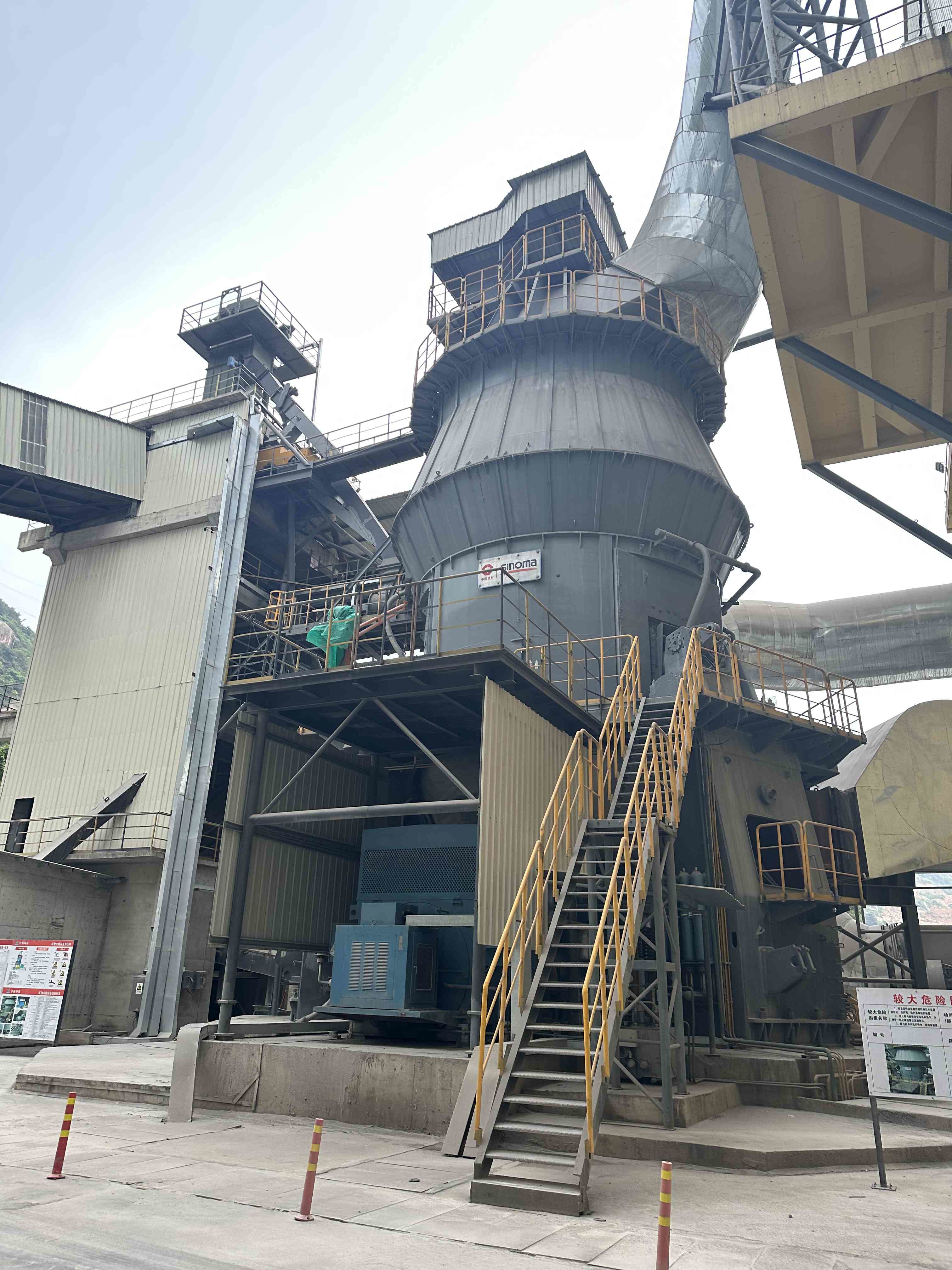
5. Procurement and Quality Assurance Guidelines
For ready-mix producers and contractors, ensuring consistent slag performance requires:
Certification to EN 15167-1 (or ASTM C989) – requesting mill test reports for each batch, verifying glass content >85% and sulphate resistance (S2- ≤0.5%).
Fineness stability – the Blaine value should not vary by more than ±50 m²/kg from the target.
Trial mix validation – perform isothermal calorimetry for 72 hours to confirm the peak heat reduction matches the design.
Third-party verification – core samples taken from mock-up sections after 28, 56 and 90 days for rapid chloride permeability (RCPT) and mercury intrusion porosimetry (MIP).
Specialist suppliers like Golden Fortune provide mill certificates and can assist with optimising the binder system for each project environment.
6. Frequently Asked Questions (FAQs)
Q1: What is the maximum replacement level of Portland cement with GGBS while still achieving a 50-year design life?
A1: For general reinforced concrete exposed to carbonation (XC3/XC4), up to 50% replacement is safe without extra cover. For marine immersion zones (XS2/XS3), 50–70% slag is preferred to combat chlorides. In mass concrete where thermal control is the priority, 70% GGBS has been successfully used (e.g., for wind turbine gravity bases). However, above 60% replacement, you must verify early-age strength and carbonation resistance with project-specific trials.
Q2: How does GGBS affect the sulphate resistance of concrete compared to sulphate-resisting Portland cement (SRPC)?
A2: For moderate to severe sulphate exposure (DS2 – DS4), a blend of 50–60% GGBS with ordinary Portland cement performs better than SRPC (CEM I 42.5N SR). The reason is the reduced C₃A content in the total binder (below 3%) and the pore refinement. Many codes (including BS 8500-1) allow the use of GGBS blends up to 65% for sulphate-resisting concrete without requiring SRPC.
Q3: When if cement is replaced with 40% GGBS, how should the mix design change to maintain the same 28-day strength class (e.g., C32/40)?
A3: To compensate for the slower strength gain of GGBS at 28 days, you have three options: (i) lower the w/b ratio from 0.55 to 0.48–0.50; (ii) increase total binder content by 5–10% (e.g., from 350 to 370 kg/m³); (iii) use a finer GGBS (Blaine >550 m²/kg). Often a combination of (i) and (ii) is the most economical. Admixture adjustment (higher superplasticiser dosage) may be needed to maintain workability.
Q4: Is GGBS concrete more susceptible to freeze-thaw damage in de-icing salt environments?
A4: No – provided the concrete is properly air-entrained (4–6% air volume). GGBS blends (30–50%) have comparable or better freeze-thaw scaling resistance than pure cement concrete, because the denser paste matrix reduces water absorption. However, it is critical to air-entrain the concrete: slag can increase the water demand for a given slump, which may reduce air content if not adjusted. Always measure air content at the point of discharge.
Q5: How can we verify the quality and origin of GGBS delivered to site?
A5: Request a Certificate of Analysis (CoA) for each tanker shipment. Key parameters to check: glass content (≥85% by XRD or optical microscopy), Blaine fineness (target ±10%), insoluble residue (<1.5%), and moisture content (<0.5%). For high-reliability projects, also conduct an EN 15167-1 conformity test on a composite sample taken from the first delivery. Reputable suppliers such as Golden Fortune provide full traceability from source to site.
7. Final Recommendation for B2B Buyers
When evaluating a switch to slag-blended concrete, start with a small-scale trial on a non-critical structural element. Monitor:
Temperature rise via embedded thermocouples.
Slump loss over 60 and 120 minutes.
Compressive strength at 7, 28 and 90 days.
Rapid chloride permeability test (ASTM C1202) at 56 days.
Once validated, scale up with confidence. The technical and environmental benefits – lower heat, higher durability, and reduced CO₂ – directly translate into lower whole-life risk for your client.
Ready to optimise your next concrete specification? Contact our technical team for mix design assistance, trial support, and access to ultrafine GGBS samples.
*For high-volume projects, Golden Fortune offers bulk vessel and truck deliveries with full mill certification.