In modern construction and infrastructure rehabilitation, the demand for high‑integrity grout cementitious systems has never been greater. Whether for precision equipment alignment, post‑tensioning ducts, or wind turbine foundations, the performance of cementitious grout directly influences long‑term safety and maintenance costs. This article explores the technical nuances of grout cementitious materials, the pivotal role of ground granulated blast furnace slag (GGBS), and how Golden Fortune delivers engineered solutions that meet the most demanding specifications.
1. Understanding Grout Cementitious: Composition and Key Functions
Cementitious grout is a tailored mixture of hydraulic binder, fine aggregates, and chemical admixtures designed to fill voids, bond elements, and transfer stresses. Unlike ordinary mortar, high‑performance grout cementitious formulations must exhibit controlled expansion, high early strength, and long‑term stability in confined spaces. The primary constituents include:
Binder system: Portland cement combined with supplementary materials such as GGBS, silica fume, or fly ash.
Aggregate: Well‑graded silica sand with controlled particle size to minimise bleeding.
Admixtures: Superplasticisers for flowability, shrinkage compensators (e.g., expansive agents), and set modifiers.
The rheological behaviour of fresh grout must ensure complete void filling without segregation, while hardened properties require low permeability and mechanical compatibility with the substrate. This is where the selection of the binder plays a decisive role.
2. Enhancing Grout Cementitious with GGBS: Mechanisms and Benefits
Ground granulated blast furnace slag (GGBS), a by‑product of iron manufacturing, is a vitreous material with latent hydraulic properties. When used in grout cementitious blends, typically at 30–60% replacement of Portland cement, it reacts with calcium hydroxide released during cement hydration to form additional calcium silicate hydrates (C‑S‑H). This pozzolanic and hydraulic reaction refines the pore structure and delivers several quantifiable advantages:
2.1 Reduced Heat of Hydration
Mass concrete or deep grout placements suffer from thermal cracking. GGBS significantly lowers the heat evolution rate. For example, a 50% GGBS blend can reduce the peak temperature by 10–15°C compared to pure cement, mitigating the risk of early‑age thermal stress.
2.2 Enhanced Durability in Aggressive Environments
The denser microstructure lowers chloride ion diffusivity and resists sulphate attack. Tests per ASTM C1202 show that GGBS‑based grouts exhibit “very low” chloride permeability (< 1000 coulombs) after 28 days. This is critical for marine structures and chemical exposure.
2.3 Long‑Term Strength Gain
While early strength may develop slightly slower, the 28‑day and 90‑day strengths often exceed those of plain cement grout. The continuous formation of C‑S‑H ensures a more homogeneous matrix, improving bond strength to steel and concrete.
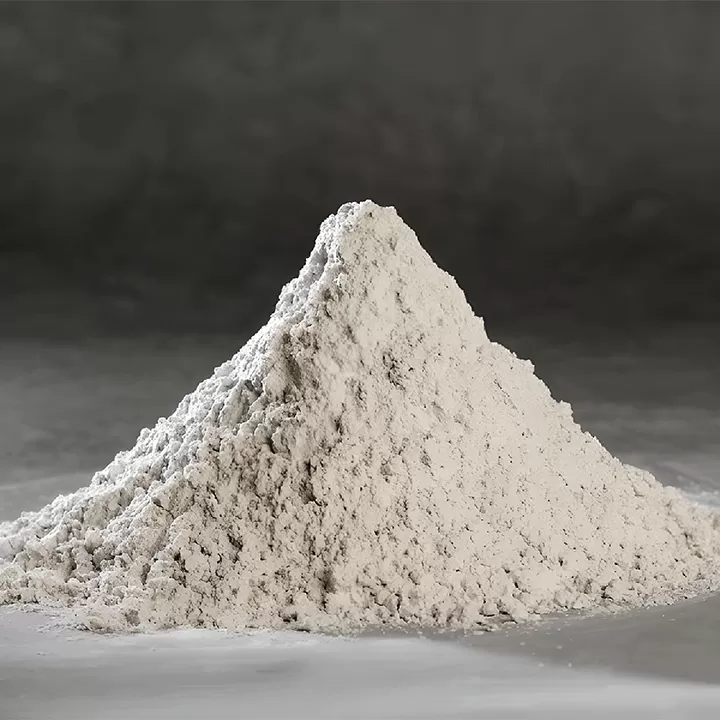
Golden Fortune supplies ultrafine GGBS (specific surface area >800 m²/kg) that optimises particle packing in grout cementitious systems, achieving superior flow and strength even at high replacement levels.
3. Critical Applications for High‑Performance Cementitious Grout
Engineered grout cementitious materials are specified in a wide range of infrastructure and industrial projects. Below are four domains where GGBS‑enhanced grout provides measurable benefits.
3.1 Precision Machinery and Heavy Equipment Grouting
Compressor rails, turbine generators, and rolling mills require grout that can withstand dynamic loads and maintain alignment. Non‑shrink properties and high elastic modulus are essential. GGBS contributes to a denser matrix that resists oil and water ingress, preventing degradation over decades.
3.2 Bridge Bearing and Expansion Joint Grouting
Bridge bearings transfer enormous vertical and horizontal forces. The grout must exhibit high compressive strength (≥ 70 MPa at 28 days) and excellent fatigue resistance. GGBS‑based grouts have proven track records in accelerated bridge construction (ABC) projects due to their reduced permeability and improved freeze‑thaw resistance.
3.3 Post‑Tensioning Duct and Tendon Grouting
In pre‑stressed concrete, grout fills the ducts to protect tendons from corrosion. Specifications (e.g., PTI M55) demand high fluidity, no bleeding, and volume stability. Ultrafine GGBS acts as a microfiller, reducing bleed channels and ensuring complete encapsulation. The low chloride content of GGBS further safeguards against stress corrosion cracking.
3.4 Wind Turbine Foundation Grouting
Onshore and offshore wind turbines impose cyclic loads on foundations. The connection between tower flange and foundation is often a highly stressed grouted joint. Here, a ductile yet strong grout cementitious with high fatigue life is mandatory. GGBS blends improve the matrix toughness and reduce heat generation during the large‑volume pours typical of offshore monopiles.
4. Solving Industry Pain Points: Technical Challenges and GGBS‑Based Solutions
Despite the widespread use of cementitious grout, several recurring problems lead to premature failure. Below we analyse these challenges and how modern formulations address them.
4.1 Shrinkage and Cracking
Plastic and drying shrinkage can cause loss of contact with the base plate. Expansive admixtures combined with GGBS help maintain slight positive expansion. The finer pore structure of GGBS grout also reduces drying shrinkage by limiting moisture movement. ASTM C1107 requires a restrained expansion of 0.0–0.4%; GGBS blends consistently meet this with a combination of shrinkage‑compensating additives.
4.2 Inadequate Flow and Placement Issues
Complex formworks or narrow gaps demand highly flowable grout (flow cone time ≤ 30 seconds). Superplasticisers work synergistically with the spherical particles of GGBS, improving lubricity and reducing water demand. The result is self‑levelling grout that fills every crevice without vibration.
4.3 Thermal Cracking in Thick Sections
For sections exceeding 300 mm, temperature rise becomes critical. By substituting cement with GGBS, the total heat release is delayed and reduced. Finite element modelling shows that a 50% GGBS blend can cut the maximum temperature by 12°C, bringing it below the common threshold for thermal cracking (20°C differential).
4.4 Vulnerability to Chemical Attack
Industrial floors and sewage structures are exposed to sulphates and acids. GGBS consumes calcium hydroxide, the phase most susceptible to sulphate attack. After 6 months of immersion in 5% sodium sulphate solution, GGBS grout retains >90% of its original strength, while plain cement grout often deteriorates rapidly.
Golden Fortune provides tailored GGBS grades and technical support to help engineers design grout mixes that overcome these challenges, backed by mill certificates and third‑party test reports.
5. Performance Specifications and Quality Metrics
To ensure reliability, grout cementitious materials must comply with recognised standards. The table below illustrates typical performance targets for a high‑flow, non‑shrink grout containing 40% GGBS, tested per ASTM and EN methods.
| Property | Test Method | Typical Value (GGBS blend) |
|---|---|---|
| Flowability (initial) | ASTM C230 / flow cone | 30 ± 2 seconds |
| Compressive strength (1 day) | ASTM C109 | 22 MPa |
| Compressive strength (28 days) | ASTM C109 | 75 MPa |
| Restrained expansion (28 days) | ASTM C1090 | 0.12% |
| Chloride permeability | ASTM C1202 | 850 coulombs |
| Sulphate resistance (expansion) | ASTM C1012 | 0.03% @ 6 months |
The data confirm that a well‑proportioned grout cementitious incorporating GGBS meets or exceeds the requirements for critical applications. Golden Fortune regularly publishes such data for its clients, ensuring full traceability.
6. Partnering with Golden Fortune for Technical Excellence
With decades of experience in ultrafine GGBS production, Golden Fortune supports engineers, ready‑mix producers, and pre‑cast plants in optimising their grout cementitious formulations. Our offering includes:
Ultrafine GGBS with consistent fineness (≥800 m²/kg) and chemical composition.
Customised logistics for bulk tankers or big bags worldwide.
Technical mix design assistance, including laboratory trials and on‑site support.
Documentation for green building certifications (LEED, BREEAM) due to the low carbon footprint of GGBS.
Whether you require a standard non‑shrink grout or a specialised formulation for extreme temperatures or chemical resistance, our team delivers data‑backed solutions that stand the test of time.
Frequently Asked Questions (FAQ)
Q1: What is the difference between grout cementitious and standard cement mortar?
A1: Standard mortar is primarily used for masonry bedding and has higher water content, often leading to shrinkage. Grout cementitious is specifically designed for void filling and load transfer, with controlled expansion, superior flow, and higher early strength. It typically contains finer aggregates and specialised admixtures to ensure complete contact with the substrate.
Q2: Can GGBS be used in all types of cementitious grout?
A2: Yes, GGBS is compatible with most Portland cement types and can be incorporated into both field‑mixed and pre‑packaged grouts. However, the dosage must be optimised based on ambient temperature, strength requirements, and setting time. GGBS slightly retards setting, which can be advantageous in hot weather. Golden Fortune provides mix adjustment guidelines for different applications.
Q3: How does GGBS improve the durability of grout in marine environments?
A3: GGBS refines the pore structure and reduces the permeability to chlorides and sulphates. It also binds alkalis and reduces the risk of alkali‑silica reaction. In marine exposure, GGBS‑based grout cementitious shows significantly lower corrosion rates of embedded steel, extending service life by decades.
Q4: What are typical replacement levels of GGBS in high‑performance grout?
A4: Replacement levels vary from 30% to 70% by mass of cement. For most structural grouts requiring a balance between early strength and durability, 40–50% GGBS is common. For massive pours where thermal control is critical, levels up to 70% can be used with appropriate accelerators. Trial mixes should always verify performance against project specifications.
Q5: Is GGBS grout suitable for cold‑weather grouting?
A5: Yes, but precautions are needed because the hydration of GGBS is temperature‑sensitive. At temperatures below 10°C, early strength development may be slower. Using warm mixing water, insulating formwork, or incorporating a non‑chloride accelerator can mitigate this. Golden Fortune offers technical datasheets with cold‑weather recommendations for its GGBS products.
Q6: How does the cost of GGBS‑based grout compare to pure cement grout?
A6: Although GGBS itself is often cost‑effective compared to cement, the overall mix cost depends on logistics and admixture usage. More importantly, the extended durability and reduced maintenance provide a superior life‑cycle cost. For critical infrastructure, the initial investment in a high‑quality grout cementitious with GGBS pays back many times over through extended service intervals.
Q7: What standards apply to GGBS‑enhanced cementitious grout?
A7: Common standards include ASTM C1107 (packaged dry, hydraulic‑cement grout), EN 1504‑6 (grouting for anchoring), and PTI M55 for post‑tensioning. GGBS itself complies with ASTM C989 or EN 15167. Our Golden Fortune products are certified accordingly, and we can provide test reports for specific project requirements.
For further technical data or to discuss your next project with our specialists, visit www.ultrafineggbs.com and explore how grout cementitious engineered with ultrafine GGBS can set new benchmarks in performance and sustainability.