Modern construction relies on a sophisticated understanding of cement and additives to achieve specific performance characteristics that ordinary portland cement alone cannot provide. The interaction between the base binder and carefully selected chemical or mineral components determines the workability, strength evolution, durability, and even the color of the final concrete. For specifiers and concrete producers, mastering this complex relationship is essential for delivering high-performance structures in an increasingly demanding market. This deep dive explores the technical nuances of cement and additives, from fundamental mechanisms to advanced application strategies. As a leader in supplementary cementitious materials, Golden Fortune provides the expertise and high-quality inputs necessary to navigate this complex landscape.
1. Classifying Cement Additives: Chemical Admixtures vs. Mineral Additions
The term cement and additives encompasses two fundamentally different categories of materials, each playing a distinct role in concrete technology. Chemical admixtures are typically liquids added during mixing to modify fresh or hardened concrete properties. Mineral additions, often called supplementary cementitious materials (SCMs), are fine solids that participate in the hydration reactions and contribute to the microstructure of the hardened paste. Understanding the distinction and synergy between these two classes is the foundation of advanced mix design.
1.1 Chemical Admixtures: Modifying Fresh and Hardened Properties
Chemical admixtures are formulated to achieve targeted effects with small dosages, typically ranging from 0.2% to 5% by mass of cement. Their mechanisms are based on surface chemistry and early-age hydration control.
Plasticizers and Superplasticizers (High-Range Water Reducers): These are perhaps the most widely used admixtures. They work by adsorbing onto cement particles and imparting a negative charge, causing electrostatic repulsion (steric hindrance for polycarboxylate ethers). This disperses the particles, reducing water demand by 15-30% without losing workability, or dramatically increasing slump without adding water. The result is higher strength and lower permeability concrete.
Set Controllers (Retarders and Accelerators): Retarders, often based on sugars or hydroxycarboxylic acids, delay the initial hydration of C3S and C3A, extending workability time in hot weather or for large pours. Accelerators, such as calcium chloride (non-corrosive alternatives like calcium nitrate are preferred for reinforced concrete), speed up early strength gain, critical for cold-weather concreting and rapid formwork turnover in precast operations.
Air-Entraining Agents: These surfactants create a stable system of microscopic air bubbles in the concrete matrix. This intentionally entrained air (typically 4-8% by volume) provides crucial resistance to freeze-thaw cycles by giving expanding water room to migrate, preventing internal cracking.
Specialty Admixtures: This category includes corrosion inhibitors (to protect reinforcing steel), shrinkage reducers (to mitigate drying shrinkage cracking), permeability reducers (hydrophobic or crystalline materials), and viscosity-modifying agents (for underwater concrete or self-consolidating concrete).
1.2 Mineral Additions (SCMs): Enhancing Microstructure and Sustainability
Mineral additions are finely divided materials that are added in larger quantities, often replacing 15% to 70% of the portland cement. They contribute to strength and durability through hydraulic or pozzolanic reactions.
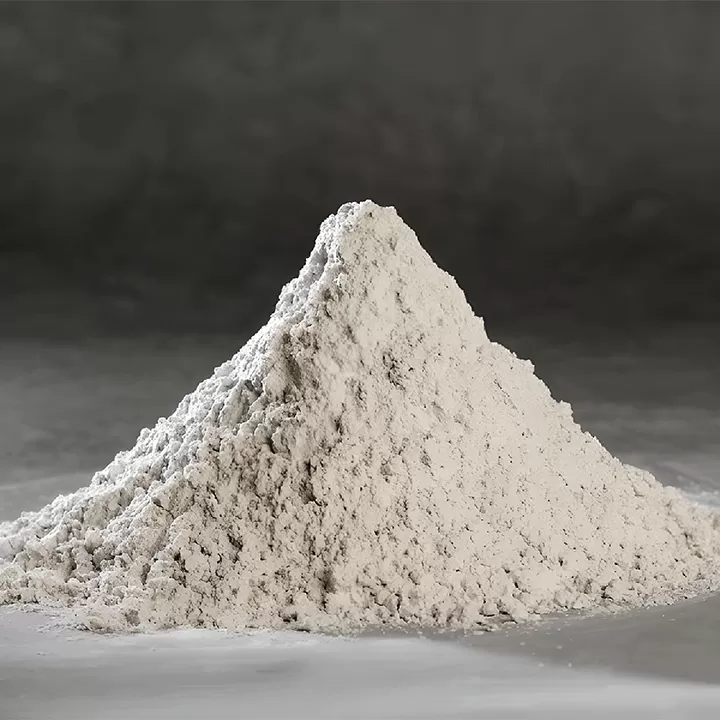
Ground Granulated Blast Furnace Slag (GGBFS): A byproduct of iron production, GGBFS is a latent hydraulic material. When activated by the alkalis and calcium hydroxide from cement hydration, it reacts to form additional calcium silicate hydrates (C-S-H), the primary strength-giving phase. This leads to denser microstructure, improved long-term strength, enhanced sulfate resistance, and lower heat of hydration. Golden Fortune specializes in providing high-quality GGBFS that meets stringent particle size and reactivity specifications.
Fly Ash: A pozzolanic byproduct from coal-fired power plants, fly ash reacts with calcium hydroxide to form additional C-S-H. It improves workability due to its spherical particle shape, reduces heat generation, and enhances long-term durability against sulfate attack and ASR. Quality and color can vary significantly based on the source coal.
Silica Fume: An extremely fine byproduct of silicon metal production, silica fume is a highly reactive pozzolan. Its particles are 100 times smaller than cement grains, allowing it to fill microscopic voids (particle packing) and react rapidly. It is essential for producing high-strength and ultra-high-performance concrete (UHPC) and for applications requiring extremely low permeability, such as bridge decks and chemical containment floors.
Natural Pozzolans and Calcined Clays: Materials like metakaolin (calcined kaolin clay) and volcanic ashes are gaining traction as sustainable SCMs. They offer good pozzolanic reactivity and can contribute to strength and durability while reducing the carbon footprint of the concrete.
2. The Synergistic Relationship: Optimizing the Ternary Blend
The real power of modern concrete technology lies in the intelligent combination of cement and additives to create ternary or quaternary blends. For instance, a mix containing portland cement, GGBFS, and silica fume can be optimized for multiple performance targets. The portland cement provides early hydration and alkalinity. The GGBFS contributes to long-term strength and sulfate resistance while lowering the heat of hydration. The silica fume fills interstitial spaces and provides extremely high early strength and impermeability. When combined with a polycarboxylate-based superplasticizer, such a blend can achieve compressive strengths exceeding 100 MPa with exceptional durability.
This synergistic approach also addresses sustainability goals. By replacing a significant portion of high-CO₂ clinker with industrial byproducts like GGBFS or fly ash, the embodied carbon of the concrete can be reduced by 30-70%. This is a critical consideration for projects seeking green building certifications like LEED or BREEAM. Golden Fortune supports these efforts by supplying consistent, high-purity GGBFS that enables reliable, low-carbon concrete production.
3. Industry Challenges and Technical Solutions in Additive Use
While the benefits are substantial, the use of cement and additives introduces complexities that must be managed through rigorous testing and quality control.
Incompatibility Between Cement and Admixtures: Not all cements react identically with a given superplasticizer. Variations in C3A content, sulfate form, or alkali content can lead to issues like rapid slump loss, unexpected retardation, or poor air entrainment. The solution requires conducting comprehensive paste and concrete trials (marsh cone tests, mini-slump tests) before full-scale production to verify compatibility.
Variability in Mineral Addition Quality: The chemical and physical properties of industrial byproducts like fly ash can fluctuate as the source power plant's feed coal changes. This can affect water demand, set time, and color. Using a supplier with stringent quality control, such as Golden Fortune for GGBFS, which processes material to consistent fineness and chemical composition, mitigates this risk.
Managing Air Content with SCMs: The carbon content (loss on ignition) in fly ash can adsorb air-entraining admixtures, making it difficult to achieve and maintain a stable air void system. Adjusting the admixture dosage or switching to a low-LOI fly ash or a different SCM like GGBFS, which does not have this issue, are common corrective actions.
Dispersion of Silica Fume: Due to its extreme fineness, silica fume requires careful handling and a high dosage of superplasticizer to disperse properly and avoid agglomeration. It is often supplied in a densified form or as a slurry to facilitate handling and mixing.
4. Future Trends in Cement and Additives Technology
The field of cement and additives is continuously evolving, driven by the need for decarbonization and enhanced material performance. Key trends include the development of novel SCMs from other industrial wastes (e.g., copper slag, steel slag fines), the use of nanotechnology (nano-silica, nano-titania) for superior properties, and the rise of digital admixture systems that precisely control concrete properties in real-time during batching. Furthermore, the push towards circular economy principles is leading to the formulation of cements with significantly lower clinker factors, where the combined use of high-quality SCMs and advanced chemical admixtures allows for cement replacement levels of 50% or more without compromising performance.
5. Guidelines for Selecting and Specifying Cement and Additives
Making informed choices about cement and additives requires a structured approach. Begin by defining the performance requirements of the concrete in both its fresh and hardened states. Consider environmental exposure classes (e.g., XF for freeze-thaw, XA for chemical attack) as defined in standards like EN 206 or ACI 318. These classes will dictate the necessary durability characteristics, such as low permeability or high sulfate resistance, which directly influence the choice of SCM and w/c ratio. Next, evaluate the local availability and cost of different SCMs. Finally, conduct trial mixes with the specific combination of cement, SCM, chemical admixtures, and aggregates to verify performance. Engage with suppliers early in the process to leverage their technical expertise. A reliable partner like Golden Fortune can provide not only the material but also data sheets and technical guidance to support optimal mix design.
Frequently Asked Questions (FAQ)
Q1: What is the difference between an admixture and an additive in
concrete?
A1: In concrete terminology, an admixture typically refers
to a chemical product added to the concrete mix, usually in small quantities, to
modify its properties (e.g., superplasticizers, retarders). An additive often
refers to a mineral material added in larger quantities, such as GGBFS, fly ash,
or silica fume, which functions as a part of the cementitious system. Both fall
under the broad umbrella of cement and additives.
Q2: How do GGBFS and fly ash differ in their effect on
concrete?
A2: While both are SCMs that improve durability and reduce
heat, they work differently. GGBFS is a latent hydraulic material that reacts
with water and alkalis to form its own binders, often leading to lighter colored
concrete and superior resistance to sulfates and chlorides. Fly ash is a
pozzolan that requires calcium hydroxide from cement hydration to react; it
typically improves workability more significantly but may result in slower early
strength gain.
Q3: Can using too many additives negatively affect
concrete?
A3: Yes, improper selection or dosage can be detrimental.
For example, excessive superplasticizer can cause severe segregation or
excessive retardation. Too high a replacement level with some SCMs can lead to
unacceptably slow early strength development or increased risk of carbonation.
All combinations must be properly proportioned and tested.
Q4: Are cement and additives important for reducing the carbon
footprint of concrete?
A4: They are absolutely critical. The primary
way to reduce the CO₂ emissions of concrete is to replace a portion of the
portland cement (clinker) with low-carbon SCMs like GGBFS. Using a blend of
cement and additives can reduce the carbon footprint of the concrete by 30% to
50% or more while often improving long-term durability.
Q5: How should cement and additives be stored on a job
site?
A5: Cement and powdered SCMs must be stored in weather-tight
silos or buildings to protect them from moisture, which can cause hydration and
caking. Chemical admixtures should be stored according to manufacturer
guidelines, typically in a sheltered area protected from freezing and extreme
temperatures, and should be agitated periodically if they are suspensions.
Q6: How does Golden Fortune ensure the quality of its GGBFS for use
in cement and additive blends?
A6: Golden Fortune employs a strict
quality assurance protocol. This includes sourcing from selected steel mills,
using magnetic separation to remove metallic iron, and grinding to a controlled,
high fineness (typically >400 m²/kg). Every batch is tested for chemical
composition (ensuring low LOI and consistent glass content), physical properties
(specific surface area, particle size distribution), and reactivity (strength
activity index) to ensure consistent, predictable performance in concrete.
In conclusion, the sophisticated use of cement and additives is the cornerstone of modern, high-performance, and sustainable concrete. By understanding the distinct roles and interactions of chemical admixtures and mineral additions, and by partnering with experienced suppliers like Golden Fortune, construction professionals can overcome technical challenges and deliver structures that meet the highest standards of strength, durability, and environmental responsibility.