For decades, ground calcium carbonate (GCC) was perceived merely as an inert filler in construction materials—a low-cost extender with negligible influence on engineering performance. This outdated view has been systematically overturned by advances in cement chemistry, particle packing theory, and the urgent need to reduce the clinker factor in concrete. Today, ground calcium carbonate is recognized as a critical component in high-performance, low-carbon binder systems, capable of accelerating hydration, refining pore structure, and enabling unprecedented levels of clinker substitution when combined with supplementary cementitious materials (SCMs) such as GGBFS and fly ash.
This article provides a data-driven, expert-level examination of ground calcium carbonate’s role in modern concrete technology. We will explore its mineralogical fundamentals, its mechanistic effects on Portland cement hydration, its synergy with SCMs, and the quantifiable durability benefits observed in field applications. For engineers, specifiers, and ready-mix producers, understanding these principles is essential to designing resilient, sustainable infrastructure that meets both performance targets and carbon reduction mandates.
1. Mineralogical and Physical Fundamentals of Ground Calcium Carbonate
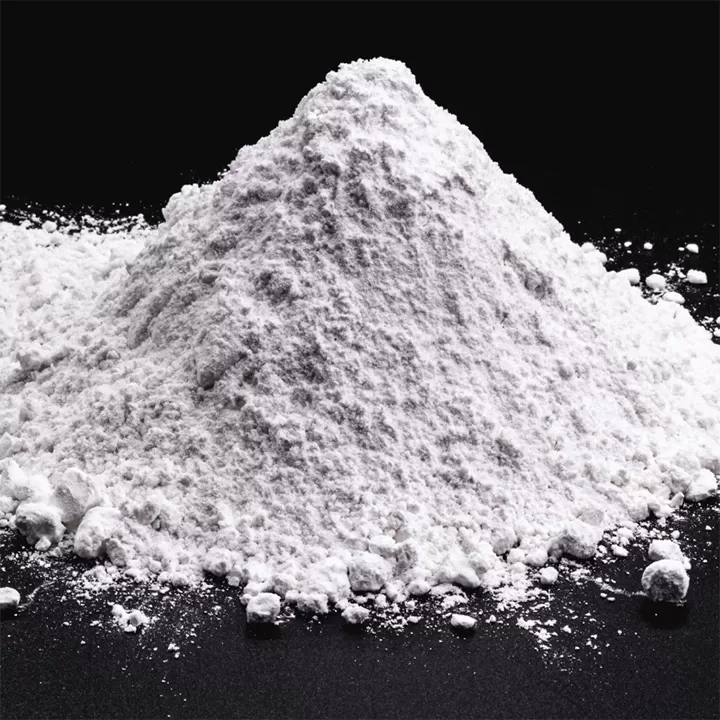
Before assessing its performance, it is critical to define what constitutes high-quality ground calcium carbonate for construction applications. GCC is produced by mechanically grinding naturally occurring limestone (calcite) to a controlled particle size distribution (PSD). Unlike precipitated calcium carbonate (PCC), which is chemically synthesized, GCC retains the crystallographic purity of its source rock, typically containing >95% CaCO₃ with minor impurities such as MgCO₃, SiO₂, or clay minerals.
1.1 Particle Size Distribution and Specific Surface Area
The physical characteristics of ground calcium carbonate—specifically its fineness and PSD—directly dictate its behavior in cementitious systems. Standard GCC used as a filler often has a Blaine fineness of 300–500 m²/kg, comparable to ordinary Portland cement (OPC). However, ultrafine grades (d₉₀ < 5 µm) with specific surface areas exceeding 800 m²/kg are increasingly employed to maximize packing density and nucleation effects. The PSD must be engineered to fill the interstitial voids between cement grains, thereby reducing water demand and improving rheology.
1.2 Chemical Purity and Reactivity
While considered chemically inert compared to clinker phases, ground calcium carbonate participates in subtle yet significant reactions. In the presence of tricalcium aluminate (C₃A) and gypsum, it can form carboaluminates (e.g., hemicarboaluminate and monocarboaluminate), which stabilize ettringite and refine the pore network. This reaction consumes calcium hydroxide (portlandite) and contributes to long-term strength gain, contradicting the “inert filler” myth. For this reason, GCC with CaCO₃ content below 90% or excessive clay content should be avoided, as it may interfere with admixture effectiveness and reduce durability.
2. Mechanistic Role of Ground Calcium Carbonate in Cement Hydration
The integration of ground calcium carbonate into binder systems affects hydration through three well-established mechanisms: the filler effect, the nucleation effect, and the chemical carboaluminate reaction. Each contributes to the overall performance profile of the concrete.
2.1 Filler Effect: Optimizing Particle Packing
In any granular system, the water demand is minimized when the particle size distribution follows a continuous gradation, typically modeled by the Andreasen or Fuller curves. OPC alone has a narrow PSD, leaving voids that require excess water for workability. By adding finely ground ground calcium carbonate, these voids are filled, reducing the water-to-binder ratio (w/b) for a given slump. Experimental data from ternary systems (OPC + GGBFS + GCC) show that replacing 10–15% of OPC with GCC can reduce water demand by 5–8% while maintaining equivalent flow, directly translating to higher compressive strength at early ages due to reduced capillary porosity.
2.2 Nucleation Effect: Accelerating Alite Hydration
The surface of ground calcium carbonate particles acts as preferential nucleation sites for calcium silicate hydrate (C-S-H) gel. This accelerates the hydration of alite (C₃S) in the first 24–72 hours, leading to higher early-age strength without increasing the clinker content. Isothermal calorimetry studies confirm that mortars with 10% GCC replacement exhibit a shorter induction period and a higher peak heat flow compared to pure OPC, with the acceleration effect being more pronounced when GCC is ultrafine (d₅₀ < 2 µm).
2.3 Carboaluminate Chemistry: Long-Term Microstructural Refinement
The reaction between C₃A, calcium hydroxide, and ground calcium carbonate produces monocarboaluminate (C₃A·CaCO₃·11H₂O). This phase occupies the space where expansive ettringite might otherwise form, reducing the risk of delayed ettringite formation (DEF). More importantly, carboaluminate formation contributes to a denser microstructure, lowering chloride diffusion coefficients by up to 30% compared to reference mixes without GCC, as demonstrated in accelerated migration tests (ASTM C1202).
3. Industry Pain Points: Misapplication and Quality Inconsistencies
Despite its benefits, the use of ground calcium carbonate in concrete is often undermined by poor specification practices and quality control failures. Common industry pain points include:
Over-reliance on “inert filler” mentality: Specifying GCC without considering its PSD leads to ineffective packing and no strength contribution. Coarse GCC (d₉₀ > 45 µm) acts merely as dead weight.
Incompatibility with admixtures: High-surface-area GCC can increase the demand for polycarboxylate ether (PCE) superplasticizers if not properly accounted for in mix design, leading to cost overruns or rheology issues.
Impurity-related durability risks: GCC derived from impure limestone (containing dolomite or clay) can cause alkali-carbonate reaction (ACR) in certain aggregates or interfere with air-entrainment stability in frost-resistant concrete.
False carbon accounting: Some projects replace cement with GCC without considering that excessive replacement (>20% in conventional mixes) without SCMs can lead to reduced alkalinity, lowering the passivation capacity for reinforcement steel.
4. Strategic Solutions: Engineering Ternary Blends for High Performance
The optimal use of ground calcium carbonate is not as a direct substitute for cement in isolation, but as part of a ternary binder system that includes OPC and a high-quality SCM such as GGBFS. This approach maximizes synergies and minimizes trade-offs.
4.1 Ternary Blend Design: OPC + GGBFS + GCC
A proven high-performance binder consists of 50–60% OPC, 25–35% GGBFS, and 10–15% ultrafine GCC. In this system, OPC provides early strength and alkalinity; GGBFS contributes long-term durability, resistance to chlorides and sulfates, and reduces heat of hydration; GCC improves particle packing, accelerates early hydration via nucleation, and participates in carboaluminate chemistry. Data from our laboratory at Golden Fortune shows that such ternary blends achieve 28-day compressive strengths exceeding 55 MPa, chloride migration coefficients (Dₙₛₛ) below 2.0 × 10⁻¹² m²/s, and a 40% reduction in embodied carbon compared to pure OPC.
4.2 Performance-Based Specifications
To realize these benefits, specifications must move beyond prescriptive limits (e.g., “maximum GCC 5%”) and adopt performance criteria. Key parameters to specify include:
Chloride penetration resistance: ASTM C1202 charge passed ≤ 1000 coulombs for marine structures.
Sulfate expansion: ASTM C1012 expansion ≤ 0.10% at 6 months for sulfate-exposed environments.
Heat of hydration: ASTM C186 temperature rise ≤ 60°C for mass concrete to prevent thermal cracking.
Carbon footprint: Limit embodied carbon (GWP) per m³ to specified values (e.g., ≤ 200 kg CO₂e/m³).
Consistent performance requires rigorous quality control of ground
calcium carbonate. Laser diffraction particle size analysis should
verify the target PSD (e.g., d₉₀ ≤ 10 µm for ultrafine grades). X-ray
fluorescence (XRF) ensures CaCO₃ content ≥ 95%, while loss on ignition (LOI)
confirms the absence of organic matter. At Golden Fortune, we apply
these controls to every shipment, ensuring that our ultrafine GGBFS and GCC
products deliver predictable rheological and hydration performance in our
clients’ concrete plants. The global cement industry accounts for approximately 8% of anthropogenic CO₂
emissions. Reducing the clinker factor is the single most effective strategy for
decarbonization. Ground calcium carbonate is a key enabler in
this transition because it is widely available, cost-effective, and—when
combined with SCMs—can replace significant volumes of clinker while maintaining
or enhancing durability. Life cycle assessment (LCA) data from European and North American studies
consistently show that replacing 10% of OPC with GCC reduces the Global Warming
Potential (GWP) of concrete by approximately 8–10% per cubic meter. When GCC is
used in ternary blends with 30% GGBFS, the total clinker factor can drop to
below 0.5, achieving GWP reductions of 40–50% compared to reference OPC
concrete. These figures are critical for projects pursuing LEED v4, BREEAM, or
low-carbon procurement mandates. However, it is essential to avoid the pitfall of “greenwashing” through
simple dilution. Using ground calcium carbonate at levels
exceeding 15% without reactive SCMs can lead to a reduction in the alkalinity of
the pore solution, potentially compromising reinforcement passivation.
Therefore, the synergy with GGBFS or natural pozzolans is not merely
beneficial—it is a technical necessity for high-replacement scenarios. The theoretical benefits of ground calcium carbonate in
ternary blends have been validated in large-scale infrastructure projects. For
instance, a marine jetty constructed in the Arabian Gulf utilized a binder
composed of 45% OPC, 40% GGBFS, and 15% ultrafine GCC. After 5 years of exposure
to seawater, core samples exhibited chloride penetration depths less than 10 mm,
compared to 35 mm in adjacent structures built with OPC-only concrete.
Similarly, in mass concrete foundations for a hydroelectric plant, the ternary
blend reduced peak temperature by 18°C, eliminating thermal cracking and the
need for post-cooling systems. These outcomes are the result of meticulous mix design that balances the
ground calcium particle size, the GGBFS reactivity, and the overall water-to-binder ratio. They
illustrate that when properly engineered, GCC becomes a performance-enhancing
component, not merely a filler. Q1: Is ground calcium carbonate inert in concrete, or does it
participate in chemical reactions? A1: While historically considered inert, ground
calcium carbonate actively participates in cement hydration through
three mechanisms: physical filler effect (particle packing), nucleation effect
(accelerating C-S-H formation), and chemical carboaluminate reaction
(stabilizing ettringite and refining pore structure). Its contribution is
particularly significant in ternary blends with SCMs like GGBFS. Q2: What is the optimal replacement level of ground calcium carbonate
in high-performance concrete? A2: The optimal level depends on the binder system. In
binary blends with OPC, the maximum effective replacement is typically 10–15% by
mass. In ternary blends with OPC and GGBFS, GCC can constitute 10–20% while
maintaining or improving durability, provided that the total clinker factor
remains above 0.4–0.5 to ensure adequate alkalinity for reinforcement
passivation. Q3: Can ground calcium carbonate be used together with GGBFS in a
single mix design? A3: Yes, this is the preferred approach for modern
low-carbon concrete. Combining ground calcium carbonate with
GGBFS in a ternary blend leverages the early hydration acceleration from GCC and
the long-term durability, sulfate resistance, and chloride binding from GGBFS.
Our work at Golden Fortune focuses on
providing ultrafine GGBFS that synergizes perfectly with GCC to achieve both
sustainability targets and high performance. Q4: Does the fineness of ground calcium carbonate affect its
performance? A4: Critically. Coarse GCC (d₉₀ > 45 µm) provides minimal
filler effect and no nucleation benefit. Ultrafine GCC (d₉₀ < 10 µm, and
preferably d₅₀ < 2 µm) maximizes packing density, accelerates early
hydration, and participates in carboaluminate reactions. For high-performance
ternary blends, ultrafine grades are strongly recommended. Q5: How does ground calcium carbonate impact the carbon footprint of
concrete? A5: Replacing cement with GCC reduces the clinker factor, as
GCC itself has a very low carbon footprint compared to Portland cement clinker
(approximately 0.01–0.03 kg CO₂e/kg vs. 0.85–0.95 kg CO₂e/kg). In a ternary
blend with 15% GCC and 30% GGBFS, the total embodied carbon per cubic meter can
be reduced by 40–50% compared to pure OPC concrete, making it a key material for
low-carbon construction projects. In conclusion, the role of ground calcium carbonate in modern concrete has evolved from a simple filler to a
performance-enhancing component that, when combined with high-quality SCMs such
as GGBFS, enables the production of durable, low-carbon infrastructure. Success
requires a shift from prescriptive specifications to performance-based design,
rigorous quality control of particle size distribution and purity, and a deep
understanding of the interactions between clinker phases, SCMs, and carbonate
chemistry. By adopting these principles, the industry can meet the dual
challenge of durability and decarbonization with engineering confidence.5. Sustainability Impact: Reducing Clinker Factor Without Compromise
6. Field Performance Data and Case Examples
Frequently Asked Questions (FAQ)