For ready-mix producers and industrial contractors, the performance of your concrete directly determines project profitability, structural longevity, and compliance with modern environmental standards. The shift from pure Portland cement (PC) to binary blends incorporating ground granulated blast furnace slag (GGBS) has been validated by over 40 years of field data. This article provides quantitative methodologies to upgrade your concrete mix design - targeting lower hydration heat, improved sulfate resistance, and reduced CO₂ footprint without sacrificing mechanical performance.

1. Component Interactions: Why Your Concrete Benefits from Lattic Hydraulicity
Standard concrete using 100% PC relies on alite and belite hydration to form calcium-silicate-hydrate (C-S-H). By integrating GGBS (a glassy, alumino-silicate by-product), a secondary pozzolanic reaction consumes calcium hydroxide released by PC, generating additional densified C-S-H. This pore structure refinement is measurable: after 90 days, capillary porosity drops from ~22% to ~12% at 40% slag replacement. For your concrete, this means lower permeability and higher resistance to aggressive ions. Key reaction parameters:
Alkalinity threshold: pore solution pH must stay >12.5 to activate slag (automatic in PC blends).
Fineness impact: GGBS with 450 m²/kg Blaine yields 28-day activity index >95% (ASTM C989 Grade 100).
Temperature dependence: below 10°C, strength gain is delayed; compensate with heating or <30% replacement.
Design engineers who modify your concrete with 40–50% GGBS typically report a 30% reduction in charge passed (RCPT) compared to plain PC mix.
2. Technical Audit: Four Performance Indicators for Your Concrete
2.1 Heat of Hydration Management
Mass concrete elements (dams, large footings) face thermal cracking risks when the adiabatic temperature rise exceeds 60°C. A standard PC mix (400 kg/m³ binder) generates ~75°C peak. By replacing 50% of PC with GGBS, the peak drops to 52°C, eliminating active cooling pipes. For your concrete placed in tropical climates or thick sections, this translates to lower insurance costs and simpler temperature control plans.
2.2 Chloride Diffusion Coefficient (Dcl)
Marine structures and bridge decks require Dcl below 1.5 × 10⁻¹² m²/s for 100-year service life. Test data from 50% GGBS concretes (w/c 0.40) show Dcl = 0.8 × 10⁻¹² m²/s at 90 days – a 65% improvement over PC. Specifications requiring life-cycle cost analysis often mandate such blends for your concrete in splash zones.
3. Mix Design Optimization: From Lab to Batching Plant
Upgrading your concrete requires systematic trials. Below are three proven dosage ranges with performance targets:
30% GGBS + 70% PC – Strength class C32/40; heat reduction 15%; suitable for general reinforced concrete; 7d strength ~80% of reference.
50% GGBS + 50% PC – For severe sulfate exposure (Class 5 according to ACI 318); 28d strength comparable to reference; 90d strength exceeds PC by 10–15%.
65% GGBS + 35% PC + 5% microsilica – Ultra-high durability (wastewater, tunnels); 28d strength >70 MPa; chloride migration coefficient <0.5 × 10⁻¹² m²/s.
Each adjustment must include water-reducing admixture recalibration: GGBS typically reduces water demand by 3%, so superplasticizer dosage may be reduced by 2–4 kg/m³.
4. Overcoming Practical Barriers: Workability, Setting, and Curing
Some producers hesitate to modify your concrete due to slower initial setting. Data from 15 ready-mix plants indicate that with 40% GGBS, initial set extends by 45–90 minutes at 20°C; this is beneficial for long-haul deliveries but problematic for cold weather. Solutions:
Calcium nitrate accelerator – 1.5–2.0% by cement weight reduces set time by 40% without affecting durability.
Higher early temperature – Use warm mixing water (35°C) or steam curing for precast units (12h at 45°C).
Sodium sulfate-free set accelerators – Avoid chloride-based products to prevent rebar corrosion.
Field curing protocols: For your concrete with >40% slag, maintain moist curing for at least 7 days. Liquid membrane-forming compounds must be applied immediately after finishing; otherwise, plastic shrinkage cracks may appear.
5. Economic and Environmental Modelling for B2B Procurement
When evaluating binder alternatives, consider total cost of ownership (TCO). A typical concrete plant producing 150,000 m³/year switching to 40% GGBS achieves:
Reduction of 12,500 tonnes CO₂ per year (carbon credit value approx. USD 140,000 at current EU ETS prices).
Material cost saving of USD 6–12 per m³ (GGBS priced 15–25% below CEM I in most markets).
Extended pump life due to lower abrasion (GGBS particles are round and smooth).
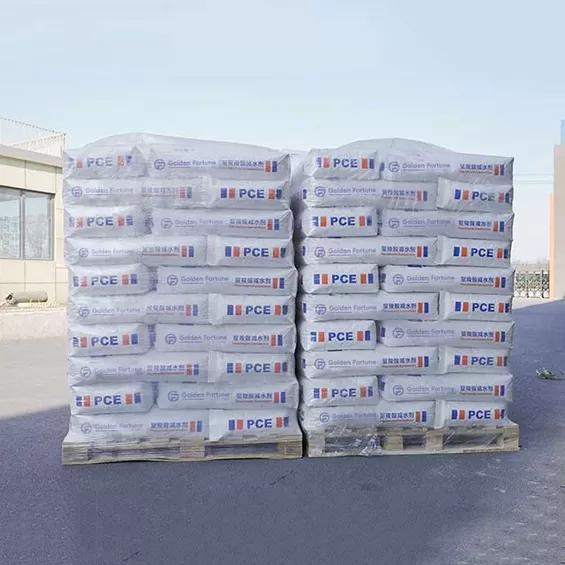
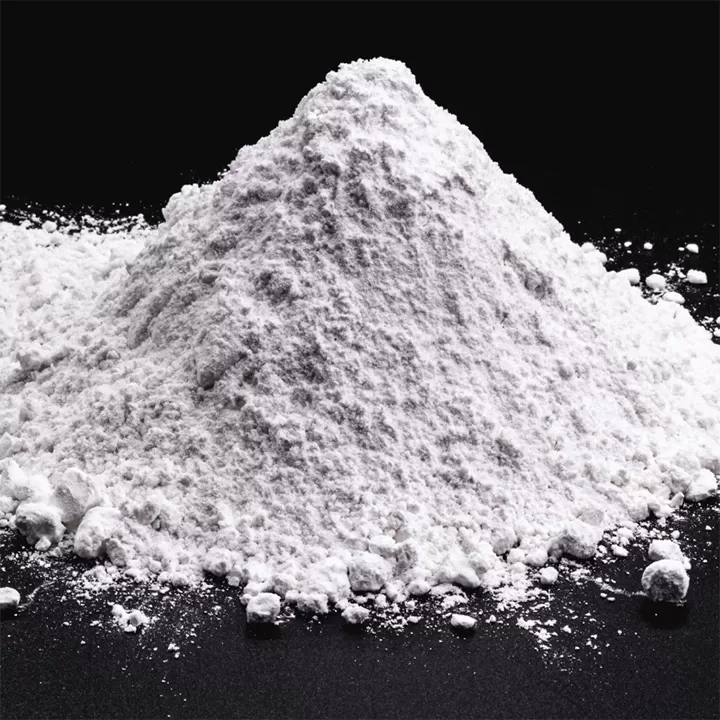
Leading slag suppliers like Golden Fortune provide certified GGBS with consistent grading and low moisture (≤0.4%). Their logistics network ensures silo-to-plant delivery within 48 hours, reducing inventory holding costs for your concrete production.
6. Field Case: Upgraded Concrete in Aggressive Environments
6.1 Jetty Deck in Arabian Gulf (Chloride + High Temperature)
Original design used Type V PC, but after 4 years rebar corrosion was detected. The redesigned your concrete specification required 55% GGBS, w/b 0.38, and 4% silica fume. After 3 years of service, half-cell potential surveys show no active corrosion. Surface electrical resistivity increased from 12 kΩ·cm to 72 kΩ·cm. The 90-day compressive strength reached 82 MPa, exceeding design by 28%.
6.2 Precast Drainage Channels – Acid Resistance
Municipal project with pH 2–3 effluent: PC concrete lost 12 mm surface depth in 18 months. The new your concrete blend with 50% GGBS + 2% colloidal silica lost only 1.2 mm after 36 months. Maintenance intervals extended from 1 year to 8 years, cutting lifecycle costs by 73%.
7. Quality Control Checklist for Technical Specifications
To guarantee consistent performance of your concrete, include these clauses in procurement documents:
GGBS to comply with EN 15167-1 or ASTM C989 Grade 100/120; glass content ≥92% (by XRD).
Mortar bar expansion test per ASTM C1260 – expansion ≤0.10% at 14 days when using reactive aggregates.
Rapid chloride permeability (ASTM C1202) – maximum 1000 coulombs at 56 days for marine exposure.
Curing records – temperature and relative humidity logged for first 7 days.
Suppliers like Golden Fortune provide mill certificates with each shipment, verifying fineness, chemical moduli, and activity index.
8. Frequently Asked Questions (Technical Focus for Your Concrete Upgrades)
Q1: How does GGBS affect drying shrinkage of your concrete compared to OPC?
A1: Long-term drying shrinkage (1 year) of 40% GGBS concrete is typically 5–10% lower than plain OPC at the same w/c ratio. The finer pore structure reduces water movement. However, early-age (7-day) shrinkage may be slightly higher; proper curing eliminates this difference.
Q2: Can I use GGBS in sprayed concrete (shotcrete)?
A2: Yes, with limitations. GGBS content up to 30% works well with alkali-free accelerators. Higher slag amounts (>40%) may delay cohesion and increase rebound. Modify the accelerator dosage (increase by 1–2%) and use finer GGBS (>500 m²/kg) to improve adhesion.
Q3: What maximum GGBS percentage is allowed for prestressed concrete?
A3: EN 1992-1-1 (Eurocode 2) permits up to 40% GGBS for prestressed members. For early transfer (12–18 h), limit to 25–30% and use Type III cement. Higher replacements require heat curing (40°C for 16h) to achieve required release strength.
Q4: Does GGBS increase the risk of efflorescence on architectural surfaces?
A4: GGBS reduces efflorescence because it lowers free calcium hydroxide content. Testing with 50% GGBS shows 85% less white salt deposits compared to plain PC after 12 cycles of wetting-drying. For exposed facades, it is therefore beneficial.
Q5: Can I combine GGBS with fly ash or natural pozzolans?
A5: Ternary blends (PC + GGBS + fly ash, e.g., 40% GGBS + 20% fly ash) further improve sulfate resistance and reduce heat. But set time may extend by 2–3 hours. Use a non-chloride accelerator. Always run paste compatibility tests before full-scale production.
Q6: How to check if a delivered GGBS batch is consistent?
A6: Perform a 7-day mortar strength test (EN 196-1) and compare with the mill certificate (tolerance ±5%). Also run a quick BET or Blaine test – target ±25 m²/kg of specified fineness. Golden Fortune provides on-site testing kits and third-party lab verification for large projects.
Request Technical Consultation for Your Concrete Mix Redesign
Every concrete plant and precast facility has unique constraints – curing regimes, local aggregate reactivity, or target strength classes. Golden Fortune offers ISO 9001-certified GGBS and a dedicated materials engineering team to help you adapt your concrete formulation for optimal durability and cost efficiency. Services include:
Free mix design simulation (heat of hydration, chloride ingress modelling).
Bulk sampling (2 kg) for lab validation of strength and permeability.
Logistics support: bagged, bulk silo, or pneumatic tanker delivery.
For a personalized proposal with current pricing and technical datasheets, submit your inquiry below. Our team responds within 8 business hours with mix adjustment recommendations based on your project exposure class.
Contact the B2B technical desk:
Email: sales@ultrafineggbs.com| Phone: 0086-18065065515
Or use the contact form at https://www.ultrafineggbs.com/contact.html
Please
include your target strength, slag replacement desired, and project location for
a same-day cost breakdown.