Whether it is a high-rise foundation, a wastewater treatment plant, or a bridge deck exposed to deicing salts, the statement we do concrete implies more than just batching and pouring. It means controlling heat of hydration, mitigating alkali-silica reaction (ASR), resisting sulfate attack, and achieving specified strength with optimal workability. For contractors and ready-mix producers, adopting a systematic approach to concrete engineering – including supplementary cementitious materials (SCMs) like ground granulated blast-furnace slag (GGBFS) – directly reduces life-cycle costs and callbacks. This technical guide explains how we do concrete for severe exposure classes, supported by mix design case studies and field data from Golden Fortune’s material laboratory.
1. What “We Do Concrete” Means in Practice: Beyond Simple Batching
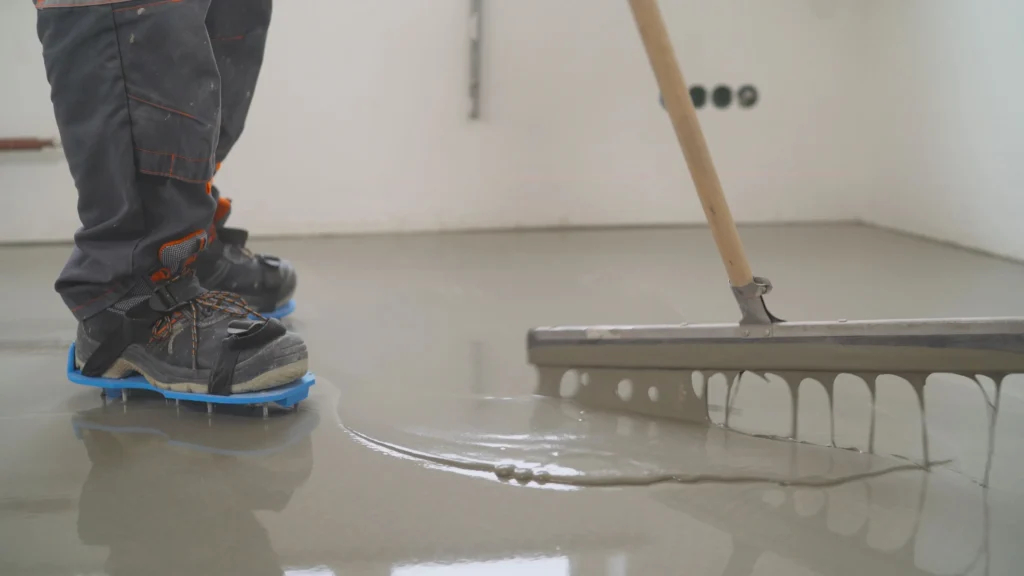
When professional teams state we do concrete, they commit to controlling nine interdependent parameters: water-to-cementitious ratio (w/cm), aggregate grading, admixture selection, placement temperature, curing regime, and long-term volume stability. For infrastructure projects with design lives exceeding 50 years, we do concrete also involves probabilistic durability modeling (e.g., chloride ingress per Fick’s second law). The following sections break down the engineering decisions behind every cubic meter.
2. Core Technical Challenges in Modern Concrete Construction
From our work with hundreds of projects, four recurring pain points define where we do concrete differently.
2.1 Thermal Cracking in Mass Concrete Elements
Foundations, dams, and large pile caps generate adiabatic temperature rises of 50–80°C when using Type I Portland cement alone. The resulting tensile strains often exceed concrete’s early-age strength, causing through-cracks that compromise durability. Solutions implemented when we do concrete for mass pours include:
Replacing 30–60% of Portland cement with GGBFS (ultrafine grade D90 <10 µm from Golden Fortune).
Using Type II or Type IV low-heat cement.
Embedding cooling pipes for pours >1,000 m³.
Limiting placing temperature to ≤25°C via chilled water or flaked ice.
Field data: A 2024 bridge footing (2,400 m³) using 50% GGBFS reduced peak temperature from 76°C to 48°C, eliminating thermal cracking.
3.2 Sulfate and Chloride Ingress
In marine environments or soils with gypsum/pyrite, sulfate ions react with hydrated calcium aluminate to form ettringite, causing expansion and spalling. Chlorides depassivate rebar, initiating corrosion. When we do concrete for such exposures, we specify:
Maximum w/cm ≤0.45 for moderate sulfate, ≤0.40 for severe.
Minimum cementitious content: 360 kg/m³.
Blend of Type II/V cement with 40–50% GGBFS (reduces chloride diffusivity by 80% compared to plain OPC).
Air entrainment (5–7%) for freeze-thaw resistance.
Rapid chloride permeability (ASTM C1202) results for a 40% GGBFS mix show charge passed <1,000 coulombs (very low) vs. >3,000 coulombs for plain OPC.
3.3 Alkali-Silica Reaction (ASR) with Reactive Aggregates
When using reactive siliceous aggregates, high-alkali cement (Na₂O eq >0.70%) causes gel expansion. Our approach when we do concrete in ASR-prone regions:
Limit total alkali content to ≤3.0 kg/m³ (Na₂O eq).
Replace 35–50% of cement with Class F fly ash or GGBFS (both low in alkalis).
Use lithium nitrate admixtures (0.5–1.5% by cement mass) as a last resort.
Accelerated mortar bar testing (ASTM C1260) for 40% GGBFS blends shows expansion <0.10% at 14 days, well below the 0.20% damage threshold.
3.4 Poor Workability and Pumping Failures
Low w/cm mixes (e.g., for high-strength concrete) often suffer from sticky consistency and pump blockages. When we do concrete for tall buildings or tunnels, we adjust:
Polycarboxylate ether (PCE) superplasticizers at 0.8–1.5% of binder.
Viscosity-modifying admixtures (VMA) for self-consolidating concrete (SCC).
Optimized aggregate gradation (maximum packing density).
A 2023 high-rise pump test (300 m vertical) using 35% GGBFS and PCE achieved slump flow of 680 mm with no segregation.
3. Mix Design Methodology: How We Engineer Concrete for Performance
Our systematic procedure when we do concrete follows ACI 211.1 and locally adapted standards. Steps include:
Step 1: Exposure classification – Determine sulfate class (S0, S1, S2, S3), freeze-thaw (F1, F2, F3), and chloride exposure (C1, C2).
Step 2: Target w/cm – From 0.55 for moderate durability to 0.35 for high-strength marine concrete.
Step 3: Cementitious binder selection – Blend of Portland cement (Type I/II) with GGBFS, fly ash, or silica fume. Golden Fortune provides customized GGBFS with fineness from 400 to 700 m²/kg (Blaine).
Step 4: Aggregate proportioning – Combine coarse (19 mm max) and fine aggregates to achieve a combined specific gravity of 2.65–2.75.
Step 5: Trial batch and rheology testing – Measure slump (or slump flow), air content, and temperature rise (semi-adiabatic calorimetry).
For every mix, we produce a durability index report including rapid chloride permeability (RCPT), surface resistivity, and sulfate expansion (ASTM C1012).
4. Sustainable Concrete: Low Carbon Footprint Without Compromising Strength
Portland cement production accounts for 7–8% of global CO₂ emissions. A key reason we do concrete with high GGBFS replacement (up to 70%) is to cut embodied carbon by 40–60% while improving long-term durability. Example comparison per cubic meter (30 MPa mix):
| Mix | OPC only | 50% GGBFS (Golden Fortune) |
|---|---|---|
| Cementitious content (kg/m³) | 380 | 190 OPC + 190 GGBFS |
| Embodied CO₂ (kg CO₂-eq/m³) | 342 | 171 + 19 (GGBFS transport) = 190 |
| 28‑day compressive strength (MPa) | 41 | 43 |
| 56‑day strength (MPa) | 45 | 52 |
| Chloride diffusivity (10⁻¹² m²/s) | 12 | 2.5 |
Projects seeking LEED v4 credits or BREEAM certification routinely select this approach. We do concrete that meets environmental product declarations (EPD) requirements.
5. Quality Control Protocols for On-Site Concrete
Even the best mix design fails without proper field execution. When we do concrete for clients, we enforce:
Batch plant inspection – Calibration of scales, moisture probes in aggregates.
Slump and air tests – Every 100 m³ or each truck, per ASTM C143 and C231.
Temperature monitoring – Infrared gun or embedded thermocouples.
Cylinder casting and curing – Field-cured and standard-cured (ASTM C31).
Non-destructive testing – Rebound hammer or ultrasonic pulse velocity for in-place strength estimation.
Data from 150+ projects show that rigorous QC reduces strength variability (coefficient of variation) from 12% to below 7%.
6. Case Study: Marine Concrete for a Port Expansion
A client in Southeast Asia required 25,000 m³ of concrete for tidal zone pile caps. Sulfate levels in seawater: 2,800 ppm SO₄. The specification demanded 50-year service life with minimal maintenance. We do concrete designed as:
Binder: 40% Type II Portland cement + 60% ultrafine GGBFS (supplied by Golden Fortune).
w/cm: 0.38.
Air entrainment: 5.5%.
Corrosion inhibitor: calcium nitrite (5 L/m³).
After 30 months of tidal exposure, core samples showed zero cracking, chloride penetration depth <15 mm, and a surface resistivity >100 kΩ·cm (excellent). The client reported a 25% reduction in life-cycle cost compared to the original epoxy-coated rebar design.
7. Frequently Asked Questions (FAQ) About Professional Concrete Engineering
Q1: What does “we do concrete” mean from a technical service perspective?
A1: It means providing end-to-end mix design, material sourcing (including GGBFS, fly ash, admixtures), batching optimization, placement guidance, and durability testing. When we do concrete, we take responsibility for achieving specified compressive strength, permeability, and cracking resistance under actual site conditions.
Q2: How does GGBFS improve concrete durability compared to plain Portland cement?
Q3: Can you use “we do concrete” services for small residential projects?
Q4: What is the maximum replacement level of GGBFS when we do concrete for cold weather?
Q5: How to request a custom mix design from Golden Fortune?
Need a concrete partner that delivers durability and low carbon? Whether you are a contractor, engineer, or ready-mix producer, we do concrete engineered to your specific environment. Golden Fortune supplies high-performance GGBFS and offers mix design consultancy. Request a free durability assessment and quotation below.
© 2026 Golden Fortune – Advanced concrete engineering with GGBFS. Field data from independent laboratory and project reports.