For specifiers, ready-mix producers, and precast manufacturers, the color of portland cement is rarely an arbitrary aesthetic trait. It directly influences customer acceptance, architectural integration, and the perceived quality of exposed concrete surfaces. While grey is the expected standard, variations from light ash to dark charcoal or even brownish hues can lead to project rejections and costly rework. This article provides a deep technical examination of the factors governing cement coloration, industry pain points, and how supplementary cementitious materials, particularly ground granulated blast furnace slag (GGBS), deliver predictable, uniform results. Golden Fortune brings over a decade of expertise in high-performance GGBS, and this guide reflects our commitment to solving real-world consistency challenges.
1. Fundamental Origins: Why Portland Cement Displays Different Colors
The color of portland cement is not an independent property but a result of complex interactions among clinker minerals, grinding fineness, and secondary constituents. The primary driver is the ferrite phase (C4AF – tetracalcium aluminoferrite), which imparts brown to grey tones. Higher iron oxide (Fe₂O₃) content shifts the hue toward darker, yellowish-brown shades. Conversely, low iron clinkers produce lighter cements – a principle used in white portland cement manufacturing, where Fe₂O₃ is kept below 0.4%.
Clinker mineral composition: C₃S (tricalcium silicate) and C₂S (dicalcium silicate) are light grey; C₃A (tricalcium aluminate) is white; but C4AF dominates coloration. Variations in raw meal homogeneity directly affect final color.
Fuel ash carryover: Kilns using coal or petcoke introduce fine ash particles rich in iron and carbon, darkening the clinker. Plants switching to gas or alternative fuels often observe lighter color of portland cement.
Grinding aid chemicals and mill wear: Certain grinding aids alter particle surface properties, while worn steel media can add metallic contaminants, causing grey-black speckling.
Gypsum type and hydration: Natural gypsum (calcium sulfate dihydrate) vs. synthetic gypsum (from flue gas desulfurization) may produce different color undertones in the final paste.
2. Industry Pain Points: When Color Inconsistency Disrupts Projects
Architectural concrete, paving blocks, masonry units, and exposed aggregate finishes demand a uniform matrix color. A mismatch between adjacent pours or between precast elements and cast-in-place concrete leads to immediate visual rejection. Contractors face three main challenges:
Batch-to-batch clinker variations: Cement plants occasionally change quarry sources or adjust raw mix proportions. Without a stabilizing agent, the resulting cement shifts color without warning.
Regional SCM quality fluctuations: Fly ash from different power plants varies in carbon content (loss on ignition), causing dark speckles or uneven shading. Natural pozzolans (calcined clays, volcanic ash) introduce reddish or buff tones.
Water-to-cement ratio and curing effects: Higher w/c increases porosity, often lightening the surface, while improper curing leads to efflorescence (white salt deposits) that masks the true base color.
Resolving these issues requires a consistent, chemically stable supplementary material that homogenizes the paste matrix and minimizes chromatic deviation. This is where high-quality GGBS demonstrates its value.
3. GGBS as a Color-Stabilizing Component: Technical Mechanisms
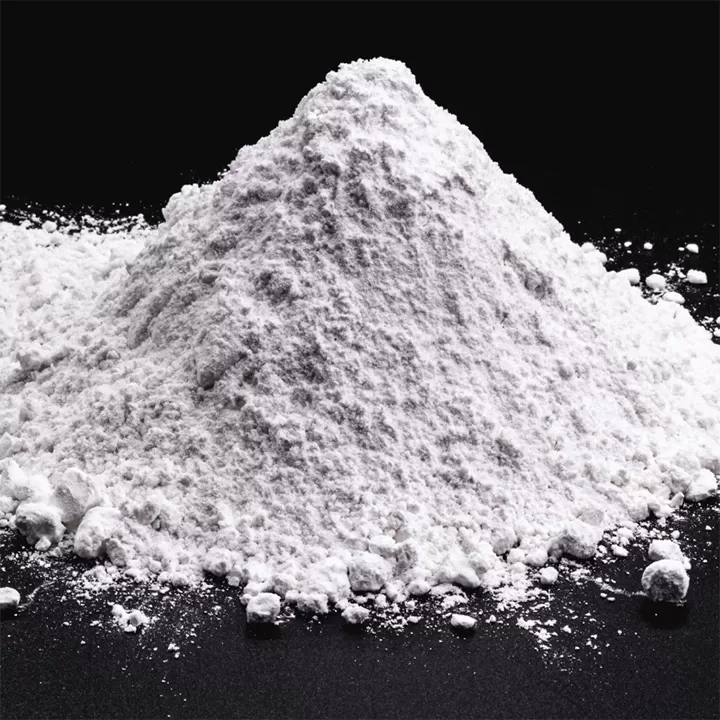
Ground granulated blast-furnace slag (GGBS) is produced by rapid water quenching of molten iron slag, followed by fine grinding. Its intrinsic color is off-white to pale grey (lightness L* value typically 75–85 in the CIELAB scale), significantly lighter than ordinary portland cement (OPC, L* ~55–70). When blended at 30% to 50% replacement, GGBS raises the overall brightness and reduces the impact of clinker-borne iron variations. More importantly, the latent hydraulic nature of GGBS forms a dense calcium-silicate-hydrate (C-S-H) gel with a uniform microstructure, minimizing localized color patches caused by heterogeneous hydration.
From a process control perspective, integrating a stable GGBS supply — such as that provided by Golden Fortune — decouples the final color of portland cement from raw clinker swings. Our GGBS is manufactured under strict quality protocols, guaranteeing consistent fineness (≥4000 cm²/g Blaine) and a narrow chemical composition range (CaO/SiO₂ ratio ≈ 1.0–1.2, Al₂O₃ 10-15%, MgO <10%). This chemical stability translates into predictable color outcomes for precast and ready-mix operations.
3.1. Interaction with Iron Phases and Alkalis
Slag hydration consumes portlandite (Ca(OH)₂) released by OPC, reducing the overall alkalinity and modifying iron solubility. Lower pore solution pH suppresses the formation of brown-colored ferric complexes, instead favoring paler ferrous or calcium-ferrite phases. Additionally, GGBS dilutes the periclase (MgO) and C4AF content per unit volume of binder, smoothing out any localized high-iron clusters originally present in the clinker.
4. Practical Evaluation Methods for Cement and Concrete Color
For producers aiming to maintain a target shade, qualitative visual inspection alone is insufficient. Standardized measurement approaches include:
Handheld spectrophotometry (ASTM E308): Measures L*a*b* coordinates. A ΔE* (total color difference) below 1.5 is generally imperceptible to the human eye. Regular monitoring of cement powder and cured mortar panels is recommended.
Visual reference panels: Prepare wet-cured and sealed mortar specimens (1:3 cement:sand) from each cement lot, compared against a master standard under controlled illumination (D65 daylight simulator).
Image analysis of ground cement: Digital microscopy can detect carbon speckles or un-ground clinker particles that cause dark spots in finished concrete.
When using GGBS blends, perform color validation on both fresh paste and 28-day cured samples, as the color may lighten slightly over time due to continued pozzolanic reaction and reduced porosity.
5. Application-Specific Recommendations for Color Control
Different segments of the construction industry have unique requirements regarding the color of portland cement. Below are targeted strategies.
5.1. Architectural Precast and Cladding Panels
These demand absolute uniformity across large surfaces. Use a fixed blend of 40–50% GGBS with a single consistent OPC source. Avoid changing cement brands mid-project. Implement full-scale mock-up panels for client approval before production begins.
5.2. Colored Concrete (Integral Pigments)
Integral pigments (iron oxides, chromium greens, etc.) rely on a neutral, consistent base cement shade to achieve accurate final hues. A dark or variable OPC will distort pigment performance. Adding 30% GGBS lightens and homogenizes the base matrix, reducing the pigment dose required by up to 15% while improving color reproducibility.
5.3. Paving Blocks and Segmental Retaining Walls
High-volume production lines often face raw material changes. Establish a buffer stock of pre-blended GGBS+OPC from a trusted supplier like Golden Fortune. Use automated batching that records blend proportions for each shift, allowing traceability of any color complaints.
6. Overcoming Challenges: Fine-Tuning the GGBS-OPC Blend
While GGBS enhances color stability, three parameters require attention:
Replacement ratio sensitivity: Up to 30% GGBS produces a subtle lightening; 30–50% yields a distinct pale grey-green undertone. Beyond 60%, the concrete surface may exhibit a greenish caste due to unhydrated slag particles, which may be undesirable for certain architectural applications. The optimal range for most color-sensitive work is 35–45%.
Fineness matching: Mismatched particle size distribution can lead to segregation in fresh concrete, creating mottled surfaces. Work with GGBS suppliers that guarantee particle size distributions (e.g., 45 µm residue <5%) compatible with typical OPC grinding curves.
Early curing temperature: Slag-based mixes have slower early strength gain; protect surfaces from rapid drying and maintain above 10°C for the first 48 hours to avoid carbonation-induced color changes (light surface patches).
7. Long-Term Durability and Color Retention
Beyond immediate aesthetics, a stable color indicates a well-hydrated, dense microstructure. GGBS blends reduce permeability, chloride ingress, and efflorescence. Efflorescence, in particular, can ruin the visual appeal of brickwork or pavers by depositing white calcium carbonate on the surface. The reduced portlandite content in GGBS-enriched concrete directly lowers efflorescence risk, preserving the intended color of portland cement throughout the structure’s service life. Moreover, resistance to UV-induced fading is superior for slag-based concretes due to the absence of organic additives and the formation of opaque C-S-H phases.
8. Frequently Asked Questions (Industry Focused)
Q1: Can the color of portland cement indicate cement quality or strength?
A1: Not directly. While dark grey cements often contain higher C4AF or carbon, both low and high C3S cements can be grey. Strength is governed by fineness, alite content, and sulfate balance. However, extreme color variability often signals production instability or contamination, which indirectly affects consistency in concrete performance. Always combine color checks with standard compressive strength and setting time tests.
Q2: Will adding GGBS always make concrete lighter?
A2: Yes, in the majority of OPC-GGBS blends, the final concrete exhibits a higher lightness (L*) value compared to OPC-only concrete. The magnitude depends on replacement level and slag whiteness. At 30% replacement, the lightening is mild (ΔL* ≈ 2–4 units). At 50%, the color shifts to a uniform light grey with a very subtle greenish tone under specific lighting. This is widely accepted for structural and architectural concrete.
Q3: How can I test if my GGBS supplier maintains consistent color-controlling properties?
A3: Request quarterly chemical analysis reports (oxide composition: CaO, SiO₂, Al₂O₃, MgO, Fe₂O₃, S), glass content (>95% by XRD), and Blaine fineness. For direct color validation, produce 28-day mortar prisms using your standard OPC + GGBS at the intended blend ratio. Compare with previous batches using a spectrophotometer. Reputable suppliers like Golden Fortune provide these data with every shipment.
Q4: Does the formwork or release agent influence the final visible color of concrete made with portland cement and GGBS?
A4: Yes. Oily or pigmented release agents can stain the surface, masking the true matrix color. For color-critical work, use non-staining, water-based release agents. Also, absorbent formwork (untreated wood) may draw water and fine particles to the surface, altering local binder concentration and creating darker blotches. Sealed steel or phenolic plywood is recommended.
Q5: What is the maximum GGBS replacement allowed without compromising the desired color?
A5: For standard grey concrete where the color is not tightly specified, up to 70% GGBS is possible, but the color will be distinctly pale (almost light grey). For architectural projects requiring a traditional medium-dark grey, keep GGBS below 35%. Always conduct trial mixes at the project’s target replacement level and evaluate under different lighting conditions (sunlight, overcast, indoor lighting).
9. Conclusion: A Proactive Path to Predictable Cement Color
Managing the color of portland cement is not a matter of chance but of systematic control over raw materials, blending, and quality assurance. GGBS stands out as the most practical and performance-enhancing solution to neutralize clinker variations, reduce efflorescence, and deliver a uniform, repeatable appearance across projects. By partnering with an experienced GGBS specialist, concrete producers can eliminate guesswork and avoid costly disputes over color mismatches.
Golden Fortune supplies ultra-fine GGBS with verified chemical consistency and technical support for blend optimization. Our team works alongside your quality control department to establish color benchmarks and adjust slag fineness to match your production cycle.
Ready to standardize the color performance of your concrete
products?
Contact Golden Fortune today for
technical datasheets, sample test blends, and a customized supply plan. Send
your inquiry through our website or directly email our technical sales team – we
respond within 24 hours to discuss your specific color targets and production
parameters.
Send an Inquiry Now (or visit www.ultrafineggbs.com)