Concrete is the most widely used man-made material on the planet, yet its traditional formulation faces mounting pressure to evolve. Engineers, contractors, and specifiers are no longer satisfied with a one-size-fits-all approach; they demand concrete solutions that address specific performance requirements while minimizing environmental impact. This comprehensive guide, grounded in decades of expertise in GGBS (Ground Granulated Blast Furnace Slag) technology, explores the technical intricacies behind modern concrete solutions. We will dissect common failure mechanisms, quantify the benefits of supplementary cementitious materials (SCMs), and provide actionable insights for achieving superior durability and sustainability—backed by the high-quality products from Golden Fortune.
1. The Evolution of Concrete: From Traditional Mixes to High-Performance Solutions
For decades, concrete was perceived as a simple blend of Portland cement, aggregates, and water. However, as infrastructure ages and environmental conditions become more aggressive, the limitations of ordinary concrete have become evident. Cracking, spalling, reinforcement corrosion, and chemical attacks are costly reminders that we need better concrete solutions.
1.1 The Shift Toward Performance-Based Specifications
Modern codes (ACI 318, EN 206) now emphasize performance metrics such as chloride diffusion coefficients, sulfate resistance, and heat of hydration. This shift has paved the way for advanced concrete solutions that incorporate SCMs like GGBS, silica fume, and fly ash. These materials not only enhance long-term properties but also contribute to circular economy principles by valorizing industrial by-products.
2. Key Technical Challenges in the Concrete Industry
Understanding the root causes of concrete deterioration is essential for designing effective solutions. Below are the most prevalent challenges that modern concrete solutions must overcome:
Chloride-induced corrosion: In marine environments or where de-icing salts are used, chlorides penetrate the cover and depassivate reinforcing steel, leading to expansive rust and cracking.
Sulfate attack: Soils or groundwater containing sulfates react with calcium aluminate phases in cement, forming expansive ettringite that disrupts the concrete matrix.
Alkali-silica reaction (ASR): Reactive aggregates can swell when exposed to high-alkali pore solutions, causing map cracking and loss of strength.
Thermal cracking in mass concrete: The exothermic hydration of cement generates internal heat; without proper control, thermal gradients induce tensile stresses and cracking.
Permeability and freeze-thaw damage: High permeability allows water and aggressive agents to ingress, exacerbating deterioration cycles.
Each of these challenges demands targeted concrete solutions that modify the microstructure and chemistry of the hardened binder.
3. Sustainable Concrete Solutions: The Role of Supplementary Cementitious Materials (SCMs)
The most effective way to simultaneously improve durability and reduce carbon footprint is to replace a portion of Portland cement with SCMs. Among these, GGBS stands out due to its consistent quality and high reactivity. Golden Fortune supplies ultra-fine GGBS that meets or exceeds international standards (ASTM C989, EN 15167), ensuring reliable performance in critical applications.
3.1 Why GGBS is a Game-Changer for Concrete Solutions
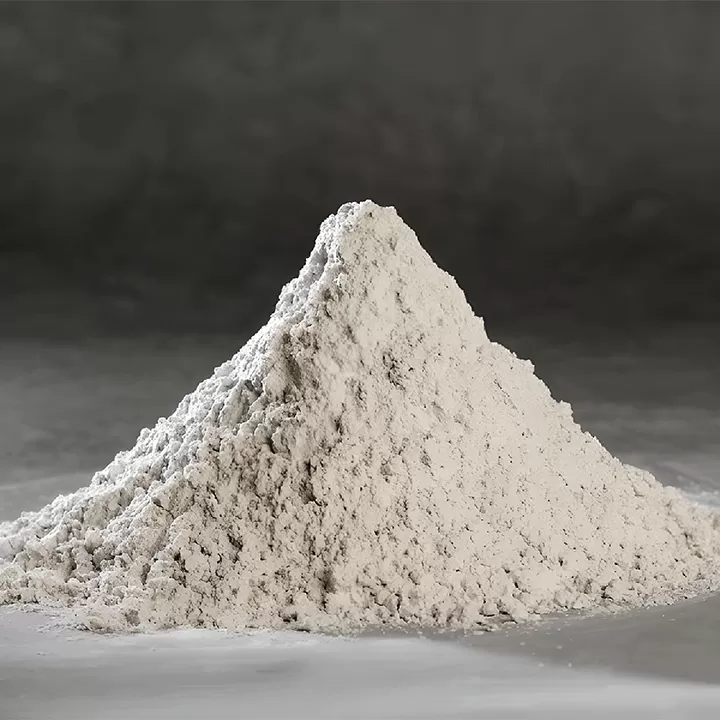
GGBS is a latent hydraulic material produced by quenching molten blast-furnace slag and grinding it to a fine powder. When combined with Portland cement, the calcium hydroxide released during cement hydration activates the slag, forming additional calcium silicate hydrates (C-S-H) that fill capillary pores and refine the pore structure. This mechanism underpins many of the performance benefits discussed below.
4. Technical Deep Dive: How GGBS Enhances Concrete Performance
Integrating GGBS into concrete solutions yields quantifiable improvements across multiple parameters:
4.1 Mechanical Properties
Long-term strength: While early-age strength may be slightly lower, GGBS blends typically achieve higher ultimate strengths (at 56 or 90 days) due to continued pozzolanic reaction. For a 50% replacement, the strength activity index often exceeds 100% by 28 days.
Improved bond: The denser interfacial transition zone around aggregates enhances bond strength, critical for reinforced elements.
4.2 Durability Enhancements
Chloride resistance: GGBS concrete exhibits chloride diffusion coefficients 2–5 times lower than plain Portland cement mixes, dramatically extending the initiation period for corrosion. This makes it ideal for marine structures and bridge decks.
Sulfate resistance: By diluting the C₃A content and consuming calcium hydroxide, GGBS mitigates sulfate attack, achieving classifications of “high sulfate resistance” in many standards.
ASR mitigation: The reduced alkalinity and increased binding of alkalis in C-S-H suppress deleterious expansion from reactive aggregates.
Reduced permeability: Capillary porosity decreases, leading to lower water absorption and enhanced freeze-thaw durability.
4.3 Thermal Control in Mass Concrete
The slower hydration kinetics of GGBS reduce the peak temperature rise in mass pours, minimizing thermal cracking risks. For large foundations or dams, this is a critical advantage that simplifies construction sequencing and reduces the need for cooling pipes.
4.4 Workability and Finish
GGBS particles are typically glassy and smooth, improving the rheology of fresh concrete. This allows for lower water-cement ratios without sacrificing workability, and often results in a creamier, more cohesive mix that is easier to pump and finish.
5. Tailored Concrete Solutions for Specific Applications
Different construction scenarios require bespoke concrete solutions. Below are examples where GGBS-enhanced mixes excel:
5.1 Marine and Coastal Structures
Jetties, sea walls, and offshore platforms face relentless chloride exposure. Using GGBS at 50–70% replacement levels can extend service life from 50 to over 100 years, as demonstrated in numerous European and Asian port projects.
5.2 Wastewater Treatment Facilities
Biogenic sulfuric acid corrosion is a major concern in sewer pipes and treatment tanks. GGBS concrete’s low calcium hydroxide content reduces the substrate available for acid attack, significantly improving longevity.
5.3 High-Rise Buildings and Foundations
For deep foundations and large mat slabs, controlling heat is paramount. GGBS blends lower the hydration heat, while the improved workability aids in placing concrete in congested reinforcement.
5.4 Precast and Prestressed Elements
Precast producers can benefit from GGBS by achieving higher early strengths through optimized curing cycles (e.g., steam curing), while ensuring superior long-term durability. Golden Fortune offers GGBS grades specifically tailored for the precast industry, ensuring consistent reactivity.
6. Implementing Concrete Solutions: Best Practices for Mix Design and Quality Control
Adopting advanced concrete solutions requires careful attention to mix design and execution. Here are practical guidelines:
6.1 Proportioning
Determine the optimal replacement level based on performance targets (e.g., 30% for moderate sulfate resistance, 50%+ for high chloride resistance).
Adjust water-reducing admixtures to maintain target slump; GGBS may require slightly higher superplasticizer dosages at very high replacements.
Consider the effect on setting time—GGBS extends setting, which can be compensated with accelerators in cold weather or allowed to simplify hot-weather concreting.
6.2 Curing
Proper curing is even more critical for GGBS blends because the pozzolanic reaction relies on moisture. Moist curing for at least 7 days is recommended to realize the full potential of the concrete solution.
6.3 Quality Assurance
Partner with reputable suppliers like Golden Fortune who provide certified mill test reports and technical support. Conduct trial mixes to verify fresh and hardened properties before full-scale production.
7. Future Trends in Concrete Technology
The next decade will witness even more sophisticated concrete solutions, including:
Carbon capture and utilization: Incorporating CO₂ into fresh concrete to mineralize and permanently store it.
Digital concrete: Sensor-integrated structures and self-healing materials.
Novel binders: Calcium sulfoaluminate cements, alkali-activated materials, and limestone calcined clay cements (LC³).
GGBS will remain a cornerstone due to its proven track record and abundant availability. Companies like Golden Fortune are at the forefront, continuously improving processing techniques to deliver even finer, more reactive slags that push the boundaries of performance.
Frequently Asked Questions (FAQ)
Q1: What exactly are concrete solutions in the context of construction?
A1: In construction, concrete solutions refer to tailored mix designs and technologies that address specific performance requirements—such as high strength, resistance to chemicals, low heat, or reduced carbon footprint. They often involve the use of supplementary cementitious materials like GGBS to optimize properties beyond what plain Portland cement can offer.
Q2: Can GGBS be used in all types of concrete?
A2: Yes, GGBS is versatile and can be incorporated into virtually all concrete applications, including ready-mix, precast, mass concrete, high-performance concrete, and even roller-compacted concrete. The replacement level is adjusted based on the desired properties and exposure conditions.
Q3: How does using GGBS affect the cost of concrete?
A3: While GGBS itself may have a cost similar to or slightly lower than Portland cement, the overall concrete solution can be cost-effective due to reduced cement content, longer service life (lower maintenance), and potential for thinner sections if higher strengths are achieved. Additionally, many green building certification schemes (LEED, BREEAM) reward its use, adding indirect value.
Q4: What standards govern the quality of GGBS for concrete?
A4: Key standards include ASTM C989 / C989M (for GGBS used in concrete and mortars), EN 15167-1 (for GGBS for use in concrete, mortar and grout), and BS 8500. These define fineness, chemical composition, and strength activity index requirements. Golden Fortune rigorously tests its GGBS to meet or exceed these specifications.
Q5: Does GGBS affect the colour of concrete?
A5: Yes, GGBS typically produces a lighter colour (off-white to pale greenish-grey) compared to standard Portland cement concrete. This can be an aesthetic advantage in architectural applications and also reduces heat absorption in pavements. The exact shade depends on the slag source and replacement level.
Q6: How long has GGBS been used in concrete, and is it proven?
A6: GGBS has been used in concrete for over a century, with extensive documented performance in structures worldwide, including the London Underground, the Channel Tunnel, and numerous bridges and marine facilities. Its long-term durability is well-established through research and field experience.
Q7: Are there any limitations to using high volumes of GGBS?
A7: At very high replacement levels (above 70%), early-age strength development may be significantly slower, and setting times can be prolonged. This can be managed with accelerators, adjusted formwork stripping times, or warm-weather concreting. Additionally, careful curing is essential. For most structural applications, 30–50% replacement offers an optimal balance of properties.
In conclusion, the pursuit of resilient and sustainable infrastructure demands intelligent concrete solutions. By embracing the synergistic benefits of GGBS and partnering with a trusted supplier like Golden Fortune, engineers and contractors can deliver structures that stand the test of time while meeting the highest environmental standards. For detailed technical data sheets or to request a sample, please visit our website or contact our engineering team.