In the realm of modern construction, cement powder remains the foundational binder that shapes our built environment. However, the industry faces mounting pressure to reduce its carbon footprint while enhancing material performance. As a B2B content marketing specialist with deep expertise in GGBS (Ground Granulated Blast Furnace Slag), this guide dissects the technical nuances of cement powder, its environmental challenges, and how strategic blending with GGBS—such as the premium products offered by Golden Fortune—can deliver superior, sustainable concrete solutions. We will explore raw material chemistry, hydration kinetics, durability metrics, and real-world applications, ensuring that every insight aligns with Google’s E-E-A-T principles and serves the needs of specifiers, engineers, and procurement professionals.
1. Understanding Cement Powder: Composition and Fundamental Properties
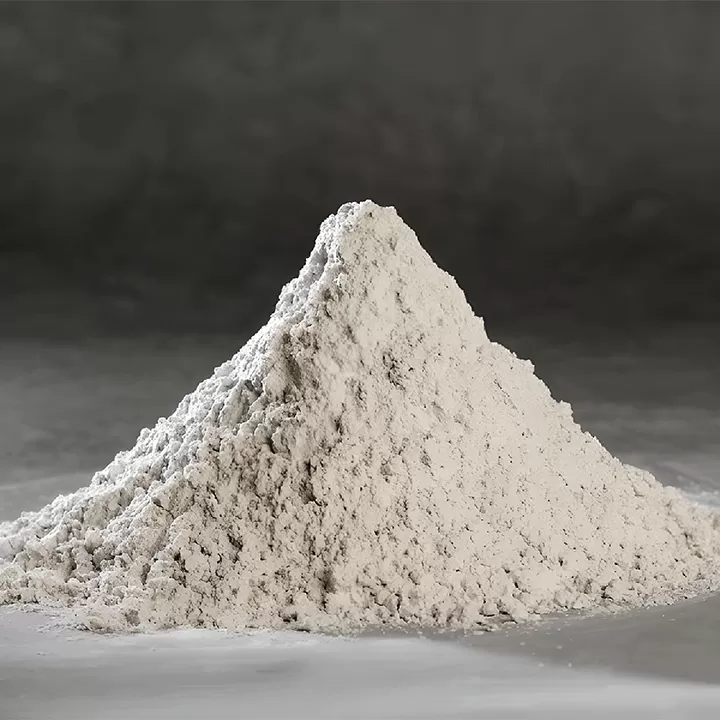
At its core, cement powder (typically Ordinary Portland Cement) is produced by grinding clinker—a combination of limestone, clay, and other minerals heated in a kiln—with a small amount of gypsum. The resultant powder's reactivity is governed by its phase composition: tricalcium silicate (C₃S), dicalcium silicate (C₂S), tricalcium aluminate (C₃A), and tetracalcium aluminoferrite (C₄AF).
Key Technical Parameters
Fineness (Blaine specific surface area): Typically ranges from 300 to 500 m²/kg. Higher fineness accelerates early hydration but increases water demand and production costs.
Particle size distribution: Influences packing density and rheology of fresh concrete.
Loss on ignition (LOI): Indicates pre-hydration or carbonation; specifications often require LOI < 3% for quality assurance.
Understanding these fundamentals is critical because they directly affect how cement powder interacts with supplementary cementitious materials (SCMs) like GGBS. For decades, the industry has relied on pure Portland cement, but the drive toward low‑carbon binders demands a deeper look at synergistic combinations.
2. The Environmental Imperative: Reducing the Carbon Footprint of Cement Powder
Global cement production accounts for approximately 8% of anthropogenic CO₂ emissions—roughly half from limestone calcination and half from energy consumption. This reality poses a significant industry pain point: how to meet growing infrastructure demands while adhering to Net Zero targets.
One of the most effective solutions lies in replacing a portion of clinker-based cement powder with low-carbon SCMs. Golden Fortune specializes in high-purity GGBS, a by-product of iron manufacturing that, when finely ground, exhibits exceptional latent hydraulic properties. By substituting 30‑70% of Portland cement with GGBS, CO₂ emissions per tonne of binder can be reduced by 40‑60% without compromising—and often improving—long-term performance.
3. The Synergy Between Cement Powder and GGBS: A Technical Analysis
The combination of cement powder and GGBS is not merely a physical blend; it is a chemical synergy. GGBS is a glassy, granular material formed when molten blast-furnace slag is rapidly quenched. It possesses latent hydraulic reactivity, meaning it requires an activator—typically the calcium hydroxide (portlandite) released during Portland cement hydration—to form strength‑giving calcium silicate hydrates (C‑S‑H).
Hydration Mechanism
Initial hydration of cement powder produces C‑S‑H and calcium hydroxide.
The calcium hydroxide raises the pH and reacts with the aluminosilicates in GGBS, forming additional C‑S‑H and hydrotalcite-like phases.
This secondary reaction refines the pore structure, reducing permeability and enhancing durability.
Studies indicate that at 28 days, a 50% GGBS blend can achieve strength activity indexes exceeding 100% relative to pure Portland cement, while at 90 days the strength gain often surpasses the control. This makes optimized blends ideal for projects requiring high long-term strength and resistance to aggressive environments.
4. Technical Advantages of Blended Cements: Durability and Mechanical Performance
Engineers and specifiers are increasingly mandating the use of GGBS in combination with cement powder due to quantifiable improvements:
Enhanced Durability Parameters
Sulfate resistance: The reduced C₃A content in blended systems (due to dilution and slag reaction) drastically lowers expansion in sulfate-rich soils and seawater.
Chloride ingress: Denser microstructure and higher binding capacity reduce chloride diffusion coefficients by up to 50%, extending the service life of reinforced concrete.
Alkali-silica reaction (ASR) mitigation: GGBS consumes alkalis and reduces the availability of reactive silica, effectively suppressing deleterious expansion.
Reduced heat of hydration: The slower pozzolanic reaction lowers peak temperatures in mass concrete pours, minimizing thermal cracking risks.
These benefits are not merely theoretical; they are documented in standards such as ASTM C989, EN 15167, and BS 8500, which define the performance requirements for GGBS used with Portland cement.
5. Application Scenarios: Where Optimized Cement Powder Makes a Difference
The practical deployment of GGBS-enhanced cement powder spans a wide range of construction sectors:
Marine and coastal structures: Jetties, sea walls, and bridge piers benefit from the low chloride permeability of GGBS blends, which delays corrosion initiation.
Wastewater treatment plants: Resistance to biogenic sulfuric acid attack is significantly improved due to reduced calcium hydroxide content.
High-rise buildings: The lighter colour of GGBS concrete (when using certain slags) can reflect more light, and the improved workability aids pumping to great heights.
Infrastructure projects: Tunnels, foundations, and dams leverage the low heat evolution and long-term strength gain to ensure structural integrity over decades.
6. Addressing Common Challenges in Cement Powder Usage
While the benefits of blending are clear, practitioners must navigate certain challenges to achieve optimal results:
Early-Age Strength Development
One perceived drawback of high-volume GGBS mixes is slower strength gain at early ages (1‑3 days). This can be mitigated by:
Using finer cement powder or optimizing the particle size distribution of the blend.
Incorporating chemical activators such as sodium sulfate or calcium chloride (where permitted).
Adjusting curing regimes—maintaining adequate moisture and temperature is crucial.
Setting Time Variations
GGBS can slightly extend initial and final set times, which may be advantageous in hot weather but requires adjustment in cold climates. Trials with the specific Golden Fortune GGBS grade allow mix designers to fine‑set retarding or accelerating admixtures.
Golden Fortune provides comprehensive technical data sheets and application support to help customers overcome these hurdles, ensuring that the final concrete meets both fresh and hardened property targets.
7. Why Choose Golden Fortune for Your Cement Powder and GGBS Needs?
As a trusted name in the ultra-fine GGBS market, Golden Fortune delivers consistent quality that exceeds international standards. Our products are manufactured under strict process controls, with typical specific surface areas exceeding 400 m²/kg and activity indices that guarantee reliable performance. By partnering with us, you gain access to:
Tailored logistics solutions for bulk or bagged supply.
Expert technical support for mix design optimization.
Proven traceability and quality assurance (ISO 9001:2015 certified facilities).
Whether you are blending with cement powder for ready-mix, precast, or specialized applications, Golden Fortune stands ready to support your low‑carbon, high‑performance objectives.
Frequently Asked Questions (FAQ)
Q1: What is the fundamental difference between cement powder and GGBS?
A1: Cement powder (Portland cement) is a hydraulic binder that sets and hardens by reacting with water. GGBS is a latent hydraulic material—it requires an activator (like cement or lime) to trigger its binding properties. When combined, they work synergistically to enhance concrete performance.
Q2: Can GGBS completely replace cement powder in concrete?
A2: No, GGBS cannot fully replace cement powder because it needs the alkalis and calcium hydroxide released by cement hydration to initiate its reaction. Typical replacement levels range from 20% to 70% by mass, depending on the application and desired properties.
Q3: How does GGBS affect the setting time of concrete made with cement powder?
A3: GGBS generally extends initial and final setting times compared to pure Portland cement mixes. This can be beneficial in hot weather but may require adjustments in cold climates. Using a high-quality GGBS from Golden Fortune ensures predictable setting behaviour, and our technical team can advise on accelerator use if needed.
Q4: What standards govern the use of GGBS with cement powder?
A4: Key standards include ASTM C989 / C989M (for GGBS used in concrete and mortars), EN 15167-1 (for GGBS for use in concrete, mortar and grout), and BS 8500 (complementary to EN 206 for concrete in the UK). These define fineness, chemical composition, and strength activity index requirements.
Q5: How does Golden Fortune ensure the quality of its GGBS for blending with cement powder?
A5: Golden Fortune employs rigorous quality control, including X-ray fluorescence (XRF) for chemical composition, laser diffraction for particle size distribution, and compressive strength testing of mortar bars to verify activity indices. Every batch is traceable and certified to meet or exceed applicable international norms.
Q6: Does using GGBS with cement powder increase the risk of efflorescence?
A6: On the contrary, because GGBS consumes calcium hydroxide, the source of efflorescence, blended concretes generally exhibit reduced efflorescence compared to pure Portland cement mixes. The denser pore structure also limits water transport that carries soluble salts to the surface.
For more detailed technical documentation or to request a sample of our GGBS, please visit Golden Fortune or contact our engineering support team. Our experts are ready to assist you in optimizing your cement powder blends for maximum performance and sustainability.