Modern concrete infrastructure projects face a dual challenge: maintaining strict structural performance while reducing carbon footprints. Globally, standard concrete designs rely heavily on traditional ASTM C150 portland type 1 cement. However, relying solely on unblended cement limits durability and contributes significantly to greenhouse gas emissions.
By integrating Ground Granulated Blast-Furnace Slag (GGBS or GGBFS), engineers can modify these traditional mixes. This article analyzes how GGBS interacts chemically with portland type 1 cement, highlighting how this combination improves long-term durability and structural reliability.
To implement these blends successfully, it is important to understand chemical hydration, activation thresholds, and proper mixing strategies. Through strategic material selection, suppliers like Golden Fortune provide high-activity GGBS to help ready-mix producers achieve consistent performance across diverse applications.
Understanding the Synergy: Portland Type 1 and GGBS
Standard portland type 1 cement is formulated for general use, characterized by high early-strength development driven by its tricalcium silicate (C3S) and dicalcium silicate (C2S) content. When water is added, it hydrates to produce calcium silicate hydrate (C-S-H) gel and calcium hydroxide (CH). The byproduct, calcium hydroxide, contributes little to structural strength and can be vulnerable to chemical leaching.
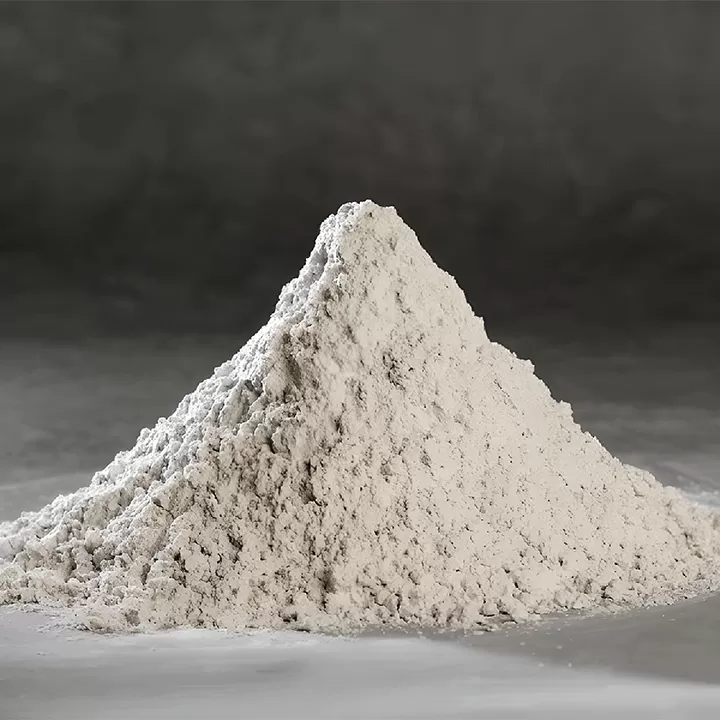
GGBS is a glassy, latent hydraulic binder produced by quenching molten iron slag. Unlike inert mineral fillers, GGBS reactively combines with the calcium hydroxide byproduct of portland type 1 hydration. This secondary pozzolanic reaction converts the weak calcium hydroxide into dense, stable C-S-H gel.
This combined hydration process alters the pore structure of the concrete matrix, reducing capillary porosity. According to guidelines in ACI 233R, utilizing this dual-binder system can yield concrete with high ultimate strength and lower permeability. This synergy forms the foundation of modern high-performance concrete mix designs.
The Pozzolanic Equilibrium Framework
A common misconception in the concrete industry is that delayed initial strength in blended mixes indicates a reduction in overall concrete quality. Many operators react by keeping GGBS replacement levels below 20% to avoid early-stage stripping delays. However, research indicates that higher replacement levels often provide better long-term durability when properly managed.
To balance early hydration with long-term chemical resilience, we propose the Pozzolanic Equilibrium Framework (PEF). This framework guides the adjustment of replacement levels based on the chemical makeup of both the slag and the portland type 1 cement used.
| Replacement Level (%) | Primary Chemical Action | Optimal Structural Application | Recommended Curing Protocol |
|---|---|---|---|
| 20% - 35% | Accelerated C3S hydration; moderate pore refinement. | Pavements, precast elements, low-rise columns. | Standard moist curing (3 to 5 days). |
| 36% - 55% | Balanced CH consumption; significant decrease in permeability. | Marine foundations, bridge decks, mid-rise frames. | Extended moist curing (7 days minimum). |
| 56% - 70% | Dominant secondary C-S-H formation; low heat generation. | Mass concrete pours, dam foundations, high-sulfate soils. | Temperature-monitored curing (7 to 14 days). |
By applying the PEF, engineers can determine the correct blend ratios for specific projects. When sourced from reliable partners like Golden Fortune, high-glass-content GGBS can help optimize replacement ratios without sacrificing early structural integrity.
Chemical Activation Dynamics of Blended Concrete
The hydration of a portland type 1 and GGBS blend occurs in two distinct, sequential phases. During the primary phase, C3S and C2S in the cement react with water, releasing calcium ions and raising the pore solution's pH above 12.5. This highly alkaline environment is necessary to break the silicate and aluminate bonds in the glassy slag structure.
In the secondary phase, the dissolved species from the GGBS react with the free calcium hydroxide ($Ca(OH)_2$) in the concrete pores. This reaction produces additional C-S-H gel, which fills microscopic voids within the cement paste. This micro-filling effect is a key reason why blended concrete can outperform unblended cement concrete over time.
Chemical analysis shows that this secondary phase reduces the average pore size from 100 nanometers down to under 10 nanometers. By replacing a portion of the portland type 1 cement, engineers can design mixes with lower chloride diffusion rates, helping protect steel reinforcement from corrosion.
Enhancing Durability in Harsh Service Environments
Concrete structures in coastal zones or industrial settings face continuous exposure to sulfates and chloride ions. Unblended portland type 1 cement contains tricalcium aluminate ($C_3A$), which reacts with external sulfates to form expansive ettringite, a primary cause of cracking. Reducing the total amount of clinker in the mix helps mitigate this chemical vulnerability.
By substituting 50% or more of the portland type 1 cement with GGBS, the overall $C_3A$ content of the binder system is lowered. Additionally, the improved physical density of the paste reduces the rate at which external sulfate ions can penetrate the concrete matrix.
This dual protection also helps prevent Alkali-Silica Reaction (ASR). Soluble alkalis present in portland type 1 clinker can react with reactive silica in aggregate particles, leading to expansive gels that crack the concrete. Introducing high-quality GGBS binds these alkalis within the dense C-S-H structure, reducing their availability to react with aggregate particles.
Managing Heat of Hydration in Mass Concrete
During the hydration of mass concrete elements, such as thick raft foundations, the heat generated by portland type 1 cement can lead to significant thermal gradients. If the temperature difference between the core and the surface of the concrete exceeds 20°C, thermal cracking can occur, compromising structural integrity.
GGBS hydrates at a slower rate than pure portland type 1 cement, which reduces the peak temperature reached during early curing. Incorporating slag helps spread the heat release over a longer period, lowering the maximum thermal gradient within the mass concrete element.
For example, in a marine foundation project requiring a continuous pour of 3,000 cubic meters, a 60% substitution of portland type 1 cement with slag reduced peak core temperatures by 15°C compared to reference mixes. Working with experienced suppliers like Golden Fortune helps ensure consistent slag quality, allowing designers to manage thermal risk profiles with confidence.
Addressing Key Practical Concerns in Blended Mixes
While the technical advantages of blending slag with portland type 1 are clear, field engineers often raise practical questions regarding project execution. Below, we address three common concerns associated with these blended systems.
Concern 1: Does high GGBS substitution compromise early strength development?
At ambient temperatures, substituting 50% of the portland type 1 cement can reduce 3-day and 7-day compressive strengths by 15% to 25%. However, the long-term strength of these mixes often surpasses unblended concrete by 28 and 90 days. For projects requiring rapid early strength, mix designs can be adjusted with chemical accelerators, or the substitution rate can be limited to 30%.
Concern 2: Are different sources of Portland Type 1 compatible with a single GGBS source?
Yes, though variations in the alkali content and fineness of the portland type 1 cement can affect the activation rate of the GGBS. High-alkali cements often accelerate slag hydration, whereas low-alkali options may result in slower early strength gains. We recommend performing trial batches with the specific project materials to establish predictable performance windows.
Concern 3: How does cold weather affect the curing of a GGBS/Portland blend?
Lower temperatures slow the hydraulic activity of both GGBS and portland type 1 cement, which can extend setting times and delay formwork removal. In cold conditions, it is important to apply proper curing insulation, heat the mix water, or adjust the substitution ratio down to maintain project schedules.
GGBS-Portland Mix Design Verification Checklist
Before initiating a large-scale pour using a blended binder system, project teams can use this verification checklist to confirm compatibility and performance parameters.
Raw Material Certification: Verify the ASTM C150 mill test report for the portland type 1 cement and ASTM C989 compliance report for the GGBS.
Substitution Optimization: Confirm that the slag replacement level matches the thermal and exposure requirements of the structural element.
Admixture Compatibility: Check that water-reducers and air-entraining agents are compatible with the high-volume slag mix.
Temperature Management: Ensure thermal monitoring equipment is calibrated and ready for use in mass concrete pours.
Curing Plan: Verify that moist-curing blankets, water sprays, or curing compounds are available on-site for immediate application.
Frequently Asked Questions
Q1: What is the primary difference between Portland Type 1 and GGBS?
A1: portland type 1 is a primary hydraulic cement manufactured by burning limestone and clay at high temperatures. GGBS is a byproduct of iron manufacturing that acts as a secondary hydraulic binder, requiring chemical activation by the calcium hydroxide released during cement hydration.
Q2: Can GGBS be blended directly on-site, or must it be interground at the mill?
A2: Both methods are viable. On-site blending at the batch plant allows for flexible adjustment of replacement ratios to suit specific project needs, while interground blended cements (ASTM C595 Type IS) offer highly consistent chemical distribution.
Q3: How does the addition of GGBS affect the water demand of concrete mixes?
A3: GGBS has a glassy surface texture and lower water absorption compared to standard portland type 1 cement. This characteristic often reduces water demand by 3% to 5% for a given slump, helping improve workability and lower the water-to-binder ratio.
Q4: Why does GGBS-blended concrete sometimes display a temporary green color after stripping?
A4: This temporary greening is caused by a reaction between sulfide ions in the slag and metal ions in the cement matrix. The color fades to a bright white or light gray as the concrete surface oxidizes in contact with air.
Q5: What are the typical shelf-life conditions for stored GGBS?
A5: GGBS is highly sensitive to moisture and should be stored in dry, weather-tight silos, similar to portland type 1 cement, to prevent pre-hydration and preserve its reactivity.
Optimizing mix designs by combining portland type 1 cement with GGBS is a practical approach for modern construction. This combination improves the concrete's long-term strength, reduces permeability, and helps manage the heat of hydration in mass elements, while also contributing to lower overall carbon emissions.
Achieving consistent results in these blended systems requires reliable, high-grade materials. Partnering with suppliers like Golden Fortune ensures access to quality-tested binders that support project specifications and help meet environmental targets. Explore our range of high-performance binder materials today to optimize your next concrete mix design.