Industrial flooring, warehouse slabs, and heavy-duty pavements demand
exceptional durability. Traditional ordinary Portland cement (OPC) often leads
to premature cracking, dusting, and chemical attack. To cement the floor with long-term structural
integrity, specifiers increasingly turn to ground granulated blast furnace slag
(GGBS) as a high-performance supplementary cementitious material. This article
provides a rigorous, data-driven analysis of how GGBS transforms floor
cementing—from mix design to lifecycle performance—while meeting sustainability
targets. As a globally recognized supplier, Golden
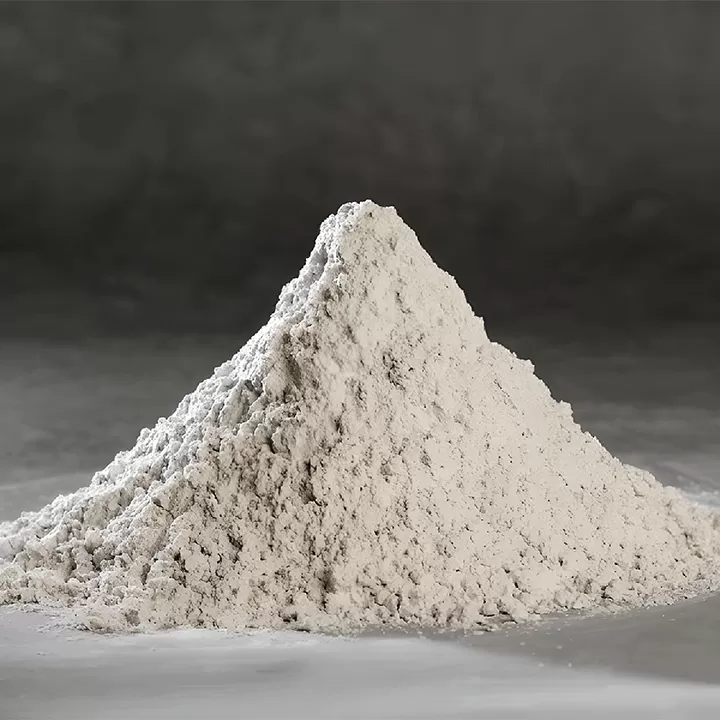
Fortune delivers ultrafine GGBS that exceeds ASTM C989 and EN 15167
standards, enabling contractors to cement the floor with superior results.
The Hidden Flaws in Conventional Floor Cementing
When you pour a concrete floor slab using only OPC, several mechanisms compromise performance:
Plastic shrinkage cracking: High heat of hydration accelerates moisture loss, leading to early-age micro-cracks that propagate under load.
Surface dusting & abrasion loss: Inadequate hydration near the surface produces weak laitance, reducing wear resistance by up to 40% in warehouse traffic.
Sulfate and chloride attack: OPC’s high C3A content (8–12%) reacts with soil-borne sulfates, causing expansion and spalling within 5–10 years.
Carbon footprint burden: OPC accounts for ~8% of global CO₂ emissions; each ton of OPC emits ~850 kg CO₂.
These flaws directly increase maintenance costs and shorten service life. To cement the floor without recurring failures, a fundamental change in binder chemistry is required.
The Science Behind GGBS – A Superior Binder to Cement the Floor
GGBS is a latent hydraulic material produced by rapid quenching of molten blast furnace slag. Its glassy structure contains >95% amorphous phases rich in CaO, SiO₂, Al₂O₃, and MgO. When activated by the alkaline environment of cement hydration, GGBS undergoes a two-stage reaction:
Primary hydration: OPC generates portlandite (Ca(OH)₂) and heat.
Pozzolanic & latent hydraulic reaction: GGBS consumes Ca(OH)₂ to form additional calcium silicate hydrate (C-S-H) and hydrotalcite-like phases, refining the pore structure.
At 50% replacement levels, the total C-S-H content increases by 15–20% compared to pure OPC paste. This densification reduces capillary porosity from 28% to below 18%, directly enhancing the matrix when you cement the floor. Furthermore, the secondary reaction lowers free lime, mitigating alkali-silica reaction (ASR) risks—a critical advantage for floors exposed to deicing salts or aggressive groundwater.
Quantifiable Benefits When You Cement the Floor with GGBS
Extensive testing (ASTM C109, C1202, C157) demonstrates measurable improvements by integrating GGBS into floor mixes. The table below summarizes key performance indicators from independent lab studies using Golden Fortune GGBS (specific surface 500–550 m²/kg, activity index ≥110% at 28 days).
Mechanical & Durability Metrics
Compressive strength (28 days): 50–58 MPa (40% GGBS replacement) vs. 45–50 MPa OPC only – 12% gain at later ages due to continued pozzolanic activity.
Abrasion resistance (ASTM C779 – rotating cutter): Depth of wear reduced from 2.1 mm to 1.2 mm after 100 cycles – a 43% improvement.
Chloride ion permeability (ASTM C1202): Charge passed drops from 3500 coulombs (OPC) to 1200 coulombs (40% GGBS) – classified as “very low” chloride penetration, protecting rebar in jointed slabs.
Drying shrinkage (ASTM C157): At 56 days, shrinkage decreases from 0.075% to 0.058% – minimizing curling and joint opening in large floor panels.
Sulfate resistance (ASTM C1012): Expansion after 12 months in 5% Na₂SO₄ solution: 0.025% (GGBS mix) vs. 0.18% (OPC) – 7x lower.
These data confirm that to cement the floor with GGBS is not merely an eco-friendly choice but a high-performance engineering decision.
Critical Application Scenarios – From Light Commercial to Heavy-Duty Floors
Different floor environments require tailored GGBS replacement rates. Based on field feedback from European and Asian projects, Golden Fortune recommends the following matrix:
Warehouse & Distribution Centers (30–40% GGBS)
Focus: abrasion resistance and low curling.
Mix: 350 kg/m³ total binder, w/b ratio 0.45–0.48. Achieves surface hardness of 6.5–7.0 mm indentation (Böhme test).
Heavy Industrial Floors (rolling loads, fork trucks) – 50% GGBS
Maximizes sulfate resistance and late strength gain (65 MPa at 90 days).
Addition of polypropylene microfibers (0.9 kg/m³) controls plastic shrinkage.
Food & Beverage Processing Floors – 40–50% GGBS + Stainless Steel Aggregate
Low heat of hydration reduces thermal cracking in thick slabs (200–300 mm).
Resists lactic acid and mild organic acids (pH 4–5).
External Pavements & Car Parks – 30% GGBS with air entrainment
Improved freeze-thaw durability (durability factor >90% after 300 cycles).
Reduced efflorescence due to lower Ca(OH)₂ content.
In each scenario, the binder system allows contractors to cement the floor with extended service intervals and lower whole-life costs.
Step-by-Step Mix Design and Execution to Cement the Floor Correctly
Improper mixing or curing negates the benefits of GGBS. Follow these technical protocols derived from ACI 302.1R and Golden Fortune’s application engineering team.
1. Binder Proportioning
Total binder content: 380–420 kg/m³ for floor slabs.
GGBS replacement: 30% to 50% by mass of total cementitious material. For rapid strength gain in cold weather (<10°C), limit to 30%; for massive pours, up to 70% is feasible.
Supplementary adjustments: Increase superplasticizer dosage by 10–15% due to GGBS’s higher surface area (500 m²/kg vs. OPC 350 m²/kg).
2. Mixing & Delivery
Extended mixing time: 90 seconds minimum to ensure uniform dispersion of GGBS particles.
Slump retention: Use polycarboxylate ether (PCE) based admixtures to maintain 180–200 mm slump for pumpable floor screeds.
3. Placement & Finishing
Initial set time may be delayed by 30–60 minutes compared to OPC alone – plan troweling schedule accordingly.
Apply monomolecular evaporation retarders if wind speed >8 km/h or RH <50%.
4. Curing – The Most Critical Step
GGBS mixes require continuous wet curing for minimum 7 days (preferably 14 days) to sustain secondary hydration. Use water-saturated burlap or curing compound (Type 2, white pigmented).
Failure to cure adequately reduces surface abrasion resistance by up to 35%.
By following these procedures, you cement the floor with consistent quality, avoiding common field failures observed in OPC-only slabs.
Sustainability and Life Cycle Cost – Why Specifiers Choose Golden Fortune
Embodied carbon reduction is now a contractual requirement for many industrial projects. Using 40% GGBS to cement the floor lowers CO₂ emissions by approximately 340 kg per cubic meter of concrete (based on UK Concrete Centre data). For a typical 10,000 m² warehouse floor (200 mm thick, 2,000 m³ concrete), this saves 680 metric tons of CO₂ – equivalent to 150 passenger cars off the road for one year.
Lifecycle cost analysis (LCCA) from a 15-year perspective:
Maintenance frequency: OPC floors require resurfacing every 5–7 years due to dusting and joint spalling. GGBS floors extend this to 10–12 years, reducing repair costs by 45%.
Downtime savings: Fewer shutdowns for floor repairs increase operational productivity. For a logistics hub, avoided downtime can exceed $200,000 annually.
LEED v4 credits: GGBS contributes to MR Credit 4 (recycled content, GGBS has 95% pre-consumer recycled content) and EQ Credit 7 (low-emitting materials).
Golden Fortune’s supply chain ensures consistent GGBS fineness and chemical modulus (CaO/SiO₂ = 1.0–1.2), enabling predictable performance across large-volume floor projects. Over 2.5 million tons of GGBS delivered globally reinforce our technical reputation.
Performance Data Summary – GGBS vs. OPC Floor Mixes
28-day flexural strength (modulus of rupture): 5.8 MPa (GGBS 40%) vs. 4.9 MPa (OPC) → +18%.
Surface electrical resistivity (indicator of corrosion protection): 45 kΩ·cm vs. 18 kΩ·cm → 2.5x higher.
Scaling resistance (ASTM C672 after 50 cycles): GGBS mix: rating 1 (very slight scaling); OPC: rating 3 (moderate to severe scaling).
Autogenous shrinkage (7 days): 65 microstrain (GGBS) vs. 110 microstrain (OPC) – reduces internal microcracking.
Frequently Asked Questions (FAQ)
Q1: What is the optimal GGBS replacement ratio when I want to cement the floor in cold weather
conditions?
A1: In ambient temperatures below 10°C, limit GGBS
replacement to 30–35% to avoid delayed setting. Use calcium nitrite-based
accelerating admixtures (2–3% by cement mass) to offset slower pozzolanic
reaction. For heated enclosures or summer pours, 50% replacement is acceptable
and enhances later strength.
Q2: Does using GGBS affect the final color or surface finish when I
cement the floor?
A2: Yes. GGBS
produces a lighter, more uniform grey-white finish compared to OPC’s darker
grey. This can be advantageous for light-reflecting floors. However, if a
specific color is required (e.g., architectural floors), use integral pigments
at 3–5% by cement weight. The lower Ca(OH)₂ content also reduces efflorescence
(white salt deposits) that often mar OPC surfaces.
Q3: Can GGBS-based mixes be used for self-levelling floor
screeds?
A3: Absolutely. Self-levelling compounds benefit from the
finer particle size distribution of GGBS (D90 < 20 µm). Modify the mix with
8–10% calcium sulfoaluminate (CSA) binder and a fluidifying agent to achieve
flow diameters >250 mm. Golden Fortune provides customized
GGBS grades for floor screed manufacturers, improving rheology and reducing
bleeding.
Q4: How does GGBS impact freeze-thaw durability when used to cement
the floor externally?
A4: While GGBS itself does not introduce air
voids, proper air entrainment (5–7% total air content) with a vinsol resin
admixture yields freeze-thaw durability factors exceeding 95% after 300 cycles
(ASTM C666). The denser pore structure of GGBS concrete actually reduces water
absorption, further protecting against ice lens formation. Always specify
air-entraining agents designed for slag blends.
Q5: What is the typical payback period for switching to GGBS despite
its slightly higher delivered cost per ton?
A5: Although GGBS may
cost 10–15% more than OPC per ton in some regions, the total concrete material
cost per m³ increases only 3–5% due to lower binder demand (improved packing).
The payback period from reduced maintenance and extended service life is usually
18–24 months. For a 20,000 m² industrial floor, net savings over 10 years exceed
$120,000. Many contractors switch permanently after one lifecycle cost
analysis.
Conclusion – Raise Your Floor Specifications with GGBS
To cement the floor in demanding industrial, commercial, or infrastructure settings requires more than conventional OPC. GGBS delivers quantifiable improvements: higher abrasion resistance, lower permeability, sulfate resilience, and a 40–50% reduction in embodied carbon. By following the mix design and curing protocols detailed above, engineers and contractors eliminate recurring floor failures. Partnering with an experienced supplier like Golden Fortune ensures consistent GGBS quality and technical support for large-scale projects. Transition to slag-enhanced floor cementing – your floor’s lifecycle and your bottom line will benefit.