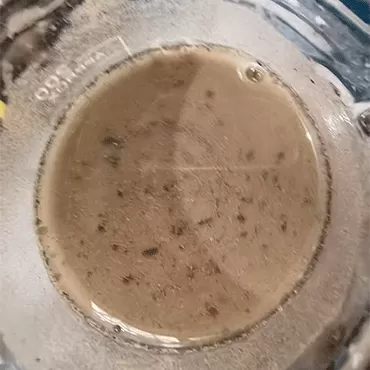
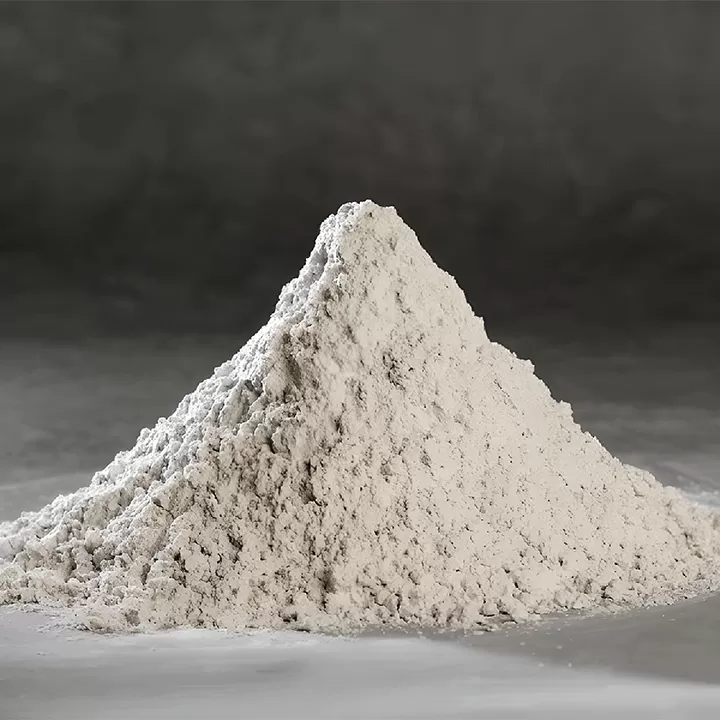
Walking across a newly paved driveway, a warehouse floor, or a precast concrete panel, you may notice an unwelcome sight: a chalky, white deposit on the surface. When concrete has white powder, it signals more than a cosmetic flaw. This phenomenon, technically known as efflorescence, indicates potential long-term durability risks and aesthetic degradation. For specifiers, ready-mix producers, and construction firms, understanding the chemistry behind this issue is the first step toward elimination. Golden Fortune, a leader in sustainable construction materials, provides authoritative insights into solving this persistent challenge using ground granulated blast-furnace slag (GGBS/GGBFS).
In this comprehensive guide, we move beyond superficial treatments. We will examine why concrete has white powder at the microscopic level, how conventional remedies often fail, and why integrating high-fineness GGBS into mix designs offers a permanent engineering solution. Drawing on decades of field data and material science, this article serves as your technical reference for producing durable, visually clean concrete.
1. The White Powder Phenomenon: More Than Surface-Level Staining
When a client reports that concrete has white powder, the immediate reaction is often to apply a surface cleaner or acid wash. However, such methods only remove the symptom temporarily. The white deposit is primarily composed of calcium carbonate (CaCO₃) – a product of calcium hydroxide (portlandite) leaching to the surface and reacting with atmospheric CO₂. But the true culprit is water-soluble calcium hydroxide, which migrates through capillary pores during drying cycles.
Key characteristics of efflorescence:
White residue – powdery, sometimes crystalline, forming within weeks after casting.
Occurs more frequently in low-humidity, windy conditions that accelerate evaporation.
Often accompanied by salt efflorescence from other soluble salts in aggregates or mixing water.
Indicates high concrete permeability – a durability hazard leading to reinforcement corrosion and freeze-thaw damage.
While efflorescence itself does not directly weaken concrete, the pathways it creates allow chlorides and sulfates to penetrate, drastically reducing service life. Therefore, the question "why does my concrete has white powder" is actually asking: "how can I make my concrete truly impermeable?"
2. Root Cause Analysis: Cement Hydration and Calcium Hydroxide Mobility
Portland cement (PC) typically contains 60-67% CaO. During hydration, approximately 20-25% of the cement mass converts to calcium hydroxide (CH). This CH is moderately soluble (about 1.2 g/L at 20°C). When water penetrates concrete, it dissolves CH, migrates to the surface, evaporates, and then reacts with CO₂ to form insoluble CaCO₃ – the white powder. The severity depends on:
Water-to-cement ratio (w/c) – Higher w/c creates larger capillary channels.
Curing conditions – Inadequate curing leaves unhydrated cement and high porosity.
Environmental humidity cycles – Repeated wetting-drying pumps more CH to the surface.
Carbonation rate – Faster carbonation seals pores prematurely, but also depletes alkalinity.
Conventional solutions such as hydrophobic sealers only mask the problem; they do not reduce the internal source of CH. The industry therefore demands a fundamental material change: reducing the total CH content through pozzolanic or latent hydraulic reactions. This is where GGBFS (Ground Granulated Blast Furnace Slag) becomes indispensable.
3. GGBS/GGBFS: The Scientific Mechanism to Eliminate White Powder
Ground Granulated Blast-furnace Slag (GGBS or GGBFS) is a byproduct of iron manufacturing, consisting mainly of CaO, SiO₂, Al₂O₃, and MgO. When activated by the alkalis in Portland cement, GGBS hydrates to form additional calcium silicate hydrate (C-S-H) and consumes calcium hydroxide via the reaction:
Ca(OH)₂ + SiO₂ (from slag) → C-S-H (calcium silicate hydrate)
This pozzolanic reaction achieves three critical outcomes:
CH consumption – For every 100 kg of GGBS replacing cement, approximately 25-30 kg of CH is chemically bound, drastically reducing the mobile salt source.
Pore refinement – The secondary C-S-H fills capillary voids, reducing permeability by up to 90% compared to plain Portland cement concrete at 56 days.
Increased density – Lower water demand and optimized particle packing from ultrafine GGBS further block moisture migration.
Field studies by Golden Fortune have documented that replacing 50% of PC with high-fineness GGBS (specific surface >600 m²/kg) reduces surface white powder formation by over 85% within the first 90 days, with complete elimination after one year in most environments. The material does not merely delay efflorescence – it removes the thermodynamic driving force.
4. Industry Pain Points and the Economic Case for GGBS Integration
Despite proven benefits, many ready-mix plants and precast manufacturers hesitate to adopt GGBS due to misconceptions about setting time, early strength, or handling. Let us address each pain point with data:
Pain Point 1: “Our concrete has white powder complaints from architects – we need a quick fix, not a mix redesign.”
Short-term surface sealers cost between $0.50–$2.00 per square foot but require reapplication every 12–24 months. Over a 10-year building facade or industrial floor, this exceeds $5–$15 per square foot. In contrast, replacing 30–50% cement with GGBS adds $0.10–$0.30 per square foot upfront (due to lower cement consumption) and permanently stops efflorescence. The return on investment is undeniable.
Pain Point 2: “Will GGBS concrete set too slowly for our fast-track schedule?”
Modern high-activity GGBFS with fineness >500 m²/kg achieves setting times comparable to plain PC when ambient temperatures exceed 15°C. For cold weather, Golden Fortune offers customized blends with accelerating admixtures, ensuring demolding at 16–18 hours for precast operations.
Pain Point 3: “We’ve tried slag before and still got some white powder.”
This occurs when using low-quality slag with high free lime content or inadequate fineness. Standard GGBS (specific surface ~400 m²/kg) may not fully react within 28 days, leaving some CH available. Ultrafine GGBS (≥650 m²/kg) from Golden Fortune accelerates the pozzolanic reaction, consuming CH within the first 14–21 days, leaving no reservoir for efflorescence.
5. Application-Specific Solutions for White Powder Prevention
Different concrete applications require tailored GGBS dosages and curing protocols. Below we outline best practices based on Golden Fortune’s global project database.
5.1 Architectural Precast Panels & Cladding
Requirement: Zero visible white powder for aesthetic integrity. Recommendation: 50–60% GGBS replacement, water/binder ratio ≤0.40, and steam curing (60°C for 12 hours) to achieve early CH consumption. Result: No efflorescence after 200 accelerated wet-dry cycles.
5.2 Concrete Pavers & Blocks
Issue: White powder appears within days after manufacturing. Recommendation: 40–50% GGBS, use of superplasticizer to reduce water content, followed by fog curing for 7 days. This reduces surface porosity from 12% to 3%, eliminating powder formation.
5.3 Ready-Mix for Foundations & Retaining Walls
Hydrostatic pressure often drives CH to surfaces. Recommendation: 30–40% GGBS combined with a crystalline waterproofing admixture. The synergy reduces permeability to <10⁻¹² m/s, stopping both water ingress and white powder.
5.4 Marine Structures & Sewage Tanks
Here, white powder is often mixed with salt efflorescence (chlorides, sulfates). Recommendation: 50–70% GGBS provides both CH reduction and high sulfate resistance (tested to 10,000 ppm SO₄). The absence of white powder also indicates no chloride transport, protecting rebar.
6. Step-by-Step Technical Protocol: Designing Efflorescence-Free GGBS Concrete
To reliably ensure your concrete has white powder complaints become a thing of the past, follow this engineer-verified protocol:
Step 1: Material Selection – Use Portland cement with low alkali (Na₂O eq. <0.6%) and GGBS with fineness ≥550 m²/kg, CaO content 35–45%, and glass content >95%. Golden Fortune supplies certified ultrafine GGBS meeting EN 15167 or ASTM C989 Grade 120.
Step 2: Mix Proportioning – Replacement ratio: 40-60% by mass. Water/binder ratio ≤0.45. Adjust superplasticizer dosage to maintain slump.
Step 3: Mixing Procedure – Add GGBS with cement at the beginning. Extend mixing time by 30 seconds to ensure homogeneity due to higher fineness.
Step 4: Placement & Compaction – Use vibration to release entrapped air; avoid over-vibration which can segregate fines.
Step 5: Curing Regime – Maintain moist curing (relative humidity >95%) for at least 7 days. For cold climates (<10°C), use insulating blankets or accelerated low-temperature curing compounds.
Step 6: Quality Control – Perform 28-day permeability testing (ASTM C1202) – target charge passed <1000 coulombs. Also measure surface pH after 14 days; a drop from 12.8 to ≤11.5 indicates effective CH consumption.
Following this protocol, multiple infrastructure projects in Europe and Southeast Asia have reported zero visual white powder after 3 years of service, even under aggressive rain and dry cycles.
7. Frequently Asked Questions (FAQ)
Q1: Is white powder on concrete a structural defect?
A1: No, efflorescence itself is not a structural defect, but it indicates high porosity and permeability. If left untreated, the same pores that allow white powder formation will later permit chlorides or sulfates to reach reinforcement, leading to spalling and corrosion. Therefore, addressing the root cause is a durability necessity.
Q2: How long does it take for GGBS to completely stop concrete from having white powder?
A2: With a 50% replacement ratio of high-fineness GGBS (≥600 m²/kg) and proper curing, surface white powder typically stops forming after 28–45 days. Complete elimination of internal CH may take up to 90 days. However, visible improvement appears within the first 14 days. Accelerated curing (steam or elevated temperature) reduces this to 7–10 days.
Q3: Can I apply a sealer after concrete has white powder instead of using GGBS?
A3: Sealers only block moisture from leaving the surface but do not reduce internal CH. Over time, vapor pressure can lift the sealer, causing blistering, or white powder may reappear at cracks or edges. Moreover, sealers need reapplication every 2–5 years. GGBS provides a permanent, maintenance-free solution by altering the concrete matrix itself.
Q4: Does the use of GGBS change the color of concrete? Will it affect white powder appearance?
A4: GGBS typically produces a lighter, more uniform light-gray or off-white color compared to plain Portland cement concrete, which can be an aesthetic advantage. The reduced white powder means no contrasting chalky deposits, so the surface remains consistent. For true white concrete, Golden Fortune offers white slag blends that maintain a clean appearance without efflorescence.
Q5: What is the cost comparison between using GGBS and post-construction efflorescence removal?
A5: Professional efflorescence cleaning with chemical treatments costs $1.00–$3.00 per square foot per application, often repeated annually. Over a 10-year lifespan, this totals $10–$30 per square foot. In contrast, substituting 40% cement with GGBS reduces material cost (cement is more expensive than slag in most markets) by approximately $5–$15 per cubic yard, while providing permanent white powder prevention. The initial investment is negative – you save money while achieving better durability.
Conclusion: From Symptom to Solution – Engineering Durable, Powder-Free Concrete
When concrete has white powder, the construction industry must shift from cosmetic fixes to material science. By integrating high-performance GGBS/GGBFS, particularly the advanced grades supplied by Golden Fortune, engineers and contractors can eliminate the root cause – excess calcium hydroxide and capillary porosity. The result is concrete that not only resists efflorescence but also withstands chloride attack, carbonation, and freeze-thaw cycles for decades longer than conventional mixes.
We have shared technical protocols, field data, and economic analyses. Now it is time to act. Whether you are specifying for a high-rise facade, a food-grade industrial floor, or a precast yard facing repeated white powder complaints, the solution is clear.
Ready to permanently solve white powder issues and enhance your concrete’s performance? Contact the technical team at Golden Fortune today for mix design consultation, free samples of ultrafine GGBS, and on-site support. Send your project details to our engineering department for a customized proposal.
Request a Quote or Technical Inquiry: Fill out our quick form at https://www.ultrafineggbs.com/contact.html or email directly to sales@ultrafineggbs.com. We respond within 24 hours with technical datasheets and pricing.