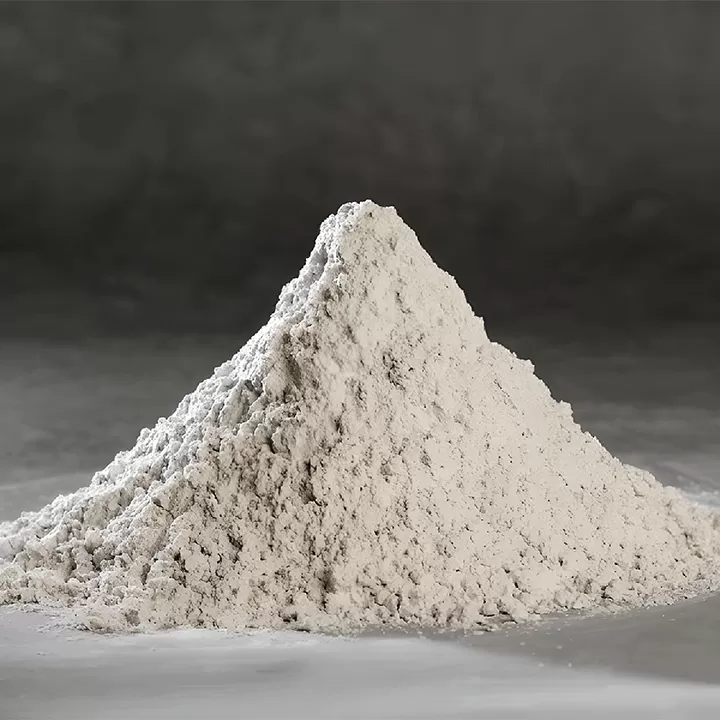
The term portland chemical refers to the complex mineralogy of Portland cement clinker. Understanding these phases is important for concrete mix design, especially when blending with supplementary cementitious materials (SCMs) like ground granulated blast furnace slag (GGBFS). Golden Fortune supplies high-quality GGBFS to over 40 countries, and we work closely with concrete engineers to optimize binder systems. This article explains the seven major chemical components and their practical effects.
1. Tricalcium Silicate (C₃S) – The Strength Provider
Tricalcium silicate (Ca₃SiO₅) is the most abundant phase in Portland cement, typically 45–65% by weight. The portland chemical reaction of C₃S with water produces calcium silicate hydrate (C-S-H) gel and calcium hydroxide (CH). This reaction controls early strength (up to 28 days).
Typical content: 50–60% in Type I cement.
Hydration heat: 500 J/g, high early heat release.
Contribution to 28-day strength: 70–80%.
When GGBFS replaces part of the cement, the additional CH from C₃S activates the latent hydraulic properties of slag. Golden Fortune's ultrafine GGBFS (specific surface >600 m²/kg) reacts faster with CH, improving early strength of blended mixes.
2. Dicalcium Silicate (C₂S) – Long-Term Strength
Dicalcium silicate (Ca₂SiO₄) hydrates more slowly than C₃S. This portland chemical phase contributes to strength beyond 28 days, sometimes up to one year. Typical content is 15–30%.
Hydration heat: 250 J/g, lower than C₃S.
Reaction rate: 5–10 times slower than C₃S.
Final strength potential: Similar to C₃S after 1 year.
For mass concrete structures (dams, large foundations), high C₂S cement reduces thermal cracking. Combining with GGBFS further lowers heat of hydration. Golden Fortune provides technical data on optimum slag replacement levels for low-heat applications.
3. Tricalcium Aluminate (C₃A) – Setting and Sulfate Resistance
Tricalcium aluminate (Ca₃Al₂O₆) is the most reactive portland chemical phase. It reacts violently with water, causing flash setting unless gypsum is added. C₃A content determines sulfate resistance.
Typical content: 5–12% in general-purpose cement.
Low C₃A (≤5%): Sulfate-resisting cement (Type V).
High C₃A: Vulnerable to sulfate attack in soil or seawater.
Gypsum added: 3–5% to regulate setting.
GGBFS does not contain C₃A. Replacing 50% of Portland cement with slag reduces the effective C₃A content, improving sulfate resistance. Golden Fortune's slag has been used in marine piles and wastewater treatment plants.
4. Tetracalcium Aluminoferrite (C₄AF) – Color and Durability
Tetracalcium aluminoferrite (Ca₄Al₂Fe₂O₁₀) gives gray color to cement. This portland chemical phase has low hydraulic activity but contributes to late-age strength and abrasion resistance.
Typical content: 5–12%.
Hydration heat: 200 J/g, lowest among all phases.
Iron content: Higher C₄AF produces darker cement.
In roller-compacted concrete (RCC) pavements, higher C₄AF improves wear resistance. When blending with light-colored slag, the final concrete shade can be controlled. Golden Fortune offers both standard and white slag for architectural concrete.
5. Calcium Sulfate (Gypsum) – Setting Regulator
Gypsum (CaSO₄·2H₂O) is interground with clinker to prevent flash setting. The portland chemical interaction between C₃A and gypsum forms ettringite (AFt) which slows down hydration.
Optimum SO₃ content: 2.5–3.5% by weight.
Too little gypsum: Flash set, unworkable concrete.
Too much gypsum: False set, expansion cracking.
When using GGBFS, the optimum SO₃ level may shift. Golden Fortune's laboratory can test blended binders to determine the ideal gypsum content for your mix.
6. Minor Components: Alkalis, Magnesia, and Free Lime
Minor compounds significantly affect durability. Key portland chemical elements to monitor:
Alkalis (Na₂O, K₂O): Above 0.6% can cause alkali-silica reaction (ASR) with reactive aggregates. Low-alkali cement (≤0.6%) is specified for such aggregates.
Magnesia (MgO): Above 5% leads to unsoundness (delayed expansion). Soundness test per ASTM C151.
Free lime (CaO): Poorly burned lime causes unsoundness. Limit <1%.
GGBFS has very low alkali content (typically <0.5% Na₂Oeq). Replacing cement with slag reduces the total alkali load, mitigating ASR risk. Golden Fortune's GGBFS meets EN 15167 and ASTM C989 requirements.
7. Chemical Interactions with GGBFS – Synergy for Performance
Portland cement and GGBFS form a complementary system. The portland chemical hydration produces calcium hydroxide (CH), which activates the glassy phase of slag. In turn, slag consumes CH and produces additional C-S-H gel.
Benefits of blending: Lower heat of hydration, higher sulfate resistance, reduced ASR, improved chloride penetration resistance.
Typical replacement levels: 30–50% for general concrete; up to 70% for mass concrete.
Early strength: Use ultrafine GGBFS (≥600 m²/kg) to offset slower strength gain.
Golden Fortune produces ultrafine GGBFS with Blaine fineness 650–700 m²/kg, which achieves 28-day activity index >110% (compared to 95% for standard slag). This allows higher replacement without delaying construction schedules.
Common Industry Pain Points and Solutions
Pain point: Variable cement chemistry causing inconsistent setting time. Solution: Perform a pilot test with your cement and slag combination. Golden Fortune offers free lab blending trials.
Pain point: Sulfate attack in underground structures. Solution: Use low C₃A cement (≤5%) plus 50% GGBFS. This combination reduces C₃A equivalent to below 3%.
Pain point: Thermal cracking in thick sections. Solution: Replace 50–70% of cement with GGBFS. The heat of hydration drops by 40–60%.
Why Golden Fortune Is a Trusted Partner for GGBFS
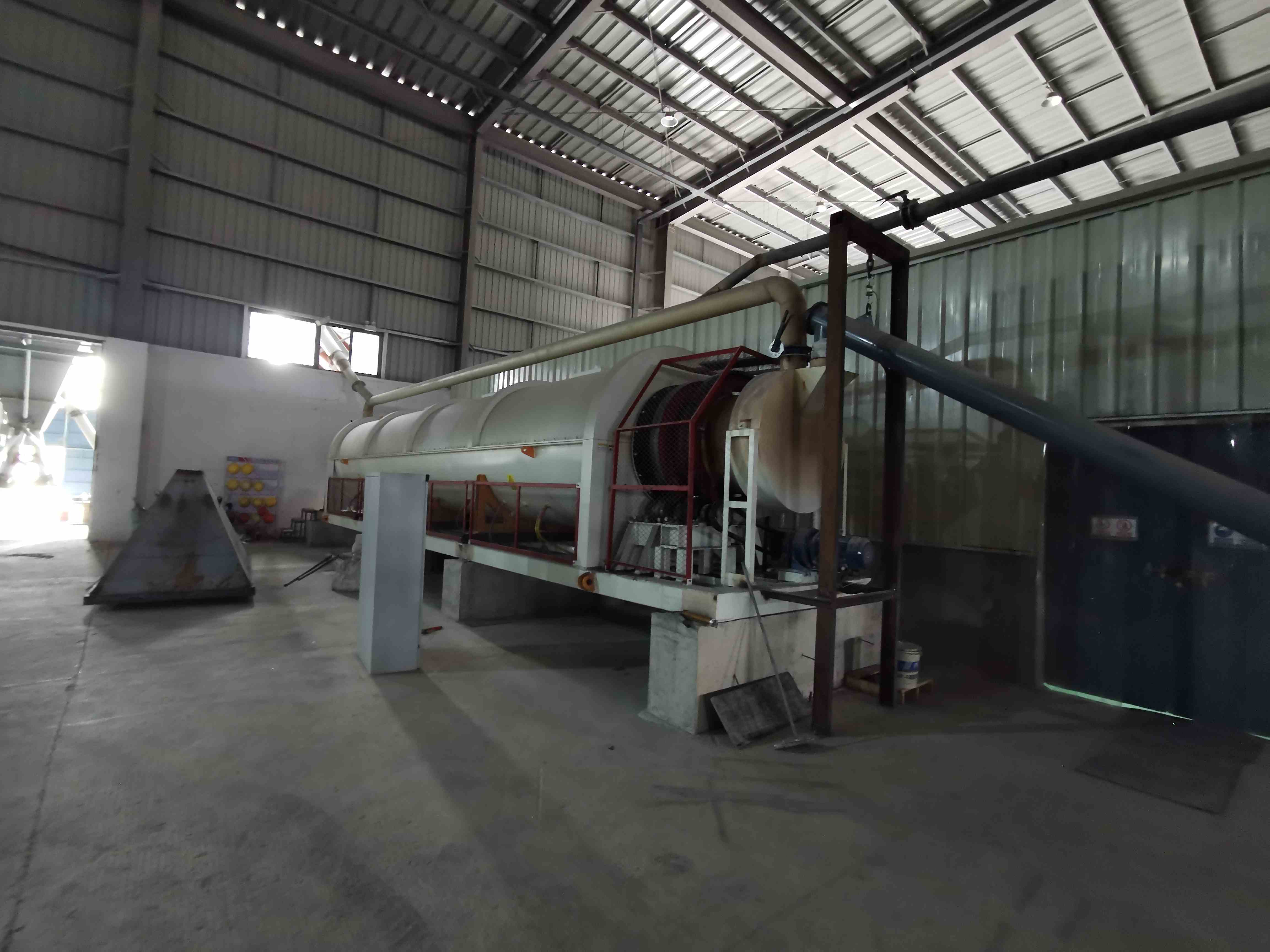
Golden Fortune has supplied over 2 million tons of GGBFS to ready-mix and precast plants worldwide. Our products complement the portland chemical system by improving long-term durability. Advantages include:
Ultrafine grinding technology: Particle size D90 ≤ 16µm, increasing reactivity.
Quality consistency: Daily sampling for chemical composition (XRF) and activity index.
Bulk and bagged supply: 1.5 MT jumbo bags, 40 kg bags, or pneumatic tankers.
Technical support: On-site mix design optimization and trial batch assistance.
Frequently Asked Questions (FAQ)
Q1: What is the difference between Type I and Type V Portland cement
chemically?
A1: Type V (sulfate-resisting) has C₃A ≤5%, while Type I
has 5–12%. Type V also often has lower C₃S and higher C₂S to reduce heat. Both
are covered under ASTM C150.
Q2: How does GGBFS affect the portland chemical hydration
heat?
A2: GGBFS hydrates slowly and consumes CH. At 50% replacement,
total heat of hydration at 7 days is about 50% of plain cement. This reduces
thermal cracking risk.
Q3: Can I use GGBFS with all types of portland
cement?
A3: Yes, but the optimum replacement level depends on cement
C₃A and alkali content. Golden Fortune provides compatibility testing. Higher
C₃A cements require more gypsum when blended with slag.
Q4: What is the maximum SO₃ content in a portland-slag blended
cement?
A4: ASTM C595 allows up to 4% SO₃ for blended cements (Type
IS). Too much SO₃ can cause delayed ettringite formation. Golden Fortune
recommends keeping total SO₃ ≤3.5% for normal applications.
Q5: How do I prevent false set when using high-alkali cement and
slag?
A5: False set occurs when gypsum dehydrates to hemihydrate.
Use cement with controlled grinding temperature. Adding slag does not cause
false set; instead, extend mixing time by 30 seconds. Golden Fortune's ultrafine
slag improves workability without increasing water demand.
Request a Technical Data Sheet or Sample for Your Concrete Mix
Understanding the portland chemical composition of your binder is the first step to durable concrete. Golden Fortune offers free samples of ultrafine GGBFS (2 kg) and a customized mix design report based on your local cement and aggregates. We also provide XRD and XRF analysis of blended pastes.
Contact Golden Fortune's technical
team:
Website: https://www.ultrafineggbs.com/
Email:
sales@ultrafineggbs.com
Phone:0086-18065065515
Send your cement mill certificate (chemical analysis) and target strength. Golden Fortune will respond with a recommended GGBFS grade and replacement ratio within 2 business days.