The global construction sector faces a defining challenge: reducing carbon emissions without sacrificing structural integrity. Traditional binder production accounts for roughly 8% of global carbon dioxide emissions, primarily driven by the calcination of limestone. As regulatory bodies tighten carbon limits, the demand for a viable alternative to portland cement has moved from a niche environmental goal to a core commercial necessity.
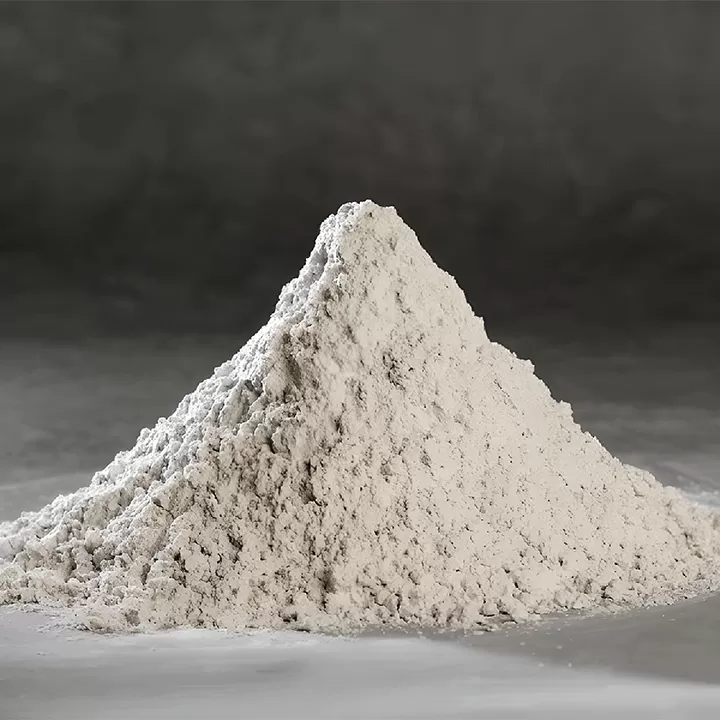
For ready-mix concrete producers, precast manufacturers, and infrastructure developers, selecting the right supplementary cementitious material (SCM) is critical. Ground Granulated Blast-Furnace Slag (GGBS or GGBFS) has emerged as one of the most reliable options available today. This guide analyzes how GGBS serves as a high-performance substitute, offering a balance of environmental compliance and enhanced durability.
By understanding the chemical and physical properties of industrial by-products, procurement specialists can make data-driven decisions. High-quality SCMs, such as those supplied by Golden Fortune, allow modern projects to meet strict green building certifications. Let's examine the technical mechanisms, application frameworks, and market realities of clinker substitution.
The Decarbonization Imperative in Modern Cement Production
Traditional Ordinary Portland Cement (OPC) manufacturing is inherently carbon-intensive. For every ton of OPC clinker produced, approximately 0.8 to 0.9 tons of CO2 are released into the atmosphere. Roughly 60% of these emissions stem from the chemical decarbonation of raw materials (limestone conversion to lime), while the remaining 40% result from fuel combustion in high-temperature kilns.
To mitigate this impact, the international construction industry is rapidly adopting low-clinker formulations. Incorporating a high-quality alternative to portland cement allows producers to significantly lower the embodied carbon of concrete mixes. This transition is further accelerated by global carbon tax frameworks and green procurement policies, such as LEED and BREEAM certifications.
However, simple substitution is not merely about environmental compliance; it must maintain or improve the physical properties of the concrete. Ready-mix concrete suppliers require materials that integrate into existing batching plants without requiring extensive equipment modifications. This operational compatibility makes slag-based binders highly practical for industrial-scale deployment.
Why GGBS/GGBFS Outperforms Other supplementary Materials
When searching for a reliable alternative to portland cement, engineers typically evaluate fly ash, silica fume, metakaolin, and GGBS. While each material offers distinct advantages, GGBS consistently demonstrates superior versatility across large-scale infrastructure projects. Its chemical composition, rich in reactive silicates and aluminates, allows it to actively participate in long-term hydration reactions.
Unlike fly ash, which can suffer from supply volatility due to coal plant retirements, GGBS is a reliable co-product of the steel industry. This consistent supply chain makes it an attractive option for long-term municipal contracts. Furthermore, GGBS particles exhibit a glassy, amorphous structure that optimizes water demand and improves paste rheology during mixing.
Industry specialists like Golden Fortune provide finely graded blast-furnace slag that meets stringent international quality standards. The controlled particle size distribution of premium GGBS ensures predictable setting times and high ultimate strength. This reliability helps mitigate the batch-to-batch variations often associated with less refined alternative binders.
The "Synergy-Substitution Matrix" (SSM) Framework
To successfully integrate industrial co-products, we utilize a proprietary structural framework called the Synergy-Substitution Matrix (SSM). This framework evaluates three core variables: hydration kinetics, particle packing density, and chemical durability. Balancing these factors prevents the early-age strength deficits sometimes associated with alternative binders.
The SSM framework operates on the principle that GGBS does not merely replace OPC; it enhances the overall cementitious matrix. When OPC hydrates, it produces calcium silicate hydrate (C-S-H) gel and calcium hydroxide (CH). The addition of a reactive alternative to portland cement triggers a secondary pozzolanic reaction, converting free CH into additional, high-density C-S-H gel.
This secondary reaction refines the pore structure of the concrete, reducing permeability and limiting the ingress of harmful ions. Consequently, concrete formulated under the SSM guidelines exhibits exceptional resistance to chloride attack, sulfate exposure, and alkali-silica reactions (ASR). This makes it highly suitable for marine and underground structures.
The Counter-Intuitive Truth: The Zero-Clinker Fallacy
A common misconception in sustainable construction is that a 100% clinker-free concrete mix is always the most environmentally friendly option. While geopolymer or alkali-activated binders can achieve zero OPC content, they often require highly corrosive chemical activators like sodium silicate or sodium hydroxide. The manufacturing, transport, and handling of these activators introduce significant carbon overheads and safety challenges.
Therefore, a balanced, optimized blend typically yields a better practical outcome than attempting complete clinker elimination. Utilizing GGBS as a partial alternative to portland cement at replacement levels between 50% and 70% offers an optimal balance of carbon reduction, cost-efficiency, and ease of site application.
By pairing high-volume slag mixes with targeted chemical admixtures, producers can achieve rapid early strength development without relying on high-carbon clinker. This approach reduces overall project risk while lowering the carbon footprint. Working with established supply partners like Golden Fortune ensures access to the technical support required to design these balanced, high-performance mixtures.
GGBS Substitution & Performance Assessment Checklist
Before implementing a high-volume slag mix design, technical teams should conduct a thorough evaluation of raw materials and ambient conditions. The following checklist serves as an initial template to ensure predictable on-site performance when utilizing slag as a primary cementitious component.
| Evaluation Parameter | Standard Target Range | Impact on Concrete Performance | Mitigation Strategy |
|---|---|---|---|
| Blaine Fineness | 350 - 450 m²/kg (Ultra-fine: >500) | Influences rate of hydration and early strength. | Select specialized grades from suppliers like Golden Fortune. |
| Replacement Level | 30% to 70% by weight | Affects heat of hydration and setting times. | Adjust replacement based on structural mass and thermal limits. |
| Glass Content | Min 90% (Amorphous phase) | Determines hydraulic reactivity of the slag. | Verify source quality through mineralogical XRD analysis. |
| Curing Temperature | 15°C to 30°C (Optimal) | Low temperatures can delay early-age strength. | Utilize thermal insulation or accelerators in cold-weather pours. |
Addressing Critical Technical Doubts
When transitioning to slag-based mixes, engineering teams frequently raise valid questions regarding long-term durability and on-site handling. Below, we address three common concerns observed in modern high-volume slag applications.
Doubt 1: Does high GGBS content negatively impact early-age
strength?
While slag-blended concrete typically exhibits slower
initial strength gain compared to pure OPC, this can be managed. By optimizing
the particle size distribution of the GGBS and using appropriate water-reducing
admixtures, 28-day design strengths can be consistently met, with long-term
strength (at 56 and 90 days) often exceeding standard OPC mixes.
Doubt 2: How does GGBS perform under aggressive chemical
environments?
GGBS is highly effective in aggressive environments.
Its lower calcium hydroxide content reduces susceptibility to acid and sulfate
attacks. Additionally, the refined pore structure limits chloride ion
penetration, protecting steel reinforcement in marine structures from premature
corrosion.
Doubt 3: Are slag-blended mixes prone to increased shrinkage
cracking?
Because GGBS reduces the peak heat of hydration, thermal
cracking risks are significantly lower in mass concrete pours. Standard drying
shrinkage is comparable to OPC, provided that appropriate curing practices are
maintained during the critical early hydration phase.
Frequently Asked Questions
Q1: What makes GGBS a viable alternative to portland
cement?
A1: GGBS acts as a direct hydraulic binder replacement due
to its rich silicate and aluminosilicate content. When combined with water and
activated by the calcium hydroxide produced during OPC hydration, it forms
additional calcium silicate hydrate (C-S-H) gel, which is the primary source of
concrete strength and durability.
Q2: Can GGBS be used in cold-weather concrete
applications?
A2: Yes, but setting times may be extended under cold
conditions. In cold weather, it is advisable to optimize the substitution rate
(typically keeping it closer to 30-40%) or to utilize heated curing procedures
and chemical accelerators to maintain progress schedules.
Q3: How does utilizing GGBS contribute to LEED
certifications?
A3: GGBS is a recycled industrial co-product. Using
it as an alternative to portland
cement reduces the embodied carbon of the concrete. This qualifies
the project for points under Materials and Resources (MR) credits, specifically
for environmental product declarations (EPDs) and sourcing of raw materials.
Q4: What is the shelf life of raw GGBS compared to standard
OPC?
A4: When stored in dry, weather-protected silos, GGBS generally
has a longer shelf life than OPC. Because it requires chemical activation (such
as the alkaline environment provided by hydrating cement) to set, it is less
susceptible to moisture-induced pre-hydration during storage.
Q5: How does the cost of GGBS compare to traditional
cement?
A5: In most industrial markets, GGBS is priced competitively
with, or slightly below, standard OPC. Additionally, the long-term durability
improvements it provides can lower lifecycle maintenance costs, offering
economic benefits over the lifespan of the structure.
Conclusion & Actionable Next Steps
Sourcing a reliable alternative to portland cement is a practical strategy for modern construction. GGBS offers a proven way to reduce environmental impact while maintaining high durability and long-term mechanical strength. Integrating this material allows ready-mix suppliers and developers to meet both regulatory standards and client sustainability goals.
Successful implementation requires careful mix design, strict quality control, and dependable supply partners. Selecting the right replacement levels and sourcing materials that meet international standards are key steps to ensuring predictable on-site performance.
For technical consultations, custom mix optimization, and reliable bulk supply of high-grade GGBS, consider partnering with established specialists. Contact Golden Fortune today to evaluate your project specifications and receive a tailored material assessment.