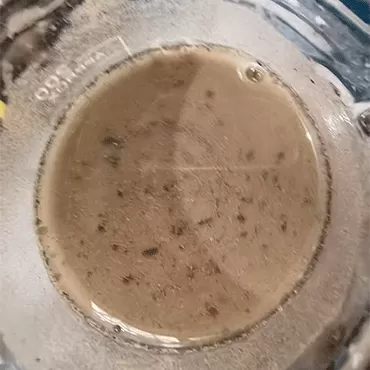
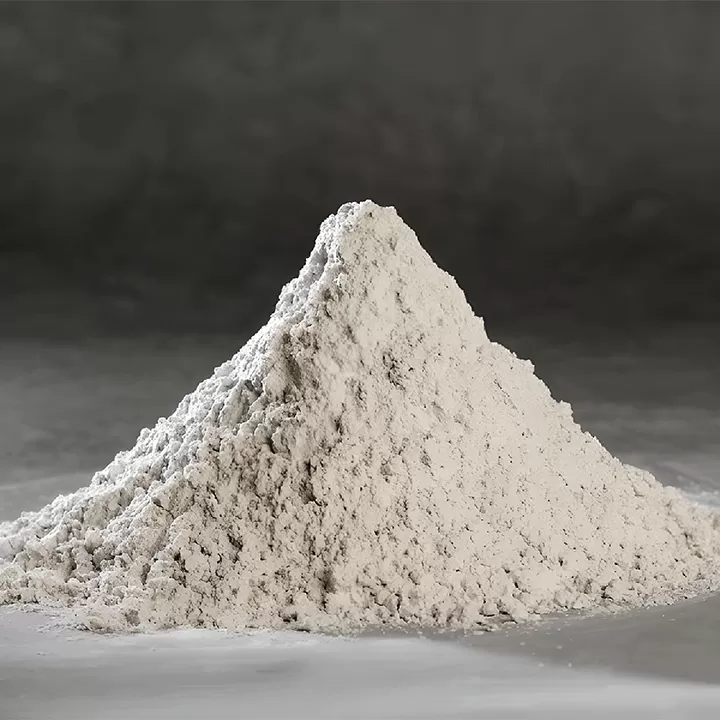
As the primary binder in concrete, portland tsement provides the strength and durability required for foundations, pavements, and precast elements. However, standard portland tsement alone may exhibit limitations in aggressive environments—high heat of hydration, sulfate attack susceptibility, or alkali-silica reaction (ASR). This technical paper examines the phase composition of portland tsement (C3S, C2S, C3A, C4AF) and how blending with ground granulated blast furnace slag (GGBFS) modifies setting behavior, long-term strength, and chemical resistance. Golden Fortune supplies high-reactivity ultrafine GGBFS that, when combined with portland tsement, produces ternary blends suitable for marine structures, mass foundations, and sulfate-rich soils.
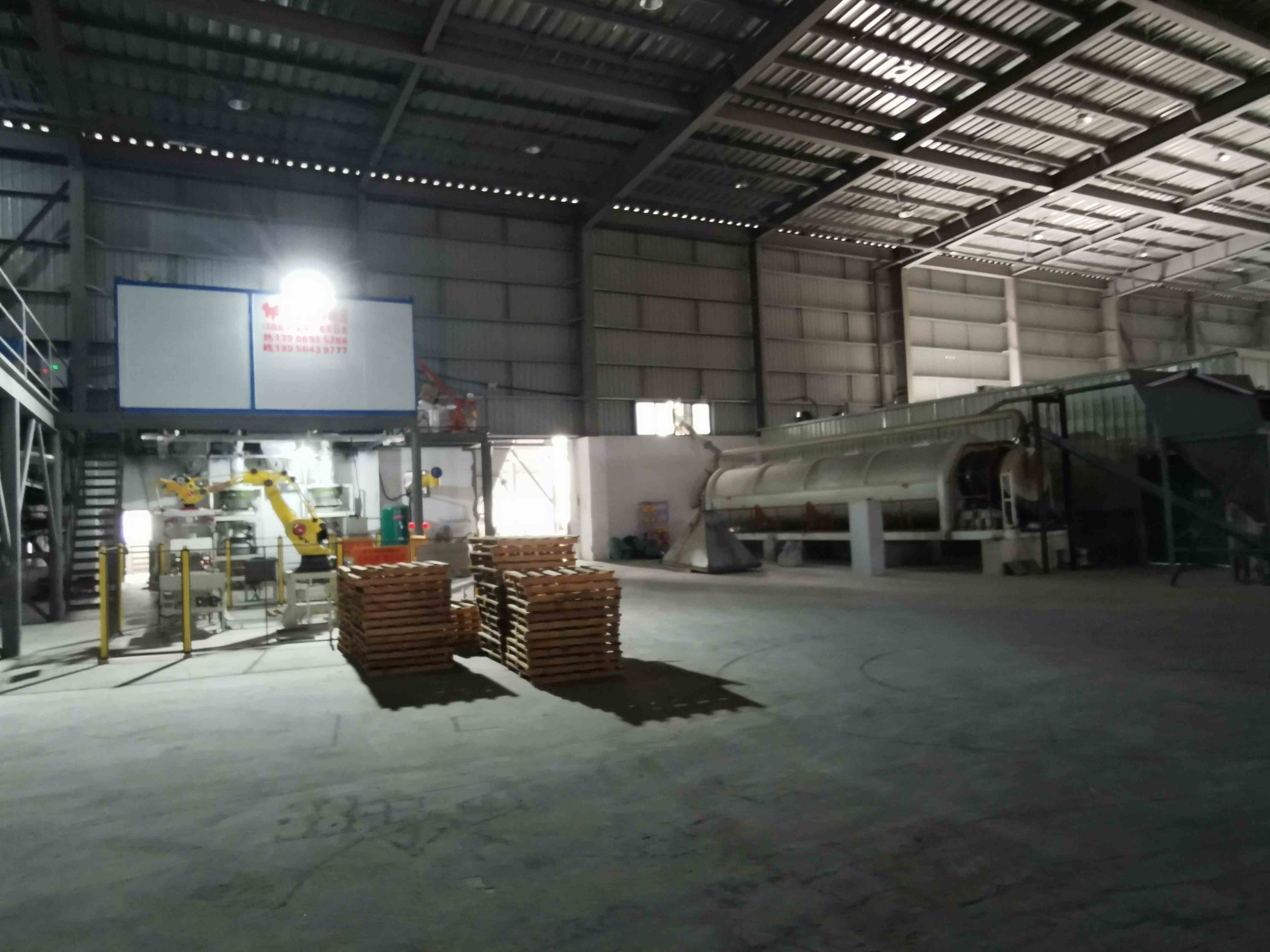
1. Composition and Hydration of Portland Tsement
Portland tsement is manufactured by sintering a precisely blended mixture of limestone, clay, and iron ore at ~1450°C, producing clinker nodules. After cooling, the clinker is ground with a small amount of gypsum (calcium sulfate) to control setting. The four primary clinker phases are:
Alite (C3S – tricalcium silicate) : 50–70% by mass. Reacts rapidly, responsible for early strength (1–28 days).
Belite (C2S – dicalcium silicate) : 15–30%. Hydrates slowly, contributes to strength gain beyond 28 days.
Aluminate phase (C3A – tricalcium aluminate) : 5–10%. Very reactive; contributes to early heat release and flash setting if gypsum is insufficient. Susceptible to sulfate attack.
Ferrite phase (C4AF – tetracalcium aluminoferrite) : 5–15%. Low reactivity, influences cement color (gray).
The hydration process generates calcium silicate hydrate (C-S-H) gel—the primary binding phase—and portlandite (Ca(OH)₂). However, portlandite is soluble and can be leached in water, reducing durability. This is where supplementary cementitious materials (SCMs) like GGBFS react with portlandite to form additional C-S-H, densifying the microstructure.
2. Performance Limitations of Standard Portland Tsement
While portland tsement is versatile, certain applications reveal inherent weaknesses:
High heat of hydration – Mass concrete pours (dams, large foundations) experience thermal gradients exceeding 20°C, leading to cracking.
Sulfate attack – Soils or groundwater with high sulfate content react with C3A to form ettringite and gypsum, causing expansion and disintegration.
Alkali-silica reaction (ASR) – When reactive aggregates are used, alkalis from cement (Na₂O, K₂O) trigger gel formation that expands.
Chloride ingress – Reinforced concrete in marine or deicing salt environments suffers corrosion due to chloride permeability.
Each of these issues can be mitigated by reducing the portland tsement content and replacing a portion with GGBFS. A 40–50% slag replacement lowers heat of hydration by 30%, improves sulfate resistance (due to reduced C3A and pore refinement), and cuts chloride diffusivity by an order of magnitude. Golden Fortune provides ultrafine GGBFS with fineness >600 m²/kg, accelerating the pozzolanic reaction to offset early strength loss often associated with slag blends.
3. Optimized Blends: Portland Tsement + GGBFS
Designing a durable concrete binder requires balancing performance requirements. Below are typical replacement levels for portland tsement with GGBFS based on application:
General purpose (floors, pavements) : 25–35% GGBFS – improves workability, reduces bleeding, enhances finish.
Mass concrete (dams, bridge piers) : 40–60% GGBFS – controls thermal cracking, lowers peak temperature.
Marine structures / wastewater treatment : 50–65% GGBFS – high chloride and sulfate resistance.
Sulfate-exposed foundations : 60–70% GGBFS – virtually eliminates C3A-related sulfate attack.
When using high slag contents, note that the pH of the pore solution decreases, which may affect passivation of steel reinforcement. However, for moderate replacement (≤50%), the alkalinity remains sufficient for corrosion protection. For higher replacements, add a small amount of alkali (e.g., NaOH) or use a ternary blend with fly ash to buffer pH.
High-performance mineral additives like ultrafine GGBFS from Golden Fortune also improve sulfate resistance by reducing the C3A equivalent in the total binder and by refining capillary pores that limit sulfate ingress. Laboratory data show expansion <0.02% after 6 months in ASTM C1012 sulfate solution for blends with 50% slag, compared to 0.15% for pure portland tsement.
4. Physical and Chemical Testing Protocols
To ensure consistent performance, the following tests should be conducted on both the portland tsement and the final blended binder:
Fineness (Blaine air permeability) – For portland tsement, typical range 300–400 m²/kg; GGBFS may exceed 600 m²/kg.
Setting time (Vicat needle) – Initial set ≥45 minutes, final set ≤10 hours for ordinary portland tsement. Blending with slag extends setting by 30–90 minutes.
Compressive strength (ISO 679 or ASTM C109) – 1, 3, 7, 28, and 56 days. Slag blends require 56-day strength for specification.
Sulfate expansion (ASTM C1012) – Maximum expansion at 6 months ≤0.10% for moderate sulfate resistance, ≤0.05% for high resistance.
Heat of hydration (ASTM C1702) – Isothermal calorimetry to determine peak heat release rate and total heat at 7 days.
For projects using GGBFS-blended binders, specify a minimum 56-day strength and conduct mortar bar expansion tests. The slower early strength development is compensated by higher later-age strength (>120% of plain portland tsement at 90 days).
5. Handling and Storage of Portland Tsement in Humid Environments
Hydration begins when portland tsement contacts moisture. Bulk cement stored in silos must be protected from humidity; typical storage life at 20°C and 50% RH is 3 months before a measurable loss of strength. For bagged cement, use pallets and waterproof covers. When blending GGBFS with portland tsement at the ready-mix plant, weigh each component separately to ensure precise proportioning. Pre-blended hydraulic cements (e.g., Portland-slag cement) are available but offer less flexibility than field blending.
6. Case Study: Foundation Slab in Sulfate-Rich Soil
A warehouse project in coastal area with soil sulfate content of 3,000 ppm (moderate sulfate exposure, class S2) originally specified ordinary portland tsement (C3A ≈ 8%). After 5 years, severe cracking and surface spalling occurred due to ettringite formation. The replacement design used a ternary binder: 40% portland tsement + 55% GGBFS + 5% silica fume, with w/b ratio 0.40. At 10 years, no sulfate-related distress was observed, and concrete resistivity increased by 300% compared to the original mix. This demonstrates the effectiveness of reducing portland tsement content in aggressive soils.
7. Frequently Asked Questions (FAQ) – Portland Tsement
Q1: What is the difference between portland tsement and ordinary
Portland cement (OPC)?
A1: “Portland tsement” is a regional spelling
variant of Portland cement. Both refer to the same hydraulic binder manufactured
from clinker and gypsum. The term “ordinary” (OPC) typically indicates CEM I
according to EN 197-1, containing ≤5% minor additional constituents. Other types
(CEM II–V) include fly ash, slag, or limestone.
Q2: How does GGBFS affect the color of portland tsement
concrete?
A2: GGBFS lightens the color of hardened concrete,
producing a lighter grey or even off-white appearance. This is often preferred
for architectural finishes. However, high slag content (≥60%) may cause a
greenish tint due to sulfur compounds; this fades with exposure to air and
sunlight. Portland tsement blends with up to 40% GGBFS
maintain a consistent gray color suitable for industrial floors.
Q3: Can portland tsement be stored for extended periods without
losing strength?
A3: In dry conditions (relative humidity <60%),
bagged portland tsement retains acceptable strength for 3–6 months. After 6
months, compressive strength may drop by 10–20% due to pre-hydration from
atmospheric moisture. For critical applications, test the cement’s setting time
and strength before use. Storing in airtight silos with desiccant air dryers
extends shelf life to 12 months. Golden Fortune recommends
ordering just-in-time to avoid quality risks.
Q4: What is the maximum replacement level of portland tsement with
GGBFS for reinforced concrete exposed to deicing salts?
A4: For
chloride-induced corrosion resistance, replacement levels of 35–50% are optimal.
Higher levels (≥60%) may reduce the pore solution alkalinity (pH below 12.5),
potentially depassivating steel. However, if the concrete is well-cured and has
low permeability (rapid chloride permeability <1000 coulombs), up to 65%
GGBFS has been used successfully in marine piles. Always conduct a corrosion
risk assessment (half-cell potential, concrete resistivity) for high-slag
mixes.
Q5: How to accelerate early strength of portland tsement-slag blends
in cold weather?
A5: Use a combination of: (1) ultrafine GGBFS
(higher fineness accelerates pozzolanic reaction); (2) calcium chloride-free
accelerating admixture (e.g., calcium formate); (3) reduce w/b ratio to
0.40–0.45; (4) maintain concrete temperature above 15°C using heated mixing
water or insulated forms. Alternatively, limit slag replacement to 25–30% during
winter months. Portland tsement with 25% slag typically
achieves 70% of pure OPC strength at 3 days, sufficient for formwork
removal.
8. Environmental and Economic Benefits of Optimized Binder Design
Reducing the proportion of portland tsement in concrete directly lowers CO₂ emissions—each ton of cement clinker emits approximately 0.85 tons of CO₂ (process + fuel). By replacing 40% of portland tsement with GGBFS (a byproduct of steel production), the carbon footprint per cubic meter of concrete drops by 35–40%. Additionally, slag-blended concretes exhibit higher long-term strength, reducing the need for structural overdesign. For large infrastructure projects, life-cycle cost analysis shows savings of 15–20% when using GGBFS blends due to extended service life and reduced maintenance.
To obtain technical datasheets, mixture proportioning software, or customized binder formulations for your specific exposure conditions, contact the materials engineering team at Golden Fortune. Our laboratory provides full characterization of portland tsement and GGBFS blends, including isothermal calorimetry, sulfate expansion, and chloride migration testing.
Submit your project specifications (exposure class, required strength, local aggregate type) via the Golden Fortune inquiry form. Receive a comparative mix design report and cost-benefit analysis within 5 business days – including recommended portland tsement replacement levels and predicted service life under sulfate or chloride attack.