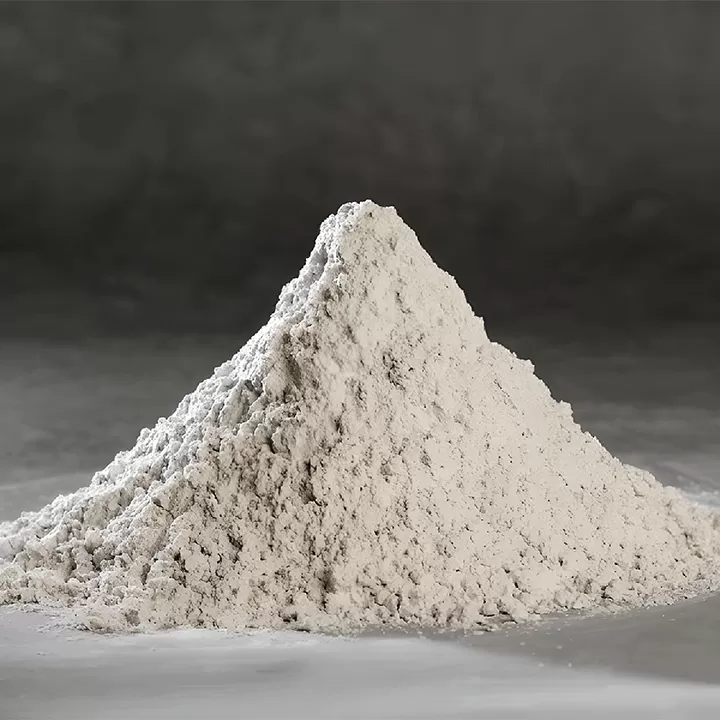
Selecting the right binder is critical for achieving specified early strength, durability, and workability. Cement 52.5 R is a high-strength Portland cement conforming to EN 197‑1, with a 28‑day compressive strength of at least 52.5 MPa and rapid early strength gain (R). It is the preferred choice for precast concrete, high‑rise buildings, bridge decks, and repair mortars. This guide presents nine technical parameters that structural engineers and concrete producers must evaluate. Each point is based on EN 196 methods, durability test data, and field performance from major infrastructure projects.
1. Compressive Strength Development Profile
The defining property of cement 52.5 R is its rapid strength gain. Standard requirements:
2‑day strength: ≥ 20 MPa (EN 196‑1 mortar prisms).
7‑day strength: typically 35–45 MPa.
28‑day strength: ≥ 52.5 MPa, often reaching 60–65 MPa with proper mix design.
This rapid development allows formwork removal after 12–18 hours in precast operations, increasing production throughput by 30–40% compared to 42.5R cements.
2. High C3S Content and Clinker Mineralogy
Cement 52.5 R contains a high proportion of alite (C3S, tricalcium silicate) – typically 55–65% – which hydrates quickly and contributes to early strength. The clinker is ground to a Blaine fineness of 450–550 m²/kg, significantly higher than 42.5 grade (350–400 m²/kg).
Higher fineness increases surface area for hydration, accelerating heat release.
Careful control of C3A content (5–8%) balances early strength with sulfate resistance.
Golden Fortune supplies cement 52.5 R with clinker sourced from modern dry‑process kilns, ensuring consistent mineralogy.
3. Heat of Hydration Management
A known challenge of high‑early‑strength cement is increased heat of hydration, which can cause thermal cracking in massive pours. Solutions include:
Replacing 20–40% of cement with ground granulated blast furnace slag (GGBFS) or fly ash to reduce peak temperature.
Using ice in mixing water or liquid nitrogen cooling for large volumes (> 100 m³).
Specifying a low‑heat version with modified C3A/C3S ratio if available.
For a typical 500 mm thick wall, adiabatic temperature rise can reach 45–55°C. Finite element thermal analysis is recommended before placement.
4. Sulfate and Chemical Resistance
Standard cement 52.5 R has moderate sulfate resistance (SR) unless specifically produced as SR grade. For aggressive soil or groundwater (sulfate class S2 or higher), use a combination of cement 52.5 R with GGBFS (50–70% slag) or a true sulfate‑resistant Portland cement (C3A < 3%).
Test method: ASTM C1012 expansion after 6 months in 5% Na₂SO₄ solution.
Acceptable expansion: < 0.10% for moderate exposure, < 0.05% for severe.
Golden Fortune offers blended cements combining cement 52.5 R with ultrafine GGBFS to achieve both high early strength and excellent sulfate resistance.
5. Workability and Water Demand
Higher fineness increases water demand. Standard consistency water for cement 52.5 R is typically 28–32% by mass of cement. To maintain a w/c ratio of 0.35–0.45 for high strength, use superplasticizers (polycarboxylate ether type).
Slump loss is faster than with lower grade cements – retarding admixtures may be needed for long hauls.
For self‑compacting concrete (SCC), adjust paste volume and use viscosity‑modifying agents.
Perform Marsh cone or mini‑slump tests on site to verify admixture compatibility.
6. Compatibility with Supplementary Cementitious Materials (SCMs)
Cement 52.5 R performs well with SCMs to reduce cost and improve durability. Recommended blends:
GGBFS – replace 30–50% for lower heat and higher sulfate resistance; strength development slightly slower but still exceeds 42.5R at 28 days.
Silica fume – replace 5–10% for ultra‑high performance concrete (UHPC) > 100 MPa.
Fly ash (class F) – replace 15–25% for improved workability in mass concrete.
Always conduct trial mixes because SCMs affect water demand and setting time. Ultrafine GGBFS from Golden Fortune has a specific surface of 600–800 m²/kg, which enhances packing density and early strength when blended with cement 52.5 R.
7. Setting Time and Retarder Requirements
Initial setting time for cement 52.5 R is ≥ 45 minutes (EN 196‑3). Typical values range 60–90 minutes. Final setting occurs within 2–3 hours. For hot weather concreting (> 30°C), set retarders (e.g., gluconate or phosphonate) are necessary to avoid cold joints.
Dosage of retarder: 0.2–0.5% by weight of cement.
Test setting time using Vicat needle at site conditions before large pours.
Do not exceed recommended retarder dosage; over‑retardation can delay finishing by > 24 hours.
8. Drying Shrinkage and Crack Control
Higher cement content and fineness increase drying shrinkage. For a concrete with 450 kg/m³ cement 52.5 R, 28‑day drying shrinkage (ASTM C157) may reach 600–800 microstrain – higher than 42.5R mixes.
Mitigate by using shrinkage‑reducing admixtures (SRA) at 1–2% by weight of cement.
Keep water‑to‑cement ratio as low as practical (≤ 0.40).
Provide adequate curing (wet burlap or curing compound) for at least 7 days.
For slab‑on‑ground applications, consider using a shrinkage‑compensating cement or reinforcing fibers.
9. Quality Assurance and Certification
When sourcing cement 52.5 R, require the following documentation from the supplier:
EN 197‑1 CE marking with notified body certificate.
Factory production control (FPC) audit report.
Mill test certificate for each batch: fineness (Blaine), setting time, compressive strength at 2, 7, 28 days, and chemical composition (C3S, C3A, SO₃, Cl⁻).
Golden Fortune provides third‑party tested cement 52.5 R with full traceability, including alkali content (≤ 0.6% Na₂O equivalent) for ASR control.
Case Study: Precast Beam Production with 52.5R
A precast concrete plant manufacturing bridge beams switched from 42.5N to cement 52.5 R. Using the same mix proportions, 2‑day strength increased from 28 MPa to 42 MPa, allowing demolding after 16 hours instead of 28 hours. The plant increased output by 35% without adding new casting beds. Annual cost savings exceeded €180,000. The same cement was blended with 30% GGBFS for lower heat in thick sections.
Frequently Asked Questions (FAQ)
Q1: What is the difference between cement 52.5 R and 52.5
N?
A1: According to EN 197‑1, both have a 28‑day strength ≥52.5 MPa.
The difference is early strength: “R” (rapid) requires 2‑day strength ≥20 MPa,
while “N” (normal) requires 2‑day strength ≥10 MPa. For precast and fast‑track
construction, 52.5R is preferred. For mass concrete where heat control is more
important, 52.5N may be used with retarders.
Q2: Can I use cement 52.5 R for concrete exposed to
seawater?
A2: Yes, but with precautions. Seawater contains sulfates
and chlorides. Use a low C3A (<8%) version or blend with 50–70% GGBFS to
improve sulfate and chloride resistance. Also, ensure a low water‑to‑cement
ratio (≤0.40) and adequate cover (≥50 mm) to prevent reinforcement corrosion. Golden Fortune offers a
marine‑grade 52.5R with adjusted C3A.
Q3: What is the typical cost premium for cement 52.5 R compared to
42.5R?
A3: Due to higher clinker quality and finer grinding, cement
52.5R costs 10–20% more per tonne than 42.5R. However, the increased early
strength often allows reduction in cement content (e.g., from 400 kg/m³ to 350
kg/m³) while maintaining target strength, partially offsetting the cost. Perform
mix optimization to find the most economical dosage.
Q4: How does cement 52.5 R perform in hot weather
concreting?
A4: The rapid hydration accelerates setting, increasing
the risk of cold joints and plastic shrinkage cracks. Use set retarders
(0.2–0.5% by cement), cool aggregates or use chilled water, and erect windbreaks
to reduce evaporation. Limit concrete temperature to ≤30°C at placement. For
very hot climates (>40°C), consider using a 42.5N cement with a high‑range
water reducer instead.
Q5: What is the maximum replacement level of GGBFS with cement 52.5 R
without losing 28‑day strength?
A5: With a high‑quality ultrafine
GGBFS (specific surface >600 m²/kg), you can replace up to 40% of cement
52.5R and still achieve ≥52.5 MPa at 28 days. For standard GGBFS (400 m²/kg),
limit replacement to 30%. Always conduct trial mixes because the strength
activity index of GGBFS varies by source. Golden Fortune provides technical support for blend optimization.
Request a Technical Data Sheet or Quotation
Selecting the right cement 52.5 R for your project requires detailed information on clinker chemistry, fineness, and compatibility with local aggregates and admixtures. Golden Fortune offers free sample shipments (5 kg) for laboratory testing. Send your target mix design and performance requirements (early strength, heat limit, exposure class). Our engineers will provide a full data package including strength development curves, heat of hydration graphs, and a cost‑per‑MPa analysis.
Submit an inquiry to our cement technical team → Click here for a response within 24 hours