Architectural concrete has moved beyond structural function to become a design statement. Achieving a consistent white color for concrete is challenging because ordinary gray concrete contains iron-rich cement and dark aggregates. True white concrete requires white Portland cement (ASTM C150 Type I or III white), white or light-colored aggregates, precise pigment control, and sometimes supplementary materials that do not darken the matrix. This article examines the technical parameters that influence final whiteness, including cement chemistry, aggregate grading, admixture interactions, and curing methods. For specifiers seeking sustainable solutions, Golden Fortune provides high-purity ultrafine GGBFS that, when properly blended, supports color consistency and reduces carbon footprint without compromising whiteness.
1. Why White Concrete Matters: Applications and Performance Demands
White concrete is specified for:
Architectural precast panels: Facades, cladding, and decorative screens where uniformity and light reflectivity are desired.
Terrazzo and polished floors: White matrix allows colored chips to stand out.
Street furniture and urban landscaping: Benches, planters, bollards that need a clean, bright appearance.
White concrete countertops: High-end residential and commercial applications.
Light-reflecting pavements: Reduces urban heat island effect.
In each case, achieving a repeatable white color for concrete requires control over every input material. Variation in cement brand, aggregate source, or mixing water can shift the shade from pure white to off-white or gray.
2. Raw Materials for White Concrete
The final whiteness is determined by four main components. Below is a technical breakdown.
2.1 White Portland Cement
White cement is manufactured from raw materials low in iron and manganese (Fe₂O₃ < 0.35%, Mn₂O₃ < 0.03%). The production process uses ceramic grinding media and oil or gas fuel to avoid ash contamination. Key properties:
Whiteness index: Typically 87–92% reflectance (compared to 98% for titanium dioxide).
Fineness: 350–450 m²/kg (Blaine) – finer than gray cement, which improves early strength and brightness.
Cost: 2–3 times higher than gray cement. However, the premium is justified for architectural finishes.
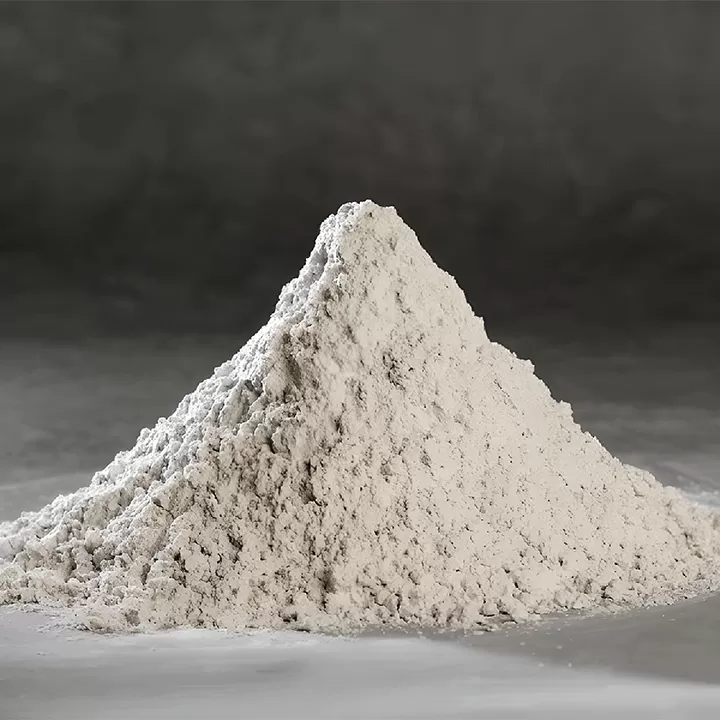
When combined with other binders, ensure the supplementary material does not introduce color. Golden Fortune supplies ultrafine GGBFS (ground granulated blast furnace slag) with a light gray color (brightness >70%) that, at replacement levels below 20%, does not visibly darken white concrete while improving workability and sulfate resistance.
2.2 White Aggregates
Aggregates contribute 60–75% of concrete volume. For white color for concrete, use:
Fine aggregate: White silica sand (SiO₂ >98%), marble dust, or limestone fines. Avoid river sand with iron oxide staining.
Coarse aggregate: White quartz, marble chips, or light-colored dolomite. Maximum size typically 10–20 mm for precast.
Washing: Aggregates must be washed to remove clay and organic matter, which cause dark specks.
Aggregate color should be tested by making a mortar patty with white cement and comparing to a reference. Any aggregate that produces a gray or brown tint should be rejected.
2.3 White Pigments and Whitening Agents
To boost whiteness beyond what cement and aggregates provide, pigments are added:
Titanium dioxide (TiO₂): Rutile grade, dosage 1–5% by weight of cement. TiO₂ increases reflectance up to 92–95% and also provides photocatalytic self-cleaning properties.
Zinc oxide (ZnO): Less common, used for specific chemical resistance.
Lithopone (BaSO₄ + ZnS): Lower cost but lower whitening power.
Overdosing TiO₂ can increase water demand and reduce strength. A proper white color for concrete mix design includes a pigment optimization trial.
2.4 Water and Admixtures
Mixing water must be clean, iron-free, and preferably potable. Any rust-colored water will stain. Admixtures (superplasticizers, retarders, air entrainers) should be selected from those specifically formulated for white concrete – some standard admixtures contain dark defoamers or sulfonated naphthalene that impart a brownish hue. Polycarboxylate ether (PCE) superplasticizers are recommended as they are colorless.
3. Mix Design Considerations for Consistent Whiteness
Achieving a uniform white color for concrete requires strict proportion control. Typical mix proportions for precast white concrete (per m³):
White cement: 350–450 kg
Water: 140–180 kg (w/c ratio 0.35–0.45)
White sand: 650–750 kg
White coarse aggregate: 1,000–1,200 kg
TiO₂ (optional): 5–15 kg
PCE superplasticizer: 0.8–1.5% of cement weight
Key factors to monitor:
Water-to-cement ratio: Lower w/c produces denser, brighter surface but may require more superplasticizer. High w/c brings laitance (fines) to the surface, causing uneven color.
Cement content variation: Batch-to-batch cement color must be checked using a colorimeter. Request a certificate of whiteness from the cement supplier.
Bleed water: White concrete bleeds more visibly. Use anti-bleed admixtures or reduce mixing water to prevent white efflorescence (calcium carbonate deposits) that appear as patchy white stains but are actually a defect.
Golden Fortune offers technical support to adjust GGBFS content in white concrete. At 10–15% replacement of white cement, ultrafine GGBFS can improve packing density and reduce permeability, while maintaining whiteness above 85% when used with TiO₂.
4. Process Control for Uniform White Concrete
Even with correct materials, poor production practices ruin whiteness.
4.1 Mixing Sequence and Equipment
Dedicated mixers should be used for white concrete – residues of gray cement or pigment in the drum cause discoloration. If the same mixer is used, clean it thoroughly with water and a neutral detergent before batching white concrete. Mixing sequence: add aggregates and half the water → add cement, GGBFS, and pigments → add remaining water and admixtures. Total mixing time: 90–120 seconds to ensure complete dispersion of TiO₂.
4.2 Formwork and Release Agents
Form surfaces must be clean, smooth, and free of rust. Use a colorless release agent (e.g., light oil emulsion or water-based barrier). Dark release agents (used diesel, wax containing carbon) stain the concrete surface.
4.3 Curing and Surface Protection
Improper curing leads to uneven hydration, causing blotchy appearance. Recommended methods:
Spray-on curing compound (white pigmented or transparent – ensure it does not yellow).
Cover with white polyethylene sheeting (to reflect sunlight and avoid overheating).
Fog curing – but avoid running water directly on the surface, which washes out cement paste.
After demolding, protect the surface from dirt, grease, and airborne dust. For precast elements, store vertically to prevent rain streaks.
5. Common Defects in White Concrete and Remedies
Even experienced producers encounter issues. Below are frequent problems with white color for concrete and their solutions.
Yellowing or brownish tint: Caused by ferrous contamination in aggregates or mixing water. Solution: Acid wash with dilute oxalic acid (2–5%) followed by water rinse. Prevention: source certified white aggregates.
Efflorescence (white powder patches): Calcium hydroxide migrating to surface and reacting with CO₂. Solution: Reduce w/c ratio, use a hydrophobic admixture, or apply a silane-siloxane sealer after curing. For existing efflorescence, scrub with a stiff brush and mild acid.
Dark mottled spots: Often from residual formwork oil or insufficient mixing of TiO₂. Solution: Increase mixing time; use a high-shear mixer for pigments.
Gray edges or corners: Due to cement paste bleeding away from edges. Solution: Use a low-bleed superplasticizer and vibrate carefully (over-vibration causes segregation).
6. Sustainable White Concrete: The Role of GGBFS and Other SCMs
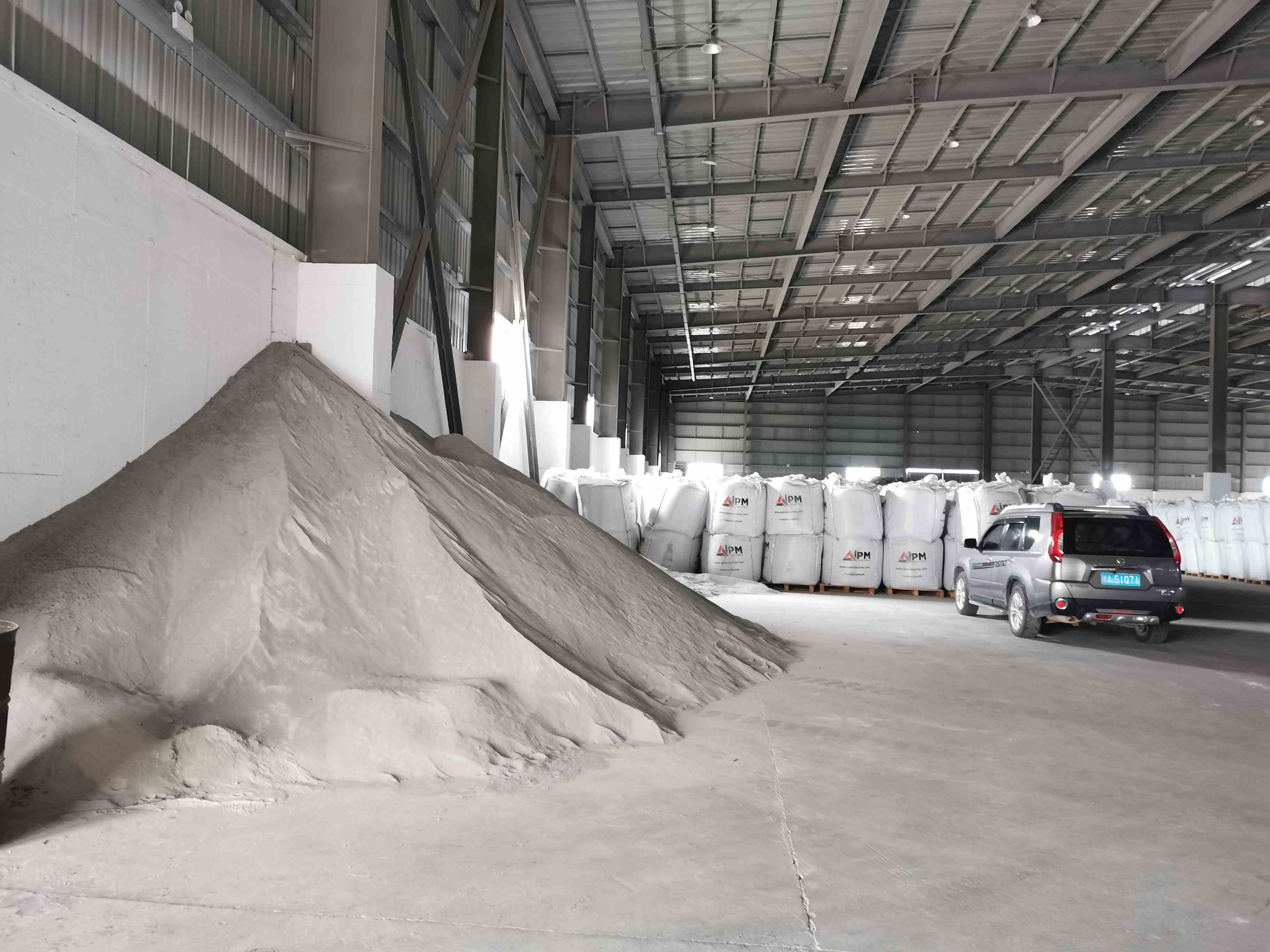
White Portland cement has a higher carbon footprint per ton than gray cement due to finer grinding and the need for clean fuels. To reduce environmental impact, supplementary cementitious materials (SCMs) can partially replace white cement. However, most SCMs (fly ash, silica fume, metakaolin) are dark gray or tan. GGBFS from iron blast furnaces is typically light gray. High-purity, ultrafine GGBFS (such as that supplied by Golden Fortune) can replace up to 15–20% of white cement without visible darkening, especially when combined with TiO₂. Benefits include:
Reduced CO₂ emissions by 10–15% per cubic meter.
Improved sulfate resistance (important for exterior white concrete).
Increased paste density, reducing efflorescence potential.
Lower heat of hydration, preventing thermal cracking in large white concrete elements.
For a white color for concrete mix with GGBFS, always conduct a trial panel to compare against a control without GGBFS. The whiteness difference should be within 3% reflectance.
Frequently Asked Questions (FAQ) About White Color for Concrete
Q1: What is the best way to achieve a pure white color for concrete
without using expensive white cement?
A1: White cement is necessary
– gray cement contains too much iron oxide to ever become white. However, you
can reduce white cement content by using white aggregates and adding titanium
dioxide (TiO₂) at 3–5% of cement weight. Some producers use a white cement +
white sand mix as a “scratch coat” over a gray structural core. For true uniform
whiteness throughout the cross-section, white cement is mandatory.
Q2: How does GGBFS affect the white color for
concrete?
A2: Standard GGBFS is light gray, not pure white. At
replacement levels below 20% in white cement concrete, the final color may shift
slightly toward off-white, but with the addition of TiO₂ (1–2%) the difference
becomes negligible. Ultrafine GGBFS from Golden Fortune has higher brightness (>70%) than
standard slag, making it suitable for eco-friendly white concrete formulations.
Always test mock-ups.
Q3: Can I use ordinary aggregates and just add white pigment to get
white concrete?
A3: No. Ordinary aggregates (gray limestone, river
gravel, sand) contain dark minerals that will be visible on the surface, giving
a speckled gray appearance. To achieve a clean white color for concrete, you
must use white or light-colored aggregates (white quartz, marble chips, light
dolomite). Pigments alone cannot hide dark aggregate particles.
Q4: What is the typical cost premium for white concrete compared to
standard gray concrete?
A4: White cement costs 2–3 times more than
gray cement. White aggregates are also 30–50% more expensive. Including TiO₂ and
special admixtures, the material cost for white concrete is typically 2.5–4
times higher than gray concrete. However, for architectural precast where
appearance is critical, the added cost is justifiable. Using GGBFS as a partial
cement replacement can reduce the premium by 5–10%.
Q5: How do I measure the whiteness of my concrete to ensure
consistency?
A5: Use a tristimulus colorimeter (Hunter Lab or
Minolta) that measures L* (lightness), a* (red-green), b* (yellow-blue). For
white concrete, target L* > 85, a* near 0, b* < 3. Alternatively, a simple
visual method: prepare 150 mm cubes or panels from each batch and compare to a
master sample under consistent lighting (D65 daylight simulator). For production
control, take a reading from each batch's wet mix using a portable colorimeter
after casting and curing.
Q6: Can white concrete be polished to a high-gloss
finish?
A6: Yes. White concrete with a low w/c ratio (0.30–0.35) and
high cement content (450 kg/m³) can be ground and polished using diamond
abrasives. The final appearance resembles terrazzo. However, the whitest results
require white cement, white quartz aggregates, and no dark pigments. After
polishing, apply a lithium-based densifier and a white wax or acrylic sealer to
maintain brightness.
Ready to Achieve Superior White Concrete for Your Next Project?
Consistent white color for concrete requires technical expertise in material selection, mix optimization, and process control. Golden Fortune provides high-purity ultrafine GGBFS that helps concrete producers reduce carbon footprint while maintaining brightness and durability. We also offer laboratory support to adjust GGBFS content for your specific white concrete formulation – from precast panels to decorative elements.
Send your inquiry today – include your target whiteness (L* value or required reflectance), cement type, aggregate sources, and production volume. We will respond within 48 hours with a technical datasheet, sample recommendations, and a customized mix design proposal. For urgent projects, we can arrange a video consultation to review your existing white concrete challenges.
Request a consultation for white color for concrete from Golden Fortune – references available from leading precast manufacturers and architectural concrete specialists.