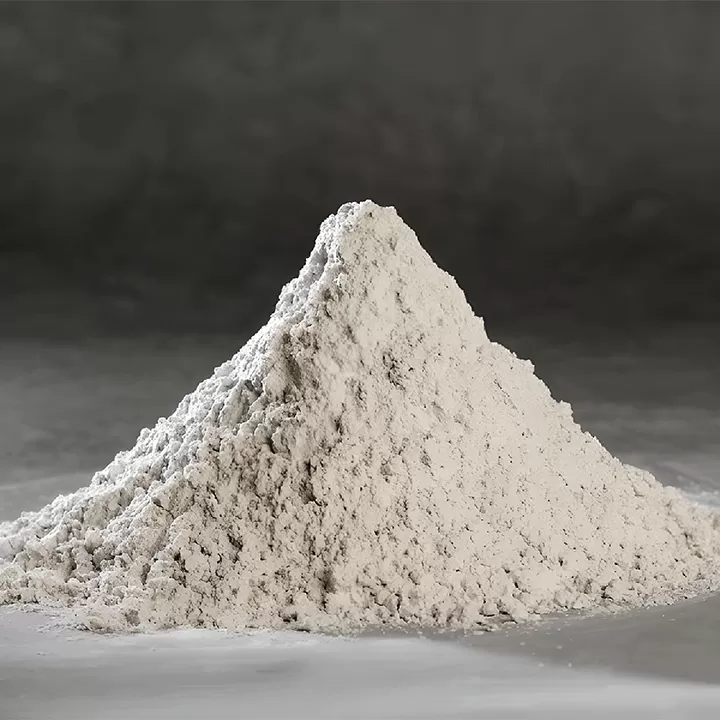
The specification of cement and cement products has evolved beyond ordinary Portland cement (OPC) to include supplementary cementitious materials (SCMs) that improve long-term strength and chemical resistance. Ground granulated blast furnace slag (GGBFS) is one of the most effective SCMs, enhancing sulfate resistance and reducing heat of hydration. This article provides a technical assessment of cement and cement products blended with GGBFS, covering reaction mechanisms, performance metrics, quality control, and economic advantages. Golden Fortune supplies high‑reactivity ultrafine GGBFS specifically engineered for modern cement and cement products formulations.
1. Hydration Chemistry of Portland Cement and GGBFS Blends
When OPC hydrates, it produces calcium silicate hydrate (C‑S‑H) gel and portlandite (calcium hydroxide, CH). The CH fraction (20‑25% of hydrated paste) offers no strength contribution and is susceptible to chemical attack. Blending with GGBFS introduces latent hydraulic reactivity: the glassy aluminosilicate structure of slag reacts with CH in the presence of an alkaline activator (provided by OPC) to form additional C‑S‑H and calcium aluminate hydrates.
Key reaction steps in blended cement and cement products:
Initial hydration (0‑24 hours): OPC components (C₃S, C₂S) hydrate, releasing CH and heat.
Slag activation (1‑7 days): CH concentration reaches ~0.02 mol/L, initiating breakdown of slag glass network. Alumina and silica species combine with calcium to form secondary C‑S‑H and hydrotalcite‑like phases.
Long‑term densification (7‑90 days): Continued pozzolanic reaction refines pore structure, reducing capillary porosity from 25% to 12%.
The efficiency of GGBFS in cement and cement products depends on its glass content (target >95%), fineness (specific surface area 400‑600 m²/kg), and chemical modulus (CaO+MgO)/(SiO₂+Al₂O₃) ideally 1.0‑1.3. Golden Fortune produces ultrafine GGBFS with d90 <10 µm, achieving 28‑day activity index >115% (ASTM C989 Grade 120).
2. Quantitative Performance Benefits of GGBFS in Cement Products
Based on industrial data from ready‑mix concrete plants and precast operations, substituting 30‑50% of OPC with GGBFS in cement and cement products yields the following improvements.
2.1 Mechanical Strength Development
7‑day strength: 85‑90% of OPC control (slightly lower due to slower slag activation).
28‑day strength: 100‑110% of OPC control, depending on slag fineness.
90‑day strength: 115‑125% of OPC, as secondary hydration continues.
Flexural strength gain: +15% at 56 days compared to pure OPC.
2.2 Durability Indicators
Sulfate resistance (ASTM C1012): Expansion after 6 months in 5% Na₂SO₄ solution: <0.05% for 50% GGBFS blend vs. 0.25% for OPC.
Chloride penetration (RCPT, ASTM C1202): Charge passed reduced from >4,000 coulombs (OPC) to <1,500 coulombs (50% GGBFS) – classified as “low” chloride ion penetrability.
Alkali‑silica reaction (ASR) mitigation: 50% GGBFS reduces expansion by 80‑90% in accelerated mortar bar tests (ASTM C1567).
Carbonation depth: Slightly higher than OPC (2‑3 mm at 1 year vs. 1‑2 mm) but acceptable for reinforced concrete with adequate cover.
2.3 Heat of Hydration Reduction
Total heat at 72 hours: OPC produces 350 J/g; 50% GGBFS blend produces 210 J/g (40% reduction).
Temperature rise in mass concrete (2 m thick slab): Peak temperature drops from 75 °C to 58 °C, reducing thermal cracking risk.
These data confirm that cement and cement products incorporating GGBFS meet or exceed standard specifications for most structural applications, with added durability benefits.
3. Industrial Applications of GGBFS‑Blended Cement Products
Different sectors of the construction industry specify GGBFS content based on performance requirements.
3.1 Mass Concrete Foundations and Dams
Typical GGBFS replacement: 50‑70%.
Goal: Minimize temperature rise and delayed ettringite formation.
Case example: Three Gorges Dam project used 45% slag cement in mass placements.
3.2 Marine Structures (Ports, Seawalls, Offshore Platforms)
Typical GGBFS replacement: 40‑60%.
Resists chloride‑induced corrosion of rebar. The refined pore structure limits chloride ingress to <0.02% by weight of concrete after 10 years.
3.3 Sewage and Wastewater Treatment Plants
Typical GGBFS replacement: 30‑50%.
Resists biogenic sulfuric acid attack (pH <3). GGBFS concrete shows 3‑4x lower mass loss than OPC after 12 months in simulated sewer environment.
3.4 Precast Concrete Elements (Pipes, Pavers, Railway Sleepers)
Typical GGBFS replacement: 20‑40%.
Provides earlier demolding strength when combined with steam curing (accelerates slag reaction).
Golden Fortune supplies ultrafine GGBFS that enhances early strength, enabling 20% slag replacement without extending curing time.
4. Technical Challenges and Solutions for GGBFS in Cement Products
Despite advantages, some producers hesitate due to slower early strength, setting time variations, and color inconsistencies. Below are engineering solutions.
4.1 Slow Early Strength Development
Problem: At 7 days, GGBFS blends achieve only 85‑90% of OPC strength, affecting formwork removal schedules. Solution: Use ultrafine GGBFS (specific surface 600‑700 m²/kg) or add a small amount of calcium sulfoaluminate (2‑3%) to accelerate early hydration. Golden Fortune produces ultrafine slag with d90 <10 µm, achieving 7‑day strength ratio >95% at 40% replacement.
4.2 Extended Setting Time
Problem: Initial set may be delayed by 30‑90 minutes. Solution: Avoid using retarding admixtures; instead, adjust cement fineness or add 0.5‑1% of calcium chloride (where permitted). For cold weather concreting, use heated mixing water.
Problem: Inconsistent glass content or chemical composition
leads to unpredictable performance. Solution: Source GGBFS from
suppliers with ISO 9001 certification and daily quality control (XRF analysis,
glass content by XRD). Golden Fortune provides a certificate of
analysis with each shipment, tracking fineness, density, and activity index. Problem: Fresh GGBFS concrete may appear greenish due to
trace sulfur compounds; color fades to normal gray as hydration proceeds.
Solution: Inform specifiers that this is temporary and does not
affect strength. For architectural finishes, limit GGBFS to 25% or use white
cement blends. For a typical ready‑mix plant producing 100,000 m³/year of concrete (35 MPa
mix design), substituting 40% of OPC with GGBFS yields the following economics
(prices regional average). OPC cost: $85/ton; GGBFS cost: $55/ton. Cementitious binder content: 350 kg/m³. OPC only: 350 kg →
$29.75/m³. Blended (60% OPC + 40% GGBFS): 210 kg OPC ($17.85) + 140 kg
GGBFS ($7.70) = $25.55/m³. Savings per cubic meter: $4.20. Annual savings:
$420,000. Additional benefits: Reduced heat curing energy, lower CO₂
emissions (40% reduction for cement portion), eligibility for green building
credits (LEED). Even accounting for a slight increase in chemical admixture dosage
(superplasticizer), the net saving exceeds $3.50/m³. Golden
Fortune offers volume‑based pricing and logistics support to
optimize landed cost. To ensure reliable performance, producers must implement regular testing of
both raw materials and finished cement and cement products. Incoming GGBFS: Test for glass content (XRD), specific
surface area (Blaine or BET), density, and activity index (ASTM C989).
Frequency: each shipment. Fresh concrete: Monitor setting time (ASTM C403) and
temperature rise (semi‑adiabatic calorimetry). Hardened concrete: Compressive strength at 7, 28, and 56
days; rapid chloride permeability (ASTM C1202) for durability verification. Mix design adjustments: Increase superplasticizer dosage by
10‑15% compared to OPC mix to maintain slump due to higher slag
fineness. Golden Fortune provides technical support for mix
optimization, including trial batch supervision and strength modeling. Q1: What is the maximum GGBFS replacement level for structural
concrete? Q2: Does GGBFS affect the finishability of cement products like
pavers or terrazzo? Q3: How does GGBFS influence freeze‑thaw resistance of cement
products? Q4: Can GGBFS be used in sulfate‑resistant cement products for
aggressive soils? Q5: What is the shelf life of bagged GGBFS‑blended cement
products? Q6: How does GGBFS affect the rheology of self‑consolidating concrete
(SCC)? Each concrete producer has unique raw materials (local aggregates, cement
brand, admixtures) and performance targets (strength class, durability exposure,
curing conditions). Generic GGBFS recommendations often require site‑specific
validation. Golden Fortune offers a structured technical
assistance program: Material sampling: Send 10 kg of your OPC and a sample of
local aggregates to our laboratory. Mix design optimization: We perform isothermal calorimetry,
mortar strength tests, and pore structure analysis to determine optimal GGBFS
replacement level and fineness. Trial batch supervision: Our field engineer visits your
plant to conduct full‑scale trials, measuring slump, air content, setting time,
and compressive strength. Quality plan: We deliver a written quality control protocol
including incoming inspection, batching adjustments, and curing
recommendations. Ongoing monitoring: Monthly reviews of strength data and
durability test results to fine‑tune the mix. Contact our concrete technology team directly via the website. Provide your
current mix design, target concrete grade, and any project‑specific durability
requirements (sulfate, chloride, or freeze‑thaw). We will respond within 48
hours with a preliminary proposal and schedule for a free trial batch. Send your cement product specifications to Golden Fortune’s
concrete specialists — include mix design and target performance for a
prioritized engineering consultation.4.4 Color Variation (Greenish Tint)
5. Cost‑Benefit Analysis: GGBFS Blended Cement Products
6. Quality Control and Specification Compliance for Cement Products with
GGBFS
Frequently Asked Questions (B2B Cement Products with GGBFS)
A1: For general reinforced concrete,
40‑50% is common and covered by standards (EN 206, ASTM C595). For mass concrete
and marine structures, up to 70% can be used with careful curing. Higher
replacement (>60%) may require extended moist curing (7‑14 days) to achieve
adequate surface durability against carbonation.
A2: Ultrafine GGBFS improves
paste rheology and reduces bleeding, resulting in smoother finishes. For exposed
aggregate surfaces, the slight color difference (greenish tint) fades within 1‑2
weeks. Golden Fortune offers a “white slag” variant with
lower iron content for architectural applications.
A3: Properly air‑entrained GGBFS concrete
(5‑7% air content) performs as well as OPC in freeze‑thaw cycles (ASTM C666).
The refined pore structure actually reduces critical saturation, improving
resistance in deicer salt environments. Ensure air entrainment admixture dosage
is adjusted because slag fines can absorb surfactants.
A4: Yes. Blends with 50‑70% GGBFS
outperform Type V sulfate‑resisting Portland cement (SRPC) in high sulfate
concentrations (up to 10,000 ppm SO₄²⁻). The low CH content and aluminum binding
prevent ettringite and thaumasite formation. Golden
Fortune provides design guides for sulfate exposure classes.
A5: Blended cement should be used within
3 months of packing if stored in dry conditions (relative humidity <60%).
Moisture absorption leads to pre‑hydration and reduced activity. For bulk silos,
use nitrogen purging or desiccant breathers. Golden
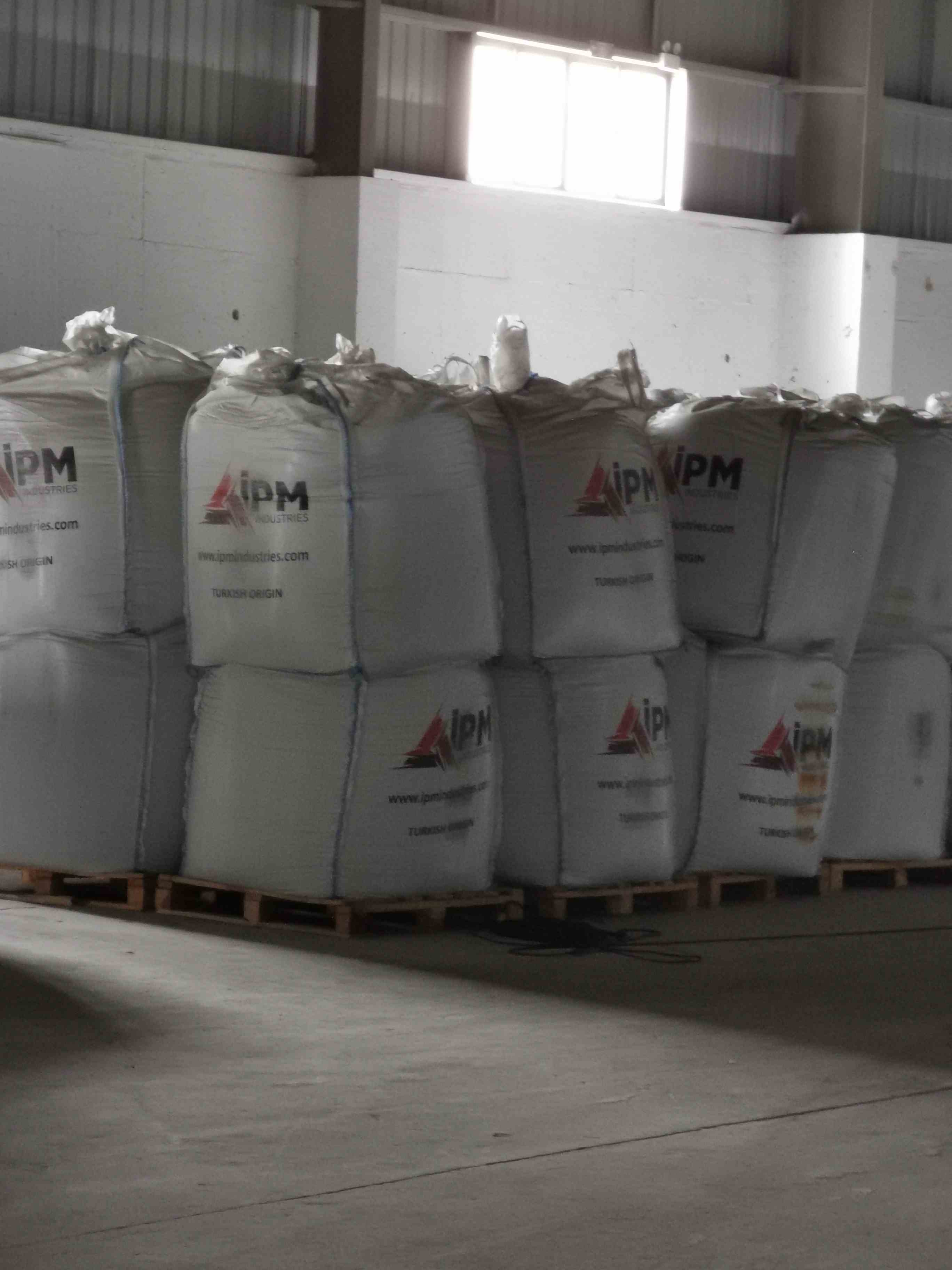
Fortune supplies GGBFS in moisture‑proof big bags (1.5 t) with
12‑month shelf life when unopened.
A6: The spherical particle shape of GGBFS
(compared to angular OPC) improves flowability and reduces yield stress. At
30‑40% replacement, you can lower superplasticizer demand by 10‑15% while
maintaining slump flow >650 mm. This makes GGBFS ideal for SCC applications
in precast and architectural concrete.Request Technical Support for GGBFS Integration into Your Cement
Products