In modern concrete technology, the ability to modify rheology without compromising strength is central to meeting the demands of complex structures. Achieving this balance hinges on the proper selection and application of a concrete water reducer. This article provides a comprehensive technical analysis of how these essential admixtures function, their impact on hardened concrete properties, and how they synergize with supplementary cementitious materials (SCMs) like GGBFS to solve persistent industry challenges.
1. The Fundamental Role of Water Reducers in Concrete Technology
Water is necessary for cement hydration and workability, but excess water is detrimental to concrete quality. Each additional liter of mixing water above the optimum increases capillary porosity, reduces strength, and elevates permeability. A concrete water reducer (also known as a plasticizer or superplasticizer) allows producers to decrease water content by 5% to 40% while maintaining or improving slump. This seemingly simple function has profound implications for the entire concrete system, enabling the production of high-strength, durable concrete that can be placed reliably in congested reinforcement or complex formwork.
2. Mechanisms of Action: From Surface Chemistry to Rheology Modification
To select the appropriate water reducer, engineers must understand how these polymers interact with cement particles. The mechanisms vary by chemical family and directly influence performance characteristics like saturation dosage and slump retention.
2.1 Particle Dispersion: Breaking the Flocculation
Without admixtures, cement particles flocculate due to electrostatic attraction and van der Waals forces, trapping water within the agglomerates. A concrete water reducer adsorbs onto particle surfaces and overcomes these attractive forces via two primary mechanisms:
Electrostatic Repulsion: Traditional water reducers (lignosulfonates, naphthalene sulfonate formaldehyde - SNF) impart a strong negative surface charge. The resulting repulsive forces push particles apart, releasing trapped water.
Steric Hindrance: Modern polycarboxylate ether (PCE) superplasticizers feature long, non-absorbing side chains that create a physical barrier between particles. This steric effect is more effective and less sensitive to variations in pore solution chemistry than electrostatic repulsion alone.
2.2 Impact on Cement Hydration Kinetics
Water reducers do not simply lubricate; they interact with hydration reactions. By dispersing cement, they increase the surface area available for reaction, which can accelerate early hydration if not counteracted. However, many water reducers also contain retarding components or are designed to temporarily inhibit C3A hydration to control slump loss. Understanding this balance is critical for predicting setting times, especially in mass concrete pours or hot-weather concreting.
3. Comparative Analysis: Lignosulfonate, SNF, and PCE Water Reducers
The selection of a concrete water reducer is a technical decision based on performance requirements, cost constraints, and binder compatibility. The table below outlines the characteristics of the three main families.
3.1 Lignosulfonate-Based Water Reducers (Traditional)
Water Reduction: 5-12%.
Chemistry: Derived from wood pulp processing. Contain sugars and other components that cause significant retardation.
Applications: Suitable for low-specification concrete where retardation is acceptable or desired. Often used in conjunction with more powerful superplasticizers to extend workability.
Limitations: High dosage can lead to excessive air entrainment and unpredictable setting times.
3.2 Naphthalene and Melamine Sulfonates (SNF/SMF) - High-Range
Water Reduction: 15-25%.
Chemistry: Synthetic polymers providing strong electrostatic dispersion.
Applications: Precast concrete where high initial workability and rapid strength gain are needed. They perform well with vibration consolidation.
Limitations: Rapid slump loss, especially in hot weather. Can produce sticky mixes at high dosages.
3.3 Polycarboxylate Ether (PCE) Superplasticizers - High-Range
Water Reduction: 25-40%.
Chemistry: Comb-shaped copolymers with tunable side chain density and length.
Applications: Essential for self-consolidating concrete (SCC), high-strength concrete (HSC > 80 MPa), and mixes requiring long-distance transport.
Advantages: Excellent slump retention, high water reduction, and molecular design flexibility for specific performance targets.
4. Impact on Hardened Concrete: Strength, Durability, and Volume Stability
The primary benefit of using a concrete water reducer is the reduction in water-cement ratio (w/c). For every 10% reduction in water content, 28-day compressive strength typically increases by 15-25%. This lower w/c refines the pore structure, reducing the size and connectivity of capillaries. The result is concrete with:
Reduced Permeability: Chloride ion penetration is significantly lowered, extending the service life of structures in marine environments.
Enhanced Freeze-Thaw Resistance: Denser concrete is less prone to saturation, mitigating internal frost damage.
Improved Abrasion Resistance: Critical for industrial floors and hydraulic structures.
However, at very low w/c ratios (<0.30), high dosages of some superplasticizers can increase autogenous shrinkage due to rapid self-desiccation. This risk can be mitigated by using internal curing or shrinkage-reducing admixtures—areas where Golden Fortune's expertise in ultrafine materials provides valuable supplementary solutions.
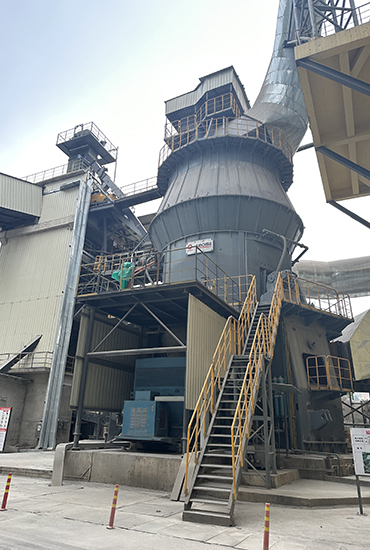
5. Synergistic Use with GGBFS: Optimizing Rheology and Long-Term Performance
A defining trend in sustainable construction is the combined use of chemical admixtures and SCMs. Ground Granulated Blast Furnace Slag (GGBFS), particularly the high-fineness grades from Golden Fortune, interacts favorably with PCE-based water reducers. The smooth, glassy surface of slag particles reduces inter-particle friction and can lower the water demand of the mix. When a concrete water reducer is used in a ternary blend (cement + GGBFS + silica fume), the following synergies are observed:
Reduced Yield Stress and Plastic Viscosity: The combination allows for highly flowable concrete (e.g., SCC) with high volumes of SCMs, without segregation.
Pore Structure Refinement: The water reducer enables the low w/c ratio, while the GGBFS consumes calcium hydroxide to form additional calcium-silicate-hydrate (C-S-H) gel, resulting in a denser, more durable matrix.
Mitigation of Undesirable Interactions: Some SCMs can cause rapid slump loss with certain cements. A well-designed PCE can overcome these compatibility issues, ensuring consistent workability.
As noted in modern concrete technology, the ability to modify rheology without compromising strength is central to complex structures, a principle that drives the innovation behind both high-performance water reducers and advanced SCMs like those from Golden Fortune.
6. Addressing Industry Pain Points: Slump Retention and Cement-Admixture Compatibility
Two persistent challenges dominate field applications of concrete water reducer technology.
Managing Slump Loss: The depletion of the water reducer through adsorption onto early hydration products (especially ettringite) leads to a rapid loss of workability. Solutions include using PCEs with specifically designed slump-retention side chains, incorporating a retarding component, or employing a dual-dosing strategy where a portion of the admixture is added at the jobsite.
Resolving Incompatibility: Certain cements, particularly those with high soluble alkali sulfates or specific C3A polymorphs, can consume the water reducer instantly, preventing dispersion. This necessitates rigorous pre-qualification testing (e.g., Marsh cone, mini-slump flow) using the exact combination of cement, SCMs, and admixture intended for the project.
7. Selection Guide for Engineers and Concrete Producers
Selecting the optimal concrete water reducer requires a systematic evaluation of project-specific factors:
Define Performance Objectives: Is the primary goal high early strength (favor SNF or high-range PCE), extended transport time (favor PCE with retention), or extreme durability (favor PCE for maximum w/c reduction)?
Characterize the Binder System: Determine the cement type, alkali content, C3A level, and the type and fineness of all SCMs (slag, fly ash, silica fume).
Assess Environmental Conditions: High temperatures accelerate slump loss and may necessitate a retarding water reducer or one with enhanced retention.
Evaluate Placement Method: Pumping requires controlled rheology (low yield stress, moderate viscosity), while underwater concreting demands high cohesion and resistance to washout.
8. Future Directions: Bio-Based Polymers and Smart Dosing Systems
The next generation of concrete water reducer technology is focused on sustainability and precision. Research into bio-based polymers (e.g., modified lignins, polysaccharides) aims to reduce the carbon footprint of admixtures. Simultaneously, the industry is moving towards digital dosing systems that use real-time rheological measurements from the mixer to automatically adjust admixture dosage, ensuring perfect consistency and minimizing waste in large-scale operations.
The strategic use of a high-quality concrete water reducer is fundamental to modern concrete construction. By understanding the underlying dispersion chemistry and the critical interaction with SCMs like GGBFS, engineers can move beyond simplistic slump targets and design robust, durable, and sustainable concrete mixes that meet the most demanding structural and environmental challenges.
Frequently Asked Questions (FAQ)
Q1: What is the difference between a standard water reducer and a high-range water reducer (superplasticizer)?
A1: The distinction lies in the achievable water reduction. A standard water reducer (e.g., lignosulfonate) typically reduces water content by 5-10%. A high-range water reducer, or superplasticizer (e.g., SNF or PCE), can reduce water by 15-40%. This allows for the production of either flowing concrete with high slump or very high-strength concrete with a very low w/c ratio.
Q2: How does a concrete water reducer affect the long-term durability of a structure?
A2: By enabling a lower water-cement ratio, a water reducer refines the pore structure of the hardened concrete. This results in significantly reduced permeability to water, chlorides, and other aggressive agents. Lower permeability directly translates to enhanced resistance to corrosion of reinforcement, sulfate attack, and freeze-thaw damage, thereby extending the structure's service life.
Q3: Can a water reducer be used effectively in concrete containing large amounts of GGBFS?
A3: Yes, and this combination is highly recommended for producing durable, sustainable concrete. A PCE-based water reducer is particularly effective at dispersing both cement and GGBFS particles, allowing for good workability even with high slag replacement levels (50% or more). The water reducer enables the low w/c ratio needed for durability, while the GGBFS contributes to a denser microstructure and improved long-term strength.
Q4: What are the potential negative effects of overdosing a concrete water reducer?
A4: Overdosing can lead to several problems: significant retardation of setting time, excessive bleeding and segregation (where aggregate separates from the paste), and, with some types, unwanted air entrainment. Severe overdosing can prevent the concrete from setting altogether. It is essential to follow manufacturer recommendations and conduct trial mixes to establish the correct dosage for the specific materials.
Q5: How can I fix concrete that is losing slump too quickly on a hot day?
A5: Rapid slump loss in hot weather is common. Solutions include: 1) Using a PCE superplasticizer specifically formulated for slump retention. 2) Adding a hydration-stabilizing or retarding admixture to slow down the initial reactions. 3) Implementing a dual-dosing strategy (part at the plant, part at the site). 4) Cooling the concrete mix water or using ice to lower the initial concrete temperature.
Q6: Why does the same water reducer sometimes perform differently with different cement sources?
A6: This is a classic compatibility issue. Variations in cement chemistry—particularly the form and amount of C3A, the type and quantity of calcium sulfate (gypsum, hemihydrate), and the soluble alkali content—can significantly affect how quickly the water reducer is adsorbed and how effectively it disperses the particles. This is why pre-project testing with the exact job materials is critical.