Understanding the true portland cement purpose extends far beyond the simplistic notion of a binder. It is about engineering a controlled chemical reaction that transforms loose aggregates into a monolithic, load-bearing material capable of withstanding decades of mechanical stress, chemical attack, and environmental exposure. For specifiers, ready-mix producers, and infrastructure owners, grasping the nuances of this purpose—its capabilities and its inherent limitations—is the first step toward achieving long-term structural reliability. This article dissects the portland cement purpose through a technical lens, examining its chemical composition, hydration mechanisms, performance attributes, and the evolving role of supplementary materials in optimizing its function.
The Chemical Rationale: Why Portland Cement Serves as the Universal Hydraulic Binder
The portland cement purpose is rooted in its mineralogical composition. Manufactured from limestone, clay, and iron ore under high-temperature sintering, the resulting clinker comprises four primary phases: alite (C₃S), belite (C₂S), aluminate (C₃A), and ferrite (C₄AF). Each phase contributes distinct characteristics to the binder’s behavior.
C₃S (Alite): Responsible for early strength development (first 28 days). Its rapid hydration releases significant heat but establishes initial set and stiffness.
C₂S (Belite): Provides late-age strength (beyond 28 days) and contributes to long-term durability through a slower, denser hydration product.
C₃A (Aluminate): Reacts quickly with gypsum to control flash setting; however, high C₃A content can reduce sulfate resistance, a key consideration when defining the portland cement purpose in aggressive environments.
C₄AF (Ferrite): Influences color and contributes modestly to strength, but plays a role in reducing the overall heat of hydration when balanced correctly.
When water is added, these phases dissolve and precipitate calcium silicate hydrate (C-S-H)—the primary binding matrix—along with calcium hydroxide (CH) and other crystalline products. This hydration process defines the portland cement purpose: to form a durable, chemically stable microstructure that bonds aggregates and resists degradation.
From Mix Design to Microstructure: The Performance Spectrum of Portland Cement
Engineers rely on portland cement to fulfill multiple performance objectives simultaneously. A comprehensive understanding of the portland cement purpose requires analyzing these objectives through quantifiable metrics:
Workability & Consistency: Standardized testing (slump, flow table) ensures that the fresh concrete can be placed and compacted without segregation. Variations in cement fineness or alkali content directly influence water demand and setting time.
Compressive Strength Development: Meeting 28-day design strengths (e.g., 30 MPa to 80 MPa) is a baseline, but a true understanding of portland cement purpose includes predicting strength gain at 56 and 90 days for massive or prestressed elements.
Dimensional Stability: Shrinkage and creep behavior are governed by the paste’s pore structure and elastic modulus. High-quality cement minimizes drying shrinkage, preventing cracking in restrained members.
Durability Against Aggressive Agents: Resistance to sulfate attack, chloride penetration, and freeze-thaw cycles depends on the permeability of the hydrated cement matrix. This is where the inherent purpose of portland cement meets its limitations without modification.
While ordinary portland cement (OPC) performs adequately in standard environments, high-performance or extreme exposure scenarios demand a more nuanced approach. The foundational portland cement purpose—to act as a hydraulic binder—remains, but supplementary cementitious materials (SCMs) like GGBS become necessary to bridge performance gaps.
Industry Pain Points: Where Standard Portland Cement Purpose Falls Short
Despite its ubiquity, portland cement alone cannot satisfy every engineering demand. Several persistent challenges highlight why relying solely on OPC without considering SCMs compromises long-term asset value:
Thermal Cracking in Mass Concrete: High C₃S and C₃A contents generate adiabatic temperature rises exceeding 50°C in thick sections, leading to tensile stresses and cracking. This undermines the portland cement purpose of providing a monolithic, watertight structure.
Chloride-Induced Corrosion: In marine bridges and parking structures, chloride ingress through the permeable paste initiates rebar corrosion. Plain OPC concrete often fails to meet service life requirements beyond 50 years without additional protective measures.
Sulfate Attack: Soils with high sulfate concentrations react with C₃A and CH to form expansive ettringite and gypsum, causing progressive deterioration. Type V cement (low C₃A) mitigates this but does not eliminate it.
Carbon Footprint: The cement industry accounts for approximately 8% of global CO₂ emissions. Using portland cement alone contradicts stringent environmental regulations and green building certifications like LEED v4.1, which reward lower embodied carbon.
Alkali-Silica Reaction (ASR): Reactive aggregates combined with high-alkali cements produce expansive gels, causing map cracking and structural distress. The portland cement purpose of long-term stability is compromised without alkali-aggregate reaction control measures.
These limitations have driven the industry to adopt blended cements and SCMs, transforming the traditional portland cement purpose into a broader system performance approach.
Enhancing Portland Cement Purpose Through GGBS Integration: Technical Synergies
Ground Granulated Blast Furnace Slag (GGBS) is one of the most effective SCMs for upgrading the performance of portland cement-based systems. When properly proportioned, GGBS does not replace the portland cement purpose; it amplifies it by modifying the hydration chemistry and microstructure.
Microstructural Refinement and Pore Structure Optimization
GGBS reacts with calcium hydroxide (CH) produced during cement hydration to form additional C-S-H. This secondary reaction:
Reduces the concentration of free CH, which is otherwise vulnerable to leaching and sulfate attack.
Refines capillary porosity, shifting pore size distribution from mesopores (>50 nm) to gel pores (<10 nm). This lowers water permeability by up to 70% compared to plain OPC.
Increases the density of the interfacial transition zone (ITZ) around aggregates, improving mechanical interlocking and fracture toughness.
Thermal Moderation and Durability Enhancement
By replacing 30–50% of cement with GGBS, the heat of hydration is significantly reduced—peak temperatures drop by 25–40°C in mass concrete, eliminating thermal cracking risks. Durability metrics improve sharply:
Rapid chloride permeability (RCPT) values drop from >3000 coulombs (OPC) to <1000 coulombs (GGBS blends), indicating exceptional resistance.
Sulfate expansion (ASTM C1012) is reduced by over 70%, meeting severe exposure requirements.
ASR expansion is suppressed due to reduced alkalinity and consumption of alkalis by C-S-H phases.
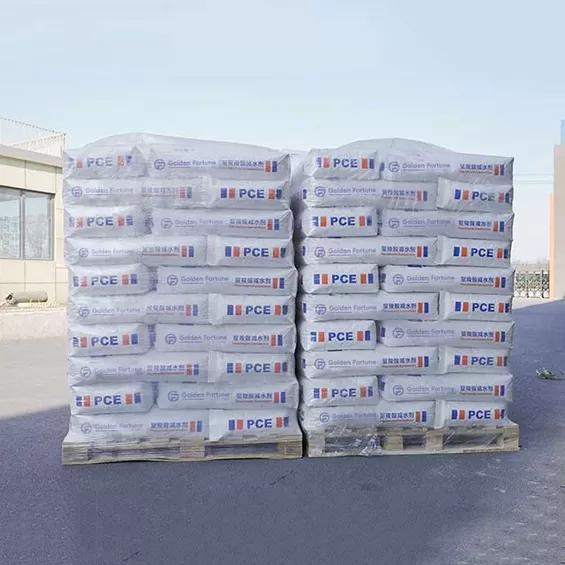
Suppliers such as Golden Fortune provide ultra-fine GGBS with optimized particle size distribution (d90 < 20 µm) and high glass content (>95%), ensuring that the synergy with portland cement yields consistent, high-performance results. The portland cement purpose is thereby extended to cover the most demanding infrastructure applications.
Application-Specific Optimization: Mapping Portland Cement Purpose to Real-World Scenarios
The versatility of portland cement is realized through different mix designs and SCM combinations tailored to project conditions. The table below outlines how the fundamental portland cement purpose adapts across typical applications:
| Application | Primary Performance Requirement | Cement & SCM Strategy | Enhanced Purpose |
|---|---|---|---|
| Marine Structures (Piers, Ports) | Chloride resistance >100-year service life | OPC + 50–70% GGBS (Grade 120) | Chloride diffusion coefficient < 1.0 × 10⁻¹² m²/s |
| Mass Concrete Foundations (Dams, Rafts) | Low heat of hydration, crack control | Low-heat OPC + 40–60% GGBS | Peak temperature < 70°C; delta T < 20°C |
| High-Rise Buildings (C80–C100) | High early strength, pumpability | Type I/II cement + 20–30% ultra-fine GGBS | 12-hour strength > 15 MPa; 28-day > 90 MPa |
| Sewage/Wastewater Plants | Biological sulfuric acid resistance | OPC + 50% GGBS or calcium aluminate blend | pH buffering capacity; low permeability |
In each scenario, the fundamental portland cement purpose—providing hydraulic binding and strength—remains central, but the inclusion of high-quality GGBS transforms its functional envelope.
Quality Assurance: Testing and Verifying Portland Cement Performance
Ensuring that the portland cement purpose is achieved requires rigorous testing protocols. Key tests that specifiers and contractors should mandate include:
Physical Requirements: Fineness (Blaine), setting time (Vicat), soundness (autoclave expansion), and compressive strength (ASTM C109).
Chemical Analysis: Oxide composition (MgO, SO₃, C₃A) and loss on ignition to ensure consistency and compliance with ASTM C150 or EN 197.
Heat of Hydration: Isothermal calorimetry to predict thermal behavior in mass concrete.
Compatibility with Admixtures: Mortar flow tests and setting time adjustments ensure that water reducers or retarders perform as intended.
Performance Verification for Blends: When using GGBS, slag activity index (ASTM C989) and RCPT (ASTM C1202) confirm durability improvements.
Working with established suppliers like Golden Fortune provides access to mill test reports and third-party certifications, ensuring that the intended portland cement purpose is reliably delivered to the project site.
Frequently Asked Questions About Portland Cement Purpose and Optimization
Q1: What is the primary portland cement purpose in modern concrete technology?
A1: The primary portland cement purpose is to act as a hydraulic binder—when mixed with water, it hydrates to form a rigid, durable matrix (C-S-H) that binds aggregates together. Beyond basic binding, its purpose has evolved to include controlled strength development, dimensional stability, and, when combined with SCMs, enhanced durability against aggressive environments.
Q2: How does GGBS modify the portland cement purpose for high-durability applications?
A2: GGBS refines the pore structure, consumes free calcium hydroxide, and reduces permeability. This transforms the portland cement purpose from a standard binder into a high-performance binder capable of resisting chloride ingress, sulfate attack, and thermal cracking. With GGBS replacement levels of 30–70%, structures achieve service lives exceeding 100 years in marine or aggressive soil conditions.
Q3: Can the portland cement purpose be fulfilled without supplementary materials in mass concrete?
A3: While technically possible using low-heat cement and cooling pipes, relying solely on portland cement increases complexity and cost. The core portland cement purpose in mass concrete is better achieved with GGBS or fly ash, which naturally reduce hydration heat by 30–40%, eliminate thermal cracking risks, and improve long-term strength—all without active cooling systems.
Q4: How do I select the right cement type to match the intended purpose for my project?
A4: Selection depends on exposure class (ACI 318 or EN 206). For general use, Type I/II cement suffices. For sulfate resistance, Type V is recommended. However, for optimized performance across multiple durability threats, blending portland cement with high-grade GGBS from suppliers like Golden Fortune often provides the most robust solution, addressing chloride, sulfate, and ASR risks simultaneously.
Q5: What quality control measures ensure that the portland cement purpose is consistently met on site?
A5: Strict quality control includes: (1) verifying mill certificates for cement and GGBS; (2) performing fresh concrete tests (slump, air content, temperature); (3) casting and testing cylinders for compressive strength at multiple ages; (4) conducting durability tests (RCPT, sulfate expansion) for critical elements. For GGBS blends, ensure slag activity index and fineness match specifications. Partnering with a reliable supplier such as Golden Fortune provides traceability and technical support to uphold the intended portland cement purpose throughout construction.
Precision in Purpose—From Chemistry to Asset Lifecycle
The portland cement purpose is not a static definition but a dynamic engineering objective. It begins with the precise control of clinker chemistry and fineness, extends through mix design and placement, and culminates in measurable durability over decades. While portland cement alone provides the foundational hydraulic reactivity, the demands of modern infrastructure—extended service life, sustainability, and resilience—require a systems approach that integrates high-performance SCMs like GGBS. By understanding the technical synergies between cement and slag, and by partnering with expert suppliers such as Golden Fortune, engineers and asset owners can ensure that the intended portland cement purpose is not just met but optimized for the most challenging environments. This precision in purpose translates directly to safer, longer-lasting, and more sustainable structures—a fundamental requirement for the built environment of the future.