Modern construction chemistry relies heavily on the precise formulation of cementitious compound systems—complex blends of hydraulic binders, supplementary materials, and chemical admixtures designed to meet specific performance criteria. Among the supplementary materials, ground granulated blast furnace slag (GGBS) has emerged as a critical component due to its latent hydraulic properties and its ability to modify the rheological, mechanical, and durability characteristics of the final matrix. This article provides a data-driven examination of how GGBS, particularly ultrafine grades, influences the behavior of modern cementitious compound formulations. We will explore the underlying chemistry, quantitative performance improvements, solutions to common formulation hurdles, and the role of reliable suppliers like Golden Fortune in delivering consistent, high-quality GGBS for demanding applications.
1. The Chemical and Physical Foundations of Cementitious Compounds with GGBS
A cementitious compound is fundamentally a multi-phase system where particle packing, surface chemistry, and reaction kinetics determine the properties of both the fresh paste and the hardened matrix. GGBS, with its glassy, amorphous structure rich in CaO, SiO₂, Al₂O₃, and MgO, interacts with the Portland cement clinker phases to create a more complex and often superior binding system.
Hydration Mechanisms and Microstructural Evolution
Unlike pure Portland cement, where alite (C₃S) and belite (C₂S) hydrate directly to form calcium silicate hydrate (C-S-H) and calcium hydroxide (CH), the GGBS in a blended cementitious compound requires an alkaline activator—typically the CH released from cement hydration. This triggers the breakdown of the glassy slag structure, allowing its components to react and form secondary C-S-H. This secondary C-S-H has a lower Ca/Si ratio and incorporates alumina, resulting in a denser, more refined pore structure. Thermogravimetric analysis (TGA) of 50% GGBS blends shows a 40–50% reduction in CH content after 90 days compared to plain Portland pastes, confirming the pozzolanic consumption of portlandite.
Impact on Rheology and Workability
The physical shape and surface characteristics of GGBS particles influence the fresh-state behavior of the cementitious compound. Typically, slag particles are angular with a smooth surface texture, which can improve the packing density and reduce water demand when combined with optimized superplasticizers. However, the higher fineness of ultrafine GGBS (e.g., >600 m²/kg Blaine) increases the specific surface area, requiring careful adjustment of polycarboxylate ether (PCE) dosages. Yield stress and plastic viscosity measurements using a rheometer indicate that replacing 30% cement with standard GGBS can reduce yield stress by 15–20% due to improved particle dispersion, while ultrafine grades may require a 10–15% increase in PCE to maintain equal slump flow.
2. Quantifiable Performance Enhancements in GGBS-Based Cementitious Compounds
The incorporation of GGBS into a cementitious compound delivers measurable improvements across several key performance indicators, validated by standardized testing protocols.
Chloride migration resistance: According to NT BUILD 492, non-steady-state chloride migration coefficients (Dₙₛₛ) for GGBS blends (50% replacement) are typically 4–6 × 10⁻¹² m²/s, compared to 10–12 × 10⁻¹² m²/s for plain Portland mixes. This reduction directly correlates with extended service life predictions for reinforced concrete exposed to marine chlorides.
Sulfate expansion control: ASTM C1012 testing reveals that mortars containing 60% GGBS exhibit expansion values below 0.05% after 12 months of exposure to 5% sodium sulfate solution, whereas plain Portland mortars often exceed 0.2% within 6 months. This makes GGBS-based compounds essential for foundations and wastewater infrastructure.
Delayed ettringite formation (DEF) mitigation: The lower heat generation and reduced internal temperatures in mass concrete placements minimize the risk of DEF. Finite element modeling of a 1.5 m thick slab with a 50% GGBS blend shows peak temperature reductions of 15–20°C compared to plain cement, keeping the core below the 65–70°C DEF threshold.
Long-term compressive strength: While 1-day strengths of GGBS-rich cementitious compounds may be 30–50% lower, the 28-day strengths often equal or slightly exceed plain mixes. At 90 days and beyond, GGBS blends can surpass plain Portland by 20–30% due to ongoing slag hydration, as confirmed by numerous studies (e.g., EN 196-1 mortar prism tests).
3. Strategic Industrial Applications of High-Performance Cementitious Compounds
The unique property set of GGBS-enhanced cementitious compound systems makes them the material of choice for several specialized construction sectors. The following applications illustrate the practical benefits achieved through optimized formulations.
Offshore Wind Foundations and Marine Works
Monopile grouted connections and gravity-based foundations require a cementitious compound with exceptional resistance to cyclic loading and seawater ingress. GGBS contents of 60–70% are common in such grouts to achieve the necessary low permeability and high modulus of elasticity. Recent projects in the North Sea have utilized ternary blends incorporating ultrafine GGBS from suppliers like Golden Fortune to meet the 50-year design life without cathodic protection.
High-Strength Self-Compacting Concrete (SCC) for High-Rise Construction
SCC formulations rely on high paste volumes and optimized particle grading to achieve flowability without segregation. Incorporating GGBS (typically 30–50%) improves the rheological stability and reduces the risk of bleeding. Moreover, the lighter color of GGBS-based compounds offers aesthetic advantages for exposed architectural surfaces. The Shanghai Tower's foundation utilized a 60% GGBS blend to control heat while maintaining pumpability over 580 m vertical distance.
Precast Concrete with Accelerated Curing
Precast manufacturers are increasingly adopting GGBS in their cementitious compound recipes. Although early strength development is slower under ambient conditions, heat curing (e.g., 50–70°C) activates the slag hydration, enabling high early strengths for demolding within 12–16 hours. The long-term benefits include reduced efflorescence and a denser surface finish, which enhances product durability and aesthetics.
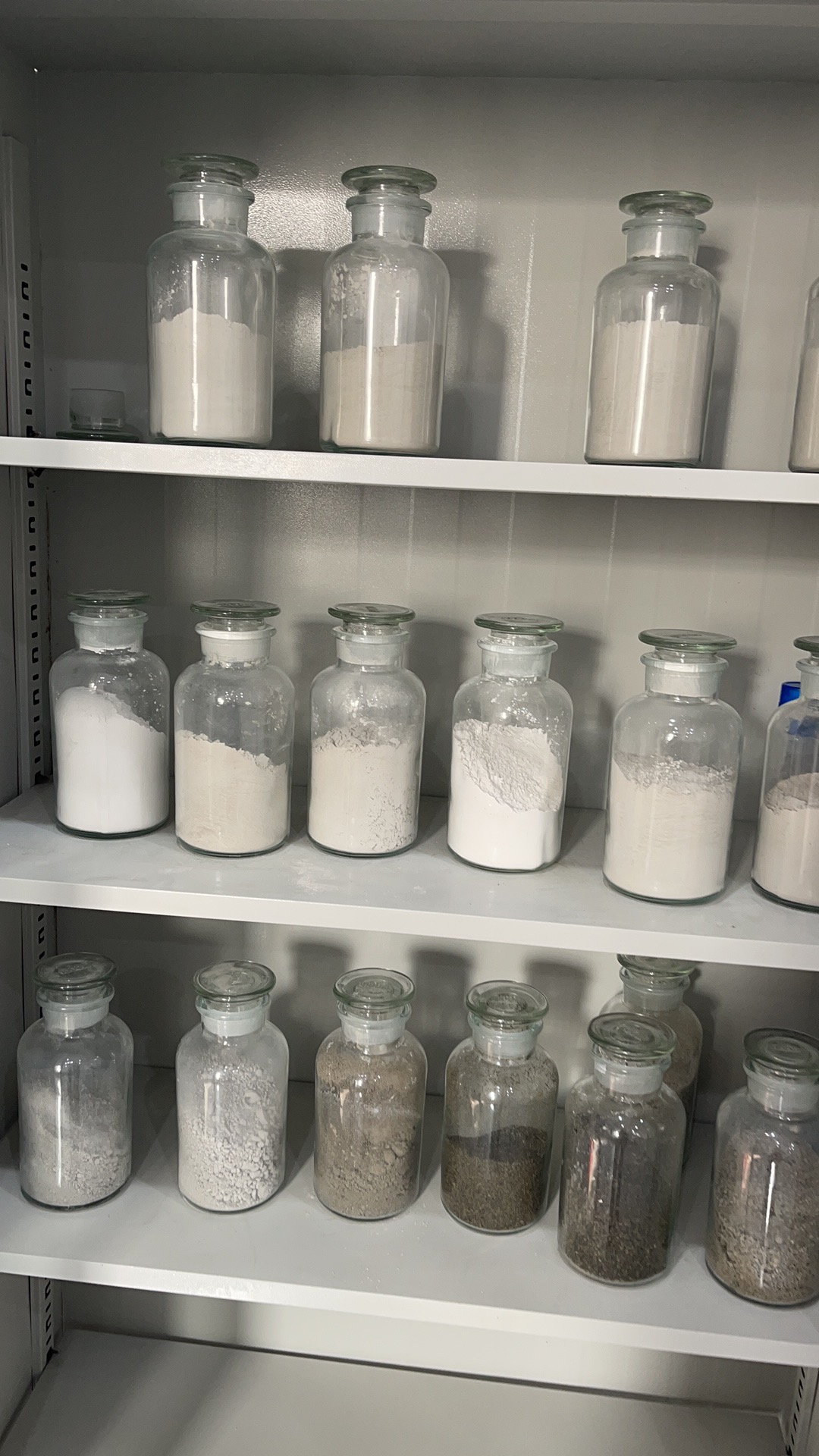
4. Addressing Formulation Challenges with Advanced GGBS Solutions
Despite the proven advantages, formulators of cementitious compounds face several challenges when incorporating GGBS, including variability in slag chemistry, slower early strength, and compatibility with certain admixtures. Industry leaders like Golden Fortune are addressing these issues through advanced processing and technical support.
Overcoming Slow Early-Age Strength Development
One of the most cited barriers to higher GGBS utilization is the delayed setting and reduced 1–3 day strengths. Golden Fortune offers ultrafine GGBS with a Blaine fineness exceeding 650 m²/kg. Independent verification using ASTM C109 shows that a 50% replacement with ultrafine GGBS achieves 3-day strengths reaching 80% of the plain Portland control, and 7-day strengths exceeding 95%. This performance enables high replacement levels even in fast-track construction without the need for excessive cement or chemical activators.
Ensuring Chemical and Physical Consistency
Inconsistent slag composition can lead to unpredictable setting times and strength variations. Reputable processors implement rigorous quality assurance protocols. Golden Fortune operates ISO 9001-certified facilities, providing mill certificates with every shipment that detail oxide analysis (by XRF), fineness (Blaine and sieve residue), and activity index (7- and 28-day). This transparency allows compound formulators to fine-tune their mixes with confidence and maintain batch-to-batch uniformity.
Optimizing Chemical Admixture Compatibility
GGBS surfaces can adsorb higher amounts of superplasticizers, potentially reducing their efficiency. Through collaboration with admixture manufacturers, technical teams from Golden Fortune assist in conducting paste flow tests (mini-slump) and zeta potential measurements to select the optimal PCE type and dosage. This ensures that the cementitious compound meets the required workability retention without overdosing or segregation.
5. Sustainability and Life-Cycle Assessment of Cementitious Compounds
The environmental footprint of a cementitious compound is increasingly scrutinized under regulations such as the European Green Deal and LEED v4.1. GGBS offers a direct pathway to decarbonize concrete and mortar products. For every metric ton of GGBS used in place of Portland cement, approximately 0.9 tons of CO₂ emissions are avoided. A life-cycle assessment (LCA) conducted according to EN 15804 for a typical C30/37 concrete with 50% GGBS shows a 40% reduction in global warming potential (GWP) compared to a plain cement reference.
Furthermore, GGBS is a certified green product under ISO 14021, as it utilizes an industrial by-product (blast furnace slag) that would otherwise require disposal. The use of GGBS in cementitious compounds contributes to circular economy principles and helps construction projects earn credits in categories such as "Building Product Disclosure and Optimization" (LEED) and "Materials" (BREEAM). With carbon pricing mechanisms expanding globally, specifying GGBS-enriched compounds is not only an environmental choice but a financially prudent one.
Conclusion: The Evolution of Cementitious Compounds Through Advanced GGBS Technology
The integration of GGBS into modern cementitious compound formulations is a testament to the industry's ability to innovate in response to durability demands and environmental imperatives. From offshore wind farms to high-rise superstructures, the technical and economic case for GGBS is supported by decades of research and field validation. As processing technologies advance—particularly in ultrafine grinding and quality control—the barriers to higher substitution levels are being systematically dismantled. Suppliers like Golden Fortune play a pivotal role in this transition, providing not only a consistent product but also the technical expertise necessary to optimize complex binder systems. The future of high-performance, sustainable cementitious compounds will undoubtedly rely on the continued refinement and adoption of GGBS as a core ingredient.
Frequently Asked Questions (FAQ)
Q1: What is the recommended GGBS replacement level for a standard structural cementitious compound?
A1: For general structural applications (e.g., beams, columns, slabs), replacement levels of 25% to 50% are common. This range provides a balance between improved durability and manageable early strength. For aggressive environments (marine, chemical), levels up to 70% are used. Always verify with trial mixes conforming to local standards (ACI 211.1 or BS 8500).
Q2: How does the fineness of GGBS affect the properties of a cementitious compound?
A2: Finer GGBS (higher Blaine) reacts more quickly, improving early-age strength and reducing setting time. It also enhances particle packing, leading to lower permeability. However, it increases water demand and may require higher superplasticizer dosages. Ultrafine GGBS (>600 m²/kg) from Golden Fortune is engineered to maximize reactivity while maintaining workability through optimized particle size distribution.
Q3: Can GGBS be used in combination with other supplementary materials like fly ash or metakaolin in a cementitious compound?
A3: Yes, ternary and quaternary blends are common in high-performance concrete. GGBS works synergistically with fly ash (improving long-term strength and sulfate resistance) and with silica fume (enhancing early strength and reducing chloride permeability). The key is to optimize the proportions based on the specific performance targets and to test compatibility with admixtures.
Q4: What are the main quality parameters to check when sourcing GGBS for cementitious compounds?
A4: Essential parameters include: fineness (Blaine, m²/kg), activity index at 7 and 28 days (per ASTM C989 or EN 15167), glass content (should be >90%), and chemical composition (especially MgO, S, and alkalis). Reputable suppliers like Golden Fortune provide certified mill test reports ensuring compliance with these specifications.
Q5: Does using GGBS affect the color or appearance of the finished cementitious compound?
A5: GGBS typically produces a lighter, whiter color compared to plain Portland cement. This can be an advantage for architectural concrete and precast elements where a uniform, light appearance is desired. However, variations in slag source can affect color; therefore, consistency from a single supplier is crucial for color-sensitive projects.
Q6: How does Golden Fortune support customers in optimizing their cementitious compound formulations?
A6: Golden Fortune offers comprehensive technical support including mix design consultations, trial batch assistance, and on-site troubleshooting. Their team of materials engineers can help adjust aggregate gradations, admixture selections, and curing regimes to maximize the benefits of their ultrafine GGBS in any specific application.