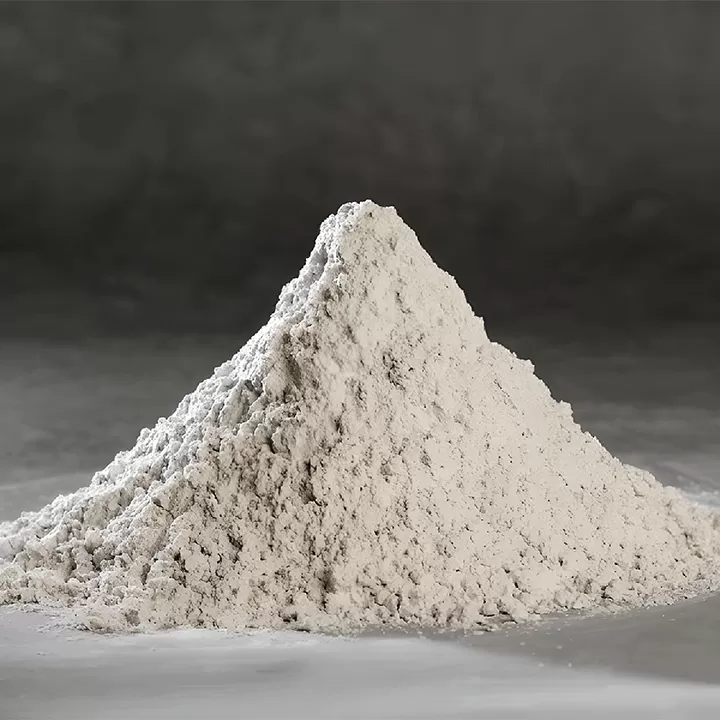
In the world of civil engineering and heavy machinery installation, precision is everything. A fraction of a millimeter can mean the difference between a machine running smoothly for decades or failing catastrophically within months. The material that bridges the gap between the concrete foundation and the steel baseplate is high performance cementitious grout.
This is not your standard construction mortar. It is a highly engineered composite designed to transfer static and dynamic loads effectively. Engineers specify this material when failure is not an option. It ensures that wind turbines stand tall in storms and that gas turbines spin without vibration.
To achieve these properties, manufacturers often incorporate advanced supplementary cementitious materials (SCMs). Companies like Golden Fortune are at the forefront of supplying the essential ingredients, such as Ground Granulated Blast-furnace Slag (GGBS), that make these grouts possible. Understanding the mechanics of high performance cementitious grout is the first step toward building durable infrastructure.
1. Defining High Performance Cementitious Grout
Standard concrete shrinks as it cures. If you use regular cement to fill the gap under a machine base, it will pull away from the steel plate as it dries. This creates voids. The machine is then supported only by air, leading to vibration and misalignment.
High performance cementitious grout is formulated to be non-shrink. It contains additives that cause a controlled expansion during the plastic and hardening phases. This expansion ensures full contact between the foundation and the baseplate.
Key characteristics include:
- High early and late compressive strength.
- Controlled expansion to prevent shrinkage cracks.
- Flowability to fill intricate voids without segregation.
- Dimensional stability under varying thermal conditions.
2. The Role of GGBS in Grout Formulations
The inclusion of Ground Granulated Blast-furnace Slag (GGBS) transforms a standard mix into a high performance cementitious grout. GGBS improves the particle packing density of the matrix. This results in a much denser final product.
When hydration occurs, GGBS reacts to form secondary Calcium Silicate Hydrate (C-S-H) gel. This gel fills the capillary pores that water would usually occupy. The result is a grout that is less permeable and more resistant to environmental stress.
Furthermore, GGBS lowers the heat of hydration. In deep pour applications, excessive heat can cause thermal cracking. By mitigating this heat, the structural integrity of the high performance cementitious grout is preserved.
3. Compressive Strength and Load Transfer
The primary function of any grout is to transfer load. Heavy machinery vibrates and exerts massive downward pressure. The grout must be stronger than the concrete foundation beneath it. Typically, high performance cementitious grout achieves compressive strengths exceeding 60 MPa to 80 MPa.
This high strength ensures that the grout does not crush under the weight of the equipment. It acts as a solid shim. If the material were weak, it would crumble, causing the machine to tilt.
Suppliers like Golden Fortune ensure that the raw materials meet strict quality standards. Consistent particle size distribution in the dry mix is crucial for achieving these high strength values reliably.
4. Flowability and Self-Leveling Properties
Installing grout under a large baseplate is difficult. You cannot trowel it into place. The material must flow like a liquid to reach every corner of the formwork. High performance cementitious grout possesses excellent rheological properties.
It is often described as "self-leveling." Once poured, gravity pulls it into the voids. However, it must do this without the water separating from the solids (bleeding) or the heavy aggregates sinking to the bottom (segregation).
Achieving this balance requires precise chemistry. Superplasticizers and viscosity-modifying agents are used. These additives allow the high performance cementitious grout to be fluid enough to pump over long distances yet stable enough to hold its uniformity.
5. Resistance to Dynamic Loads and Fatigue
Many structures are subject to cyclic loading. A bridge bearing moves with traffic; a compressor vibrates thousands of times a minute. Standard concrete eventually fatigues and cracks under this stress.
High performance cementitious grout is designed to resist fatigue. The dense microstructure, often enhanced by silica fume or ultrafine GGBS, prevents the propagation of micro-cracks.
This durability is vital for:
- Wind turbine onshore and offshore foundations.
- Crane rail grouting.
- Reciprocating compressor bases.
- Stamping presses and forge hammers.
6. Durability in Aggressive Environments
Industrial plants are often harsh environments. Spills of oil, acids, or exposure to saltwater are common. A standard cement mix would deteriorate rapidly. High performance cementitious grout offers superior chemical resistance.
The low permeability prevents aggressive agents from penetrating the matrix. This protects the steel reinforcement within the foundation from corrosion. In marine environments, resistance to chloride ion ingress is a specific requirement.
By using quality components sourced from reliable partners like Golden Fortune, formulators can guarantee the longevity of their grout even in splash zones or chemical containment areas.
7. Installation Best Practices
Even the best high performance cementitious grout will fail if installed incorrectly. Preparation is key. The concrete surface must be roughened to create a mechanical bond. This is often called the Concrete Surface Profile (CSP).
The substrate must be saturated with water but free of standing puddles (Saturated Surface Dry - SSD). This prevents the old concrete from sucking the moisture out of the fresh grout, which would stop the hydration process.
Mixing requires high-shear mixers to ensure all lumps are broken. Air entrapment should be minimized. When pouring, it must be done from one side only to prevent trapping air pockets under the plate.
Managing Temperature During Application
Temperature affects the setting time and flow of high performance cementitious grout. In hot weather, the pot life reduces significantly. The material may stiffen before it fills the void.
To combat this, contractors use chilled mixing water. They also shade the work area. In cold weather, the strength gain slows down. Warm water and insulation blankets are used to maintain the reaction temperature.
Manufacturers provide specific temperature ranges for application. Ignoring these limits can lead to flash setting or delayed strength development, compromising the project timeline.
Economic Implications of Material Choice
Using a premium high performance cementitious grout costs more per bag than general-purpose mortar. However, the cost of the grout is miniscule compared to the cost of the equipment it supports.
If a grout fails, the machine must be stopped, lifted, and the foundation repaired. This downtime can cost millions in lost production. Therefore, investing in high-quality materials upfront is a form of insurance.
The lifecycle cost analysis heavily favors high-performance materials. They require less maintenance and last as long as the structure itself.
Comparing Cementitious vs. Epoxy Grouts
While this article focuses on high performance cementitious grout, it is worth noting the alternative: epoxy grout. Epoxy offers higher chemical resistance and tensile strength but is much more expensive and harder to handle.
Cementitious options are more user-friendly. They are easier to mix, have better fire resistance, and are less sensitive to moisture during installation. For the vast majority of static heavy loads, cementitious grout is the preferred engineering solution.
Sustainability and Green Building
Modern construction demands sustainability. The use of industrial by-products like GGBS in high performance cementitious grout reduces the carbon footprint. By replacing a portion of the Portland cement, emissions are lowered.
Additionally, the durability of the material means structures do not need to be rebuilt as often. This conservation of resources aligns with LEED and BREEAM certification goals.
Suppliers are increasingly aware of their environmental impact. Choosing materials that are both high performing and eco-friendly is the new standard in the industry.
The integrity of heavy infrastructure relies on the unseen layer between the ground and the machine. High performance cementitious grout provides the stability, strength, and durability required for modern engineering marvels.
From ensuring the verticality of a skyscraper to securing the turbines that power our cities, this material is indispensable. Its formulation, often enhanced by GGBS, represents the intersection of chemistry and physics.
For engineers and contractors, selecting the right product and the right ingredients is crucial. Trusted industry partners like Golden Fortune continue to support the sector with high-quality additives that push the boundaries of what high performance cementitious grout can achieve.