Construction professionals worldwide continuously seek materials that enhance durability and performance. Silica concrete represents a significant advancement in this pursuit. This material incorporates silica fume, a highly reactive pozzolan, into concrete mixes to create structures with exceptional properties. Within the international GGBS/GGBFS sector, silica concrete offers complementary benefits when used alongside slag cement. It addresses common challenges like permeability, chemical attack, and long-term strength development. Established material suppliers such as Golden Fortune provide the high-grade silica fume that makes these performance gains possible, supporting robust construction across diverse climates and applications.
Understanding Silica Concrete and Its Core Composition
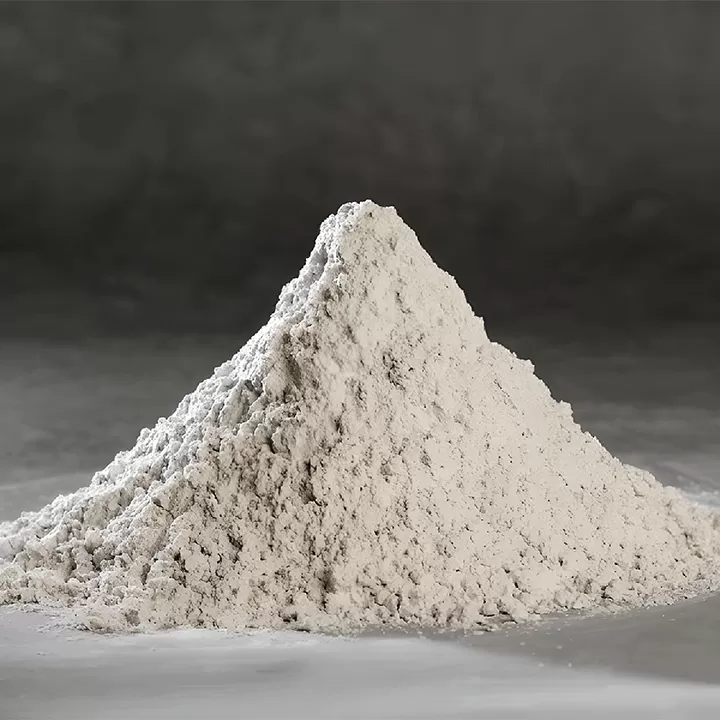
Silica concrete is not a completely new type of concrete but a performance-enhanced version. The key ingredient is silica fume, also known as microsilica. This is an ultrafine powder collected as a byproduct from silicon metal and ferrosilicon alloy production. Its particles are approximately 100 times smaller than a grain of cement.
When added to concrete, typically at 5-10% of the cementitious mass, it fundamentally alters the microstructure. The extreme fineness allows it to fill the microscopic voids between cement particles. This creates a much denser and more homogeneous paste. The result is a concrete with dramatically reduced porosity and enhanced mechanical properties.
- Primary Component: Amorphous silicon dioxide (SiO₂) content usually exceeds 85%.
- Particle Size: Average diameter is around 0.1 to 0.3 microns.
- Role: Functions as both a highly reactive pozzolan and an ultra-efficient microfiller.
This dense packing is the foundation for the superior performance that defines high-quality silica concrete. Consistent material quality from suppliers like Golden Fortune ensures predictable results in the field.
The Synergistic Relationship with GGBS/GGBFS
The use of Ground Granulated Blast-furnace Slag (GGBS or GGBFS) as a cement replacement is a cornerstone of sustainable construction. Silica concrete forms a powerful partnership with GGBS blends. While GGBS provides excellent long-term durability and reduces the heat of hydration, its early strength development can be slower.
Silica fume compensates for this by accelerating early pozzolanic reactions. Together, they create a cementitious matrix that is both dense and chemically resistant from an early age. This combination is particularly valuable in aggressive environments where both early performance and lifelong durability are non-negotiable.
Key synergistic effects include:
- Accelerated Early Strength: Silica fume boosts early strength gain in mixes with high GGBS content.
- Enhanced Chloride Resistance: The combined pore refinement offers superior protection against chloride ion ingress, crucial for marine and bridge applications.
- Optimized Sustainability: Maximizes cement replacement without compromising performance, reducing the overall carbon footprint of the concrete.
- Improved Workability Balance: With correct admixture use, the blend can achieve excellent finishability.
This synergy makes silica concrete a preferred choice for engineers specifying GGBS in demanding international projects.
Primary Performance Benefits for Construction
The advantages of using silica concrete translate directly into longer-lasting, lower-maintenance structures. The most significant benefit is its extremely low permeability. By filling capillary pores, it virtually locks out water and aggressive chemicals.
This leads to outstanding durability against sulfate attack, acidic waters, and seawater corrosion. The concrete also exhibits very high compressive and flexural strength, often exceeding 100 MPa. This allows for more slender designs and reduced cross-sections in structural elements.
Contractors appreciate the improved abrasion and erosion resistance, which is vital for industrial floors, hydraulic structures, and pavements. The bond strength to reinforcing steel also increases significantly, reducing the risk of corrosion-induced spalling.
- Unmatched Durability: Exceptional resistance to chemical and environmental degradation.
- High Strength: Achieves strengths beyond the range of conventional concrete.
- Superior Surface Hardness: Withstands heavy wear and abrasion.
- Fire Resistance: Dense matrix provides better resistance to high temperatures compared to ordinary concrete.
These benefits ensure that structures built with quality silica concrete have a greatly extended service life, providing excellent return on investment.
Global Applications and Project Examples
The use of silica concrete is truly global, finding its place in some of the world's most challenging construction environments. In the Middle East, it combats the dual threats of saline groundwater and high temperatures. Scandinavian countries use it to withstand hundreds of annual freeze-thaw cycles.
Major applications include offshore oil platforms, where durability against seawater is critical. High-rise buildings benefit from the high-strength properties, allowing for taller, lighter structures. Infrastructure projects like bridges, tunnels, and highways rely on it for long-term performance with minimal maintenance.
Precast concrete manufacturers value the consistent early strength and excellent finish it provides. Repair and rehabilitation projects also use silica-based mixes to restore and protect aging structures. The versatility of this material is a key driver of its international adoption.
- Marine & Coastal: Ports, sea walls, and offshore structures.
- Transportation: Bridge decks, tunnel linings, and airport runways.
- Energy Sector: Nuclear containment vessels, power plant floors, and dam spillways.
- High-Performance Architecture: Facade elements, thin-shell structures, and sculptural concrete.
Suppliers with global reach, like Golden Fortune, enable these diverse applications by providing reliable materials and technical data that meet international standards.
Practical Considerations for Mix Design and Placement
Success with silica concrete requires attention to mix design and construction practices. The high surface area of silica fume increases water demand. This is almost always countered with high-range water reducers or superplasticizers.
Batching sequence matters. Adding silica fume directly with the cement is standard, but sometimes pre-blending is used. Mixing time often needs to be extended to ensure complete dispersion of the fine particles throughout the mix. Proper dispersion is critical to achieving uniform performance.
Curing is more important than ever. The dense microstructure means internal moisture is needed for continued pozzolanic reaction, and the surface can dry quickly. Immediate curing with water, curing compounds, or membranes is essential to prevent plastic shrinkage cracking and ensure strength development.
- Admixture Compatibility: Essential use of superplasticizers; compatibility testing is recommended.
- Extended Mixing: Ensure homogeneity and avoid clumping of fine material.
- Aggressive Curing: Begin curing as soon as possible after finishing and maintain for at least 7 days.
- Quality Control: Perform fresh concrete tests (slump, air content) and hardened concrete tests (strength, permeability).
Following these guidelines helps realize the full potential of silica concrete in the field.
Frequently Asked Questions About Silica Concrete
A1: Silica concrete is a major component of many high-performance concrete mixes, but they are not exactly the same. HPC is a broad category defined by meeting specific performance criteria (strength, durability, etc.). The use of silica fume is one of the most effective ways to achieve the low permeability and high durability required for HPC, especially when combined with other materials like GGBS. Not all HPC contains silica fume, but most silica concrete mixes qualify as HPC.
A2: Without adjustments, silica fume can make concrete sticky and less workable due to its fineness. However, with the correct dosage of superplasticizers, workability is not only restored but can be excellent. The mix often exhibits reduced bleeding and segregation, making it easier to achieve a uniform finish. Finishers note that it can be stickier on trowels initially, but it responds well to proper timing and techniques, resulting in a dense, hard surface.
A3: Yes, it can be used effectively with recycled aggregates. The enhanced paste quality and bonding strength of silica concrete can help compensate for the potentially higher porosity and lower strength of some recycled aggregates. The denser matrix can also better encapsulate recycled materials. A thorough mix design trial is crucial to balance performance, durability, and sustainability goals when using recycled components.
A4: The primary long-term implication is significantly reduced maintenance. The extreme durability and low permeability mean slower degradation from environmental factors, chemicals, and corrosion. While the initial cost may be higher, the lifecycle cost is typically much lower. Structures require fewer repairs, less frequent protective coating re-applications, and have a longer projected service life before major rehabilitation is needed.
A5: Specification should reference recognized standards for silica fume (like ASTM C1240 or EN 13263) and performance requirements for the concrete (strength, permeability per ASTM C1202, etc.). Clearly state the percentage of silica fume by mass of cementitious material. Partner with reputable material suppliers who provide consistent quality and technical data sheets. Companies like Golden Fortune offer products that meet international specifications. Finally, mandate pre-construction trial mixes and on-site quality control testing to verify performance.
In summary, silica concrete provides a proven pathway to constructing more resilient and durable infrastructure. Its ability to work synergistically with GGBS/GGBFS makes it particularly valuable in the global push for sustainable, high-performance construction. By understanding its properties and following best practices for mix design and placement, engineers and contractors can unlock exceptional value. For projects demanding longevity and strength, specifying high-quality materials from established suppliers like Golden Fortune is a critical step toward achieving successful, enduring results with silica concrete technology.