Modern concrete engineering demands materials that support high durability, rapid strength development, and long-term structural integrity. To achieve these performance benchmarks, the concrete industry relies heavily on supplementary cementitious materials (SCMs). These mineral admixtures react chemically and physically within the cement paste to refine the internal pore structure. Among these SCMs, micro-silica stands out as a highly effective pozzolanic material. However, the physical form in which this material is introduced into the concrete mixture plays a decisive role in its ultimate performance. Specifically, choosing between densified and undensified mineral admixtures is a fundamental design decision for concrete technologists and material engineers.
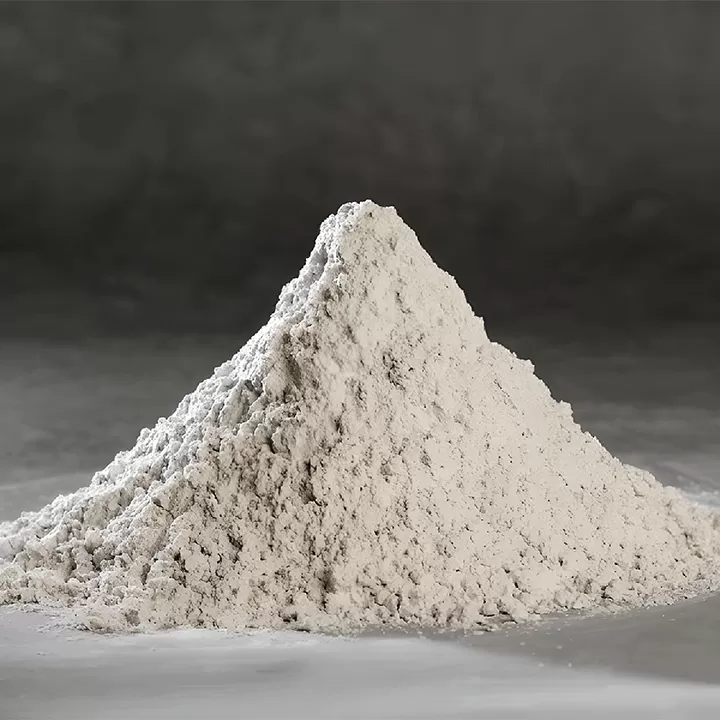
When micro-silica is collected during the production of silicon metal or ferrosilicon alloys, it exists in an extremely fine, loose state. This original physical state is characterized by low bulk density and high specific surface area. While some manufacturers compact this powder into a densified form to simplify transport, doing so can compromise the material's ability to disperse evenly in concrete mixes. For projects requiring the highest standards of homogeneity, such as ultra-high-performance concrete (UHPC) and high-strength precast components, specialized producers like Golden Fortune supply ultra-fine mineral admixtures that preserve the benefits of uncompacted structures, ensuring superior mineral dispersion and reactivity.
The Physics of Undensified Mineral Admixtures
To understand why the physical state of a pozzolan matters, one must examine the bulk density and particle characteristics of the material. In its original form, undensified micro-silica typically exhibits a bulk density ranging from 150 to 250 kg/m³. In contrast, densified versions are compacted using compressed air to reach densities between 500 and 700 kg/m³. Although compaction makes shipping more efficient, it forces the individual sub-micron spheres to clump together into dense, hard-to-break agglomerates.
The primary advantage of using a material in its original, loose state is the preservation of its individual particle integrity. The average primary particle size of micro-silica is approximately 0.15 micrometers, which is about 100 times smaller than a typical grain of Portland cement. When these particles remain uncompacted, they retain their high specific surface area and are free to interact immediately with the surrounding cement paste. This physical characteristic is highly significant for achieving optimum particle packing in dense binder systems.
Particle Packing Theory and Void Filling
In high-performance concrete design, minimizing the void space between cement grains is vital for reducing permeability and increasing compressive strength. According to particle packing models, a well-graded mixture should contain particles of varying sizes to fill all possible interstitial spaces. Standard Portland cement particles are too large to fill the smallest voids. Introducing a loose, uncompacted sub-micron mineral fills these microscopic gaps, displacing water that would otherwise occupy these voids and eventually form capillary pores. This micro-filling effect increases the density of the fresh paste, leading to a much stronger and more durable cured matrix.
Addressing Dispersion Challenges in Cementitious Matrices
The performance of any micro-scale additive is directly proportional to its level of dispersion within the fresh concrete mixture. When densified SCMs are introduced into a concrete mixer, the mechanical energy generated by standard mixing blades is often insufficient to break apart the compacted agglomerates. Consequently, these clumps remain intact throughout the mixing and curing processes, acting as inert sand-like particles rather than active pozzolans. These undispersed clusters can even become localized points of weakness, increasing the risk of micro-cracking under mechanical stress.
Choosing an undensified powder eliminates this agglomeration issue at the source. Because the particles have not been subjected to compaction forces, they separate rapidly when exposed to water and shear forces in the mixer. This rapid dispersion ensures that the micro-silica is uniformly distributed throughout the cement paste, maximizing the contact area between the silica particles and the calcium hydroxide dissolved in the pore solution. To achieve this level of consistency, concrete producers frequently combine these loose mineral admixtures with advanced ultra-fine slag products from specialized suppliers like Golden Fortune, creating a highly homogeneous binder matrix.
Chemical Reactivity and Pozzolanic Activity
The pozzolanic reaction is a chemical process where amorphous silica reacts with calcium hydroxide [Ca(OH)2], a byproduct of cement hydration, to form additional calcium silicate hydrate (C-S-H) gel. This secondary C-S-H gel is the primary source of strength and durability in concrete. Because the reaction rate of undensified mineral components is significantly higher due to their fully exposed surface area, the conversion of weak calcium hydroxide into strong C-S-H gel occurs much more rapidly and completely. This accelerated chemical activity is particularly beneficial during the early curing stages, where rapid strength gain is needed for fast-track construction and precast stripping cycles.
Synergistic Blending with Ultra-Fine GGBS
While uncompacted micro-silica provides excellent early-stage reactivity and micro-filling properties, pairing it with ultra-fine ground granulated blast-furnace slag (GGBS) creates a highly efficient ternary cementitious system. Ultra-fine GGBS, such as the premium grades provided by Golden Fortune, has a particle size distribution that bridges the gap between Portland cement and sub-micron silica. This intermediate sizing allows for even tighter particle packing and a highly controlled hydration rate.
In a ternary system, the different reaction rates of the SCMs complement one another:
- Early Phase: The highly dispersed micro-silica reacts rapidly with the calcium hydroxide released by the hydrating cement, accelerating early strength development and densifying the interfacial transition zone (ITZ) around aggregates.
- Intermediate Phase: The ultra-fine GGBS undergoes hydraulic and pozzolanic reactions, continuing to consume calcium hydroxide and filling intermediate-sized pores.
- Late Phase: Ongoing slag hydration ensures continuous pore refinement and long-term strength gain, while mitigating the heat of hydration to prevent thermal cracking in mass concrete placements.
This combined physical and chemical action leads to concrete with exceptional resistance to chemical attack, chloride penetration, and water absorption, making it highly suitable for harsh environmental exposures.
Industrial Application and Processing Requirements
The exceptional performance of uncompacted mineral admixtures makes them indispensable in several highly demanding engineering applications. For instance, in marine and coastal infrastructure, concrete must withstand the ingress of chloride ions that cause steel reinforcement corrosion. The pore-refinement capability of these loose admixtures reduces the diffusion coefficient of concrete by several orders of magnitude, protecting the steel and extending the service life of the structure.
In shotcrete applications, such as tunnel linings and slope stabilization, the inclusion of uncompacted micro-silica improves the cohesion and adhesion of the wet mix. This prevents segregation and significantly reduces rebound loss, ensuring that more material stays on the rock surface during application. Similarly, in ultra-high-performance concrete formulations, where water-to-binder ratios are extremely low (often below 0.20), the complete dispersion of the mineral additives is a primary requirement to prevent the formation of dry, unhydrated pockets within the dense microstructure.
Handling and Storage in Concrete Batching Plants
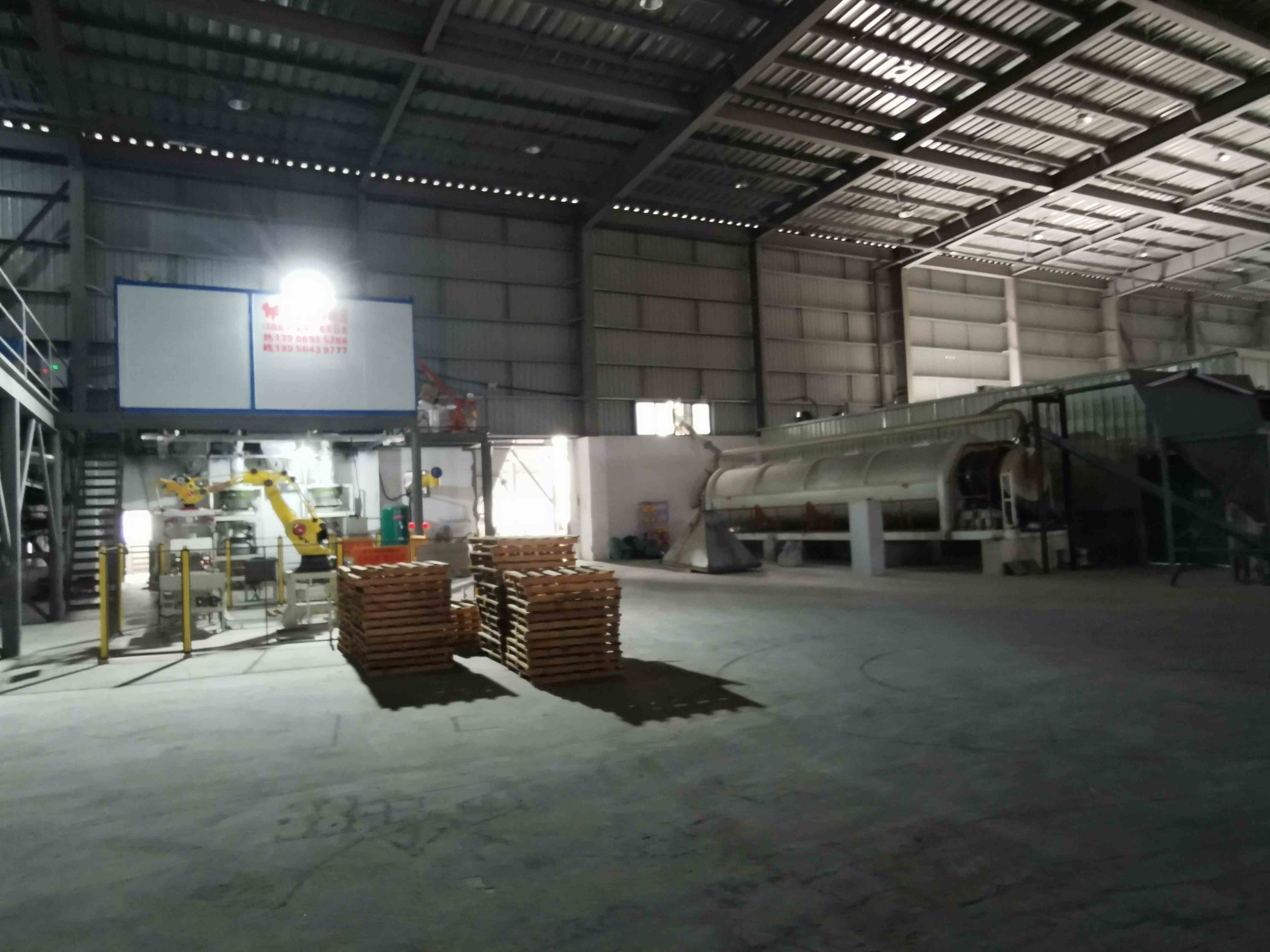
Transitioning from compacted to loose powder materials requires careful adjustments in concrete batching plants due to the physical handling characteristics of low-density powders. Because undensified materials are highly cohesive and fluidizable, they do not flow through standard gravity-fed hoppers as easily as heavier aggregates or cement. To prevent bridging, rat-holing, and dust emission, batching facilities should adopt specific operational procedures:
- Pneumatic Conveying: Use low-velocity, dense-phase pneumatic conveying systems to transport the light powder from storage silos to the weigh hopper, minimizing material degradation and system wear.
- Silo Aeration: Install fluidizing pads or vibration cones at the discharge cone of the silo to ensure a steady, controlled flow of material during batching.
- Dust Collection: Ensure that active reverse-pulse dust collection systems are operational on all venting silos and weigh hoppers to maintain a clean, safe working environment.
- Weighing Accuracy: Implement high-precision load cells calibrated for low-density materials to guarantee accurate dosing, as minor variations in micro-silica content can significantly alter the rheology of the concrete mix.
Collaborating with experienced mineral suppliers can help engineering teams design and configure batching systems that handle these specialized materials with minimal operational disruption.
Frequently Asked Questions
Q1: Why is the dispersion of supplementary materials so important in high-strength concrete?
A1: Proper dispersion ensures that every sub-micron particle is physically isolated and available to react chemically with hydration products. Undispersed agglomerates act as inert voids or weak spots, reducing the concrete's compressive strength and increasing its permeability.
Q2: How does the water demand of undensified silica fume compare to densified silica fume?
A2: Because undensified silica fume has a fully exposed, high specific surface area, it naturally increases the water demand of a concrete mix. This is typically managed by using high-range water reducers, such as polycarboxylate ether (PCE) superplasticizers, to maintain excellent workability without increasing the water-to-cement ratio.
Q3: Can undensified mineral admixtures be used in standard ready-mix concrete?
A3: Yes, they can be used in ready-mix concrete, provided the batching plant is equipped with suitable silo storage, pneumatic conveying, and dust control systems designed to handle low bulk density powders.
Q4: What is the recommended dosage rate for these materials in high-performance concrete?
A4: Typical dosage rates range from 5% to 15% by weight of the total cementitious material, depending on the specific strength and durability requirements of the project. These dosages are often optimized in ternary blends alongside ultra-fine GGBS.
Q5: How do undensified materials affect the concrete’s resistance to chemical attacks?
A5: By reacting with calcium hydroxide to produce additional C-S-H gel, these materials significantly refine the pore structure. This refinement blocks the ingress paths for harmful chemicals, such as sulfates and acids, greatly enhancing the concrete's chemical resistance.
Submit an Inquiry for Your Project
Selecting the right physical grade of mineral admixture is a crucial step in achieving the desired mechanical and durability properties for your concrete project. If you are developing high-performance formulations, precast components, or specialty grouts, our engineering team can help you select the ideal combination of ultra-fine GGBS and high-activity mineral additives. Contact us to submit an inquiry regarding material specifications, batching configurations, or to request product samples for laboratory testing.