The global construction industry faces a significant challenge: reducing the massive carbon footprint associated with Ordinary Portland Cement (OPC) production. As urbanization continues to drive demand for residential and industrial infrastructure, the necessity for a viable eco friendly alternative for cement has moved from a peripheral concern to a primary focus for engineers and developers alike. Standard OPC production is responsible for approximately 8% of global CO2 emissions, largely due to the calcination of limestone and the high thermal energy required for kilns.
Transitioning toward Supplementary Cementitious Materials (SCMs) is no longer just a trend; it is a fundamental shift in materials science. Among the various options available, Ground Granulated Blast Furnace Slag (GGBS) stands out for its ability to replace a significant portion of clinker without compromising structural integrity. By utilizing industrial byproducts, the industry can achieve circular economy goals while producing concrete that exhibits superior longevity in harsh environments.
The Chemical Mechanism of Supplementary Cementitious Materials
To understand why specific materials function as an eco friendly alternative for cement, one must examine the hydration chemistry. When OPC hydrates, it produces Calcium-Silicate-Hydrate (C-S-H) gel, which provides strength, and Calcium Hydroxide (Ca(OH)2), a byproduct that contributes little to strength and can actually increase vulnerability to chemical attacks.
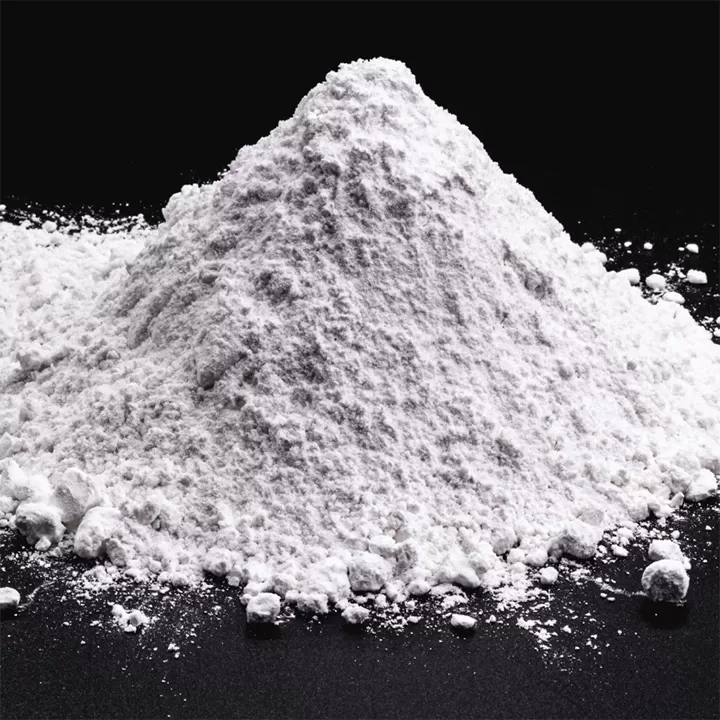
GGBS, a byproduct of the iron-making process, possesses latent hydraulic properties. When integrated into a concrete mix, it reacts with the Ca(OH)2 produced by OPC hydration. This secondary pozzolanic reaction generates additional C-S-H gel, filling the capillary pores within the concrete matrix. The result is a much denser microstructure with lower permeability. This refined pore structure is the reason why high-replacement GGBS mixes are favored for large-scale maritime and subterranean projects.
At Golden Fortune, the focus remains on optimizing the particle size distribution of these materials to ensure that the chemical reactivity is maximized, providing structural engineers with reliable data for long-term performance predictions.
Addressing Industry Pain Points: Durability and Permeability
Standard concrete often fails prematurely due to external chemical ingress. In B2B construction sectors, the longevity of an asset is a pivotal metric. The use of an eco friendly alternative for cement addresses several traditional pain points:
Chloride Ingress: In coastal regions, chloride ions penetrate concrete and cause reinforcement corrosion. GGBS-heavy mixes have a higher binding capacity for chlorides, significantly delaying the onset of corrosion.
Sulfate Attack: Soil and groundwater often contain sulfates that react with the tricalcium aluminate (C3A) in OPC, causing expansion and cracking. Replacing OPC with slag reduces the C3A content, making the concrete inherently sulfate-resistant.
Alkali-Silica Reaction (ASR): The use of reactive aggregates can lead to internal expansion. SCMs effectively mitigate ASR by consuming the alkalis and reducing the pH of the pore solution.
Thermal Cracking in Mass Concrete: Large pours, such as dam foundations or bridge piers, generate immense heat during hydration. High-replacement ratios of slag slow down the heat evolution, reducing the risk of thermal gradients and subsequent cracking.
Technical Advantages of Ultrafine GGBFS
While standard GGBS is effective, the emergence of Ultrafine Ground Granulated Blast Furnace Slag (U-GGBFS) has broadened the possibilities for high-performance concrete (HPC). The specific surface area (Blaine fineness) of standard cement is typically between 300-400 m²/kg. Ultrafine variants can reach upwards of 600-800 m²/kg.
This increased fineness acts in two ways. First, it serves as a physical filler, occupying the microscopic voids between sand and cement particles. Second, the higher surface area accelerates the chemical reaction, compensating for the slower early-age strength gain typically associated with slag-based mixes. Professionals looking for a high-performance eco friendly alternative for cement often turn to these ultrafine solutions to achieve rapid stripping times without sacrificing sustainability.
Golden Fortune has established a reputation for providing consistent, high-quality SCMs that meet stringent international standards, ensuring that large-scale infrastructure projects remain both robust and environmentally responsible.
Application Scenarios in Modern Infrastructure
The adoption of an eco friendly alternative for cement is visible across various specialized construction sectors:
1. Marine and Offshore Engineering
Structures such as harbor walls, jetties, and offshore wind turbine foundations are constantly exposed to seawater. The use of GGBS at replacement levels of 50% to 70% is common here to ensure the structure lasts for its intended 100-year service life despite the aggressive environment.
2. High-Rise Buildings and Commercial Hubs
In vertical construction, the pumpability of concrete is a major operational concern. Slag particles have a smoother surface texture and lower water demand compared to OPC, which improves the workability of the fresh concrete and allows for easier pumping to higher floors.
3. Underground Transport and Tunneling
Tunnels are subject to groundwater pressure and potential chemical leaching from the surrounding soil. Shotcrete and precast tunnel segments utilizing SCMs offer better resistance to water penetration and acidic conditions, reducing the frequency of maintenance cycles.
Optimizing Mix Designs for Carbon Reduction
To maximize the benefits of an eco friendly alternative for cement, mix design optimization is necessary. This involves adjusting the water-to-binder ratio and selecting compatible chemical admixtures. Because slag reacts slower than clinker, the use of polycarboxylate-based superplasticizers is often recommended to maintain flowability while keeping the water content low.
Furthermore, the "clinker factor"—the ratio of OPC clinker to the total cementitious material—is a primary KPI for sustainability managers. By pushing replacement levels to the limit permitted by local building codes (often up to 80% for certain applications), companies can report significant reductions in embodied carbon, aligning with global ESG (Environmental, Social, and Governance) targets.
The Future of Pozzolanic Materials
The industry is currently exploring ternary blends, which combine OPC, GGBS, and another material like Silica Fume or Metakaolin. These blends leverage the strengths of each component: OPC for early strength, GGBS for long-term durability, and Silica Fume for extreme densification. This holistic approach to material selection ensures that the built environment can withstand the rigors of climate change while simultaneously reducing its contribution to the problem.
As regulatory frameworks like the Carbon Border Adjustment Mechanism (CBAM) begin to influence international trade, the sourcing of high-grade industrial byproducts becomes a strategic necessity. Reliable supply chains for these materials are vital for maintaining the momentum of green construction initiatives globally.
The transition to a sustainable construction model is dependent on the intelligent application of materials science. Utilizing an eco friendly alternative for cement such as GGBS or GGBFS is a proven method for enhancing the durability, workability, and environmental profile of concrete. By understanding the chemical interactions and physical benefits of these SCMs, engineers can design structures that are not only stronger but also significantly less harmful to the planet.
For procurement officers and project managers, partnering with experts like Golden Fortune ensures access to the technical expertise and high-quality materials required to meet today’s rigorous building standards. If you are looking to optimize your next project for both performance and sustainability, we invite you to contact us for a detailed consultation on our product range.
Are you ready to enhance your project's sustainability profile? Contact our technical team today for a comprehensive inquiry and technical data sheets.
Frequently Asked Questions
Q1: How does the use of GGBS affect the setting time of concrete?
A1: GGBS typically extends the setting time of concrete compared to 100% OPC mixes. This is advantageous in hot weather as it prevents cold joints and allows for longer finishing times. However, in cold weather, accelerators may be used to maintain production schedules.
Q2: Can I replace cement with GGBS in any type of construction?
A2: While GGBS is suitable for most structural applications, the replacement level should be determined based on the specific requirements for early strength gain and exposure conditions. It is widely used in foundations, bridges, and marine structures.
Q3: Does concrete made with an eco friendly alternative for cement look different?
A3: Yes, concrete containing GGBS is typically lighter in color—closer to off-white rather than the traditional dark grey. This high-reflectivity surface can also help reduce the heat island effect in urban areas.
Q4: Is specialized equipment needed to handle GGBS on a job site?
A4: No specialized equipment is required. GGBS is stored in silos and batched similarly to cement. Most modern ready-mix plants are already equipped with multiple silos to handle SCMs separately.
Q5: What is the typical replacement ratio for GGBS in standard structural concrete?
A5: For general reinforced concrete, a replacement ratio of 35% to 50% is standard. For mass concrete or marine environments, this can increase to 70% or more, depending on the design specifications and local building codes.
Q6: How does ultrafine slag differ from standard slag?
A6: Ultrafine slag has a significantly smaller particle size, which leads to a much faster pozzolanic reaction and better particle packing. This results in higher early-age strength and even lower permeability compared to standard GGBS.