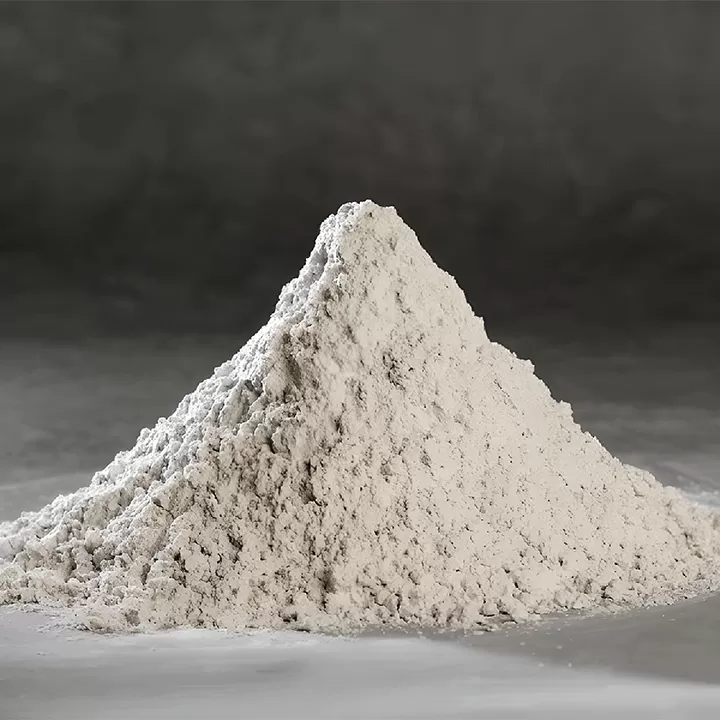
Specifiers and ready-mix producers face increasing pressure to lower embodied carbon without compromising resistance to sulfates, chlorides, or freeze-thaw. type it cement — defined in ASTM C595 as ternary blended hydraulic cement — offers a precise balance between ordinary Portland cement (OPC) and two supplementary cementitious materials (SCMs), commonly GGBFS (slag) and fly ash or limestone. This blend tackles durability challenges in aggressive environments while cutting CO₂ by 30–50% compared to pure OPC.
1. What Exactly Is Type IT Cement? (ASTM C595 Definition)
type it cement refers to ternary blended cements containing Portland cement clinker plus two distinct SCMs. According to ASTM C595 / AASHTO M 240, the “IT” designation requires that neither SCM constitutes more than 70% of the total SCM mass, and the total SCM content ranges between 15% and 70% by mass of the final blend. Common ternary systems include:
Slag + fly ash (Class F or C) – optimal for sulfate and chloride resistance.
Slag + limestone – improves workability and early strength.
Fly ash + silica fume – for very high-strength, low-permeability concrete.
Unlike binary blends (Type IS – slag cement, or Type IP – pozzolan cement), ternary combinations address multiple durability mechanisms simultaneously. For example, slag reduces chloride ingress, while fly ash controls alkali-silica reaction (ASR) and heat of hydration.
2. Technical Mechanisms: Why Ternary Outperforms Binary Blends
Engineers selecting type it cement benefit from synergistic reactions that cannot be achieved with a single SCM:
2.1. Pore Structure Refinement
Slag (GGBFS) produces additional C-S-H gel with lower Ca/Si ratio, filling capillary pores >100 nm. Fly ash provides spherical particles that act as micro-fillers. The combination reduces permeability by 60–80% relative to OPC, measured via ASTM C1202 (chloride ion penetrability – “very low” class).
2.2. Balanced Early and Late Strength
One common objection to high-volume slag or fly ash is slow early strength. Type IT blends using 20% slag + 20% fly ash maintain 1-day strength above 12 MPa (typical for structural removal of formwork). Limestone addition (10%) further accelerates hydration through filler nucleation.
2.3. Sulfate and Seawater Performance
Laboratory data from the Portland Cement Association shows ternary blends with 25% slag + 20% Class F fly ash achieve an expansion below 0.04% after 12 months in ASTM C1012 sulfate solution (5% Na₂SO₄) — well below the 0.10% limit for high sulfate resistance.
3. Key Application Scenarios for Type IT Cement
Infrastructure owners have adopted type it cement in the following demanding segments:
Marine and tidal zones: Piles, aprons, and submerged tunnels. Ternary slag-fly ash mixes reduce chloride diffusion coefficients to 2–4 × 10⁻¹² m²/s, extending service life beyond 75 years.
Wastewater treatment plants: Resistance to biogenic sulfuric acid corrosion. The lower calcium hydroxide content limits gypsum formation.
Mass concrete foundations: Slag + fly ash lowers adiabatic temperature rise by up to 45%, avoiding thermal cracking in 2 m thick rafts.
Pavements in sulfate-rich soils: Western US and Middle Eastern projects use Type IT to replace Type V cement while cutting carbon by 35%.
Green building certification: LEED v4.1 and BREEAM award additional points for ternary blends due to recycled content (slag and fly ash) and lower Global Warming Potential (GWP).
4. Industry Pain Points and Proven Solutions with Type IT
Despite growing specifications, three concerns often delay adoption. Here are mitigation strategies based on field data from major contractors.
Pain point 1: Variability in SCM quality (especially fly ash)
Solution: Use Type IT blends where slag is the dominant SCM (≥60% of the SCM fraction). Slag quality remains consistent when sourced from ISO-certified suppliers like Golden Fortune, which provides ultrafine GGBFS with stable fineness and chemistry. This minimizes dependence on fly ash, which faces supply disruptions due to coal plant retirements.
Pain point 2: slower set time during cold weather pours
Solution: Adjust the ternary ratio. For winter concreting, specify 15% slag + 10% fly ash + 75% OPC. Adding a non-chloride accelerator (2% calcium nitrate) restores setting time to OPC levels while retaining long-term durability benefits.
Pain point 3: Lack of mix design guidance for high replacements (>50%)
Solution: Use the “modified Bolomey” method for ternary systems. Reduce water-to-cementitious ratio (w/cm) by 0.02–0.04 compared to OPC mixes. For example, an OPC mix with w/cm 0.45 can be replaced by a Type IT blend at w/cm 0.42, achieving equal or higher 28-day strength.
Golden Fortune provides technical datasheets and trial mix support for clients moving to ternary blends, including rheology adjustments for pumpability.
5. Economic and Environmental Quantification
Selecting type it cement for a 50,000 m³ infrastructure project yields measurable outcomes:
CO₂ reduction: 35–50% lower compared to C150 Type I/II cement (approx. 350 kg CO₂ per ton of binder replaced). Total savings: 5,000–7,000 tons CO₂e.
Material cost: Type IT often costs 5–10% less per ton than pure OPC in regions with local slag and fly ash availability.
Extended service life: Decreased maintenance intervals for bridge decks (chloride-induced corrosion postponed from 25 to 45 years).
Life-cycle assessment (LCA) according to EN 15804 confirms that ternary cements reduce abiotic depletion potential by up to 30% compared to binary slag cement alone.
6. Specification Guidance: How to Write Type IT Requirements
For project engineers, here is a template clause:
“Hydraulic cement shall conform to ASTM C595 Type IT(S25)(P20) or approved equivalent, with combined slag and fly ash content between 35% and 55% by mass. Sulfate resistance: expansion ≤0.05% at 6 months per ASTM C1012. Chloride ion penetrability: ≤1000 coulombs at 56 days per ASTM C1202. Supplier must provide mill certificates and a ternary blend proportion report.”
This level of detail ensures supply chain accountability and predictable field performance.
For large infrastructure tenders, Golden Fortune supplies Type IT cement in bulk tankers or big bags, with independent third-party testing for each lot. Their quality management system (ISO 9001:2024) includes Rietveld XRD analysis to verify slag glass content and fineness.
7. Common Questions About Type IT Cement (FAQs)
Q1: Can Type IT cement be used for precast concrete production?
A1: Yes, with proper curing. Steam curing at 60–70°C for 6–8 hours accelerates strength gain in ternary blends. Many European precasters use Type IT (slag + limestone) for hollow-core slabs, achieving demolding strengths of 25 MPa within 12 hours.
Q2: Does Type IT cement affect air entrainment?
A2: Not directly. However, fly ash can absorb air-entraining admixtures (AEA) due to residual carbon. Adjust AEA dosage by 15–25% based on trial batches. Slag has no significant impact on air void parameters.
Q3: What replacement levels provide the best sulfate resistance using Type IT?
A3: For severe sulfate exposure (Class S3 per ACI 318), use a ternary blend with 25% slag + 20% Class F fly ash (total SCM 45%). Test results show expansion below 0.04% after one year. Do not use high-CaO fly ash (Class C) in sulfate environments.
Q4: How does Type IT compare to Type V (high sulfate resistant) cement in terms of cost?
A4: Type IT is typically 8–15% cheaper per ton than Type V, because Type V requires specialized low-C3A clinker. Type IT uses standard clinker plus SCMs, which are lower cost. Many specifiers now replace Type V with Type IT for sulfate resistance and carbon reduction.
Q5: Is Type IT cement available worldwide?
A5: Availability depends on regional SCM sources. In Europe (EN 197-1), ternary cements are covered under CEM II/B-M or CEM VI. In North America, many producers offer custom Type IT blends. For regions lacking fly ash, slag + calcined clay ternary is emerging. Golden Fortune exports ultrafine GGBFS to over 30 countries, enabling local production of Type IT cements.
Q6: Does using Type IT increase the risk of efflorescence on finished surfaces?
A6: No. Efflorescence is caused by calcium hydroxide leaching. Type IT consumes more CH through pozzolanic reactions, often reducing efflorescence compared to OPC concrete.
8. Transition to Ternary Blends: Action Steps for Concrete Producers
Adopting Type IT cement requires minor adjustments in batching and quality control, not a full plant redesign. Follow this three-step approach:
Step 1: Obtain certification of SCMs (slag activity index, fly ash LOI, fineness).
Step 2: Perform box test (ASTM C1610) to verify early-age cracking resistance.
Step 3: Train plant operators on revised moisture adjustments (slag has higher water demand but fly ash offsets this).
Golden Fortune offers on-site technical seminars and mix optimization worksheets for customers moving to Type IT or ternary systems. Their team helps adjust superplasticizer dosages and curing regimes based on local aggregates.
Ready to Specify Type IT Cement for Your Next Infrastructure Project?
Moving beyond binary blends to a proven type it cement solution cuts carbon while improving long-term durability. Whether your challenge is sulfate attack on foundations, chloride penetration in bridge decks, or lowering your project’s environmental product declaration (EPD) values, ternary cements provide a practical, code-compliant path forward.
Request technical data sheets, trial mix support, or a bulk quotation: Provide your project location, required concrete class, and annual cement consumption. The team at Golden Fortune will respond within 48 hours with a custom Type IT proposal, including ternary blend ratios, predicted performance, and carbon reduction estimates.
Send your inquiry now – attach your mix design or project specs for a fast, expert response.