Concrete is the second most consumed material on Earth, yet ordinary Portland cement (OPC) accounts for nearly 8% of global CO₂ emissions. For specifiers, contractors, and project owners facing stricter environmental regulations, identifying a scalable, cost-effective eco friendly alternative to concrete is no longer optional—it’s a business necessity. Ground granulated blast furnace slag (GGBS or GGBFS) has emerged as the most technically robust solution, reducing embodied carbon while enhancing long-term durability in aggressive environments.
1. What Makes GGBS a True Eco Friendly Alternative to Concrete?
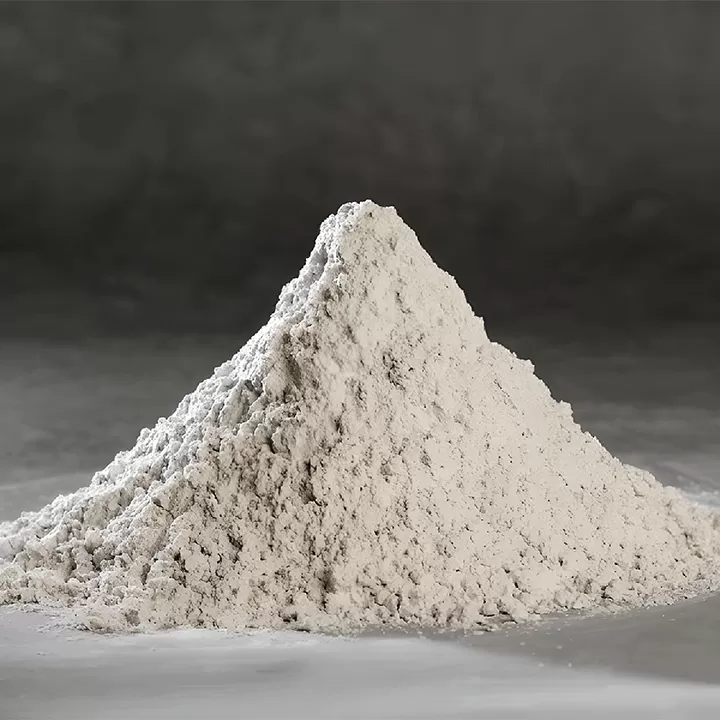
GGBS is a byproduct of iron production in blast furnaces, rapidly quenched and ground into a fine glassy powder. When blended with OPC, it reacts with calcium hydroxide (produced during cement hydration) to form additional calcium silicate hydrate (C-S-H)—the primary binding phase. This pozzolanic and latent hydraulic reaction offers two decisive advantages:
Carbon reduction: Substituting 50–70% OPC with GGBS lowers CO₂ per cubic meter by up to 70%, without sacrificing performance.
Circular economy: Each ton of GGBS used diverts industrial slag from landfills, making it a true eco friendly alternative to concrete that aligns with zero-waste targets.
Unlike other alternative binders, GGBS does not require additional activators or complex processing, ensuring consistent quality and supply for large-scale projects.
2. Technical Depth: How GGBS Redefines Concrete Durability
Beyond environmental metrics, GGBS significantly improves long-term concrete properties. Critical technical parameters include:
2.1. Reduced Heat of Hydration
Mass concrete foundations and dams often suffer from thermal cracking due to OPC’s high hydration heat. Replacing 50–70% OPC with GGBS lowers the peak temperature rise by 30–40%, minimizing thermal stress and the need for cooling pipes.
2.2. Sulfate and Seawater Resistance
Conventional concrete exposed to sulfates (soil, groundwater, marine environments) deteriorates rapidly. GGBS-rich blends reduce permeability and bind with alumina to lower ettringite formation. Test data show that 70% GGBS concrete resists sulfate attack 5x better than OPC-only mixes.
Chloride ingress reduced by up to 80% – critical for bridge decks and ports.
Alkali-silica reaction (ASR) mitigation: GGBS dilutes alkalis and consumes calcium hydroxide, suppressing expansive gel formation.
2.3. Long-Term Strength Gain
While early strength (1–3 days) may be slightly lower, GGBS concrete achieves 20–30% higher compressive strength at 56 and 90 days compared to pure OPC, thanks to denser pore structure.
3. Major Application Scenarios Where GGBS Outperforms
Industry adoption of this eco friendly alternative to concrete has accelerated across demanding sectors:
Marine and coastal structures: Piers, breakwaters, and offshore platforms benefit from exceptional chloride resistance, extending service life beyond 50 years.
Underground and foundation works: Tunnels, retaining walls, and pile caps gain sulfate resistance and reduced permeability.
Precast concrete: Steam-cured elements (pipes, blocks, paving) achieve target strengths faster with 30-50% GGBS, lowering curing energy.
Mass concrete dams: Lower hydration heat eliminates thermal cracking, reducing repair costs by millions.
Low-carbon certifications: Projects targeting LEED, BREEAM, or CEEQUAL can contribute up to 5 points using GGBS.
4. Industry Comparison: GGBS vs. Other Eco-Friendly Binders
Several supplementary cementitious materials (SCMs) compete in the green concrete space. However, supply limitations and inconsistent performance make GGBS the most reliable eco friendly alternative to concrete for heavy civil works.
| Material | CO₂ reduction (vs OPC) | Key limitation | Availability trend |
|---|---|---|---|
| Fly ash (Class F) | 30–40% | Declining quality, coal plant closures | Regional shortages |
| Silica fume | 20–30% | High cost, difficult workability | Specialty only |
| Limestone calcined clay (LC3) | 40–50% | Requires new production lines | Emerging, not widely available |
| GGBS | 60–70% | Lower early strength (mitigated by curing) | Global, steel industry byproduct |
5. Solving Industry Pain Points with GGBS
Despite clear advantages, engineers often hesitate due to three perceived barriers. Here are evidence-based solutions:
Pain point 1: Slower setting and early strength in cold weather
Solution: Use 30-40% replacement in winter or add accelerating admixtures. For critical early loads, employ combined 50% GGBS + 0.5% triethanolamine-based accelerator.
Pain point 2: Variable slag quality
Solution: Work with ISO 9001-certified suppliers like Golden Fortune, which provides ultrafine GGBS with consistent Blaine fineness (4200–4800 cm²/g) and strict EN 15167-1 compliance. Their quality control ensures predictable performance across shipments.
Pain point 3: Higher water demand
Solution: Adjust superplasticizer dosages by 10-15% for 50% GGBS blends. The denser mix design reduces long-term permeability, offsetting initial adjustments.
Leading contractors across Europe and Asia have standardized GGBS for all marine and underground works, achieving net-zero embodied carbon targets by 2030.
6. Environmental Impact: Quantifying the Shift
Adopting a proven eco friendly alternative to concrete like GGBS delivers measurable ESG benefits:
For every 1 ton of GGBS used instead of OPC, approximately 0.85 tons of CO₂ is avoided (based on UK Concrete Centre data).
A typical 100,000 m³ concrete project with 50% GGBS reduces emissions by 8,500 tons CO₂e — equivalent to removing 1,800 passenger cars from roads annually.
GGBS concrete’s 60+ year design life reduces reconstruction frequency, lowering life-cycle material consumption by 40%.
7. Why Golden Fortune is the Preferred Partner for High-Volume GGBS Supply
Sourcing consistency remains critical for multinational contractors. Golden Fortune operates integrated logistics from slag sourcing to ultrafine grinding, ensuring stable annual capacity above 500,000 tons. Each batch is tested for:
Fineness (Blaine ±2%)
Activity index (7-day ≥70%, 28-day ≥95%)
Chloride content (<0.05%) and sulfate resistance
Their technical team provides on-site mix optimization, helping concrete producers transition to low-carbon formulas without compromising pumpability or finishability. This technical support turns a material substitution into a risk-free operational upgrade.
8. FAQs: Common Questions on GGBS as an Eco Friendly Alternative to Concrete
Q1: Is GGBS concrete more expensive than conventional concrete?
A1: Per cubic meter, GGBS concrete costs up to 8% less than OPC-only concrete in most markets due to lower cement content. Even when prices are similar, lifecycle savings from extended durability and reduced maintenance outweigh minimal upfront differences.
Q2: Can GGBS be used in all concrete grades (e.g., C25/30 to C80/95)?
A2: Yes. For normal strength (C25/30–C50/60), 40-50% replacement works directly. For high-strength mixes (C70/85+), 20-30% GGBS combined with silica fume achieves 100 MPa while lowering carbon by 35%.
Q3: Does GGBS affect concrete color or finish appearance?
A3: Fresh GGBS concrete has a lighter, creamier color. Cured surfaces show a lighter, more uniform appearance compared to OPC. This is often preferred for architectural precast and exposed aggregate finishes. No negative impact on surface hardness.
Q4: How does GGBS perform in freeze-thaw cycles?
A4: Air-entrained GGBS concrete (5-7% air content) surpasses ASTM C666 requirements. The denser pore structure reduces water saturation, making it highly resistant to freeze-thaw damage, suitable for alpine roads and airport runways.
Q5: What replacement level offers the best balance of performance and carbon reduction?
A5: For most structural applications, 50% GGBS provides optimum balance: 65% CO₂ reduction, moderate heat evolution, and 28-day strength equivalent to OPC. For sulfate-rich soils or marine splash zones, 70% replacement is recommended despite slower early strength.
Ready to Lower Your Concrete Carbon Footprint While Improving Durability?
Transitioning to an eco friendly alternative to concrete no longer requires compromising mechanical properties. With GGBS from trusted partners like Golden Fortune, you can achieve green building certifications, reduce life-cycle costs, and meet net-zero targets.
Request a technical consultation or quote: Provide your project location, required concrete grade, and annual volume. The team at Golden Fortune will deliver mix design recommendations, test reports, and bulk pricing within 48 hours.
Send your inquiry now – include your company details and project specifications for a customized low-carbon concrete proposal.