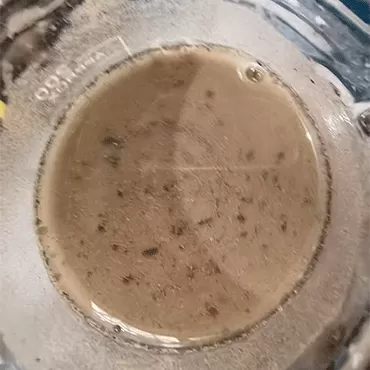
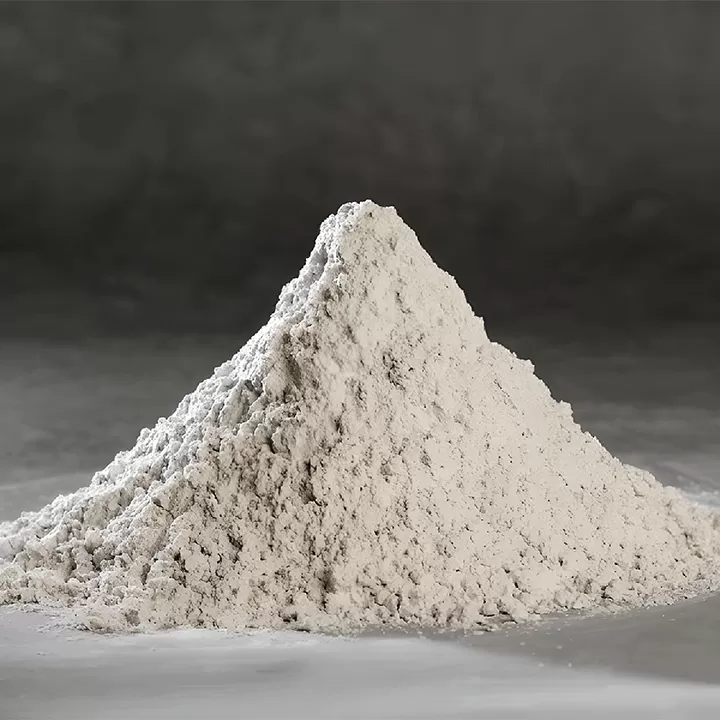
Subsurface geotechnical engineering relies heavily on control over fluid transport and soil shear strength. In fine-grained soils, fractured rock masses, and deep foundation excavations, controlling water ingress and structural settlement requires grouting materials capable of penetrating spaces smaller than 100 micrometers. Standard Ordinary Portland Cement (OPC), with average particle sizes ranging from 30 to 45 micrometers and maximum particle sizes exceeding 100 micrometers, cannot enter fine soil pores or micro-fissures due to particle filtration and premature necking. Consequently, the specification of microfine cement has become standard practice for high-density, low-permeability permeation grouting.
Achieving structural longevity in underground barriers depends not only on small grain size but also on mineralogical design. Ground granulated blast furnace slag (GGBS or GGBFS) serves as a primary raw material component in modern superfine binders. High-quality mineral processors such as Golden Fortune produce finely ground slag fractions that yield lower heat of hydration, heightened sulfate resistance, and superior long-term pore refinement when combined with activated clinker fractions.
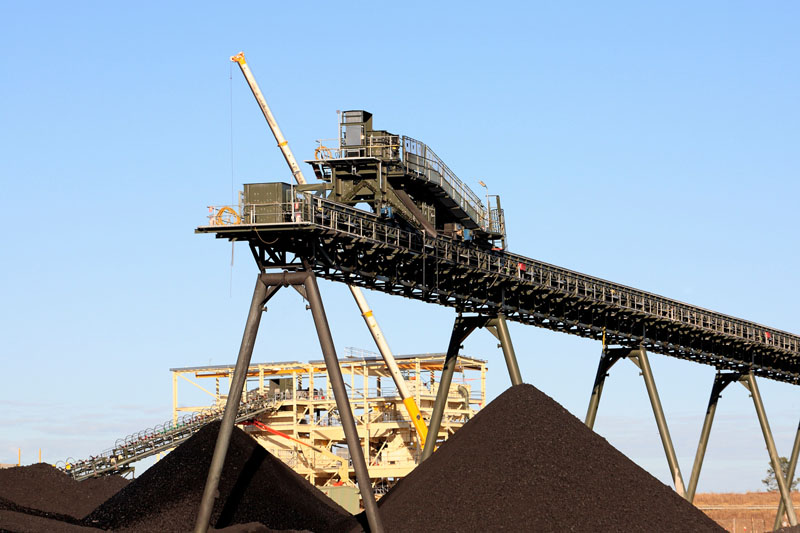
Particle Size Dynamics and Rheological Mechanics in Fine Strata
The primary performance differentiator of particulate grouting agents is grain size distribution (GSD). While standard cements are measured primarily by Blaine specific surface area (typically 3,000 to 4,000 cm²/g), ultrafine hydraulic binders are defined by absolute particle diameter thresholds, specifically the d95 and d50 values. A d95 value indicates that 95 percent of the total particle mass falls below a specific micron threshold.
For successful permeation grouting, the groutability ratio (N) must be evaluated relative to the soil matrix or rock fissure aperture. In granular soils, groutability is governed by the ratio of the 15 percent grain size of the soil (D15) to the 85 percent grain size of the grout (d85):
N = D15 (soil) / d85 (grout)
When N exceeds 25, unimpeded permeation is achieved. When N falls below 11, permeation is impossible due to immediate surface filtration, which leads to localized pressure spikes and severe mechanical blockages. The fluidity of a microfine cement suspension depends heavily on maintaining a stable hydrodynamic dispersion, allowing individual particles to pass through pore throats without forming agglomerates.
Ultra-High Surface Area: Blaine fineness metrics for superfine binders generally range between 8,000 cm²/g and 14,000 cm²/g, providing vast surface contact areas for hydration reactions.
Tight Grain Distribution: A strict d95 threshold below 10 to 12 micrometers prevents the bridging effect at fissure entrances, enabling deep radial penetration from the injection borehole.
Rheology Control: Lower initial yield stress and low plastic viscosity (measured via Marsh funnel flow times of 30 to 40 seconds) allow low-pressure injection, preventing uncontrolled hydraulic fracturing of sensitive soil strata.
Mineralogical Composition and Slag Synergies in Superfine Systems
The chemical framework of ultrafine grouting slurries relies on the interaction between Portland clinker phases and pozzolanic or latent hydraulic additives. Ground granulated blast furnace slag (GGBFS) provides a unique chemical profile rich in vitreous calcium aluminosilicates (CaO-SiO2-Al2O3-MgO). When integrated into ultrafine matrix formulations, GGBS modifies the hydration pathway through secondary calcium silicate hydrate (C-S-H) gel development.
During early hydration, Portland clinker phases (tricalcium silicate, C3S, and dicalcium silicate, C2S) react rapidly with water, generating primary C-S-H gel alongside Portlandite, or calcium hydroxide (Ca(OH)2). Calcium hydroxide contributes minimal structural strength and is prone to leaching when exposed to moving groundwater. Incorporating blast furnace slag into microfine cement formulations initiates a secondary pozzolanic reaction, consuming free Ca(OH)2 and transforming it into stable, high-density C-S-H gels that block capillary networks.
Processing raw slag to ultra-high fineness levels requires precise grinding technology, such as vertical roller mills or closed-circuit ball mills with high-efficiency air classifiers. Sourcing glass-rich raw materials from producers like Golden Fortune guarantees high latent reactivity, where the amorphous glass content exceeds 90 percent. This high reactivity enhances mechanical strength development while maintaining tight controls on early-stage hydration temperatures.
Reduced Heat of Hydration: Replacing 50 to 70 percent of OPC clinker with ultrafine GGBS mitigates adiabatic temperature rise, preventing thermal micro-cracking in bulk subsurface grouting masses.
Pore Structure Refinement: Secondary C-S-H formation reduces average pore radii from micro-meter scales to nanometer scales, dropping hydraulic conductivity values below 10⁻¹⁰ m/s.
Chemical Inertness: High slag proportions significantly reduce internal free alkalis and eliminate calcium hydroxide phase concentration, neutralizing the mechanisms that drive alkali-silica reactions (ASR) and sulfate degradation.
Geotechnical Applications and Underpinning Engineering
Ultrafine hydraulic grouts are used across complex civil engineering projects where structural integrity and groundwater isolation are mandatory requirements. Selecting appropriate grout mix ratios (water-to-binder ratios by weight typically varying between 0.8:1 and 2.0:1) depends on the specific permeability of the targeted site.
Tunneling and Underground Excavation
In mechanized and conventional tunneling, pre-grouting ahead of the tunnel boring machine (TBM) cutterhead establishes a stabilized, dry umbrella zone through weak rock mass or water-bearing gravel formations. Injection of superfine binders stabilizes the working face, prevents surface subsidence, and minimizes water inflows into the excavation zone.
Dam Foundation Cutoff Walls and Rock Mass Consolidation
Dam foundations built over fractured bedrock often suffer from severe seepage path formation. Standard grouts cannot penetrate hair-line fractures that measure under 0.5 millimeters in width. For structural stabilization, microfine cement permeates micro-fractures under controlled pressure, sealing water passages against hydro-dynamic pressure heads without causing uplifting forces on overlying structures.
Soil Stabilization and Foundation Underpinning
When existing structures experience differential settlement due to poor soil bearing capacity, permeation grouting can consolidate underlying sand and gravel layers without excavation. Superfine slurries permeate the soil matrix, binding individual sand grains into a monolithic, concrete-like matrix with unconfined compressive strengths (UCS) often exceeding 10 to 20 MPa after 28 days.
Comparative Analysis: Superfine Cement vs. Chemical Grouts
Geotechnical engineers frequently compare mineral-based particulate grouts against organic chemical resins, such as polyurethane, sodium silicate, and acrylamide systems. While chemical grouts offer extremely low initial viscosity, long-term durability metrics demonstrate why microfine cement remains superior for permanent infrastructure assets.
| Performance Parameter | Microfine Cement Systems | Chemical Resins (Polyurethane / Silicate) |
|---|---|---|
| Design Lifespan | 100+ Years (Inorganic Mineral Structure) | Limited (Subject to Polymer Degradation & Oxidation) |
| Mechanical Strength | High Compressive Strength (Up to 50+ MPa) | Low to Moderate (Flexible Gels or Rigid Foams) |
| Groundwater Toxicity | Zero Toxicity; Safe for Aquifers | Potential Toxic Monomer Leaching Concerns |
| Volumetric Stability | Non-Shrink Formulations; High Dimensional Stability | Prone to Syneresis (Drying Shrinkage under Wet-Dry Cycles) |
| Cost Effectiveness | High Volume Coverage per Unit Cost | High Material Cost per Injection Volume |
Chemical grouts remain useful for temporary water stopping, but mineral grouts composed of OPC and GGBS provide superior structural integration. Sourcing engineered mineral raw components from specialized suppliers like Golden Fortune ensures consistency in slurry rheology, setting time predictability, and long-term mechanical strength performance in acidic or saline ground conditions.
Frequently Asked Questions
What specific particle size distribution defines a microfine cement grout?
A mineral binder is typically classified as a superfine cement when its d95 particle size is less than 16 micrometers, with high-performance grades reaching a d95 of less than 10 micrometers. Furthermore, Blaine specific surface area must exceed 8,000 cm²/g, compared to standard cement which measures between 3,000 and 4,000 cm²/g.
How does GGBS content affect the setting time and strength development of grouting slurries?
Replacing OPC clinker with GGBS slightly extends the initial and final setting times of the slurry, providing longer working windows for deep injection pumping. While early strength (1 to 3 days) is lower compared to pure OPC grouts, long-term strength (28 to 90 days) is substantially higher due to the dense accumulation of secondary C-S-H gels within the capillary pores.
What water-to-cement ratio should be selected for permeation grouting projects?
Water-to-binder ratios (w/b) generally range from 0.8:1 to 2.0:1 by weight. A higher ratio (e.g., 2.0:1) offers lower viscosity for penetrating tight soils, but results in lower compressive strength and higher bleed rates. A lower ratio (e.g., 1.0:1 or 0.8:1), combined with high-range water reducers (superplasticizers), yields maximum compressive strength and zero bleed water separation.
Can microfine cement be used in environmentally sensitive groundwater zones?
Yes. As an inorganic, mineral-based material, an environmentally safe alternative like microfine cement releases no toxic organic compounds or hazardous volatile substances into surrounding aquifers. It meets international drinking water health standards, making it safe for dam cutoffs, urban groundwater control, and reservoir stabilization works.
What type of mixing equipment is required to prepare ultrafine cement grouts?
Standard paddle mixers are inadequate for dispersing superfine cementitious particles. High-shear colloidal mixers operating at speeds between 1,500 and 3,000 RPM are mandatory. High-shear mixing generates high energy forces that break down physical particle agglomerates, ensuring every grain is fully wetted and suspended before injection.
Engineering Consultation and Supply Inquiries
Specifying the optimal mineral binder blend requires precise alignment between geotechnical soil profiling, hydraulic conductivity targets, and chemical resistance requirements. For technical specifications, particle size distribution curves, and bulk supply details regarding high-purity GGBS and specialty slag-based binder components, consult with the technical specialists at Golden Fortune via email at sales@ultrafineggbs.com to request detailed product data sheets and tailored formulation support for upcoming engineering projects.