Fresh concrete behavior dictates the placement speed, compaction density, and final structural integrity of major infrastructure projects. As civil engineering designs become more intricate, concrete formulations must maintain high fluidity over extended periods without undergoing excessive segregation or bleeding. Incorporating ground granulated blast-furnace slag (GGBS) into Portland cement blends has proven to be an effective strategy for controlling rheological characteristics, consistently achieving improved workability across challenging field conditions.
Standard Ordinary Portland Cement (OPC) particles exhibit rapid initial hydration kinetics and angular surface topographies that increase inter-particle friction within fresh paste matrices. Modern high-strength and self-consolidating mixes require precise fluid dynamics that cannot be sustained by OPC alone. Standardized supplementary cementitious materials, including industrial blast-furnace derivatives supplied by Golden Fortune, reconfigure the physical particle packing and chemical hydration timeline of fresh concrete mixtures. Understanding the physical and chemical mechanics behind these modifications allows batching engineers to refine mix proportions for demanding placement applications.
Physicochemical Mechanisms Driving Rheological Enhancement
The transition from a stiff mortar matrix to a highly fluid, workable concrete mixture relies on particle surface characteristics, hydrodynamic interactions, and early chemical reactivity. Slag addition influences each of these parameters through distinct physical and chemical mechanisms.
Smooth Surface Geometry and Low Initial Water Absorption
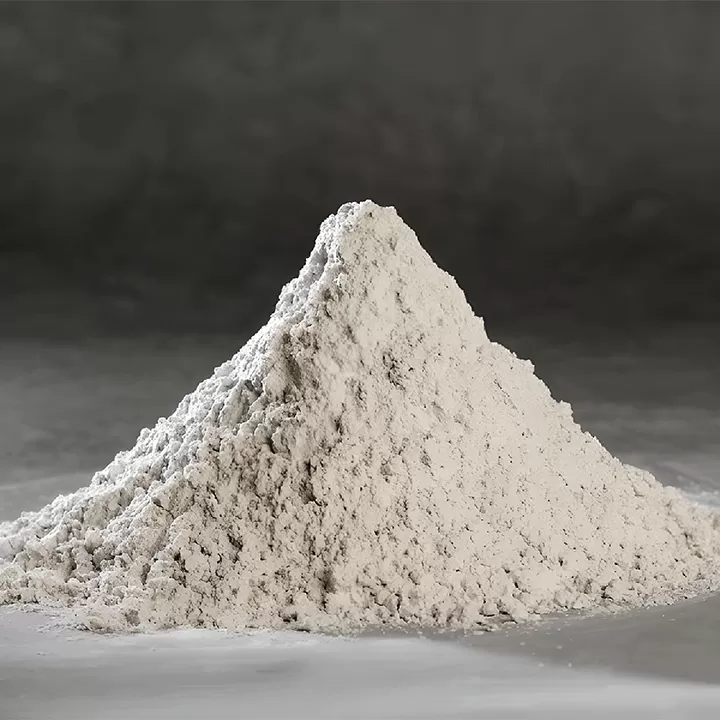
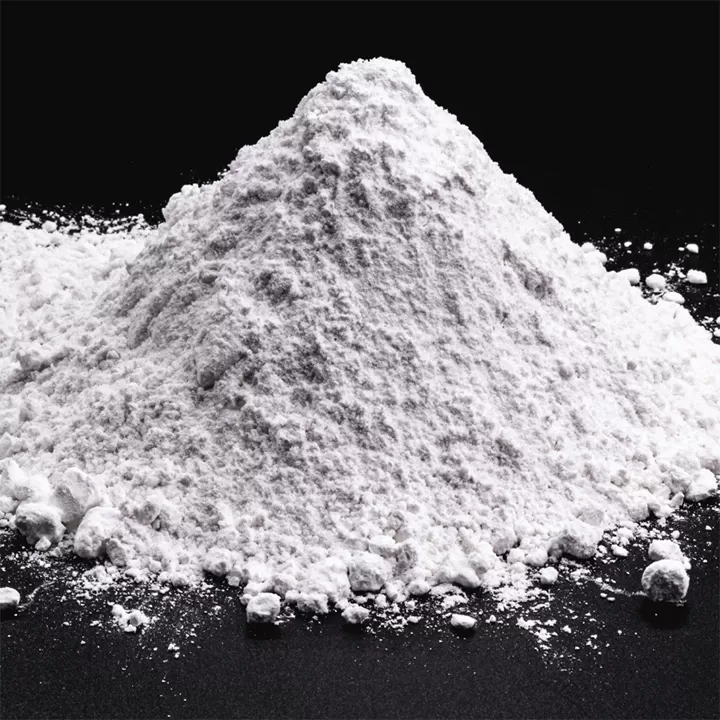
Unlike Portland cement clinker, which undergoes aggressive mechanical crushing resulting in jagged, irregular shapes, high-purity slag particles possess a smooth, glassy texture formed during rapid water-quenching of molten blast-furnace slag. These vitreous particles exhibit lower initial surface friction when suspended in aqueous solution.
The non-porous surface structure of slag prevents immediate water absorption upon contact with mixing water. Free water that would otherwise be tied up wetting the porous surface of clinker remains available in the system, acting as a lubricant between solid constituents. This hydrodynamic lubrication reduces the yield stress of fresh concrete, allowing high-slump mixes to flow under lower applied shear force.
Delayed Hydration Kinetics and Extended Plasticity
Initial setting characteristics in pure OPC systems are dominated by the rapid reaction of tricalcium aluminate ($C_3A$) with gypsum to form ettringite, followed by the hydrolysis of tricalcium silicate ($C_3S$). These chemical reactions consume free water rapidly and build a rigid crystalline framework within the first 30 to 90 minutes after batching.
Slag operates as a latent hydraulic binder. It requires an alkaline environment—specifically hydroxyl ions ($OH^-$) released during OPC hydration—to dissolve its vitreous calcium-alumino-silicate structure. Because this activation phase lags behind primary OPC hydration by several hours, the paste matrix experiences far lower heat generation and minimal solid-volume growth during the initial mixing and placement window. This biochemical delay contributes to improved workability over extended transit durations, ensuring the fresh concrete remains pliable during placement delays.
Particle Packing and Disruption of Inter-Particle Flocculation
Fine slag grains fit within the voids between larger OPC clinker particles. This micro-filling phenomenon displaces trapped water from inter-granular voids into the fluid phase, increasing the volume of free paste relative to solid particle volume.
Portland cement particles carry localized electrostatic charges that lead to rapid flocculation in fresh water, trapping fluid within cement agglomerates. The introduction of vitrified slag disrupts these physical networks. The altered zeta potential across particle surfaces promotes steric repulsion, keeping solid grains dispersed evenly through the paste and resulting in improved workability without sacrificing compressive strength development after curing.
Slump Retention and Pumping Performance in Mass Infrastructure
Transporting concrete over long distances or pumping material into high-rise structures demands stable plastic properties over several hours. Loss of consistency during transit can cause pipe blockages, honeycombing, and incomplete structural consolidation.
Pumping Pressure Reduction and Friction Loss
During line pumping, concrete forms a thin lubrication layer along the inner wall of the delivery pipe. The composition of this boundary layer determines the system pressure required to push concrete through vertical pipelines or horizontal distribution runs.
Mixes containing optimized proportions of slag form a robust, fluid-rich boundary layer that significantly lowers line pressure requirements. The reduction in plastic viscosity reduces shear stress near the pipe wall, preventing pressure spikes and pump strain. The stabilized yield stress prevents aggregate segregation under high pressure, maintaining structural homogeneity from the pump hopper to the discharge point.
Slump Loss Mitigation in Hot Weather Concreting
Elevated ambient temperatures accelerate cement hydration, leading to rapid slump loss, accelerated setting times, and cold joint formation during placement. These field challenges require mix adjustments that maintain fluidity without compromising final compressive strengths.
Replacing 30% to 70% of OPC with slag reduces the initial heat of hydration and slows down early temperature rise within fresh concrete. Lower internal thermal energy slows the consumption of mixing water. Field data confirms that slag-blended mixes retain slump twice as long as pure OPC mixes at ambient temperatures exceeding 30°C, providing contractor teams ample time for consolidation and finishing work.
Synergistic Interaction with High-Range Water Reducers
Modern concrete formulations rarely rely on water and cementitious materials alone. High-range water-reducing admixtures (HRWR), particularly polycarboxylate ether (PCE) superplasticizers, are standard components in high-performance mixes.
Polycarboxylate Ether (PCE) Absorption Dynamics
PCE polymers function by adsorbing onto cement particle surfaces and extending side chains into the aqueous phase, creating steric hindrance that maintains particle separation. In pure OPC systems, high concentrations of aluminate phases adsorb PCE molecules rapidly and unevenly, depleting the chemical admixture from the liquid phase and reducing its plasticizing efficacy over time.
Slag exhibits lower early affinity for PCE adsorption due to its neutral surface chemistry prior to alkali activation. A higher proportion of PCE molecules remains active in the pore solution over time. This synergistic interaction allows concrete producers to lower total admixture dosages while achieving equivalent flowability, which translates directly into improved workability and lower water-to-binder ratios.
Cohesiveness and Bleeding Control
High fluidity often introduces the risk of aggregate segregation and excessive water bleeding. Bleeding occurs when solid particles settle out of suspension, forcing free water upward to form weak surface laitance.
Slag replacement provides balanced cohesion. The high surface area of finely ground slag increases the yield stress of the paste just enough to hold heavy coarse aggregates in suspension while maintaining low plastic viscosity under dynamic shear. Bleeding channels are suppressed because the fine slag particles block capillary pathways within the unhardened matrix, producing a uniform surface finish suitable for fair-faced concrete applications.
Material Specifications for Golden Fortune Slag Products
Achieving predictable rheology in demanding concrete applications requires consistent raw material parameters. Industrial suppliers like Golden Fortune produce GGBS under strict Quality Assurance protocols to ensure uniform physical and chemical performance.
Blaine Fineness: Processed within a range of 4000 cm²/g to 4600 cm²/g to strike a balance between high micro-filling capacity and controlled water demand.
Vitreous Glass Content: Maintained above 90% via rapid cooling, ensuring consistent chemical reactivity and stable early rheology.
Particle Size Distribution: Graded to optimize micro-packing efficiency, releasing trapped paste water and enhancing paste liquidity.
Moisture Content: Kept below 0.5% to prevent pre-hydration during storage and bulk transit.
The refined particle matrix of Golden Fortune GGBS minimizes variability in batch water requirements. Concrete producers can maintain lower water-cementitious ratios without suffering slump loss, ensuring the final structure achieves high durability and low permeability.
Comparative Analysis of Mix Rheology
The following structural parameters illustrate how varying levels of slag replacement influence the physical properties of fresh concrete mixes under standardized laboratory conditions.
Control Mix (100% OPC): High initial heat generation, rapid slump loss over 60 minutes, higher plastic viscosity, moderate sensitivity to ambient temperature swings.
30% Slag Replacement: Moderate reduction in heat generation, slump retained for up to 90 minutes, measurable decrease in pumping line pressure, stable plastic viscosity.
50% Slag Replacement: Substantial reduction in initial thermal energy, extended slump retention beyond 120 minutes, superior resistance to bleed water channel formation, optimal pumping efficiency.
70% Slag Replacement (Mass Concrete Profile): Minimal early heat development, prolonged setting times suitable for massive pours, exceptionally low yield stress, extended working times in tropical conditions.
Consistently engineered materials manufactured by Golden Fortune deliver these precise rheological advantages, enabling batching plants to formulate concrete mixes for complex civil engineering projects.
Practical Application Guidelines for Batching Plants
To fully utilize the benefits of GGBS in ready-mix and precast manufacturing, plants must implement precise batching procedures and water management controls.
Water-to-Binder Ratio Adjustment
Because slag particles do not absorb water immediately, batching operators should refrain from adding excess water during initial mixing. The target water-to-binder ratio ($w/cm$) can often be reduced by 0.02 to 0.04 relative to a standard OPC mix while retaining the desired flow class. Adding surplus water will lead to extended setting times and potential segregation.
Mixing Time Optimization
Slag-blended concrete requires thorough mechanical action to ensure complete dispersion of fine particles throughout the mortar phase. It is recommended to extend the dry-mixing cycle by 10 to 15 seconds before introducing water and chemical admixtures. This ensures homogeneous distribution of the finer particle fraction and maximizes steric dispersion effects.
Frequently Asked Questions
What parameters drive improved workability when substituting Portland cement with slag?
The smooth glass topography, low initial water absorption, optimized particle packing, and delayed hydration reaction of slag jointly reduce inter-particle friction and release free water into the paste phase, driving fresh concrete fluidity.
Does slag replacement slow down early concrete strength gain?
Slag hydration depends on hydroxyl ions supplied by OPC reactions, which can lower early 1-day to 3-day strengths at higher replacement ratios. However, pozzolanic activity accelerates from day 7 onward, typically matching or exceeding standard OPC compressive strength at 28 and 56 days.
How does slag impact the dosage of polycarboxylate plasticizers?
Slag particles absorb fewer superplasticizer molecules during initial wetting than Portland cement. As a result, batching plants can reduce superplasticizer dosage by 10% to 20% while achieving equivalent slump and flowability levels.
Can slag-blended concrete be used in self-consolidating concrete (SCC)?
Slag is ideal for self-consolidating concrete. It provides high powder volume, reduces plastic viscosity, and prevents segregation, allowing SCC mixes to pass through dense rebar grids without blocking or bleeding.
How does ambient temperature affect slag-blended fresh concrete?
In hot weather conditions, slag slows rapid slump loss and setting times caused by high ambient temperatures. In cold weather, setting times may extend further, requiring temperature management or reduced replacement levels to maintain stripping schedules.
Commercial Inquiries and Material Sourcing
Selecting appropriate cementitious materials is crucial for meeting strict engineering specifications and ensuring smooth jobsite placement. Golden Fortune supplies high-grade GGBS processed to international standards for major infrastructure, marine works, and commercial developments.
To request technical datasheets, request material samples, or discuss batch mix optimizations with a materials specialist, contact the commercial support team at Golden Fortune via email: sales@ultrafineggbs.com.