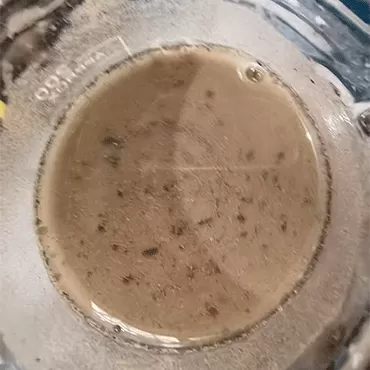
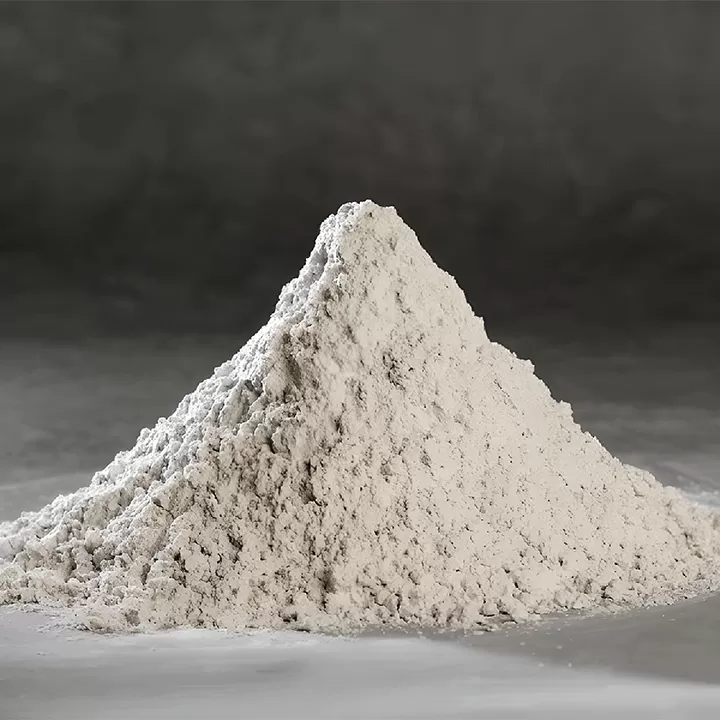
Modern structural engineering demands construction materials capable of enduring extreme mechanical loads and severe environmental exposure over long design lifespans. Standard Ordinary Portland Cement (OPC) formulations often struggle to maintain integrity when exposed to aggressive chemical agents, cyclic thermal stresses, and moisture ingress. Incorporating Ground Granulated Blast-Furnace Slag (GGBS or GGBFS) into cementitious matrices addresses these structural vulnerabilities by altering the microscopic architecture of cured concrete.
When utilized as a supplementary cementitious material, GGBS modifies hydration thermodynamics and pore geometry. The inclusion of vitrified blast-furnace slag transforms reactive phase development, yielding a dense matrix characterized by Enhanced Strength & Durability across maritime, subterranean, and heavy civil engineering applications.
1. Cementitious Hydration Chemistry of Slag Blends
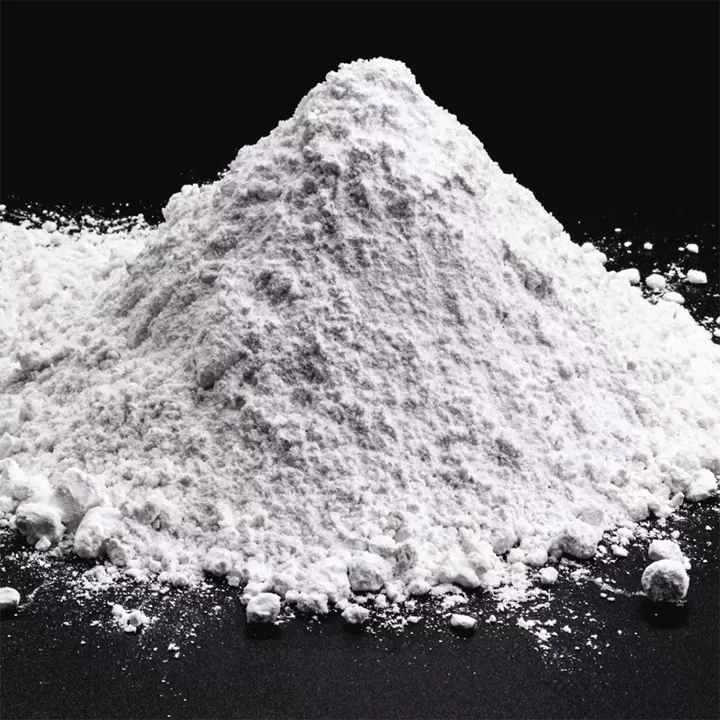
Ground granulated blast-furnace slag is obtained by water-quenching molten iron slag from blast furnaces, instantly freezing its chemical structure into an amorphous, non-crystalline aluminosilicate glass. Containing primary oxides of calcium, silica, alumina, and magnesia, this vitrified material possesses latent hydraulic properties. Unlike inert fillers, slag actively participates in matrix solidification through chemical interactions triggered by Portland cement hydration.
Latent Hydraulicity and Secondary Hydration Reactions
Initial hydration of Portland cement releases calcium hydroxide, commonly referred to as Portlandite or free lime. While calcium hydroxide contributes to early alkalinity, it offers minimal mechanical strength and remains highly susceptible to leaching and acid attack. When GGBS is introduced into the mix, it reacts with this dissolved calcium hydroxide in a secondary pozzolanic reaction.
This process breaks down the vitrified silicate structure of the slag, consuming free lime and forming additional Calcium Silicate Hydrate (C-S-H) gel. By converting weak, soluble calcium hydroxide into stable binding phases, the cementitious matrix achieves superior cohesiveness and stress distribution capability over time.
C-S-H Gel Structure Densification
The secondary C-S-H gel produced by GGBS hydration possesses a lower calcium-to-silicon ratio compared to the primary C-S-H gel formed by standard cement. This structurally modified C-S-H gel exhibits higher surface area and greater packing efficiency within the paste matrix. High-quality GGBS supplied by Golden Fortune undergoes precise mechanical grinding to optimize Blaine fineness, ensuring high surface energy and swift reaction kinetics during intermediate hydration stages.
As hydration progresses, the continuous formation of secondary C-S-H and Calcium Aluminate Silicate Hydrate (C-A-S-H) gels fills microscopic voids between cement grains. The resulting solid microstructure provides substantial resistance to mechanical shear, compressive deformation, and micro-cracking under sustained loads.
2. Microstructural Refinement and Pore Structure Modification
The mechanical performance and environmental resistance of concrete depend heavily on its internal pore network. Conventional concrete mixes contain continuous capillary pores that permit the transportation of water, air, and dissolved aggressive ions deep into the structural element.
Capillary Pore Size Distribution and Permeability Suppression
Slag hydration dramatically alters internal pore geometry through microstructural refinement. Rather than simply reducing total porosity, GGBS breaks down larger, interconnected capillary pores (greater than 50 nanometers in diameter) into small, isolated gel pores (less than 10 nanometers). This shift in pore size distribution severely limits fluid mobility according to Washburn's equation for capillary absorption.
The reduction in capillary continuity creates a highly impermeable barrier. Because water movement within the concrete matrix is suppressed, concrete structural components gain Enhanced Strength & Durability, effectively sealing internal reinforcement against external aqueous solutions and dissolved atmospheric pollutants.
Interfacial Transition Zone Densification
In standard concrete, the Interfacial Transition Zone (ITZ)—the narrow boundary region surrounding coarse and fine aggregates—represents the structural weak link. Due to wall effects during mixing, the ITZ naturally exhibits higher local water-cement ratios, larger pore volumes, and oriented crystals of weak calcium hydroxide.
Fine GGBS particles pack tightly around aggregate surfaces, disrupting localized water accumulation. As pozzolanic reactions occur within these tight spaces, the weak calcium hydroxide crystals are consumed and replaced by dense C-S-H gel. This structural modification reinforces the aggregate-paste bond, increasing shear capacity and overall tensile stress resistance under dynamic loading conditions.
3. Chemical Defense Mechanisms and Structural Longevity
Civil infrastructure exposed to marine salt spray, coastal brackish water, or sulfate-bearing soils experiences severe chemical degradation if unprotected. GGBS concrete provides robust multi-stage defense against chemical degradation pathways.
Chloride Ion Ingress Mitigation
Corrosion of internal steel rebar caused by chloride penetration is a primary cause of reinforced concrete failure. Chlorides diffuse through capillary networks until reaching the steel surface, destroying the passive oxide film and triggering localized pitting corrosion. GGBS addresses chloride transport through physical and chemical mechanisms:
Diffusive Resistance: The refined capillary structure reduces the chloride diffusion coefficient by up to an order of magnitude compared to plain OPC concrete.
Chemical Binding: Aluminate phases supplied by slag chemically bind free chloride ions within the hydrating matrix, forming stable Friedel's salt (calcium chloroaluminate).
Physical Adsorption: The low calcium-to-silicon C-S-H gel exhibits a higher surface charge, physically adsorbing chloride ions and preventing their migration toward the embedded rebar.
By slowing chloride ion transportation, structures operating in aggressive marine conditions maintain structural capacity without requiring costly protective coatings or premature rehabilitation.
Sulfate Resistance and Mitigation of Alkali-Silica Reaction
External sulfate attack occurs when sulfates in groundwater react with hydrated calcium aluminates and calcium hydroxide to form expansive compounds like gypsum and ettringite. These secondary formations generate high internal pressures, leading to spalling and disintegration. GGBS limits sulfate vulnerability by consuming the calcium hydroxide necessary for gypsum formation and reducing the overall $C_3A$ content of the binder blend.
Furthermore, GGBS effectively controls the destructive expansion associated with the Alkali-Silica Reaction (ASR). Slag consumes excess alkalis ($Na^+$ and $K^+$) within its C-S-H gel structure and starves the alkali-silica gel of available calcium ions, preventing expansive gel formation even when reactive aggregates are present. Consequently, structural assets formulated with slag exhibit Enhanced Strength & Durability when subjected to severe ambient chemical exposures.
4. Thermal Management in Mass Concrete Applications
Deep foundation rafts, dam bodies, massive bridge piers, and thick retaining walls are prone to thermal cracking caused by heat generation during cement hydration. Ordinary Portland Cement reacts exothermically, causing sharp temperature spikes deep within large concrete pours.
Adiabatic Temperature Reduction
When mass concrete cures, the outer surfaces dissipate heat quickly while the core retains heat. This severe thermal gradient causes high tensile stresses on the cooler exterior shell. If tensile stress exceeds the early-age tensile strength of the concrete, thermal expansion cracks develop, compromising structural capacity before the asset is placed into service.
Replacing 50% to 70% of OPC with GGBS modifies hydration kinetics by spreading total heat release over a significantly longer timeframe. Peak adiabatic temperature rise drops substantially, preventing sharp internal thermal gradients. Lower peak core temperatures prevent early-stage micro-cracking, preserving full load-bearing potential and ensuring long-term Enhanced Strength & Durability throughout the entire structural cross-section.
Late-Age Compressive Strength Progression
While high substitution levels of GGBS slow down 1-day and 3-day compressive strength development due to the slower activation rate of slag glass, the extended hydration curve yields notable long-term strength gains. Standard OPC concrete typically reaches peak mechanical strength within 28 to 56 days, after which strength gain slows dramatically.
GGBS mixes continue their secondary hydration for months or even years, provided moisture remains present. Compressive strength test results at 90 and 365 days regularly show slag blends surpassing plain OPC mixes by significant margins. This continuous strength progression ensures structural margins improve as the asset ages.
5. Formulation and Mix Proportioning Standards
Achieving predictable performance with slag-modified concrete requires careful adjustment of water-binder ratios, chemical admixtures, and substitution percentages tailored to specific exposure classes defined by international standards such as ASTM C989 and EN 15167.
Replacement Ratio Guidelines by Exposure Class
Concrete mix calibration must reflect project-specific structural and environmental requirements:
20% to 35% GGBS Replacement: Suitable for standard commercial superstructures, residential foundations, and elevated slabs where high early strength for rapid formwork removal is necessary.
40% to 50% GGBS Replacement: Applied in industrial floors, bridge decks, subterranean retaining structures, and road pavements requiring balanced heat mitigation, early strength, and enhanced chloride resistance.
60% to 70% GGBS Replacement: Mandated for marine piles, seawalls, wastewater treatment tanks, foundation rafts, and mass concrete placements demanding maximum heat reduction, low permeability, and complete sulfate protection.
Deploying consistent raw materials sourced from Golden Fortune allows batch plant operators to maintain tight water-cement ratio tolerances and precise polycarboxylate ether superplasticizer dosages. High reactivity index slag ensures rapid secondary hydration once initial OPC activation occurs, keeping project scheduling predictable.
6. Frequently Asked Questions
How does GGBS affect concrete workability and placement properties?
GGBS particles possess a smooth, glassy surface texture and lower initial water absorption compared to angular OPC grains. This reduces internal friction within the fresh mix, increasing slump and improving flowability without requiring excess water. Fresh concrete containing slag remains cohesive, exhibits less bleeding and segregation, and responds well to mechanical consolidation.
What curing precautions are necessary for high-content GGBS mixes?
Because secondary pozzolanic reactions rely on available water and take longer to initiate, GGBS concrete requires sustained moist curing practices. Curing periods should be extended, particularly during dry or windy conditions, to prevent moisture loss from the surface layer. Maintaining moist curing for 7 to 14 days ensures complete surface hydration, preventing early plastic shrinkage and protecting the low-permeability skin layer.
Does replacing cement with GGBS impact early-age stripping strength?
Higher replacement percentages (exceeding 50%) lower 1-day to 7-day compressive strength, especially in cold weather environments. To offset slow early strength gain while retaining long-term performance benefits, mix designers can optimize total binder content, adjust accelerator dosages, or select Grade 100 or Grade 120 finely ground slag.
Can GGBS concrete be exposed to de-icing salts and freezing conditions?
When properly proportioned, adequately cured, and air-entrained, GGBS concrete shows strong resistance to freeze-thaw cycles and de-icing chemicals. Microstructural refinement limits water absorption, reducing the amount of freezable pore water inside the matrix. Mixes intended for severe freeze-thaw environments should maintain a total air content between 5% and 7% and avoid excessive slag replacement ratios exceeding 50% unless adequate moist curing is strictly guaranteed.
How does GGBS contribute to environmental rating metrics in modern construction?
GGBS is an industrial co-product of iron production. Utilizing slag to substitute energy-intensive cement clinker directly cuts embodied carbon emissions—eliminating approximately one ton of carbon dioxide emissions for every ton of cement replaced. Incorporating slag enables projects to secure points under green building rating systems such as LEED and BREEAM while improving long-term material efficiency.
7. Material Sourcing and Project Consultation
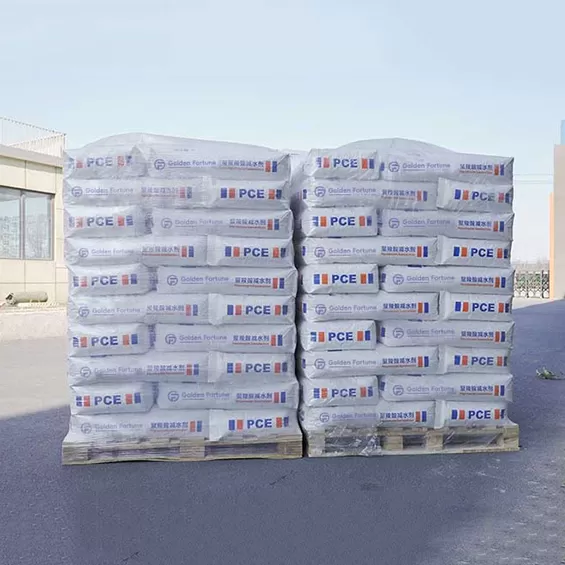
Engineering robust concrete formulations requires steady raw material inputs that meet tight physical and chemical tolerances. Consistency in Blaine fineness, glass content percentage, and chemical composition ensures predictable strength development and mix stability across complex concrete pours.
For detailed technical specification sheets, blend performance testing metrics, or custom mix design support involving high-grade slag, contact the engineering team at Golden Fortune. Direct technical inquiries and bulk procurement options can be arranged via email at sales@ultrafineggbs.com to ensure your next infrastructure project achieves Enhanced Strength & Durability.