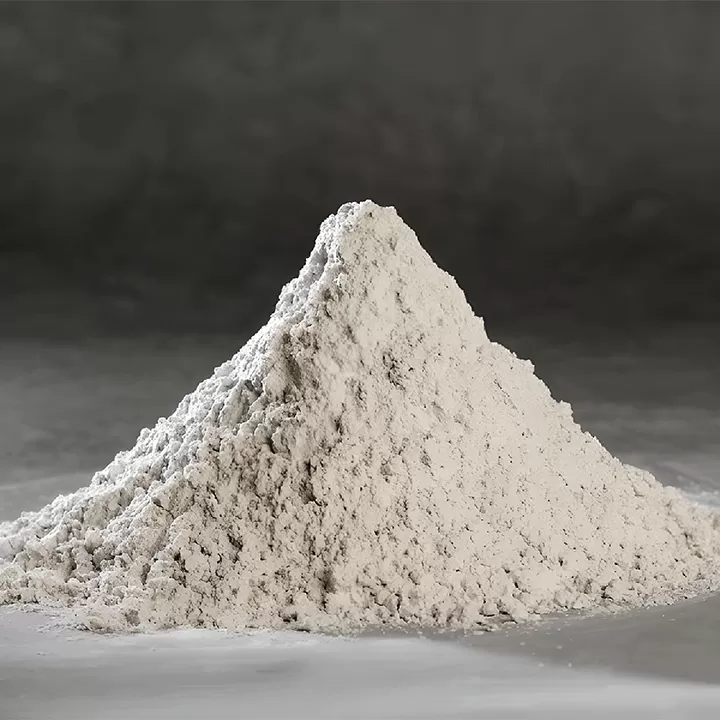
Volumetric stability remains a dominant requirement in high-performance concrete engineering. As structural designs demand higher compressive strengths and lower water-cement ratios, internal tensile stresses generated during early-age hydration frequently exceed the developing tensile strength of the concrete matrix. This imbalance results in micro-cracking, fluid ingress channels, and accelerated structural degradation. Integrating supplementary cementitious materials, specifically Ground Granulated Blast Furnace Slag (GGBS), has established itself as a primary methodology to deliver reduced shrinkage cracking across mass pour applications and precast production.
By substituting high-early-heat Portland cement with vitrified blast furnace slag, mix designers alter both the kinetics of hydration and the pore network morphology. This structural modification directly addresses the underlying thermodynamic and physical mechanisms that drive volumetric contraction across all hydration phases.
Mechanics of Volumetric Deformation in Hydrating Cementitious Systems
Concrete undergoes volume changes from the moment water contacts the binder particles. Understanding how these dimensional shifts develop requires breaking down the process into thermal, autogenous, and drying components.
Thermal Gradients and Early-Age Peak Temperatures
Ordinary Portland Cement (OPC) liberates substantial heat during the rapid dissolution of tricalcium aluminate (C3A) and tricalcium silicate (C3S). In mass structural elements, such as dam foundations, bridge piers, and thick mat slabs, interior heat dissipates much slower than surface heat. This thermal imbalance creates a steep temperature gradient. As the interior expands against the cooler, restrained exterior shell, compressive stresses build up inside while surface tensile stresses emerge. Upon subsequent cooling, internal contraction restrained by external boundaries generates severe macro-cracking.
Autogenous Shrinkage and Capillary Pressure Development
In low water-to-binder mix designs, autogenous shrinkage dominates the early hydration phase. As hydration progresses, internal water consumption depletes capillary pore spaces, leading to self-desiccation. The removal of pore water creates menisci within the unhydrated capillary network. According to the Young-Laplace relationship, these curved liquid menisci exert massive internal tensile stresses on the surrounding calcium-silicates. Without adequate internal curing or hydration rate control, self-desiccation pulls the paste structure inward, precipitating micro-fissures long before external drying occurs.
Drying Shrinkage via Moisture Transport Kinetics
Drying shrinkage occurs when ambient relative humidity falls below the internal humidity of the hardened concrete matrix. Free water within the capillary pores evaporates first, followed by the movement of adsorbed water from the surface of calcium silicate hydrate (C-S-H) gel structures. The loss of adsorbed moisture layers generates structural collapse within the paste micro-pores, manifesting as overall macroscopic volume loss.
How Mineral Admixtures Refine Microstructural Mechanics
The insertion of vitrified blast furnace slag alters both the kinetic rate of binder dissolution and the final microstructural topology. The latent hydraulic and pozzolanic behavior of slag modifies the hydration sequence through several key pathways.
Slag particles consist primarily of amorphous aluminosilicate glass. When exposed to the highly alkaline environment produced by OPC hydration, the glass structure breaks down, consuming calcium hydroxide—Ca(OH)2—and forming additional secondary C-S-H gel. This reaction proceeds at a slower rate than primary C3S hydration, distributing the overall exotherm over days rather than hours.
This prolonged reaction timeline fundamentally changes pore geometry. Primary cement hydration forms coarse, interconnected capillary networks. The secondary pozzolanic reaction of GGBS fills these coarse voids, transforming larger capillary pathways into disconnected gel pores smaller than 50 nanometers. This pore refinement drastically reduces the rate of moisture movement through the concrete matrix, directly contributing to reduced shrinkage cracking under aggressive environmental exposures.
Engineering Reduced Shrinkage Cracking Through Slag Substitution
Formulating concrete mixes with high-grade slag powders produced by Golden Fortune allows structural engineers to control volumetric stress generation precisely. Modifying replacement percentages achieves target outcomes based on environmental conditions and structural geometry.
Heat Generation Control: Replacing 50% to 70% of OPC with S95 or S105 grade slag reduces total heat output by 30% to 50%. The lower peak temperature minimizes the differential thermal gradient between core and boundary zones in mass concrete.
Capillary Stress Dampening: The refined pore distribution alters the surface tension dynamics of internal water. By subdividing large capillaries into sub-microscopic gel pores, the physical force required to cause self-desiccation strain is modulated, contributing directly to reduced shrinkage cracking.
Bleed Water Regulation: Slag particles feature smooth, vitrified surface textures that improve particle packing efficiency. This optimized packing minimizes excess water requirements, reducing bleeds and plastic settlement cracks prior to initial set.
Enhanced Strain Capacity: The slower, continuous growth of secondary C-S-H gel maintains high creep relaxation capabilities during early hydration days. High creep capacity allows the young concrete paste to deform visco-elastically under internal strain without initiating brittle fractures.
By leveraging high-reactivity materials supplied by Golden Fortune, mix designers secure predictable physical performance, matching binder kinetics with the precise heat dissipation rate of specific structural shapes.
Application Scenarios Requiring Low-Shrinkage Mix Designs
Certain infrastructure projects present zero tolerance for cracking due to severe durability standards, aggressive chemical exposure, or water retention demands.
Mass Concrete Foundations and Infrastructure Dams
Thick section pours generate extreme internal heat. Utilizing high-replacement slag formulations manages peak temperatures, ensuring that core-to-surface temperature differentials remain well below the standard 20°C limit. This control is vital to maintaining structural integrity without relying on artificial pipe cooling systems.
Bridge Decks and Highway Pavements
Structures exposed to atmospheric wind, high solar radiation, and rapid thermal cycles suffer elevated surface drying strain. Incorporating processed slag limits moisture evaporation rates, building a dense surface zone resistant to drying shrinkage micro-cracking and salt scaling.
Marine and Port Structures
Submerged or splash-zone reinforced concrete must prevent chloride ion penetration. Micro-cracks caused by autogenous shrinkage provide rapid pathways for chlorides to reach reinforcing steel. Achieving reduced shrinkage cracking preserves matrix density, ensuring long-term passivation of internal steel bars.
Industrial Ground Slabs and Jointless Flooring
Large-area industrial floors experience heavy wheel loads and dynamic stresses. Minimizing shrinkage cracking permits wider joint spacing, reducing maintenance costs while protecting floor flatness and structural integrity under heavy forklift traffic.
Standard Testing Protocols for Shrinkage Evaluation
Validating the performance of slag-modified mix designs requires strict adherence to international standard test methods that evaluate unrestrained and restrained volume changes.
ASTM C157 / C157M: Standard Test Method for Length Change of Hardened Hydraulic-Cement Mortar and Concrete. This test measures linear length changes in prism specimens subjected to controlled drying conditions, proving the efficacy of slag in lowering ultimate drying shrinkage values.
ASTM C1581 / C1581M: Standard Test Method for Determining Age at Cracking and Induced Tensile Stress Characteristics of Mortar and Concrete under Restrained Shrinkage. The "Ring Test" subjects concrete to internal steel ring restraint. The time to cracking and strain development rates provide direct evidence of resistance to restrained shrinkage cracking.
BS EN 12390-16: European standard for testing hardened concrete length changes during drying and autogenous conditions, providing clear metrics for industrial mix certification across global project sites.
Frequently Asked Questions: Supplementary Cementitious Materials and Shrinkage Mitigation
How does GGBS replacement percentage affect autogenous shrinkage versus drying shrinkage?
Higher replacement percentages (50% or above) significantly lower autogenous shrinkage by spreading the hydration process over a longer time, preventing rapid self-desiccation. For drying shrinkage, the long-term pore refinement reduces ultimate water loss rates, though proper early wet curing remains necessary during the first 7 to 14 days to maximize these benefits.
Why does GGBS concrete require strict attention to early-age wet curing?
Because the pozzolanic reaction of slag depends on the calcium hydroxide released by primary OPC hydration, moisture must remain within the system during early curing. Maintaining high moisture levels ensures the pozzolanic reaction continues, sealing micro-pores and yielding reduced shrinkage cracking in final structural elements.
Can high-reactivity S105 GGBS be used to accelerate strength development without increasing shrinkage risk?
Yes. Ultra-fine S105 slag increases early-age nucleation sites, supporting rapid initial strength gain while maintaining lower total hydration heat compared to pure OPC. This balance allows rapid formwork striking while maintaining dimensional stability.
How does slag incorporation impact concrete tensile creep strain?
Concrete containing slag exhibits higher early-age tensile creep capacity relative to its instantaneous elastic modulus. This elevated visco-elastic relaxation enables young concrete to accommodate restrained thermal and moisture movements internally, lowering stress accumulation and preventing crack initiation.
What role does particle size distribution play in achieving reduced shrinkage cracking?
An optimized particle size distribution fills structural voids between larger cement grains. Efficient particle packing displaces free water from interstitial spaces, lowering total water demand and minimizing both plastic settlement and long-term drying shrinkage.
Sourcing High-Reactivity Slag for Technical Infrastructure Projects
Achieving dependable structural performance demands consistent raw material chemistry and predictable reactivity indexes. Product lines from Golden Fortune provide stable Blaine fineness, low chemical variability, and verified hydraulic activity, allowing ready-mix producers and precast engineers to craft targeted mix designs that guarantee reduced shrinkage cracking under rigorous job site conditions.
For technical product specifications, laboratory test reports, or customized mix design optimization support for your upcoming concrete projects, contact our engineering sales team directly via email: sales@ultrafineggbs.com.