Selecting the correct cement binder is the most critical decision in concrete mix design. The types of ordinary portland cement defined by ASTM C150 are not merely commodity variants—they are precision-engineered hydraulic binders with distinct clinker phase compositions, fineness parameters, and chemical resistance profiles. Misapplication leads to durability failures such as sulfate attack, thermal cracking, or delayed ettringite formation. This technical guide provides a data-driven analysis of each Type, integrates supplementary cementitious materials (SCMs) like GGBFS for enhanced performance, and offers field-proven selection protocols.
1. Classification Framework: ASTM C150 vs. EN 197-1
Globally, the types of ordinary portland cement are most systematically categorized under ASTM C150 (Standard Specification for Portland Cement). The standard delineates five primary types based on chemical composition (tricalcium silicate C₃S, dicalcium silicate C₂S, tricalcium aluminate C₃A, tetracalcium aluminoferrite C₄AF) and physical requirements such as fineness (Blaine), autoclave expansion, and compressive strength progression. While EN 197-1 uses a different nomenclature (CEM I, etc.), the fundamental performance principles align. For high-durability infrastructure, understanding these classifications directly impacts lifecycle cost and structural integrity.
2. Technical Profiles of the Five Primary Cement Types
2.1 Type I – General Purpose Portland Cement
Type I is the reference standard for applications with no specific exposure conditions. Its typical clinker phase composition lies in the range of 50–55% C₃S, 20–25% C₂S, 8–12% C₃A, and 6–10% C₄AF. Blaine fineness is usually 350–400 m²/kg. The moderate C₃A content (≤12%) provides adequate sulfate resistance for normal soil conditions. However, in environments with elevated sulfate concentrations (SO₄ > 0.2% in groundwater), Type I alone will exhibit expansion due to ettringite formation. Typical applications include residential slabs, pavements, non-aggressive foundation works, and precast elements where no special durability requirements exist.
2.2 Type II – Moderate Sulfate Resistance & Moderate Heat of Hydration
Type II cement imposes a C₃A content restriction of ≤8% (or ≤10% when optional moderate heat requirement is specified). This reduction in aluminate phase directly lowers the potential for sulfate-induced expansion. Additionally, the heat of hydration at 7 days is limited to ≤335 kJ/kg. Engineers commonly specify Type II for mass concrete elements where temperature rise must be controlled, such as bridge abutments and retaining walls, and for structures exposed to moderate sulfate conditions (0.1% to 0.2% water-soluble SO₄). The compressive strength development is slightly slower than Type I in the first 7 days due to lower C₃S fineness adjustments, but 28-day strengths remain comparable (typically 35–45 MPa).
2.3 Type III – High Early Strength
Type III cement achieves rapid strength gain through increased fineness (Blaine typically 500–600 m²/kg) and optimized C₃S content (>55%). Compressive strength at 24 hours can reach 12–15 MPa, and 7-day strengths approach the 28-day strength of Type I. This performance is essential for cold-weather concreting, rapid formwork turnover, prestressed concrete strand release, and emergency repairs. However, the high fineness and accelerated hydration elevate the risk of thermal cracking in thick sections if proper cooling measures are absent. Furthermore, the elevated C₃A (≤12% typical) limits its use in sulfate-bearing environments. When high early strength and sulfate resistance are simultaneously required, a combination of Type III with 30–40% GGBFS is a proven solution.
2.4 Type IV – Low Heat of Hydration
Type IV cement is designed for massive concrete structures such as dams, large mat foundations, and roller-compacted concrete (RCC). The heat of hydration is limited to ≤250 kJ/kg at 7 days, achieved by controlling the C₃S (≤35%) and C₃A (≤7%) while increasing the C₂S content (>40%). The hydration process is deliberately slow, with 28-day strengths often 30–40% lower than Type I. Modern practice frequently replaces Type IV with a blend of Type II and high-volume GGBFS (50–70%) to achieve similar low-heat characteristics while improving long-term durability and reducing clinker factor. The limited commercial availability of Type IV makes blended systems a more sustainable and cost-effective alternative.
2.5 Type V – High Sulfate Resistance
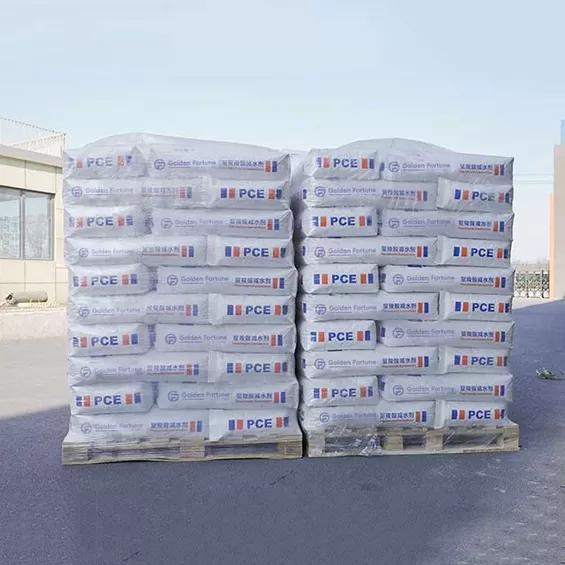
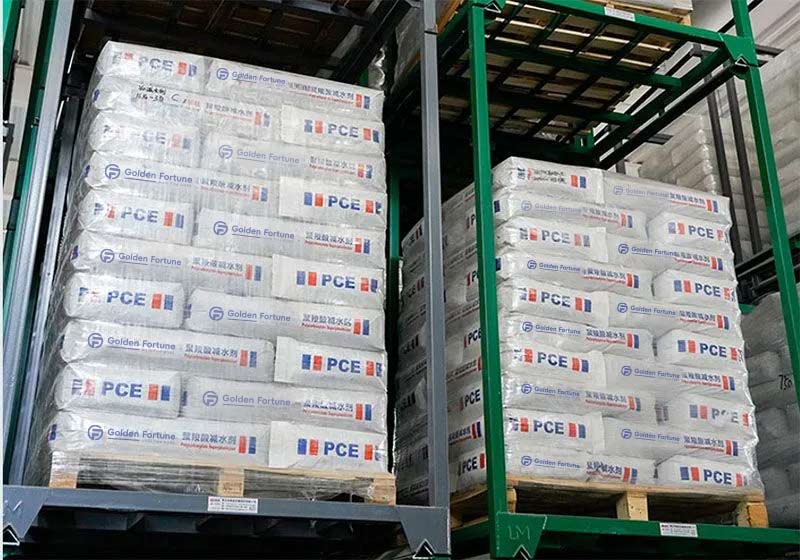
Type V cement mandates a C₃A content of ≤5%, providing superior resistance to severe sulfate exposure (SO₄ > 0.2% in water or > 0.5% in soil). This is critical for wastewater treatment plants, marine structures in tidal zones, foundations in sulfate-bearing clay, and secondary containment areas. The reduced C₃A also lowers the risk of chloride-induced reinforcement corrosion to some extent. However, Type V exhibits slower early strength development and can be less workable due to the lower aluminate content. To mitigate these drawbacks, many specifiers combine Type V with Golden Fortune ultrafine GGBFS, which enhances particle packing, refines pore structure, and improves long-term strength while maintaining the low C₃A threshold.
3. Industry Pain Points: Selection Failures and Technical Solutions
Even experienced engineers encounter durability issues due to oversimplified cement selection. Three prevalent failure scenarios demonstrate the necessity of understanding the types of ordinary portland cement in depth.
Scenario 1: Thermal cracking in mass concrete with Type III. A high-rise foundation specified Type III for rapid schedule, resulting in internal temperature differentials exceeding 35°C, causing cracking. Solution: Replaced with Type II + 50% GGBFS; the slag reduced peak hydration temperature by 20–25°C and increased long-term strength by 15% at 90 days.
Scenario 2: Sulfate attack in irrigation structures using Type I. Concrete exposed to sulfate-rich irrigation water showed map cracking and loss of strength within 5 years. Solution: Type V cement with 25% fly ash was adopted for rehabilitation, reducing C₃A content to below 3% in the binder phase.
Scenario 3: Premature formwork removal failure with Type II in cold weather. Delayed strength gain caused project delays. Solution: Shifted to a blend of Type III (70%) and Golden Fortune ultrafine GGBFS (30%); the blend achieved required stripping strength at 48 hours while maintaining long-term durability and reducing heat spike compared to neat Type III.
4. Synergistic Systems: OPC Types and GGBFS for High-Performance Concrete
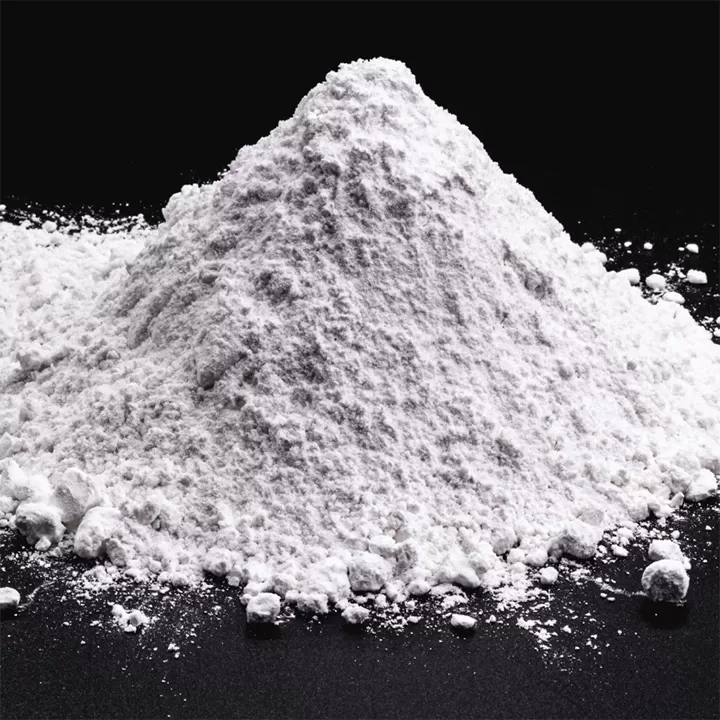
Modern concrete technology recognizes that no single cement type is universally optimal. The strategic combination of types of ordinary portland cement with ground granulated blast furnace slag (GGBFS) yields superior technical and environmental performance. Golden Fortune specializes in ultrafine GGBFS with a specific surface area exceeding 600 m²/kg, which accelerates the pozzolanic reaction and provides enhanced nucleation sites for C-S-H gel formation.
Durability enhancement: Substituting 30–50% of Type I or Type II cement with GGBFS reduces the effective C₃A content by dilution, improving sulfate resistance to Type V levels while maintaining higher early strength than neat Type V.
Chloride ingress reduction: The refined pore structure from slag hydration lowers chloride diffusion coefficients by 50–70% compared to ordinary Portland cement alone, critical for marine and deicing salt exposures.
Sustainability metrics: Each tonne of GGBFS used reduces CO₂ emissions by approximately 0.85 tonnes compared to Portland cement clinker. Projects utilizing Golden Fortune ultrafine GGBFS have achieved up to 40% reduction in embodied carbon while meeting stringent strength and durability requirements.
5. Comparative Performance Matrix
The following table summarizes the key parameters for each cement type, enabling evidence-based selection. All values are typical ranges per ASTM C150 and industry literature.
| Cement Type | C₃A Content (%) | Blaine Fineness (m²/kg) | 7-Day Heat of Hydration (kJ/kg) | Sulfate Resistance (Class) | Typical 28-Day Strength (MPa) |
|---|---|---|---|---|---|
| Type I | 8–12 | 350–400 | 330–380 | Moderate | 38–45 |
| Type II | ≤8 | 350–400 | ≤335 | High | 35–42 |
| Type III | 8–12 | 500–600 | 360–410 | Low | 45–55 (1-day: 12–18) |
| Type IV | ≤7 | 300–350 | ≤250 | High | 28–38 (90-day: 40–50) |
| Type V | ≤5 | 350–400 | 300–340 | Very High | 32–40 |
6. Advanced Selection Protocol: Matching Cement Type to Exposure Class
Based on ACI 318-19 and BS 8500 frameworks, the selection of types of ordinary portland cement must correlate with exposure conditions:
Class S0 (no sulfate exposure): Type I or Type I + 20–30% GGBFS for economic durability.
Class S1 (moderate sulfate exposure): Type II or Type I + 35% GGBFS (effective C₃A < 6%).
Class S2 (severe sulfate exposure): Type V or Type II + 50% GGBFS with confirmation of reduced permeability.
Mass concrete (thermal control): Type II + 40–60% GGBFS; avoid Type III unless in thin sections with cooling pipes.
Prestressed concrete: Type III or Type I/II + high-early-strength blends with ultrafine slag to minimize creep and achieve transfer strength at 18–24 hours.
Frequently Asked Questions (FAQ)
Q1: Can I substitute Type V cement with a combination of Type II and GGBFS?
A1: Yes. A blend of 50–60% Type II cement and 40–50% GGBFS often achieves equivalent or better sulfate resistance than neat Type V, provided the GGBFS has a low alumina content and the total binder C₃A equivalent remains below 5%. This approach also improves workability and long-term strength. Many specifiers now use this blended method for both durability and sustainability reasons.
Q2: How does the choice of types of ordinary portland cement affect concrete carbonation rates?
A2: Carbonation is primarily controlled by the water-to-cementitious ratio (w/cm) and binder type. Higher C₃A content (Type I/III) tends to chemically bind more CO₂ in the short term, but long-term carbonation resistance depends more on permeability. Using ultrafine GGBFS (such as from Golden Fortune) reduces permeability significantly, thereby lowering carbonation depth even when combined with high-C₃A cement types.
Q3: What is the maximum allowable temperature differential when using Type II cement in mass concrete?
A3: ACI 301 recommends limiting the maximum temperature differential between the core and surface of mass concrete to 20–25°C (35–40°F) to prevent thermal cracking. When Type II is combined with 40–50% GGBFS, the peak internal temperature is reduced by 10–15°C, allowing greater flexibility in placement schedules without artificial cooling.
Q4: Are there any restrictions on using Type III cement in hot weather concreting?
A4: Yes. Type III’s high fineness and rapid hydration accelerate slump loss and increase the risk of cold joints. In hot weather (ambient > 30°C), it is advisable to replace 20–30% of Type III with ultrafine GGBFS to moderate the reaction rate while still achieving high early strength. Retarding admixtures are also mandatory in such scenarios.
Q5: How does the sulfate resistance of Type V cement compare to a Type I + 50% GGBFS blend in field performance?
A5: Long-term studies (e.g., from the Portland Cement Association) indicate that a Type I + 50% GGBFS blend exhibits similar expansion rates to Type V in sodium sulfate solutions up to 5 years. The GGBFS reduces the effective C₃A content and refines pore structure, providing a dual mechanism of sulfate resistance. Moreover, the blend often shows better resistance to magnesium sulfate attack than Type V alone, making it a preferred option for aggressive environments.
The five types of ordinary portland cement provide a structured palette for engineers to address mechanical, thermal, and chemical durability challenges. However, modern concrete technology extends beyond monolithic cement use. Incorporating high-quality SCMs such as Golden Fortune ultrafine GGBFS allows for tailored binder systems that surpass the performance of any single cement type—delivering higher long-term strength, exceptional sulfate resistance, reduced thermal cracking risk, and a lower carbon footprint. For critical infrastructure, the combination of appropriate cement type with optimized slag content is no longer an option but a technical necessity. Ensure your mix design aligns with both ASTM specifications and field-proven durability data to achieve lifecycle excellence.
For detailed technical datasheets on ultrafine GGBFS compatibility with all OPC types, visit https://www.ultrafineggbs.com/.