The global construction industry is undergoing a material transformation, driven by the need for higher performance, longer service life, and lower environmental impact. At the heart of this evolution are cement additives—substances that go beyond simple mixing to fundamentally alter the chemical and physical behavior of cementitious systems. Whether you are specifying materials for a high-rise foundation or a marine structure, understanding the nuanced role of these additives is no longer optional; it is a technical necessity. This article provides a data-driven look at seven key innovations in the field, with a special focus on ground granulated blast furnace slag (GGBFS) and its role in sustainable, high-strength concrete.
1. Understanding Cement Additives: Composition and Functional Mechanisms
To appreciate the impact of modern formulations, one must first understand what constitutes a cement additive. Broadly, they fall into two categories: chemical admixtures and mineral additions. Chemical admixtures, such as superplasticizers and retarders, intervene in the hydration process, modifying setting time and workability at very low dosages (typically 0.1–2% by weight of cement). Mineral additives, often referred to as supplementary cementitious materials (SCMs), include industrial by-products like fly ash, silica fume, and GGBFS. These materials react with the calcium hydroxide produced during cement hydration to form additional calcium silicate hydrates (C-S-H), the glue that provides strength and impermeability. The strategic combination of these two classes of cement additives allows engineers to tailor concrete for specific exposure classes and mechanical requirements.
2. The Pivotal Role of GGBFS in Modern Cement Additives
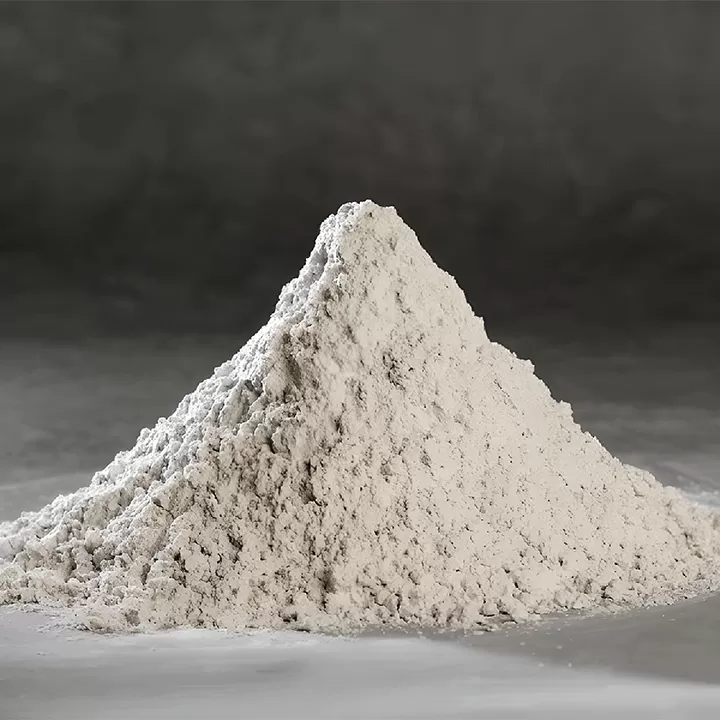
Among the mineral additives, Ground Granulated Blast Furnace Slag (GGBFS) stands out for its dual contribution to performance and sustainability. GGBFS is a glassy, granular material formed when molten iron slag is rapidly quenched from a blast furnace. When finely ground, it exhibits latent hydraulic properties, meaning it requires an activator (usually Portland cement or lime) to react. At replacement levels of 30% to 70%, GGBFS significantly refines the pore structure of concrete, leading to exceptional resistance to chloride ingress and sulfate attack. This makes it indispensable for marine structures, wastewater treatment plants, and foundations in aggressive soils. Golden Fortune has established itself as a reliable supplier in this domain, providing ultra-fine GGBFS that meets stringent international standards for consistency and reactivity. The use of such high-quality GGBFS as a primary cement additive not only enhances long-term durability but also reduces the carbon footprint of concrete by up to 40% compared to plain Portland cement mixtures.
3. Top 7 High-Performance Cement Additives Shaping 2024 Specifications
Selecting the right combination of additives requires a deep understanding of their specific effects. Below are seven critical materials that are currently defining high-performance concrete mixes, with a detailed look at their technical contributions.
3.1 Ground Granulated Blast Furnace Slag (GGBFS)
As highlighted, GGBFS is a cornerstone of durable concrete. Its fine particle size (typically >400 m²/kg Blaine) and glassy content ensure a slow, continuous hydration that reduces heat evolution—critical for mass concrete pours. Data from projects utilizing Golden Fortune GGBFS show a 25% increase in 56-day compressive strength and a 50% reduction in chloride permeability compared to control mixes. This positions GGBFS as a premium cement additive for infrastructure with a 100-year design life.
3.2 Fly Ash (Class F and C)
A by-product of coal-fired power plants, fly ash improves workability and reduces water demand. Class F fly ash (low calcium) is particularly effective in mitigating alkali-silica reaction (ASR), a common durability threat. Typical replacement levels range from 15% to 35%.
3.3 Silica Fume
With particles 100 times finer than cement, silica fume is used for ultra-high-strength concrete ( >80 MPa). It fills interstitial voids and provides a "ball bearing" effect, drastically improving bond strength and impermeability. Dosages are usually kept between 5% and 10% to avoid workability issues.
3.4 Limestone Powder
Often used as a filler, finely ground limestone can accelerate early hydration by providing nucleation sites for C-S-H formation. While it is not pozzolanic, it contributes to particle packing and is increasingly used in ternary blends to optimize the gradation of cementitious materials.
3.5 Polycarboxylate Ether (PCE) Superplasticizers
These are the workhorses of modern chemical additives. PCEs use steric hindrance to disperse cement particles, allowing for water reduction of up to 40% without loss of workability. This enables the production of self-consolidating concrete (SCC) and high-early-strength mixes essential for precast operations.
3.6 Air-Entraining Agents
For concrete exposed to freeze-thaw cycles, air-entraining agents are mandatory. They introduce microscopic air bubbles (20–200 µm) that relieve internal pressure caused by ice formation. This simple chemical additive multiplies the frost resistance of concrete by a factor of ten.
3.7 Shrinkage-Reducing Admixtures
Designed to lower the surface tension of pore water, these additives reduce drying shrinkage and the associated risk of cracking. They are particularly valuable in slabs-on-grade, repair materials, and bridge decks where dimensional stability is paramount.
4. Quantifiable Benefits: Strength and Durability Data
The selection of specific cement additives must be justified by performance data. Consider the following benchmarks derived from ASTM C989 and EN 15167 standards for slag-blended cements:
Compressive Strength: While a 50% GGBFS blend may exhibit slightly lower 1-day strength, the 28-day strength typically matches or exceeds that of pure Portland cement. By 90 days, the strength activity index often exceeds 115%.
Chloride Resistance: The rapid chloride permeability test (RCPT, ASTM C1202) shows that concrete with 50% GGBFS can achieve "very low" chloride ion penetrability ( < 1000 coulombs) compared to "moderate" to "high" ratings ( > 3000 coulombs) for plain concrete.
Sulfate Resistance: The refined pore structure and reduced calcium hydroxide content make slag-blended cements inherently resistant to sulfate attack, often performing better than Type V sulfate-resistant cements.
Heat of Hydration: Replacing cement with 50% GGBFS can reduce the peak hydration temperature by 10°C to 15°C, mitigating thermal cracking in thick sections.
5. Addressing Industry Pain Points with Smart Additive Selection
Engineers and contractors face persistent challenges: tight construction schedules demanding high early strength, environmental regulations capping carbon emissions, and budget constraints. Here is how strategic use of additives provides solutions:
Pain Point: Low Early Strength in Cold Weather. Solution: Use a combination of non-chloride accelerators and high-reactivity metakaolin or silica fume. This jump-starts hydration without risking corrosion of reinforcement.
Pain Point: High Carbon Footprint. Solution: Maximize the replacement of clinker with mineral cement additives like GGBFS. Partnering with suppliers such as Golden Fortune ensures a consistent supply of high-quality slag that meets green building certification requirements like LEED v4.1.
Pain Point: Inconsistent Mix Performance. Solution: Implement rigorous quality control on the specific surface area and particle size distribution of mineral additives. For chemical admixtures, conduct cement-admixture compatibility tests (e.g., Marsh cone test) before batching.
Pain Point: ASR-Induced Cracking. Solution: Incorporate a calculated amount of Class F fly ash or GGBFS (at least 35% replacement) proven to mitigate deleterious expansion. This is a far more durable solution than using lithium-based admixtures alone.
6. Future Directions in Cement Additives Technology
The next decade will see a shift toward "designer" additives tailored for circular economy principles. We are already witnessing the rise of calcined clays as a viable SCM where slag or fly ash is not locally available. Furthermore, digital tools like concrete hydration simulators are allowing engineers to model the exact impact of various additive combinations before a single batch is mixed. Nanotechnology is also entering the field: nano-silica and nano-titania are being explored for their ability to further densify the microstructure and even impart photocatalytic properties for self-cleaning facades. As these innovations mature, the role of specialized suppliers like Golden Fortune will be crucial in bridging the gap between laboratory research and field-ready materials, ensuring that the next generation of cement additives delivers on both performance and sustainability promises.
7. Frequently Asked Questions (FAQ)
Q1: What is the exact difference between cement additives and cement admixtures?
A1: While the terms are often used interchangeably in casual conversation, a technical distinction exists. Cement additives usually refer to materials that are interground or blended with the cement clinker during the manufacturing process (e.g., gypsum, limestone, slag). Cement admixtures are typically added to the concrete mix during batching at the ready-mix plant (e.g., superplasticizers, retarders, air-entrainers). Both fall under the broader umbrella of materials that modify cement properties, but their point of introduction differs.
Q2: How do cement additives like GGBFS contribute to reducing CO₂ emissions?
A2: The production of Portland cement clinker is energy-intensive and releases CO₂ from both the combustion of fuel and the calcination of limestone. By substituting a portion of this clinker with a by-product material like GGBFS, which requires only grinding and no further chemical conversion, the overall CO₂ per ton of cementitious material drops dramatically. For every ton of GGBFS used in place of clinker, approximately 0.9 tons of CO₂ emissions are avoided.
Q3: Can I use multiple cement additives together in the same mix?
A3: Yes, this is common practice in modern concrete technology. Ternary blends (e.g., Portland cement + GGBFS + silica fume) are used to harness the benefits of each additive—workability from slag, and ultra-high strength from silica fume. However, compatibility testing is essential. Some chemical admixtures may interact differently with various mineral additive combinations, potentially affecting setting time or air entrainment. Pre-construction trials are highly recommended.
Q4: What is the typical shelf life or storage requirement for bagged cement additives like GGBFS?
A4: Mineral additives such as GGBFS, fly ash, and silica fume should be stored in dry conditions, protected from moisture and contamination. If stored in sealed bags in a dry warehouse, they can retain their properties for several months. However, like cement, they can absorb atmospheric moisture over time, leading to partial hydration and reduced reactivity. It is best practice to use them on a first-in, first-out basis and to avoid storage for longer than 90 days in humid environments.
Q5: Are there industry standards that certify the quality of cement additives?
A5: Absolutely. For GGBFS, key standards include ASTM C989/C989M (Standard Specification for Slag Cement for Use in Concrete and Mortars) and EN 15167-1 (Ground granulated blast furnace slag for use in concrete, mortar and grout). Fly ash is covered under ASTM C618. Chemical admixtures must conform to ASTM C494 or EN 934-2. When sourcing from a supplier like Golden Fortune, you should always request mill test reports and certificates of analysis that verify compliance with these specifications.
Q6: How do I determine the correct dosage of a cement additive for my specific project?
A6: Dosage depends on the desired performance characteristics (strength, durability, workability) and the specific materials used. It is not a one-size-fits-all value. For mineral additives, typical replacement levels are well-documented (e.g., 20-40% for fly ash, 30-50% for GGBFS, 5-10% for silica fume). For chemical admixtures, manufacturers provide recommended dosage ranges. The final determination should be made through trial batching in a laboratory setting, testing for slump, setting time, air content, and compressive strength at various ages to ensure the mix meets project specifications.