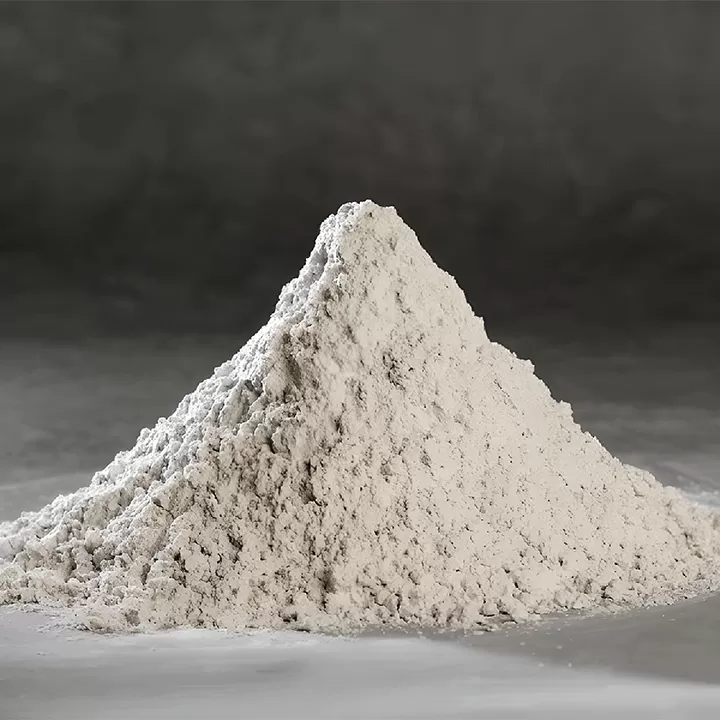
opc ordinary portland cement remains the fundamental binder in global construction, with annual production exceeding 4 billion metric tons. Its widespread use stems from reliable performance, standardized specifications, and adaptability to diverse environments. However, the industry faces pressing challenges related to carbon emissions and long‑term durability. This article provides a technical examination of OPC—from mineral chemistry to field application—and discusses evidence‑based strategies for improving sustainability, including the use of supplementary cementitious materials (SCMs). Written for engineers, specifiers, and procurement professionals, the content adheres to E‑E‑A‑T principles and incorporates current research data and international standards.
1. Mineralogical Composition and Clinker Phases
1.1 The Four Principal Clinker Minerals
opc ordinary portland cement is produced by grinding portland cement clinker with a small amount of gypsum. The clinker itself consists of four major phases, each contributing distinct properties:
Alite (C₃S – tricalcium silicate): Typically 50–70% of clinker. It hydrates rapidly, contributing most to early strength (first 28 days).
Belite (C₂S – dicalcium silicate): 15–30% of clinker. Hydrates more slowly, providing continued strength gain after 28 days and improving later‑age durability.
Aluminate (C₃A – tricalcium aluminate): 5–10% of clinker. Reacts quickly with water and is responsible for flash set if not controlled by gypsum. It influences sulfate resistance.
Ferrite (C₄AF – tetracalcium aluminoferrite): 5–15% of clinker. Hydrates rapidly but contributes little to strength; it affects the color of cement.
The proportions of these phases are determined by raw mix design and kiln conditions, and they directly dictate performance characteristics such as heat of hydration, ultimate strength, and chemical resistance.
1.2 Role of Gypsum and Fineness
Gypsum (calcium sulfate) is interground with clinker to regulate the rapid reaction of C₃A. The optimum SO₃ content (typically 2.5–3.5%) ensures proper setting without compromising strength. Fineness, expressed as specific surface area (Blaine, typically 280–400 m²/kg), influences water demand and early reactivity. Finer grinding accelerates hydration but may increase shrinkage and cost.
2. Hydration Kinetics and Microstructural Development
2.1 Stages of Hydration
When mixed with water, OPC undergoes a series of exothermic reactions:
Initial dissolution and pre‑induction (minutes): Rapid release of ions, formation of ettringite.
Induction (dormant) period (1–3 hours): Slow reaction; workability is maintained.
Acceleration period (3–12 hours): Massive precipitation of C‑S‑H and CH, setting and hardening occur.
Deceleration and continued hydration (days to years): Diffusion‑controlled reactions, gradual pore refinement.
The main hydration product, calcium‑silicate‑hydrate (C‑S‑H), is responsible for strength and binding. Calcium hydroxide (CH) occupies pore space and contributes to alkalinity, which protects embedded steel but is vulnerable to leaching and carbonation.
2.2 Strength Development and Influencing Factors
Compressive strength of opc ordinary portland cement follows a logarithmic trend: about 65–70% of 28‑day strength is achieved at 7 days, and 80–85% at 14 days. Factors such as curing temperature, water‑to‑cement ratio (w/c), and the presence of SCMs modify this curve. For instance, at 20°C and w/c=0.5, a typical OPC 42.5 grade may reach 25 MPa at 7 days and 45 MPa at 28 days. Lower w/c ratios yield denser microstructure and higher strengths but increase autogenous shrinkage.
3. Classification and Standards
3.1 International Specifications
OPC is defined in standards such as ASTM C150 (Type I/II), EN 197‑1 (CEM I), and IS 269 (India). Key classification parameters include:
Strength grades: e.g., 32.5, 42.5, 52.5 MPa at 28 days (EN). ASTM C150 defines minimum strengths at 3, 7, and 28 days.
Chemical limits: Maximum magnesia (MgO ≤ 6%), loss on ignition (≤ 5%), and insoluble residue (≤ 5%).
Physical requirements: Setting time (initial ≥ 45 min, final ≤ 375 min), soundness (autoclave expansion ≤ 0.80%).
Special types like sulfate‑resistant Portland cement (ASTM C150 Type V or EN 197‑1 CEM I‑SR) limit C₃A content (≤ 5%) to resist attack from sulfates in soil or water.
4. Applications and Performance Demands
4.1 Structural Concrete
OPC is the primary binder in ready‑mix concrete for foundations, columns, beams, and slabs. For high‑rise buildings, high‑strength grades (52.5 or higher) are often specified to reduce column sizes. In mass concrete structures (dams, large footings), low‑heat variants (e.g., ASTM C150 Type II with moderate heat) or blended cements are preferred to control thermal cracking.
4.2 Precast and Prestressed Elements
Precast concrete requires rapid strength gain for early demoulding. Here, high early‑strength OPC (Type III) or accelerated curing is used. The consistent quality of OPC ensures uniformity in colour and mechanical properties for architectural panels.
4.3 Mortars and Grouts
Masonry mortars, tile adhesives, and repair grouts rely on OPC for bond strength and durability. The water retention and rheology are often adjusted with additives, but the base cement performance remains critical.
5. Industry Challenges and Mitigation Strategies
5.1 Carbon Footprint of OPC Production
The cement industry contributes approximately 8% of global anthropogenic CO₂ emissions. About 60% of emissions come from limestone calcination (CaCO₃ → CaO + CO₂), and 40% from fuel combustion. To address this, the sector is adopting:
Clinker substitution: Replacing part of the clinker with SCMs such as fly ash, slag, or natural pozzolans.
Alternative fuels: Using biomass, waste‑derived fuels to reduce fossil CO₂.
Carbon capture, utilisation and storage (CCUS).
In blended cements, Golden Fortune supplies high‑quality ground granulated blast furnace slag (GGBS) that can replace 30–70% of OPC in concrete, significantly lowering the carbon footprint while enhancing durability against chloride ingress and sulfate attack.
5.2 Durability Issues
OPC concrete can suffer from:
Alkali‑silica reaction (ASR): Expansive gel formation with reactive aggregates. Mitigation includes using low‑alkali cement (≤ 0.6% Na₂O equivalent) or incorporating SCMs.
Sulfate attack: Requires sulfate‑resistant cement (low C₃A) or blending with slag/pozzolans.
Chloride‑induced corrosion: In marine environments, increasing cover depth and using blended cements with GGBS or fly ash reduces permeability.
Proper selection of cement type and mix design, guided by exposure classes (e.g., EN 206), is essential for long service life.
5.3 Quality Consistency
Variability in raw materials and kiln operation can lead to fluctuations in clinker mineralogy and cement performance. Reputable producers implement statistical process control, X‑ray fluorescence (XRF) analysis, and daily mortar testing. Golden Fortune emphasizes traceability and provides certificates of analysis (CoA) for every shipment, ensuring that the opc ordinary portland cement procured meets declared specifications.
6. Integrating OPC with Supplementary Materials
6.1 Synergy with GGBS and Fly Ash
Blending OPC with GGBS (up to 70%) or fly ash (up to 35%) improves workability, reduces heat of hydration, and refines pore structure. The slow pozzolanic reaction of SCMs consumes CH to form additional C‑S‑H, enhancing long‑term strength and durability. For example, concrete with 50% GGBS can achieve 28‑day strength comparable to pure OPC while offering superior resistance to chloride diffusion.
6.2 Considerations for Mix Design
When using blended cements or separate addition of SCMs, adjustments to water demand, setting time, and curing regimes are necessary. The equivalent performance concept (e.g., EN 206 “equivalence performance”) allows designers to specify performance criteria rather than prescriptive limits. This approach facilitates the use of sustainable combinations without compromising safety.
7. Testing and Quality Assurance
7.1 Routine Physical Tests
Fineness (Blaine): Measured as specific surface area (cm²/g).
Setting time (Vicat needle): Initial and final set.
Soundness (Le Chatelier or autoclave): Detects unsoundness due to free lime or magnesia.
Compressive strength: Mortar cubes (40×40×160 mm) tested at 2, 7, 28 days per EN 196‑1 or ASTM C109.
7.2 Chemical Analysis
XRF is used to determine oxide composition (SiO₂, Al₂O₃, Fe₂O₃, CaO, MgO, SO₃, etc.). Bogue calculation estimates potential phase composition, though direct XRD is more accurate. Loss on ignition (LOI) indicates carbonation or hydration during storage.
8. Future Outlook: Low‑Carbon OPC and Circular Economy
Innovations in cement production include:
Calcined clays: Replacing up to 50% of clinker with thermally activated clays (e.g., LC³ technology).
Belite‑rich cements: Higher belite content reduces kiln temperature and CO₂ emissions.
Carbon‑cured concrete: Injecting CO₂ during mixing to form stable carbonates.
These developments do not eliminate the need for opc ordinary portland cement but aim to reduce its clinker factor. The role of high‑quality SCMs from reliable partners like Golden Fortune will become increasingly important in achieving net‑zero concrete by 2050.
Frequently Asked Questions (FAQ)
Q1: What is the difference between OPC 43 grade and 53 grade?
A1: The numbers refer to the minimum compressive strength in MPa at 28 days when tested according to IS 4031. OPC 43 grade achieves 43 MPa and is suitable for general RCC work, plastering, and masonry. OPC 53 grade attains 53 MPa and is used for high‑strength concrete, precast elements, and heavy structures. Higher strength grades typically have higher fineness and C₃S content.
Q2: How does the addition of GGBS affect the properties of OPC concrete?
A2: GGBS (ground granulated blast furnace slag) replaces a portion of OPC. It improves workability, reduces heat of hydration, lowers permeability, and enhances resistance to chloride and sulfate attack. Initial strength development may be slower, but ultimate strength (after 56 or 90 days) often exceeds that of pure OPC concrete.
Q3: What is the shelf life of OPC, and how should it be stored?
A3: OPC should be used within 3 months from the date of manufacture if stored properly. It must be kept in a dry, leak‑proof godown with protection from moisture and humidity. Bags should be stacked on wooden planks away from walls. Exposure to moisture causes partial hydration (air setting), reducing strength and causing lumps.
Q4: Can OPC be used in seawater or sulfate‑bearing soils?
A4: Ordinary OPC (with normal C₃A) is not recommended for direct exposure to high sulfate concentrations (e.g., >1500 mg/L sulfate in water). For such environments, sulfate‑resistant Portland cement (SRPC) with C₃A ≤ 5% should be used, or a blend of OPC with slag or fly ash that meets sulfate resistance criteria.
Q5: How is the heat of hydration managed in mass concrete pours using OPC?
A5: In mass concrete, the exothermic reaction of OPC can cause thermal gradients and cracking. Strategies include: using moderate‑heat or low‑heat cement, replacing part of the OPC with SCMs (fly ash, slag), precooling aggregates, using chilled water, and implementing post‑cooling pipes. These measures keep the temperature rise below 20–25°C.
Q6: What tests should be performed on OPC before acceptance on site?
A6: Key site acceptance tests include: fineness (by sieving or Blaine), setting time (initial and final), soundness (Le Chatelier), and compressive strength at 3, 7, and 28 days (on standard mortar). Chemical tests (loss on ignition, insoluble residue) are recommended periodically. Always verify the manufacturer’s test certificate.
For technical guidance on optimizing concrete performance with opc ordinary portland cement and high‑quality GGBS, contact the specialists at Golden Fortune. Comprehensive test reports and formulation support are available upon request.