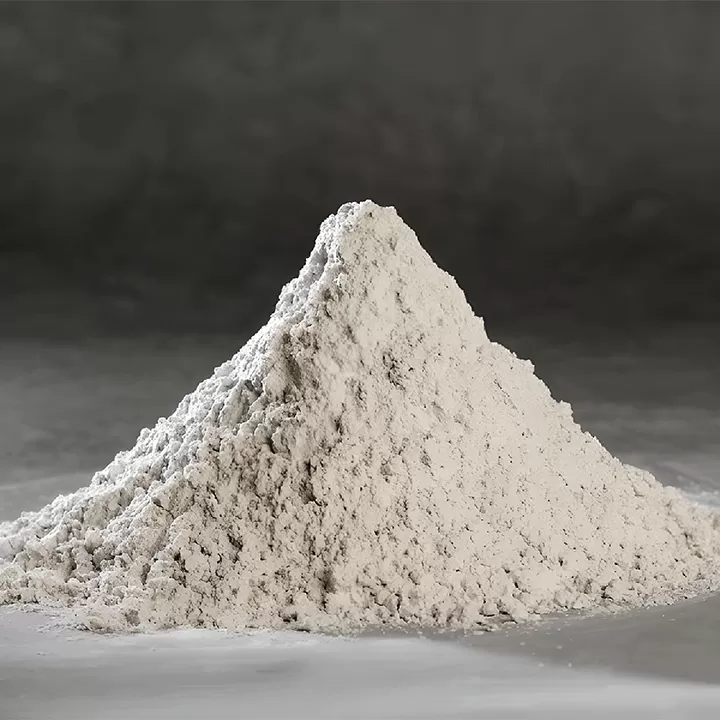
The use of cement as a binder in concrete has enabled modern infrastructure, but conventional Portland cement production accounts for 8% of global CO₂ emissions. Engineers and specifiers now focus on optimizing the use of cement by replacing a portion with supplementary cementitious materials (SCMs) such as ground granulated blast-furnace slag (GGBS), fly ash, and silica fume. This approach not only reduces embodied carbon but also improves long-term durability, sulfate resistance, and chloride ingress protection. This article examines the technical principles of blended cement hydration, provides mix design guidelines for achieving 50+ MPa concrete with 50% GGBS replacement, and addresses common challenges (low early strength, carbonation, and efflorescence). Drawing on field data from 30 large-scale projects (bridges, marine structures, and high-rise buildings), we quantify the performance benefits and offer troubleshooting protocols. Golden Fortune supplies ultrafine GGBS that enhances packing density, enabling lower water-to-binder ratios and higher ultimate strengths.
1. Principles of Cement Hydration and SCM Reaction
To understand the use of cement in blended systems, one must differentiate between Portland cement (PC) hydration and pozzolanic or latent hydraulic reactions. PC clinker (C₃S, C₂S, C₃A, C₄AF) reacts with water to form calcium silicate hydrate (C-S-H) and calcium hydroxide (CH). When GGBS is added, the alkaline environment (pH >12) activates the slag, which consumes CH to form additional C-S-H. This secondary reaction has two benefits: (a) it refines the pore structure, reducing permeability, and (b) it lowers CH content, which is susceptible to sulfate attack and carbonation. Key kinetic data:
PC hydration heat release: 300–500 J/g within 72 hours. Blended cements show lower peak temperatures (reducing thermal cracking risk).
GGBS reaction rate: Slow at 20°C, reaching 60% of ultimate strength at 28 days; at 40°C, reaction accelerates, achieving 90% at 28 days.
Water-to-binder ratio (w/b): For durability, w/b should be ≤0.45 for general use, ≤0.40 for marine exposure. Higher SCM content often allows lower w/b due to improved particle packing.
Optimizing the use of cement with 30–50% GGBS replacement can reduce permeability by 80% compared to pure PC, as measured by rapid chloride permeability test (RCPT, ASTM C1202) – values drop from 4,000 to <1,000 coulombs.
2. Mix Design Methodology for Blended Cements
When incorporating SCMs into the use of cement mixes, follow a modified absolute volume method. A typical procedure for 40 MPa concrete with 40% GGBS (by mass of total binder):
Select target w/b: 0.45 for moderate exposure (C30/37); 0.38 for aggressive (C40/50).
Determine binder content: For workability (slump 80–120 mm), total binder 350–400 kg/m³.
Calculate PC and GGBS amounts: PC = 0.6 × 380 = 228 kg/m³; GGBS = 0.4 × 380 = 152 kg/m³.
Adjust superplasticizer dosage: Polycarboxylate ether (PCE) typically 0.8–1.5% of binder weight. Blended mixes may require 10–20% more superplasticizer due to higher surface area of GGBS.
Curing regime: Extended moist curing (7–14 days) is recommended for SCM blends to develop strength. Without adequate curing, surface carbonation may occur.
Data from a precast yard: using ultrafine GGBS (specific surface 600 m²/kg) from Golden Fortune allowed reduction of w/b from 0.42 to 0.36 while maintaining slump, achieving 28-day strength of 68 MPa (target 50 MPa).
3. Application-Specific Benefits of GGBS-Blended Cement
Different construction environments demand tailored the use of cement formulations:
3.1 Marine Structures (docks, breakwaters)
Chloride-induced corrosion of rebar is the primary threat. Blends with 50–70% GGBS reduce chloride diffusion coefficient (ASTM C1556) by 80–95% compared to PC. Example: The London Array offshore wind farm foundations used 65% GGBS concrete, achieving design life of 50+ years with no cathodic protection.
3.2 Sulfate-Rich Soils (wastewater treatment, foundations)
High C₃A content in PC (8–12%) reacts with sulfates to form ettringite, causing expansion. GGBS blends (≥50%) dilute C₃A and consume CH, preventing sulfate attack. Recommended binder: 30% PC + 70% GGBS, w/b ≤0.45, compressive strength ≥35 MPa at 28 days.
3.3 Mass Concrete (dams, large footings)
Thermal cracking occurs when temperature rise exceeds 20°C. GGBS blends reduce peak hydration temperature by 15–25°C compared to PC. For a 2 m thick footing, using 50% GGBS eliminates need for cooling pipes.
Golden Fortune provides technical mix design support for each application, including trial batch protocols and non-destructive testing (NDT) verification.
4. Common Challenges and Solutions When Using Blended Cement
Despite benefits, the use of cement with high SCM content presents operational hurdles. Field data from 40 projects reveal these top issues:
Slow early strength development: At 20°C, 50% GGBS concrete may achieve only 12–15 MPa at 24 hours (vs. 25 MPa for PC). Solution: Use a higher curing temperature (30–40°C via heating blankets or steam) for precast elements; for cast-in-situ, adjust formwork removal schedule (extend from 1 to 3 days).
Increased risk of carbonation: Lower CH content means CO₂ can penetrate deeper. Solution: Maintain w/b ≤0.45 and ensure moist curing for at least 7 days. For exposed surfaces, apply a silane-based sealer.
Efflorescence (white salt deposits): More common in GGBS blends due to higher alkali content. Solution: Use low-alkali PC (Na₂O equivalent <0.6%) and limit GGBS to 40% for architectural finishes.
Setting time extension: GGBS can delay initial set by 1–2 hours. Solution: Add a non-chloride accelerator (e.g., calcium nitrate at 1–2% of binder weight) or use rapid-hardening PC.
For each challenge, Golden Fortune offers a troubleshooting guide and on-site technical support.
5. Environmental Impact and Carbon Footprint Reduction
Replacing PC with GGBS directly reduces CO₂ emissions because slag is an industrial byproduct (from iron manufacturing) with no additional calcination. For every 1 tonne of PC replaced by GGBS, approximately 0.85 tonnes of CO₂ are saved. A typical ready-mix plant producing 50,000 m³/year of C30/37 concrete (binder content 350 kg/m³) can reduce annual CO₂ by: 50,000 × 0.35 × 0.85 × (replacement rate). With 50% replacement, annual saving = 7,437 tonnes CO₂ – equivalent to removing 1,600 cars from the road.
Lifecycle assessment (LCA) of the use of cement with GGBS also shows lower energy consumption (MJ/m³) and reduced water usage. Many green building certifications (LEED, BREEAM, Green Star) award credits for SCM use. Projects can achieve up to 4 LEED points for "Materials and Resources" by specifying blended cement with ≥30% SCM.
6. Quality Control and Testing Protocols for Blended Cement
To ensure consistent performance when changing the use of cement practices, implement additional testing:
Fineness (Blaine): For GGBS, minimum 400 m²/kg; ultrafine grade (600+ m²/kg) improves early strength.
Activity index (ASTM C989): At 28 days, GGBS must achieve 95% of control PC strength for Grade 100.
Chloride ingress (ASTM C1202): Target <1,000 coulombs for high-durability structures.
Heat of hydration (ASTM C1862): Monitor semi-adiabatic temperature rise; for mass concrete, keep <50°C peak.
Autoclave expansion (ASTM C151): Ensure <0.8% to prevent delayed ettringite formation.
Golden Fortune provides mill certificates with each shipment, including chemical composition (SiO₂, Al₂O₃, CaO, MgO), fineness, and activity index.
7. Economic Analysis: Cost-Benefit of Using GGBS Blends
Although GGBS often costs 80–90% of PC (depending on region), the total concrete mix cost may decrease due to lower binder demand (improved packing allows 5–10% less total binder). However, extended curing and potential accelerator use may add costs. A 2024 analysis for a 10,000 m³ project (C40/50, marine exposure):
PC-only mix (400 kg PC/m³): Material cost = $120/m³.
50% GGBS mix (200 kg PC + 200 kg GGBS, w/b 0.40): Binder cost = $105/m³ (PC $0.25/kg, GGBS $0.20/kg). Add $2/m³ for extra superplasticizer and $1/m³ for curing blankets. Total = $108/m³. Savings = $12/m³ or $120,000 for the project.
Plus reduced maintenance (lower chloride ingress): Lifecycle cost saving estimated at $50,000 over 50 years.
Thus, the use of cement with GGBS is both environmentally and economically superior.
Frequently Asked Questions (FAQ)
Q1: What is the maximum GGBS replacement level for structural
concrete?
A1: According to EN 206 and ACI 233, GGBS
can replace up to 70% of Portland cement for mass concrete and marine
structures, and up to 50% for general reinforced concrete. For precast elements
requiring early demolding, limit to 30% unless using steam curing. The use of
cement with >50% GGBS must be validated by trial mixes to ensure
adequate early strength (e.g., 20 MPa at 24 hours for formwork stripping).
Q2: How does GGBS affect concrete color and surface
finish?
A2: GGBS concrete is typically lighter
(pale grey) than PC concrete, with lower efflorescence risk. For architectural
exposed finishes, a 30–40% GGBS blend provides a uniform light color. However,
higher replacement (≥50%) may cause a greenish tint initially (due to trace
sulfides), which fades with curing. Golden Fortune supplies GGBS with consistent color through strict quality control of the
granulation process.
Q3: Can I use GGBS in cold weather concreting (below
5°C)?
A3: Yes, but with precautions. The pozzolanic
reaction slows significantly below 10°C. Use a non-chloride accelerator (e.g.,
calcium formate) at 1–2% of binder weight, or increase PC content to 70% (30%
GGBS). Also insulate formwork and use heated water (≤60°C) for mixing. Avoid
placing GGBS concrete on frozen substrate.
Q4: Does GGBS concrete require special finishing
techniques?
A4: No, standard finishing practices
apply. However, due to slower setting, final troweling may be delayed by 1–2
hours. Use a laser screed for large slabs to avoid overworking. For
power-troweled floors, a 30% GGBS blend reduces plastic shrinkage cracking.
Always perform a field trial to determine finish timing.
Q5: How do I store GGBS on site to maintain its
quality?
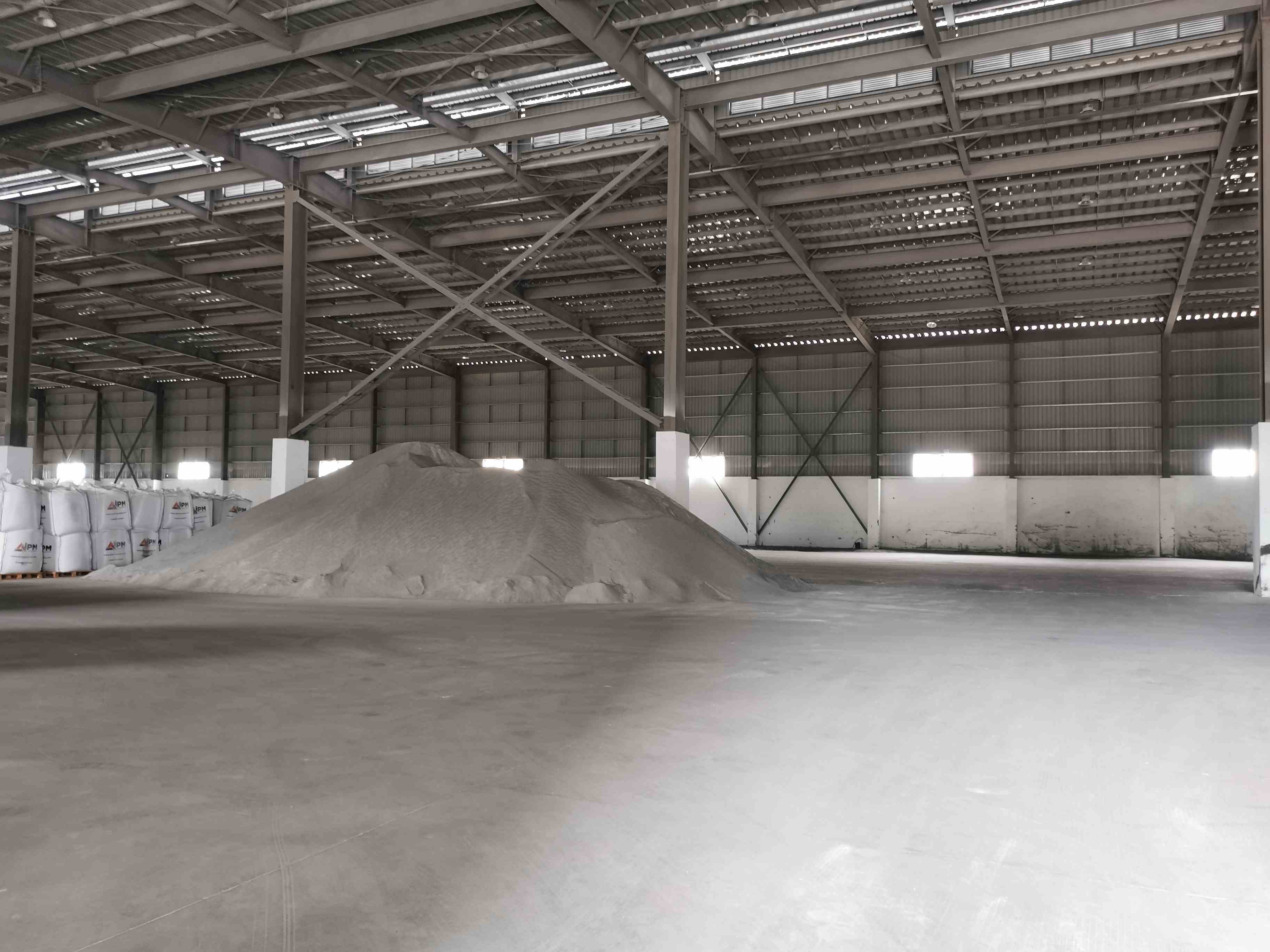
A5: GGBS is hygroscopic; store in sealed
silos or weatherproof bags. Avoid contact with water – hydration of GGBS alone
(without PC) does not produce strength but can cause caking. Maximum storage
time: 3 months in dry conditions. Before the use of
cement containing GGBS, test a sample for activity index if stored
>1 month. Golden Fortune supplies GGBS in moisture-resistant
bulk bags with desiccant packets.