In modern construction, understanding cement ka chemical behavior is not merely academic—it directly dictates structural longevity, lifecycle costs, and environmental footprint. While ordinary Portland cement (OPC) has been the backbone of infrastructure, its chemical constraints become evident in mass concrete, aggressive soil conditions, and low-carbon mandates. Ground Granulated Blast Furnace Slag (GGBFS) offers a scientifically robust solution. This article, grounded in cement chemistry principles and industrial practice, examines how blending GGBFS re-engineers reaction pathways, mitigates durability risks, and meets modern performance targets. We will reference Golden Fortune as a reference supplier of high‑reactivity ultrafine GGBFS, compliant with ASTM C989 and EN 15167 standards.
1. Fundamental Reactions of Cement Ka Chemical: The Portland Cement System
To appreciate the effect of supplementary materials, one must first examine the baseline cement ka chemical network. OPC clinker consists of four major phases: alite (C₃S), belite (C₂S), tricalcium aluminate (C₃A), and tetracalcium aluminoferrite (C₄AF). Upon water addition, these phases react at different rates, generating hydration products that bind aggregates and provide mechanical strength.
C₃S hydration – Rapid, responsible for early strength (first 28 days). Produces calcium‑silicate‑hydrate (C‑S‑H) and portlandite (CH, Ca(OH)₂). C‑S‑H gel provides ~70% of the paste’s strength.
C₂S hydration – Slower, contributes to later strength (>28 days), also generating C‑S‑H and CH.
C₃A hydration – Very reactive, releases high heat, forms ettringite and monosulfoaluminate in the presence of gypsum. High C₃A content makes cement vulnerable to sulfate attack.
C₄AF – Minor role in strength but influences color and late hydration.
Over time, the pore solution’s alkalinity (pH > 12.5) ensures stability of reinforcing steel passivation. However, the inherent production of portlandite (20–25% by mass of hydrated paste) becomes a liability: CH is soluble and prone to leaching, carbonation, and chemical attack by sulfates. These chemical weak points drive the need for cement ka chemical modifications via latent hydraulic materials such as GGBFS.
2. Critical Pain Points of Conventional Cement Chemistry in Field Applications
Despite its versatility, standalone OPC chemistry introduces several engineering and environmental issues that directly affect project economics and safety.
High heat of hydration – In massive foundations, dams, or thick walls, the exothermic reactions (especially from C₃A and C₃S) cause internal temperatures exceeding 70°C, leading to thermal cracking and reduced service life.
Sulfate and chloride vulnerability – CH reacts with external sulfates to form gypsum and expansive ettringite, causing spalling. Similarly, high permeability of plain OPC paste allows chloride ingress, risking reinforcement corrosion.
Carbon footprint – Cement production accounts for 7–8% of global CO₂ emissions. Clinker calcination releases ~0.85 tons CO₂ per ton of clinker, a growing regulatory and ESG liability.
Alkali-silica reaction (ASR) – While less direct, high alkalinity combined with reactive aggregates can produce expansive gels; modifying the pore chemistry reduces this risk.
Late-age strength stagnation – Pure OPC’s C‑S‑H density does not improve after 90 days; porosity remains relatively high.
These pain points require an intelligent redesign of the reaction kinetics and product assemblage—without sacrificing workability or cost efficiency. This is where GGBFS enters as a scientifically proven chemical modifier.
3. How GGBFS Alters Cement Ka Chemical Reaction Pathways
GGBFS is a vitreous, calcium‑aluminosilicate byproduct from iron production, consisting of >95% amorphous phases. When finely ground (specific surface >400 m²/kg) and activated by the alkaline environment of hydrating cement, it exhibits latent hydraulic behavior. The presence of cement ka chemical elements (CaO, SiO₂, Al₂O₃, MgO) in slag reacts with CH—consuming it and producing additional C‑S‑H and C‑A‑S‑H gels (calcium‑aluminosilicate hydrate).
Secondary C‑S‑H formation – CH + S + H → C‑S‑H. This reaction refines pore structure, reducing capillary porosity from ~40% in OPC to <30% at 50% slag replacement.
Lowering of CH content – CH consumption mitigates leaching, carbonation depth, and sulfate expansion. For a 50% GGBFS blend, CH fraction drops by 60–70% after 90 days.
Altered aluminate reaction – Alumina from GGBFS binds alkalis and modifies ettringite stability, reducing delayed ettringite formation risk.
Reduced heat signature – Slag hydration is slower and less exothermic; total heat at 72 hours reduces by 30–50%, critical for mass concrete pours.
The synergistic effect is a denser, more durable matrix with higher resistance to chemical aggression. For example, ASTM C1202 rapid chloride permeability tests on 50% GGBFS concrete show charge passed values below 1000 coulombs (very low), compared to >4000 coulombs for plain OPC. This transformation underscores why specifiers integrate GGBFS into cement ka chemical optimization for marine, industrial, and underground structures.
4. Technical Performance Benchmarks: Quantifying Cement Ka Chemical Enhancement
Data from industry literature (ACI 233, SCI publication) demonstrates repeatable improvements across key durability indices. The table below summarizes typical changes when replacing 30–70% OPC with high‑quality GGBFS (specific surface 450–550 m²/kg).
Key performance shifts after 28 days standard curing:
Compressive strength – 30% slag: similar to OPC at 28 days, +10–15% at 90 days. 50% slag: 5–10% lower at 7 days, equal at 28 days, +20% at 180 days.
Heat of hydration (7 days) – 50% slag reduces by ~35% (from ~350 kJ/kg to ~230 kJ/kg).
Chloride diffusion coefficient (Dₙₑₛₛ) – drops from 15×10⁻¹² m²/s (OPC) to 2–4×10⁻¹² m²/s (50% slag) – extremely low permeability.
Sulfate expansion (ASTM C1012) – after 12 months, expansion ≤0.05% for 50% slag vs. 0.15% for OPC, meeting high sulfate resistance.
Electrical resistivity (bulk) – increases from 50 ohm·m (OPC) to >200 ohm·m, indicating better corrosion protection.
These metrics prove that altering cement ka chemical stoichiometry via GGBFS not only maintains mechanical adequacy but significantly extends service life. Golden Fortune provides ultrafine GGBFS with controlled particle size distribution (D50 < 6 µm) to accelerate early reactivity while preserving long-term benefits—crucial for precast and high‑performance applications.
5. Addressing Implementation Challenges: Dosage, Early Strength, and Quality Assurance
While the advantages are substantial, engineers face practical hurdles when deploying modified cement ka chemical blends. Below are common concerns with field‑validated solutions.
Slow setting and low early strength – At high replacement (≥50%), strength development at 1–3 days can be 20–30% lower. Solutions: use ultrafine GGBFS (higher surface area), slightly lower water‑to‑cement ratio, or combine with nucleation agents. Warm‑weather concreting also accelerates hydration.
Increased water demand – Slag particles have irregular shape; plasticizer dosage may need adjustment by 0.2–0.5% of binder mass to maintain slump.
Color variation – GGBFS concrete typically shows a lighter, sometimes greenish‑blue tint, which fades to off‑white. This is aesthetic, not structural. Client education resolves concerns.
Carbonation in poorly cured sections – Because slag consumes CH, inadequate curing (less than 7 days) may lead to higher carbonation depth. Extended wet curing (7–14 days) eliminates this risk.
Quality consistency – Variability in slag vitreous content (ideally >90%) affects reactivity. Partner with established suppliers performing routine XRD and chemical modulus checks (CaO/SiO₂ >1.0, (CaO+MgO+Al₂O₃)/SiO₂ >1.4).
With proper mix design and curing, these challenges are manageable. Golden Fortune offers technical advisory services and provides mill certificates for every batch, ensuring consistent performance in large‑scale B2B projects.
6. Sector‑Specific Applications of GGBFS‑Modified Cement Ka Chemical Systems
Several high‑risk environments now mandate or recommend GGBFS use based on life‑cycle cost analysis. The following scenarios yield maximum return on investment from cement ka chemical optimization.
Marine structures – Ports, piers, and offshore wind foundations face chloride and sulfate exposure. 50–70% GGBFS concrete achieves service lives exceeding 75 years with minimal reinforcement corrosion.
Mass concrete foundations & dams – Heat control eliminates artificial cooling pipe networks. Example: Three Gorges Dam used slag blends to manage thermal gradients.
Wastewater treatment plants – Biogenic sulfuric acid attacks conventional concrete. GGBFS‑rich mixes exhibit superior acid resistance due to reduced CH and refined pores.
High‑performance pavements and bridges – Improved freeze‑thaw scaling resistance and higher ultimate strength reduce maintenance intervals.
Sustainable building certifications – Replacing clinker with industrial byproduct reduces embodied CO₂ by 40–60%, contributing to LEED and BREEAM credits.
Each application requires a customized binder formulation. cement ka chemical expertise provided by suppliers like Golden Fortune ensures the replacement level matches the exposure class and mechanical specifications (e.g., 30% for moderate sulfate, 65% for extreme chloride).
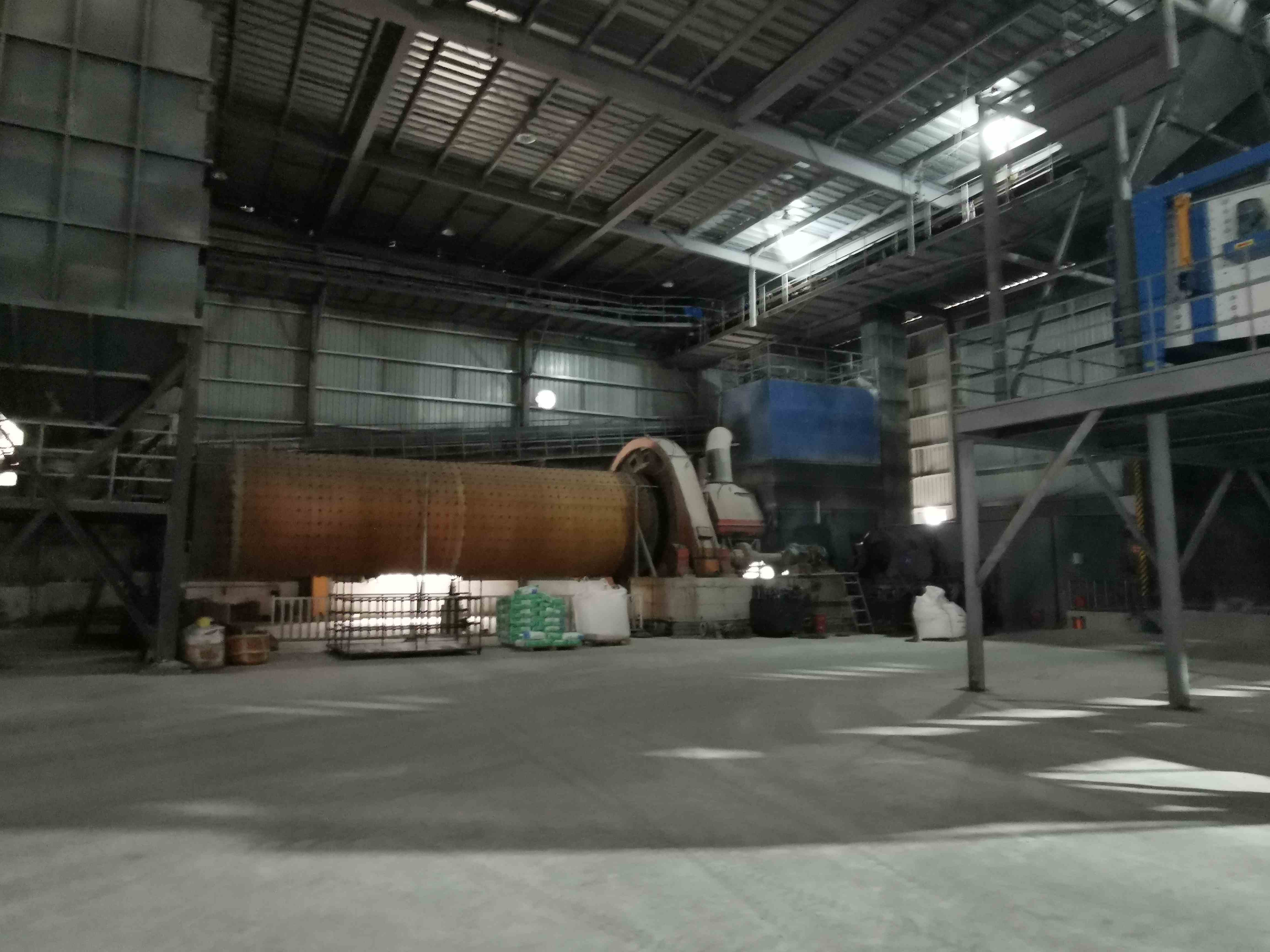
7. Circular Economy and Future Trajectories for Cement Ka Chemical
The cement industry’s net‑zero roadmap heavily relies on clinker factor reduction. GGBFS is currently the most established supplementary cementitious material (SCM) for this purpose. However, with decreasing availability of blast furnace slag (due to steel decarbonization trends), research into activation of blended systems and hybrid cements is accelerating. Future evolutions will involve:
Alkali‑activated GGBFS (geopolymers) with low‑calcium precursors, achieving near‑zero clinker.
Nanomodified slag with enhanced early reactivity for prefabricated elements.
Digital twin models predicting hydration and durability based on real‑time chemistry data.
Nonetheless, well‑optimized OPC‑GGBFS blends remain the most practical, economically viable solution for the next decade. Mastery of cement ka chemical interactions ensures that engineers can adopt these new materials without compromising structural integrity.
Frequently Asked Questions (FAQ) – Cement Ka Chemical and GGBFS Integration
Q1: Does GGBFS reduce the initial setting time and does it affect compatibility with superplasticizers?
A1: GGBFS typically extends initial setting time by 30–60 minutes compared to pure OPC, which is beneficial for hot weather concrete. However, it shows excellent compatibility with polycarboxylate ether (PCE) superplasticizers. To offset any delay in early strength, use ultrafine GGBFS (supplied by Golden Fortune) or reduce w/c ratio slightly. Setting time adjustments are easily managed with modern admixtures.
Q2: Can I use high‑volume GGBFS (50–70%) in prestressed concrete?
A2: Yes, provided that sufficient early strength (≥30 MPa at release) is achieved. This requires high‑fineness slag and warm curing (≥20°C). Many precast producers successfully use 50% GGBFS for stressed elements. For transfer strength at 12–18 hours, a ternary blend with a small amount of OPC or accelerator is recommended. Always conduct trial batches and monitor elastic modulus development.
Q3: What is the maximum replacement level for GGBFS in sulfate‑rich soils (Class 5S exposure) per ACI 318?
A3: For very severe sulfate exposure (SO₄²⁻ > 1500 ppm), ACI 318 permits up to 50% GGBFS replacement with a maximum water‑to‑cementitious ratio of 0.45. The reduced CH content combined with low permeability provides superior resistance to ettringite formation. Replacement levels of 60–70% even enhance performance further but require verification of alkali content and curing protocols.
Q4: Does the chemical composition of slag (e.g., MgO, Al₂O₃ content) influence the final cement ka chemical performance?
A4: Absolutely. Higher Al₂O₃ improves resistance to chloride ingress but may increase water demand. MgO (≤12%) promotes formation of hydrotalcite-like phases that bind chlorides. For optimal performance, look for slag with an activity index >95% at 28 days (ASTM C989 Grade 100). Golden Fortune provides full chemical and mineralogical analysis per shipment, ensuring predictable cement chemistry outcomes.
Q5: How does GGBFS affect concrete’s resistance to freeze‑thaw cycles in deicing salt environments?
A5: With a properly entrained air system (total air 5–7%), GGBFS concretes perform equally or better than OPC due to their refined capillary porosity. The lower permeability reduces salt ingress that would otherwise cause scaling. Ensure that the air void spacing factor is maintained below 0.2 mm. Field studies show 50% slag pavements after 20 winters have no significant scaling compared to controls.
Ready to specify GGBFS for your next infrastructure or industrial project? Partner with Golden Fortune for a technical consultation, customized mix design assistance, and reliable ultrafine GGBFS supply. Our team provides detailed chemical compatibility reports, sample testing, and logistical support for bulk shipments.