For over a century, portland cement has served as the foundational binder in modern construction. Its ability to provide consistent strength and durability has shaped skylines and infrastructure worldwide. However, the industry now faces a critical inflection point. The production of conventional portland cement accounts for approximately 8% of global CO₂ emissions—a statistic that is no longer sustainable for an industry under increasing environmental scrutiny.
The solution lies not in abandoning portland cement, but in optimizing its application through advanced supplementary cementitious materials (SCMs). Among these, Ground Granulated Blast Furnace Slag (GGBFS), also known as GGBS, has emerged as the most technically robust and commercially viable solution. By replacing a substantial portion of clinker, GGBFS transforms standard concrete into a high-durability, low-carbon engineering material. In this technical analysis, we will explore the chemistry, performance metrics, and economic advantages of integrating GGBFS with portland cement, drawing on industry data and real-world applications.
1. The Environmental Paradox of Portland Cement: A Quantitative Overview
The production of portland cement is an energy-intensive process. The calcination of limestone (calcium carbonate) releases inherent CO₂, while the high-temperature kilns (reaching 1450°C) demand significant fossil fuel consumption. For every ton of portland cement produced, approximately 0.9 tons of CO₂ are released. With global annual production exceeding 4 billion tons, the construction sector is under immense pressure to reduce its carbon footprint.
Regulatory frameworks such as the EU Taxonomy, LEED v4.1, and BREEAM now mandate stricter Environmental Product Declarations (EPDs). Project specifications increasingly require a reduction in the Global Warming Potential (GWP) of concrete mixes. This has shifted the focus from pure strength-based specifications to performance-based specifications that incorporate embodied carbon limits. Consequently, the substitution of clinker in portland cement blends has transitioned from a niche sustainability initiative to a mainstream engineering requirement.
2. GGBFS: The Hydraulic Solution to Clinker Dependency
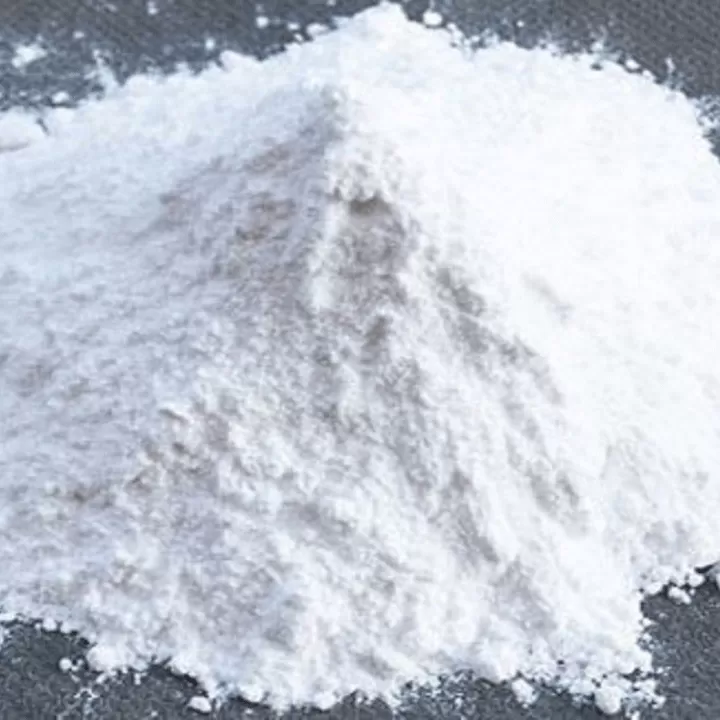
Ground Granulated Blast Furnace Slag is a by-product of the iron-making industry. When rapidly quenched, it forms a glassy, non-crystalline structure rich in calcium, silica, and alumina. Unlike inert fillers, GGBFS is a latent hydraulic binder. When activated by the alkaline environment of hydrating portland cement, it undergoes a secondary hydration reaction. This pozzolanic and hydraulic reaction results in the formation of additional calcium silicate hydrate (C-S-H) gel—the primary binding phase in concrete—while reducing the amount of calcium hydroxide (portlandite) which is often a source of long-term vulnerability.
From a technical standpoint, the synergy between portland cement and GGBFS yields a denser microstructure. Key performance indicators include:
Reduced Heat of Hydration: GGBFS replacement levels of 50% or more can lower the peak hydration temperature by up to 40%, mitigating thermal cracking in mass concrete pours such as dams, foundations, and bridge piers.
Enhanced Sulfate Resistance: The refinement of pore structure and reduction in C₃A content (by dilution) dramatically improves resistance to sulfate attack, making it ideal for marine environments and wastewater treatment facilities.
Chloride Ingress Reduction: The densified microstructure reduces chloride ion permeability by up to 80% compared to plain portland cement mixes, significantly extending the service life of reinforced concrete structures in coastal zones.
3. Engineering Specifications: Optimizing Replacement Ratios
The performance of a GGBFS-portland cement blend is highly dependent on the replacement ratio and the fineness of the slag. As a specialist in ultrafine and high-activity GGBFS, Golden Fortune emphasizes that a one-size-fits-all approach is inadequate. We categorize application-specific optimization into three tiers:
3.1 Moderate Replacement (20% – 35%)
This is the standard range for general construction. At this level, early-age strength development remains comparable to 100% portland cement mixes. The benefits include improved workability (due to the spherical shape of slag particles), reduced water demand, and a 15-25% reduction in embodied carbon. This is suitable for slabs, columns, and structural beams in commercial buildings.
3.2 High Replacement (40% – 60%)
High-volume slag systems are specified for infrastructure projects requiring exceptional durability. While initial set times may be slightly extended (manageable with set-accelerating admixtures), the long-term strength gain often exceeds that of pure portland cement by 10-15% at 90 days. This range is optimal for marine structures, tunnel linings, and mass foundations.
3.3 Ultra-High Replacement (Above 70%)
This category is reserved for specialized low-carbon applications, often in combination with alkali activation or ternary blends (including fly ash). Achieving early strength requires high-activity GGBFS or ultrafine grinding. Golden Fortune specializes in providing consistent, high-quality GGBFS that enables these advanced formulations, ensuring that the latent hydraulic properties are fully activated for projects targeting net-zero embodied carbon.
4. Addressing Industry Pain Points: Workability, Curing, and Quality Control
Despite the clear advantages, the transition to blended cements introduces specific technical challenges. Addressing these proactively is essential for successful project execution.
Prolonged Setting Time: A common concern is the slower setting time associated with high slag volumes. In cooler climates or winter pours, this can delay construction schedules. The solution lies in using ternary blends (adding a small percentage of portland cement with higher C₃S content) or employing non-chloride accelerators. Additionally, advanced grinding technologies, such as those used in ultrafine GGBFS production, increase the specific surface area, thereby accelerating the initial reaction rate without compromising long-term durability.
Curing Requirements: GGBFS-based concrete requires consistent, moist curing to develop its full strength potential. Insufficient curing can lead to surface carbonation or micro-cracking. Best practices involve extending wet curing periods to a minimum of 7 days for high-replacement mixes, utilizing curing compounds, or implementing insulated formwork in cold weather.
Supply Chain Consistency: The variability in slag quality from different steel mills can affect concrete mix design consistency. A reputable supplier must ensure chemical consistency (CaO, SiO₂, Al₂O₃ content) and glass content (>95%). Golden Fortune maintains rigorous quality control across its supply chain, providing certified products that meet ASTM C989 and EN 15167 standards, ensuring that the reactivity and fineness parameters remain stable for large-scale projects.
5. Economic Lifecycle Analysis: Total Cost of Ownership
While the initial material cost of GGBFS can fluctuate based on regional availability, a full lifecycle cost analysis consistently favors its use in high-performance structures. The economic rationale is built on three pillars:
Reduced Cement Consumption: Direct substitution reduces the quantity of portland cement purchased, often offsetting the cost of the slag. In regions with high carbon taxes or carbon credit markets, the savings are amplified.
Extended Service Life: Structures utilizing GGBFS blends exhibit superior resistance to rebar corrosion and chemical attack. By extending the design life from 50 to 100+ years, owners defer major rehabilitation costs, resulting in a significantly lower Net Present Value (NPV) of lifecycle maintenance.
Green Procurement Credits: Projects utilizing low-carbon concrete qualify for substantial incentives, including tax abatements, expedited permitting, and higher scores on sustainability rating systems, which directly impact asset valuation.
6. Case Study: Mass Concrete Foundations in Marine Environments
A recent infrastructure project in the Middle East involved the construction of deep foundation caissons for a port expansion. The specifications required a concrete mix capable of withstanding high sulfate concentrations in groundwater while mitigating thermal cracking in sections exceeding 2 meters in thickness. The consulting engineers specified a 50% replacement of portland cement with high-quality GGBFS. The results were:
Peak internal temperature reduced by 28°C compared to a 100% portland cement trial mix, eliminating the need for active cooling pipes.
Chloride migration coefficient (DRCM) decreased by 70%, meeting the 100-year service life requirement.
Embodied carbon (A1-A3) reduced by 47% for the substructure, contributing to the project’s LEED Platinum certification.
This example underscores that the strategic use of GGBFS is not merely a substitute for portland cement; it is an enhancement that unlocks superior engineering outcomes.
7. Future Outlook: Ternary Blends and Carbon Capture Integration
The evolution of binder systems is accelerating. The next frontier involves ternary blends combining GGBFS, calcined clays, and limestone fines (LC³ systems), which can achieve replacement levels of up to 80-90% with performance matching traditional portland cement. Additionally, the integration of carbon capture, utilization, and storage (CCUS) technologies in cement plants is producing “green” portland cement with lower clinker factors. However, until these technologies scale economically, GGBFS remains the most effective, proven, and immediately scalable solution for reducing the industry’s carbon footprint.
As a global supplier, Golden Fortune is committed to supporting this transition by providing consistent, high-reactivity GGBFS that meets the evolving demands of modern concrete technology. Our focus remains on empowering engineers and ready-mix producers to achieve their performance and sustainability targets without compromising constructability.
Frequently Asked Questions (FAQ)
Q1: Does replacing Portland cement with GGBFS reduce the early
strength of concrete?
A1: Yes, at high replacement levels (>50%),
early-age strength (1–3 days) can be slightly lower compared to 100% Portland
cement. However, this can be managed through mix design adjustments, such as
using ultrafine GGBFS, increasing the cementitious content, or incorporating set
accelerators. By 28 days and beyond, the compressive strength often meets or
exceeds that of conventional mixes, with significant gains at 56 and 90 days due
to the continued pozzolanic reaction.
Q2: Is GGBFS suitable for cold weather concreting?
A2:
GGBFS concrete requires careful planning in cold weather due to slower setting
times. To mitigate this, contractors should use heated mixing water, insulated
formwork, or limit replacement levels to 30-40% during winter months.
Alternatively, using a ternary blend with a small percentage of Type III
high-early-strength Portland cement can maintain setting times while still
achieving the desired durability benefits.
Q3: How does GGBFS improve resistance to sulfate attack compared to
Portland cement?
A3: Portland cement contains tricalcium aluminate
(C₃A), which reacts with sulfates in soil or groundwater to form expansive
ettringite, leading to cracking. GGBFS dilutes the C₃A content and reacts with
calcium hydroxide to form additional C-S-H, which refines the pore structure.
This reduces permeability and prevents the ingress of sulfate ions, making it
the preferred binder for foundations in aggressive soils.
Q4: What is the difference between GGBFS and fly ash?
A4:
While both are SCMs, GGBFS is a hydraulic material (it hardens in water) whereas
fly ash is primarily pozzolanic (requires calcium hydroxide to form cementitious
compounds). GGBFS generally provides higher early strength, greater resistance
to chlorides, and a lighter color than fly ash. For projects requiring high
durability in marine environments, GGBFS is often the superior choice over
standard Class F fly ash.
Q5: How do I ensure the quality of GGBFS for my
project?
A5: Quality assurance hinges on sourcing from suppliers who
provide certified mill test reports (MTRs) confirming compliance with ASTM C989
(Grades 100 or 120) or EN 15167. Key parameters to verify include glass content
(≥95%), specific surface area (fineness), and chemical composition (CaO/SiO₂
ratio). Reputable suppliers like Golden Fortune maintain
strict quality control across production and logistics to ensure batch-to-batch
consistency.
This technical overview reflects the expertise of industry professionals dedicated to advancing sustainable construction materials. For detailed mix design support or technical specifications regarding high-performance portland cement replacement strategies, contact our engineering team.