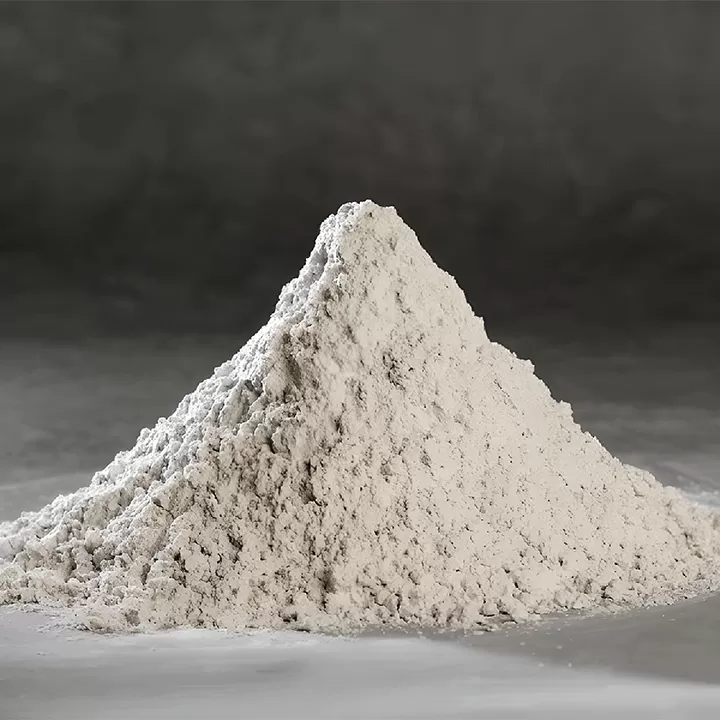
For general construction projects worldwide, type I cement portland remains the most widely specified hydraulic binder. Defined by ASTM C150 and AASHTO M85, this general‑purpose cement is suitable for concrete where special properties (sulfate resistance, low heat, or high early strength) are not required. However, its performance envelope has well‑known limitations – thermal cracking, alkali‑silica reaction vulnerability, and moderate sulfate resistance. This article provides a technical deep dive into the chemistry, physical testing, industry pain points, and proven methods to extend the service life of type I cement portland‑based concrete using supplementary cementitious materials (SCMs). Experienced suppliers like Golden Fortune offer high‑performance GGBFS that integrates seamlessly with type I cement to overcome durability challenges.
1. Chemical Composition and Phase Balance of Type I Cement Portland
ASTM C150 specifies that type I cement portland must be manufactured from clinker with a controlled proportion of four main phases:
Tricalcium silicate (C₃S): 45–65% – responsible for early and ultimate strength.
Dicalcium silicate (C₂S): 15–30% – contributes to later strength (after 28 days).
Tricalcium aluminate (C₃A): 6–12% – influences heat of hydration and flash set risk; higher C₃A reduces sulfate resistance.
Tetracalcium aluminoferrite (C₄AF): 6–10% – minor effect on strength but important for color and abrasion resistance.
Typical chemical limits for type I cement include: MgO ≤ 6.0%, SO₃ ≤ 3.5% (when C₃A >8%), loss on ignition ≤ 3.0%, and insoluble residue ≤ 0.75%. These parameters affect soundness, compatibility with admixtures, and long‑term volume stability. For B2B buyers, requesting a mill certificate with XRF analysis ensures the delivered product matches the specified phase composition.
2. Physical Performance Criteria According to ASTM C150
Beyond chemistry, type I cement portland must pass standard physical tests:
Fineness: Blaine air permeability typically 350–400 m²/kg. Higher fineness accelerates hydration but may increase water demand.
Setting time: Initial set not less than 45 minutes; final set not more than 375 minutes (Vicat test).
Soundness: Autoclave expansion ≤ 0.80% (prevents delayed ettringite formation).
Compressive strength: Minimum 12.4 MPa at 3 days, 19.3 MPa at 7 days, and 27.6 MPa at 28 days (ASTM C109 mortar cubes).
Heat of hydration: Not directly limited in ASTM C150, but typical 7‑day heat is 330–400 J/g, causing temperature rise in mass concrete.
These values ensure predictable performance in pavements, foundations, and precast elements. However, the standard does not address sulfate resistance or alkali‑aggregate reaction mitigation – two major durability gaps that require external solutions.
3. Type I Cement Portland vs. Other Cement Types: When to Choose and When to Avoid
Selecting the correct cement type prevents premature failure. Comparison with common ASTM types:
Type II (moderate sulfate resistance): C₃A ≤ 8%. Use where soil or groundwater contains moderate sulfate (150–1500 ppm). Type I has higher C₃A (6‑12%), so it performs poorly in sulfate environments.
Type III (high early strength): Finer grinding (500+ m²/kg). For cold weather or fast formwork removal. Type I cannot replace Type III without compromising early strength.
Type V (high sulfate resistance): C₃A ≤ 5%. Required for severe sulfate exposure (>1500 ppm). Type I is not suitable.
Type IL (portland‑limestone): Contains up to 15% limestone. Type I is pure portland cement without added fillers.
For most general building, pavements, and non‑aggressive environments, type I cement portland offers the lowest cost and adequate performance. But for marine structures, wastewater facilities, or sulfate‑bearing soils, a binary or ternary blend with GGBFS is mandatory.
4. Industry Pain Points Associated with Type I Cement Portland
Despite its widespread use, engineers and ready‑mix producers face recurring problems when using pure type I cement:
Thermal cracking in mass concrete: High C₃S and C₃A generate substantial hydration heat. For pours thicker than 0.5 m, temperature differentials exceed 20°C, causing through‑cracks.
Sulfate attack vulnerability: Type I concrete exposed to sulfate‑rich groundwater or seawater undergoes expansion, cracking, and loss of strength within 5–10 years.
Alkali‑silica reaction (ASR): High alkali content (typically 0.6–1.0% Na₂Oeq) combined with reactive aggregates produces expansive gel, leading to map cracking.
High carbon footprint: Portland cement clinker accounts for ~0.85 t CO₂/t. Type I cement has no SCM content, making it difficult to meet low‑carbon specifications (e.g., LEED, BREEAM).
Chloride ingress: Pure type I concrete has a rapid chloride permeability (RCP) >4000 coulombs, reducing service life of reinforced structures in de‑icing salt or marine zones.
These pain points drive the adoption of blended cements. A proven solution is replacing 30–60% of type i cement portland with ground granulated blast‑furnace slag (GGBFS) supplied by Golden Fortune.
5. Performance Enhancement: Combining Type I Cement with GGBFS
Granulated blast‑furnace slag (GGBFS) is a latent hydraulic material. When activated by the alkalis and lime released during hydration of type i cement portland, GGBFS produces additional C‑S‑H gel and consumes portlandite (Ca(OH)₂). Technical benefits include:
Sulfate resistance: 50% GGBFS replacement reduces C₃A dilution and eliminates CH, making concrete resistant to up to 10,000 ppm SO₄²⁻.
Lower heat of hydration: 50% GGBFS blend reduces 7‑day heat by 35‑45%, eliminating thermal cracking in mass foundations.
ASR mitigation: The finer pore structure and reduced alkalinity suppress ASR expansion to <0.05% at 1 year (ASTM C1567).
Chloride resistance: RCP values drop to <1500 coulombs at 50% replacement, extending reinforcement initiation time by 2‑3x.
Long‑term strength gain: 90‑day compressive strength of 50% GGBFS concrete exceeds plain type I concrete by 10‑20%.
Golden Fortune provides high‑activity GGBFS (Grade 100, Blaine 450‑550 m²/kg) with glass content >96%. Their technical team offers mix design optimization for each project, ensuring that the replacement level matches exposure conditions and construction schedule.
6. Quality Assurance and Procurement Specifications for B2B Buyers
When sourcing type i cement portland and blended solutions, professional buyers should verify:
ASTM C150 compliance certificate from an accredited lab (e.g., CTL, Intertek).
C₃A content: for moderate sulfate exposure, specify C₃A ≤ 8% (Type II modification). For general use, 6‑10% is acceptable.
Alkali equivalent (Na₂O + 0.658 K₂O): For ASR‑prone aggregates, require ≤0.60%.
Compatibility with chemical admixtures: request polycarboxylate ether superplasticizer tests to avoid false set.
For blended cements, request a separate GGBFS mill certificate (activity index, glass content, sulfide sulfur).
Many contractors now specify ternary blends (type I cement + GGBFS + fly ash) to balance early strength and durability. Golden Fortune supplies bagged and bulk GGBFS with consistent chemistry, backed by ISO 9001:2015 certification and third‑party test reports.
7. Real‑World Applications and Performance Data
Based on field studies and international projects, the following guidelines apply:
General building (slabs, columns, beams): 100% type I cement is acceptable for indoor, dry environments. For ground‑contact elements in moderate sulfate soils, use 30% GGBFS replacement.
Highway pavements and bridge decks: 40‑50% GGBFS with type I cement reduces cracking from de‑icing salts and extends life to 50+ years.
Mass concrete (dams, large raft foundations): 50‑70% GGBFS reduces peak temperature by 10‑15°C. One dam project recorded a temperature differential of only 14°C vs. 32°C for plain type I.
Precast/prestressed elements: 20‑30% GGBFS improves surface finish and reduces efflorescence, while maintaining 12‑hour demoulding strength when using heated curing.
Wastewater treatment plants: 60‑70% GGBFS with type I cement resists biogenic sulfuric acid corrosion (pH 2‑3) for >25 years.
Data from a 10‑year marine exposure test (Florida, USA) showed that 50% GGBFS concrete had no measurable chloride penetration at 40 mm cover, whereas plain type I concrete showed corrosion initiation after 6 years.
8. Environmental and Cost Life‑Cycle Considerations
Replacing 50% of type i cement portland with GGBFS reduces the concrete’s carbon footprint by approximately 40% (from ~350 kg CO₂/m³ to ~210 kg CO₂/m³). This helps achieve green building credits and meet corporate net‑zero targets without changing construction practices. Economically, while GGBFS may have a modest freight cost, the extended service life reduces repair and replacement costs by 30‑50% over a 50‑year design life. For B2B customers, Golden Fortune provides life‑cycle cost analysis as part of its technical support package.
9. Frequently Asked Questions (FAQ)
Q1: What is the difference between type I cement portland and
ordinary Portland cement (OPC)?
A1: They are the same. "Ordinary
Portland cement" is a common name; ASTM C150 designates it as Type I. It is a
general‑purpose cement without special sulfate or low‑heat properties.
Q2: Can type I cement portland be used for underground foundations
where groundwater contains sulfates?
A2: No. Type I has C₃A between
6‑12%, making it vulnerable to sulfate attack. For sulfate concentrations
>150 ppm, use Type II (moderate) or blend type I with 50% GGBFS, which
provides equivalent or better resistance than Type V.
Q3: What is the maximum replacement level of GGBFS with type I cement
without compromising early strength?
A3: For cold weather (below
10°C), limit replacement to 30‑40% to maintain 24‑hour strength >10 MPa. For
warm climates (>20°C), up to 60% replacement is feasible with proper curing.
Always conduct trial mixes.
Q4: How does the heat of hydration of type I cement compare to type I
+ GGBFS blends?
A4: Plain type I cement generates ~400 J/g at 7
days. A 50% GGBFS blend reduces this to ~260 J/g, lowering the peak temperature
rise from 35°C to 20°C in a 1 m thick wall (ambient 20°C). This eliminates
thermal cracking without cooling pipes.
Q5: Does type I cement portland contain any hazardous
materials?
A5: No. It is classified as non‑hazardous under OSHA and
REACH. However, wet concrete has a high pH (>12.5) and can cause skin burns;
standard protective equipment (gloves, boots, eye protection) is required during
handling.
Q6: Can I use type I cement with silica fume and GGBFS
together?
A6: Yes. Ternary blends (e.g., 60% type I + 30% GGBFS +
10% silica fume) are used for ultra‑high performance concrete (UHPC) achieving
150 MPa and very low permeability. Adjust water reducer dosage and curing regime
accordingly.
Q7: What documentation proves that a type I cement batch meets ASTM
C150?
A7: Request a mill test report (MTR) showing chemical analysis
(oxide percentages, C₃A, alkalis, SO₃, LOI) and physical tests (fineness,
setting times, soundness, compressive strength at 1, 3, 7, 28 days). The report
must include the ASTM C150 designation and the testing laboratory’s
accreditation.
10. Inquiry – Optimize Your Concrete with Golden Fortune GGBFS
Understanding the technical limits of type i cement portland is the first step to durable, sustainable concrete. The second step is selecting a reliable SCM partner. Golden Fortune supplies high‑quality GGBFS that directly addresses thermal cracking, sulfate attack, ASR, and carbon reduction targets.
Send your inquiry today for:
- Technical datasheets and mill
certificates
- Free lab‑scale samples for mix design validation
- Bulk
pricing and logistics options (bag, big‑bag, pneumatic tanker)
- On‑site
technical support for large infrastructure projects
Visit our product page: https://www.ultrafineggbs.com/product.html
Or
email your project requirements tosales@ultrafineggbs.com(subject: Type I
cement optimization).
Let us help you build stronger, longer‑lasting concrete with proven supplementary materials.