Concrete structures placed in cold climates face continuous physical and chemical degradation caused by repeated freeze-thaw cycles. When water trapped within the capillary network of hardened concrete expands by approximately 9% upon phase transition into ice, hydraulic and osmotic pressures develop within the cement paste. If these internal tensile stresses surpass the tensile capacity of the surrounding matrix, microcracking initiates, eventually propagating into structural scaling, spalling, and internal disruption. Mitigating this degradation requires careful manipulation of the hardened paste microstructure, permeability, and chemical stability.
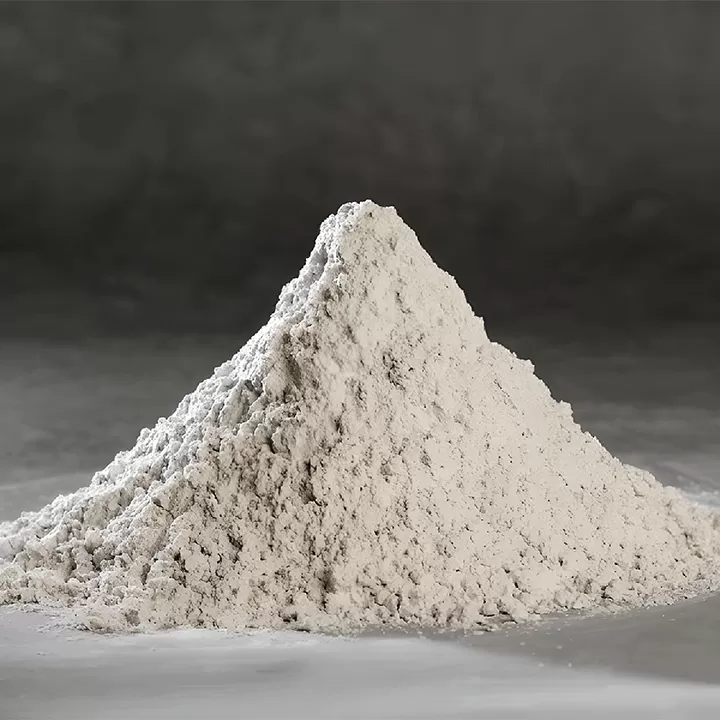
The incorporation of Ground Granulated Blast-Furnace Slag (GGBS/GGBFS) as a supplementary cementitious material significantly improves anti-freezing capabilities in structural concrete. By modifying hydration kinetics, refining the internal pore architecture, and limiting fluid ingress, slag-blended systems provide robust defenses against cold-weather deterioration. Civil engineers, ready-mix producers, and infrastructure authorities increasingly rely on high-grade GGBS to secure multi-decade service life for deep foundations, marine substructures, highways, and hydraulic assets subject to severe thermal fluctuations.
Thermodynamics and Mechanisms of Frost Action in Concrete
Understanding how slag improves anti-freezing properties requires an examination of the water-to-ice transformation inside concrete pores. Frost attack does not occur instantaneously throughout the entire matrix; it follows a temperature-dependent progression dictated by pore diameter.
Water located in large capillary cavities (diameters exceeding 50 nanometers) freezes at temperatures slightly below 0°C. Water confined within narrow mesopores (diameters between 2 and 50 nanometers) experiences depressed freezing points due to surface energy and capillary confinement effects, often remaining liquid down to -15°C or lower. Gel pores (diameters below 2 nanometers) contain physically adsorbed water that does not freeze under normal atmospheric environmental conditions.
As ice forms within the larger macropores, it draws unfrozen water from adjacent smaller mesopores through thermodynamic suction and osmotic potential. This migration generates two distinct stress fields:
Hydraulic Pressure: Generated when expanding ice forces excess unfrozen water through narrow capillary passages away from the freezing zone. If the path length to an escape boundary is too long or the permeability is too low without sufficient relief space, localized hydrostatic pressure exceeds the paste tensile strength.
Osmotic Pressure: Caused by local increases in alkali and ion concentrations in the remaining unfrozen solution surrounding ice crystals. Water migrates toward these higher-concentration zones to restore equilibrium, compounding internal hydraulic stresses.
Conventional Portland cement matrices often contain continuous capillary channels that facilitate both rapid moisture ingress and sustained hydraulic pressure propagation during thermal cycling. Slag replacement directly alters this matrix vulnerability.
Microstructural Refinement: How GGBS Improves Anti-Freezing Capacity
The primary route through which Ground Granulated Blast-Furnace Slag improves anti-freezing performance is the physical and chemical refinement of the hydrated paste. During the hydration of ordinary Portland cement (OPC), tricalcium silicate (C3S) and dicalcium silicate (C2S) react with water to form calcium silicate hydrate (C-S-H) gel and calcium hydroxide (Ca(OH)2, or portlandite). Portlandite forms large, hexagonal crystals with minimal binding capacity, leaving substantial voids and high vulnerability to leaching and moisture accumulation.
When high-grade GGBS—such as the consistent material manufactured by Golden Fortune—is introduced into the mixture, the glassy aluminosilicate phases in the slag activate in the presence of portlandite and water. This secondary pozzolanic and latent hydraulic reaction consumes weak Ca(OH)2 crystals and generates supplementary, high-density C-S-H and calcium aluminosilicate hydrate (C-A-S-H) gel.
This chemical transformation yields specific physical improvements:
Pore Size Segmentation: The continuous capillary pores (>50 nm) that typically store freezable bulk water are segmented into isolated, fine mesopores (<10 nm) and gel pores.
Reduction of Hydraulic Conductivity: Permeability coefficients decrease by up to one or two orders of magnitude compared to plain OPC concrete, heavily restricting the rate at which external water enters the structural core.
Depressed Freezing Points: With the majority of moisture held in sub-10 nm pores, the physical freezing point of the pore fluid drops substantially below standard ambient sub-zero temperatures.
Because freezable water volume is reduced at typical winter temperatures, the internal stress caused by ice crystal expansion decreases substantially, which directly improves anti-freezing concrete durability over repeated seasons.
Mitigation of De-Icing Chemical Scaling
Horizontal infrastructure assets, including bridge decks, highway pavements, and airport aprons, encounter not only sub-zero temperatures but also routine applications of de-icing salts such as sodium chloride, calcium chloride, and magnesium chloride. De-icers induce severe thermal shocks, create high osmotic pressures, and can trigger chemical attacks that exacerbate surface scaling.
Standard concrete often deteriorates rapidly under combined freeze-thaw and de-icing conditions due to salt scaling—a superficial flaking or peeling of the paste layer. Slag cement concrete presents distinct structural characteristics that withstand these stresses:
Chloride Binding and Ion Immobilization
GGBS contains alumina phases (predominantly tricalcium aluminate variants in the glass phase) that react with incoming chloride ions to form Friedel’s salt (calcium chloroaluminate). By chemically and physically binding chlorides within its hydration products, the slag matrix reduces the concentration of free chloride ions traveling through the pore solution, lowering osmotic imbalances during freezing events.
Surface Density and Fluid Absorption Control
Scaling requires an external reservoir of water to sustain the cryo-suction process. The dense outer skin of a properly cured slag-blended concrete drastically limits the capillary absorption rate (sorptivity). When moisture cannot easily penetrate the outer 5 to 15 millimeters of the concrete cover, the system retains lower internal saturation levels, preventing the degree of saturation from reaching the critical 91% threshold where hydraulic damage becomes unavoidable.
Balancing Early-Age Hydration and Curing in Cold Weather
While GGBS improves anti-freezing properties in mature concrete, careful construction practices are necessary during the early placement window. Slag hydration is more temperature-sensitive than standard Portland cement hydration. In low-temperature environments (below 5°C to 10°C), the activation of slag proceeds at a slower rate, resulting in extended setting times and slower early compressive strength development.
If fresh, unhardened concrete freezes before reaching a compressive strength of approximately 3.5 to 5.0 MPa, the expanding water disrupts the nascent C-S-H network, causing irreversible structural loss. To leverage the durability of slag while managing low early-age temperatures, project engineers must incorporate targeted mixture designs and thermal curing regimes.
Optimized Replacement Rates: For cold-weather placements, replacement levels between 25% and 40% by mass of total cementitious material provide an effective balance between early strength development and long-term durability. Higher levels (up to 50% or 65%) remain suited for mass concrete elements where the lower heat of hydration prevents thermal cracking.
Lower Water-to-Binder Ratios: Setting the w/b ratio between 0.36 and 0.42 reduces total mix water, minimizes bleed channels, accelerates mechanical strength gain, and further limits freezable capillary water.
Thermal Enclosures and Insulated Formwork: Maintaining the internal temperature of the structural element above 10°C during the initial 7 to 14 days allows the slag reaction to proceed, establishing the refined pore matrix before external freezing cycles begin.
Synergy with Air-Entraining Systems
The use of GGBS does not replace the requirement for purposeful air entrainment in concrete exposed to severe cyclic freezing and saturation. Instead, slag acts synergistically with air-entraining admixtures (AEAs) to form an engineered protection system.
Air-entraining agents produce millions of microscopic, spherical air voids distributed evenly throughout the cement paste. These voids act as expansion chambers, providing relief reservoirs where unfrozen capillary water can enter and freeze without generating disruptive hydraulic pressures. For an air-void system to function effectively under ASTM C457 standards, it generally requires a spacing factor of less than 0.20 mm and a specific surface area greater than 24 mm⁻¹.
Because high-purity GGBFS contains virtually no unburned carbon (unlike some raw fly ashes with high loss on ignition), it does not adsorb surfactant molecules from air-entraining chemicals. This consistency permits predictable air entrainment across successive batches. When paired with an optimized air-void network, the refined matrix produced by slag concrete dramatically improves anti-freezing performance compared to plain air-entrained Portland cement mixtures.
Comparative Performance Metrics
| Performance Parameter | 100% Portland Cement Concrete | GGBS-Blended Concrete (30% - 50% Replacement) |
|---|---|---|
| Capillary Pore Volume (>50 nm) | Higher; substantial interconnected capillary porosity. | Significantly lower; discontinuous, refined micro-pore structure. |
| Hydraulic Conductivity | Moderate to High (10⁻¹¹ to 10⁻¹² m/s). | Low to Ultra-low (10⁻¹² to 10⁻¹⁴ m/s). |
| Chloride Binding Capacity | Standard baseline; determined solely by C3A content of clinker. | Enhanced; formation of stable Friedel's salt matrices. |
| ASTM C666 Durability Factor (300 cycles) | Maintains 80-90% with proper air entrainment. | Exceeds 90-95% when adequately cured and air-entrained. |
| Air-Entraining Agent Stability | Varies with clinker alkali and fineness. | Extremely consistent due to low loss on ignition (LOI). |
Standard Testing Protocols and Specifications
Evaluating the cold-weather durability of slag-blended concrete involves standardized laboratory procedures designed to simulate field stresses accelerated over time:
ASTM C666: Resistance of Concrete to Rapid Freezing and Thawing
This test subjects prism specimens to continuous, automated cycles of freezing in water (or air) and thawing in water, lowering temperatures from 4°C to -18°C and back within 2 to 5 hours per cycle. Performance is monitored by measuring the dynamic modulus of elasticity via resonant frequency testing over 300 cycles. Slag concrete that has reached adequate maturity consistently achieves high relative dynamic modulus values due to the absence of large, water-filled capillary pathways.
ASTM C672 / EN 1339: De-Icing Chemical Scaling Resistance
Specimens covered with a 3% to 4% chloride solution undergo daily freeze-thaw cycles. Visual evaluations and mass-loss measurements quantify surface scaling. Achieving minimal mass loss in slag mixtures requires that specimens undergo sufficient moist curing prior to salt exposure, ensuring pozzolanic reactions have fully sealed surface capillaries.
ASTM C989 / EN 15167: Slag Cement Classification
To guarantee target performance, supplementary materials must meet Grade 100 or Grade 120 specifications under ASTM C989. These grades mandate high activity indexes and consistent glass content. Golden Fortune provides rigorously tested, uniformly granulated slag meeting global civil engineering criteria, ensuring reliable reactivity across large infrastructure contracts.
Industrial Applications and Field Implementations
Engineered slag concrete finds strategic use across major cold-region sectors where long service life without frequent maintenance is non-negotiable:
Port and Marine Structures in High Latitudes: Tidal zones in freezing waters subject concrete to continuous saturation, chemical attack from seawater salts, and multiple freeze-thaw cycles per week. Slag cements eliminate permeable pathways, preventing internal ice crystallization and reinforcement corrosion.
Airport Runways and Highway Overpasses: These structures endure direct exposure to heavy mechanical loads, aggressive acetate and chloride de-icers, and rapid thermal cycling. Slag mixtures maintain high surface abrasion resistance and limit de-icer degradation.
Hydraulic Dams and Spillways: Water-retaining civil structures in alpine or sub-arctic zones require massive concrete pours with low heat generation to prevent thermal cracking, combined with long-term internal resistance against freezing water bodies.
Frequently Asked Questions
Does the addition of GGBS cause slow strength gain during winter construction?
GGBS exhibits slower early-age hydration kinetics at ambient temperatures below 10°C. However, this is managed in structural engineering through adjusted replacement ratios (e.g., 25% to 35%), lowering the water-to-binder ratio, using accelerators where appropriate, and employing insulated curing blankets to capture the heat of hydration during the initial curing phase.
How does GGBS reduce the amount of freezable water in hardened concrete?
Through its secondary hydration reaction with calcium hydroxide, GGBS produces high-density calcium silicate hydrate (C-S-H) gel. This process physically divides large capillary pores into micro-pores smaller than 10 nanometers. Due to capillary action and surface tension, water inside pores of this scale requires temperatures far below zero to crystallize, drastically reducing internal ice formation.
Can slag concrete resist de-icing salts as effectively as standard Portland concrete?
Yes. When adequately cured prior to first frost exposure, slag concrete demonstrates equal or superior resistance to de-icing salts. Its lower permeability slows salt and water ingress, while its chemical composition binds chloride ions, reducing the osmotic pressure differentials that drive surface scaling.
What replacement percentage of GGBS is recommended for severe cold environments?
For horizontal flatwork subject to de-icing chemicals and severe freeze-thaw cycles, a replacement level between 30% and 40% is widely recommended. For mass concrete elements shielded from direct de-icing chemicals, replacement levels up to 50% can be used to balance durability and thermal control.
Is air entrainment still mandatory when using GGBS in freeze-thaw zones?
Yes. Air entrainment remains mandatory for concrete exposed to moisture and freezing temperatures. GGBS refines the capillary pore network, but microscopic entrained air voids are still required to accommodate the volumetric expansion of water during rapid temperature drops.
Source Quality Materials for Resilient Infrastructure
Specifying high-quality supplementary materials is the decisive step in constructing resilient concrete for harsh thermal environments. Consistent particle fineness, high glass content, and chemical stability ensure that every cubic meter of concrete delivers target durability metrics.
Golden Fortune supplies industrial-grade Ground Granulated Blast-Furnace Slag manufactured to international quality standards, supporting major infrastructure, precast manufacturing, and ready-mix operations globally. Connect with our engineering and procurement specialists to discuss concrete mix designs, test data sheets, and bulk shipment logistics tailored to your regional project requirements.