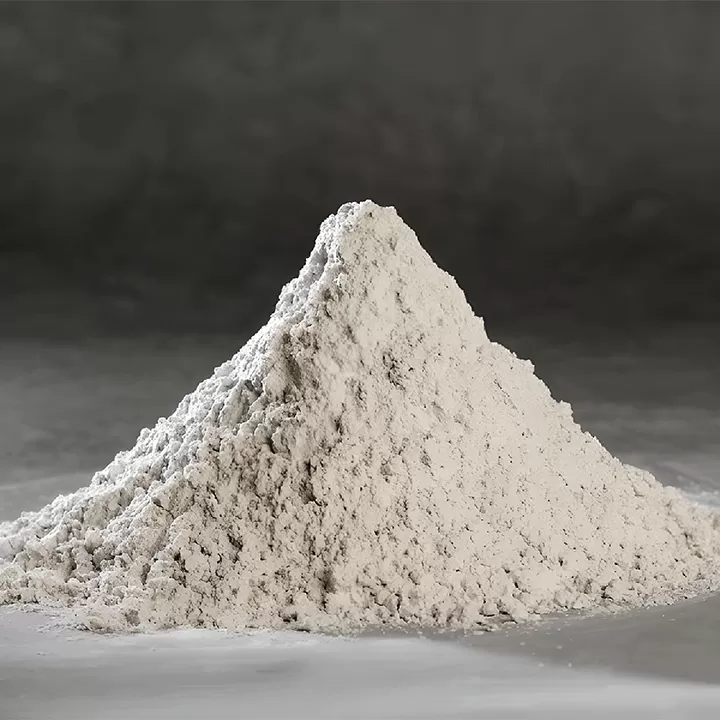
Concrete volumetric instability remains a primary cause of non-structural cracking, premature joint degradation, and compromised service lives in reinforced infrastructure. Shrinkage occurs through distinct thermal, chemical, and physical mechanisms throughout the service life of a cementitious matrix. Controlling these volumetric changes requires a deep understanding of supplementary cementitious materials (SCMs). Ground Granulated Blast-Furnace Slag (GGBS) serves as a vital component in modern mix design, modifying the cementitious matrix at a microscopic level to control dimensional change.
The incorporation of high-grade slag cement improves shrinkage performance by altering hydration kinetics, refining pore geometry, and lowering internal thermal peaks. Specifiers, structural engineers, and ready-mix producers must address internal strain developments to meet stringent structural requirements. The following analysis examines how slag cement enhances volumetric stability across diverse construction sectors.
Mechanisms of Concrete Shrinkage and Slag Hydration
To understand dimensional changes, one must separate the distinct phases of strain development within cementitious matrices: plastic, autogenous, drying, and thermal. Each mechanism originates from specific moisture transitions or chemical transformations within the hydrating paste.
Plastic Shrinkage Dynamics
Plastic shrinkage takes place while the concrete remains in an unhardened state, typically within the first few hours post-placement. When surface evaporation rates exceed the bleed rate of the mix, capillary negative pressure develops rapidly near the surface. Standard Portland cement mixes can experience aggressive early bleeding followed by sudden cessation, resulting in uneven plastic cracking. Ground Granulated Blast-Furnace Slag, through its particle packing characteristics, alters bleeding kinetics. The finer grading of slag particles maintains continuous, controlled bleeding or forms an early dense surface when properly cured, mitigating violent capillary tensile stress build-ups before the concrete gains early tensile capacity.
Autogenous and Chemical Contraction
Chemical shrinkage occurs because the absolute volume of hydration products is less than the volume of unhydrated cementitious materials plus water. In low water-to-binder (w/b) mixes, this chemical contraction leads to self-desiccation, causing autogenous shrinkage. High early-strength Ordinary Portland Cement (OPC) undergoes rapid hydration, producing sudden self-desiccation strains within 24 to 72 hours. Slag hydration proceeds at a more measured rate. Because GGBS consumes calcium hydroxide over a protracted schedule to produce secondary calcium silicate hydrate (C-S-H), it moderates early-age self-desiccation. Consequently, modern structural specifications show that replacing OPC with premium GGBS improves shrinkage performance by minimizing self-desiccation strains during the initial hardening phase.
Drying Shrinkage and Capillary Water Loss
Drying shrinkage represents the long-term extraction of evaporable water from capillary pores under ambient relative humidity conditions. The driving force behind drying shrinkage is the capillary tension described by the Kelvin-Laplace relationship:
$$\sigma_{cap} = -\frac{\ln(RH) \cdot R \cdot T}{V_m}$$
Where \(\sigma_{cap}\) is capillary tension, \(RH\) is internal relative humidity, and \(V_m\) is the molar volume of water. As water evaporates from large capillaries (50 nm to 10,000 nm), high menisci forces draw pore walls inward, triggering bulk volume contraction. When concrete incorporates GGBS, the reaction products subdivide the continuous macro-pore network into isolated, ultrafine gel pores. Because water in gel pores is held tightly through surface adsorption forces rather than bulk capillary menisci, moisture loss proceeds far more slowly, drastically lowering long-term strain rates.
Microstructural Transformation: Pore Refinement and C-S-H Morphology
Hydration of pure Portland cement produces a matrix characterized by substantial quantities of crystalline calcium hydroxide (portlandite, or CH) and primary C-S-H gel. Portlandite crystals are large, prone to cleavage, and fail to contribute to density. GGBS, produced from vitrified aluminosilicate blast-furnace by-products, is a latent hydraulic binder. In the presence of alkalis and calcium hydroxide liberated by OPC hydration, slag dissolves and triggers secondary hydration:
$$CH + \text{Aluminosilicates (GGBS)} + H_2O \rightarrow \text{Secondary } C\text{-}S\text{-}H + C\text{-}A\text{-}S\text{-}H$$
This secondary reaction generates several microscopic changes that govern shrinkage behavior:
Capillary Discontinuity: The secondary C-S-H gel precipitates within the interstitial pore spaces, breaking the interconnectivity of capillary channels and raising tortuosity.
Reduced Calcium-to-Silicon (C/S) Ratio: Slag-modified C-S-H presents a lower C/S ratio (typically 1.1 to 1.4) compared to OPC C-S-H (1.7 to 2.0). This modified gel structure exhibits higher structural surface area and superior cohesive bonding properties, which resist matrix collapse during moisture dissipation.
Pore Size Redistribution: Mercury Intrusion Porosimetry (MIP) tests demonstrate a marked shift from macro-capillaries to mesopores and micropores (less than 10 nm). Smaller pores maintain high internal relative humidity under moderate environmental exposure, curbing the capillary pressure differentials that drive drying shrinkage.
Industrial materials manufactured by Golden Fortune adhere to rigorous fineness controls and high amorphous glass content specifications (exceeding 90%). These parameters maximize latent hydraulic reactivity, ensuring that microstructural pore refinement occurs reliably across massive infrastructure projects.
Thermal Strain Mitigation in Mass Elements
Thermal shrinkage is a major driver of early-age cracking in massive concrete elements, including dam walls, bridge abutments, foundation rafts, and thick retaining walls. The exothermic reaction of tricalcium aluminate ($C_3A$) and tricalcium silicate ($C_3S$) in Portland cement generates high adiabatic core temperatures within 48 hours of casting. Subsequent cooling back to ambient temperature causes thermal contraction. When the surrounding rock, sub-base, or adjacent pours restrain this movement, thermal tensile strains exceed the tensile strain capacity of young concrete, forming wide through-cracks.
Replacing 50% to 70% of OPC with slag cement directly lowers the total heat of hydration and retards the peak temperature generation. Slag reacts endothermically during its early dissolution phase and only releases heat steadily as pozzolanic reactions develop over days and weeks. This flat hydration profile spreads heat dissipation over an extended timeframe, preventing high thermal gradients between the core and the surface. Field data confirms that high-volume slag replacement significantly improves shrinkage performance in mass concrete pours by lowering peak thermal drop ($\Delta T$).
Performance Comparison Across Binder Blends
Specifiers must weigh binder choices against various shrinkage metrics. The table below outlines performance characteristics across multiple cementitious blends subjected to standard laboratory environments (20°C, 50% RH) and equivalent water-binder ratios (0.42).
| Binder Composition | Early Heat of Hydration (J/g at 7d) | Capillary Pore Volume (>50nm) | Long-term Drying Shrinkage (Microstrain at 365d) | Thermal Cracking Propensity |
|---|---|---|---|---|
| 100% CEM I (OPC) | 340 – 380 | High (~22%) | 600 – 750 | High |
| 70% CEM I + 30% GGBS | 280 – 310 | Moderate (~16%) | 500 – 620 | Moderate |
| 50% CEM I + 50% GGBS | 220 – 250 | Low (~10%) | 420 – 540 | Low |
| 30% CEM I + 70% GGBS | 160 – 190 | Very Low (<8%) | 380 – 480 | Very Low |
Mix Design Protocols to Maximize Volumetric Stability
Achieving superior volumetric stability requires deliberate mix design decisions that complement slag incorporation. The interaction between aggregates, paste volume, water-binder ratios, and chemical admixtures dictates whether a mix realizes the full benefits of slag hydration.
Aggregate Packing and Paste Volume Reduction
Aggregates serve as internal structural skeletons that physically restrain the shrinkage of the cementitious paste. High paste volumes inevitably increase overall drying shrinkage. Maximizing the aggregate volume fraction through optimized combined aggregate grading (such as modified Andreassen or Fuller-Thompson curves) reduces the required paste volume. Because slag cement demonstrates superior rheology and lower plastic viscosity, it permits a reduction in total paste content without sacrificing workability or pumpability.
Water-to-Binder Ratio Balancing
Excess free water creates capillary voids upon evaporation, driving up drying shrinkage. Conversely, excessively low w/b ratios (below 0.35) without proper curing can elevate autogenous shrinkage. Incorporating high-grade slag allows mixes to operate efficiently at balanced w/b ratios (0.38 to 0.42). At these levels, proper proportioning improves shrinkage performance over standard OPC mixes by providing sufficient hydration water for long-term pozzolanic conversion while preventing excess uncombined water.
Superplasticizer and Retarder Compatibility
Slag particles possess a smooth, dense, glassy surface that absorbs less water during the initial mixing stage compared to porous OPC grains. This morphology improves the dispersion efficiency of polycarboxylate ether (PCE) superplasticizers. Mix designers can leverage this synergy to lower total water content, which further protects against long-term capillary shrinkage strains.
Structural Applications Demanding Low-Shrinkage Slag Concretes
Certain classes of infrastructure demand rigorous limits on crack widths and volumetric deflection. In these sectors, controlling dimensional stability directly preserves service life and lowers asset lifecycle maintenance costs.
Industrial Post-Tensioned Flooring and Jointless Slabs
Jointless industrial flooring requires tight limits on drying shrinkage to prevent curling, joint opening, and edge breakout under heavy dynamic forklift loads. High-volume slag mixes allow contractors to extend pour bays and reduce joint frequencies. The slow, steady modulus development of slag concrete provides stress relaxation via tensile creep, mitigating crack initiation while long-term autogenous strains stabilize.
Water Retaining Structures and Marine Basins
Sewage treatment plants, reservoirs, and dry docks must maintain water-tightness. Through-cracking caused by unrestrained shrinkage compromises containment. Slag cement not only yields a low-permeability C-S-H network that resists chloride and sulfate attack, but also eliminates continuous micro-crack networks. As a result, engineering specifications for water containment infrastructure globally specify high replacement levels of GGBS to manage early thermal-shrinkage stress and long-term permeability.
High-Performance Precast Concrete
Precast structural elements, such as bridge girders, segmental tunnel linings, and facade panels, are subjected to strict dimensional tolerances. Steam curing or accelerated thermal curing regimes can exacerbate moisture movement. Incorporating quality-controlled slag from suppliers like Golden Fortune ensures that precast segments retain dimensional accuracy without edge micro-cracks during stripping, transfer of prestress, and long-term storage.
Curing Protocols: Preserving the Hydration Environment
The benefits of GGBS on shrinkage performance depend heavily on early-age moisture management. Because slag relies on the prior hydration of OPC to release calcium hydroxide, its activation phase occurs later than pure Portland cement mixes. Neglecting early curing can allow the unreacted surface to lose water prematurely, which reverses the shrinkage advantages of the blend.
Extended Wet Curing: Slag mixes should receive continuous moist curing via burlap, ponding, or misting for a minimum of 7 days, and ideally 14 days in hot or windy environments.
Application of Membrane Curing Compounds: When wet curing is impractical, high-solid, poly-alphamethylstyrene or wax-based curing compounds must be applied immediately following final troweling to seal moisture into the matrix.
Thermal Blanket Protection: In cold weather or massive pours, insulating blankets prevent rapid cooling gradients, allowing the latent slag reaction to proceed while suppressing thermal contraction strain.
By protecting internal relative humidity throughout early maturity, contractors ensure that slag cement produces the dense microstructure that improves shrinkage performance consistently across the lifetime of the element.
Material Quality, Glass Content, and Consistency
Not all blast furnace slags perform identically. The capacity of GGBS to refine pores and mitigate shrinkage depends on its physical and chemical properties:
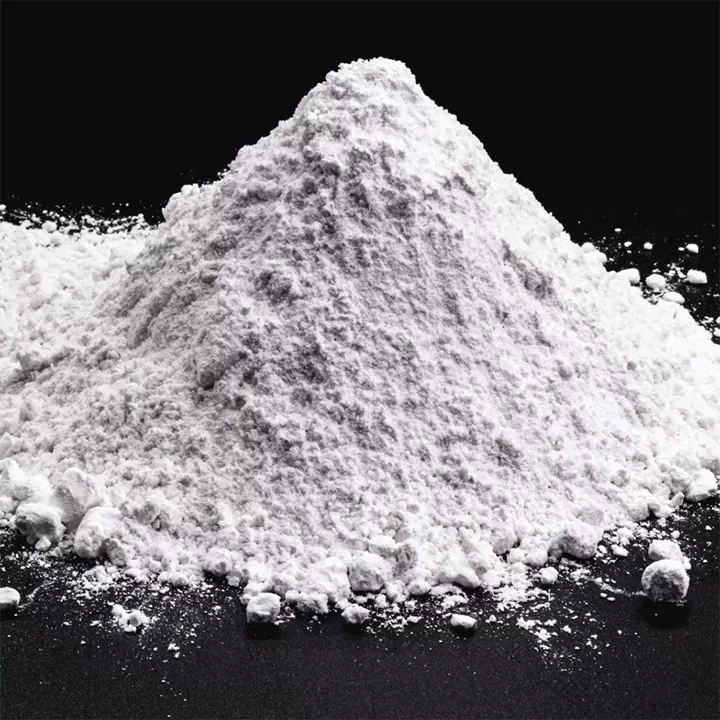
Amorphous Glass Fraction: Slag must possess a minimum glass content of 85% to 95%. Crystalline slag fractions remain inert, acting only as aggregate filler rather than participating in the secondary pozzolanic reactions that refine pore networks.
Specific Surface Area (Blaine Fineness): Fineness controls reactivity. A Blaine fineness ranging from 4,000 to 4,500 cm²/g provides an optimal balance between early strength development and moderate heat release, preventing excessive early autogenous contraction.
Hydraulic Activity Index (HAI): Compliance with ASTM C989 (Grade 100 or Grade 120) or EN 15167 ensures reliable 7-day and 28-day strength contributions, validating the chemical consumption of shrinkage-inducing portlandite.
Frequently Asked Questions
Does GGBS increase or decrease drying shrinkage in concrete?
When properly cured, GGBS decreases long-term drying shrinkage. While early-age hydration develops at a slower pace, the secondary pozzolanic reaction refines the capillary pore structure into ultrafine gel pores. This refinement reduces the volume of evaporable bulk water and minimizes internal capillary tension, leading to lower ultimate drying shrinkage microstrain.
How does curing duration affect the shrinkage of slag-blended concrete?
Slag cement requires longer moist curing than pure Portland cement mixes due to its latent hydraulic reaction. If slag concrete dries prematurely, unreacted particles fail to hydrate, leaving larger capillary channels that can increase early drying shrinkage. Providing at least 7 to 14 days of proper curing ensures that slag cement improves shrinkage performance across long-term curing environments.
What is the ideal GGBS replacement level for controlling thermal shrinkage in mass concrete?
For mass pours such as raft foundations, bridge piers, and dam structures, replacement levels between 50% and 70% GGBS are optimal. These proportions cut peak adiabatic temperature rises by 30% to 50%, substantially reducing the thermal drop ($\Delta T$) and preventing severe thermal contraction cracking.
How does slag concrete compare to silica fume regarding autogenous shrinkage?
Silica fume creates intense early autogenous shrinkage due to its high surface area and immediate water consumption, which increases the likelihood of self-desiccation cracking in low w/b concretes. Slag hydrates more moderately, consuming water over a prolonged timeframe. As a result, replacing a portion of cement or silica fume with slag moderates self-desiccation stress and lowers autogenous shrinkage.
Can slag cement reduce curling in industrial floor slabs?
Yes. Floor curling stems from differential drying shrinkage between the top exposed surface and the moist bottom base of a slab. By subdividing continuous pore networks and slowing moisture evaporation gradients, slag concrete reduces total shrinkage differentials across the slab depth, minimizing curling at construction joints.
Secure High-Performance GGBS for Your Next Project
Volumetric stability and crack mitigation are fundamental to constructing resilient, long-lasting concrete infrastructure. Specifying consistent, high-reactivity Ground Granulated Blast-Furnace Slag ensures that your mix designs maintain tight dimensional tolerances, manage thermal demands, and resist long-term environmental degradation.
For technical inquiries, detailed batch test certificates, or volume supply quotations, contact the materials engineering division at Golden Fortune. Submit your structural specifications and project parameters today to receive targeted binder recommendations and bulk pricing tailored to your procurement schedule.