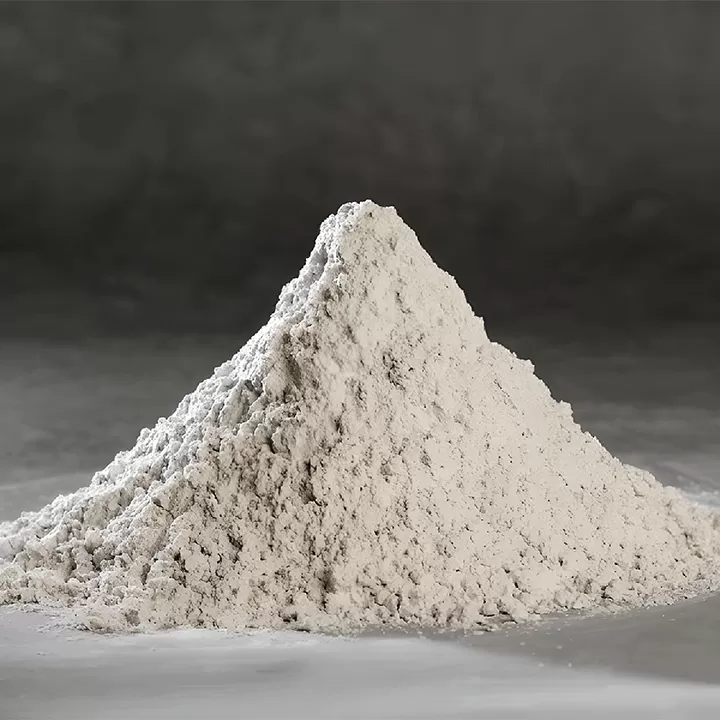
The modern engineering of supplementary cementitious materials has shifted from empirical blending to precise chemical and structural management at the sub-micron scale. In Ground Granulated Blast Furnace Slag (GGBS / GGBFS), hydraulic reactivity is dictated by the degree of disorder within its amorphous aluminosilicate phase and the spatial distribution of network-modifying cations. Achieving molecular controllability within these vitreous matrices allows producers and specifiers to determine dissolution kinetics, stoichiometric development of calcium aluminosilicate hydrate (C-A-S-H) phases, and long-term durability metrics in high-performance binders.
Industrial demand for low-carbon binders requires cement formulations to maintain early compressive strength while resisting harsh chemical environments. Raw slag performance depends entirely on the thermodynamics of rapid cooling during molten iron extraction and subsequent physical refining. By understanding how chemical species configure within the slag glass network, material engineers can predict the hydration trajectory and microstructural consolidation of concrete infrastructure.
The Glassy Network: Silicate Speciation and Network Modifiers
The chemical reactivity of vitrified slag stems from its non-equilibrium structural state. Solidified slag consists primarily of an amorphous silicate network interspersed with aluminum, calcium, and magnesium ions. The fundamental building block is the silicon-oxygen tetrahedron ([SiO4]4-), where oxygen atoms act either as bridging oxygens (BO) that bind tetrahedra together, or non-bridging oxygens (NBO) that terminate structural chains.
Tetrahedral coordination defines the rigidity of the silicate network. In pure silica, all oxygens are bridging, resulting in a three-dimensional framework characterized by high thermodynamic stability and slow dissolution in alkaline media. When basic metal oxides such as calcium oxide (CaO) and magnesium oxide (MgO) are introduced during smelting, these divalent cations act as network modifiers. The Ca2+ and Mg2+ ions disrupt the Si-O-Si linkages, creating non-bridging oxygen sites that lower the connectivity of the network:
Q0 Monomers: Isolated [SiO4]4- orthosilicate units with four non-bridging oxygens, promoting rapid dissolution upon exposure to alkaline activators.
Q1 Dimers: Pyrosilicate groups forming chain terminators, which reduce polymerization degrees.
Q2 Chain Units: Metasilicate chains that define intermediate network coherence.
Q3 and Q4 Cross-Linked Frameworks: Highly polymerized structures that demand higher hydroxyl ion concentrations to hydrolyze and dissolve.
Aluminum occupies an intermediate role. When trivalent aluminum ([AlO4]5-) substitutes for silicon in tetrahedral coordination, it requires charge compensation from neighboring Ca2+ or alkali cations (Na+, K+). This substitution alters the electrostatic topology of the glass. The ratio of non-bridging oxygens per tetrahedrally coordinated atom (NBO/T) acts as a quantitative baseline for structural depolymerization. Higher NBO/T values correlate with accelerated dissolution rates when the material contacts the alkaline pore solution generated by portlandite dissolution.
Reaction Dynamics: Alkaline Dissolution and Hydration Product Nucleation
Upon mixing GGBS with Portland cement and water, the hydration of alite (C3S) and belite (C2S) releases calcium hydroxide (Ca(OH)2) into the aqueous phase, elevating the pH above 12.5. This high concentration of hydroxyl ions (OH-) initiates the nucleophilic attack on the slag glass network. Hydroxyl groups break the strained Si-O-Si and Si-O-Al bonds, releasing monomeric silicate and aluminate species into the pore solution.
Through molecular controllability of raw slag chemistry, processing plants control the rate at which these monomeric units enter solution, preventing premature precipitation that can choke particle surfaces. Industrial sourcing through suppliers like Golden Fortune ensures consistency in these fundamental glass-phase fractions, maintaining steady dissolution rates across different production batches.
As ion concentrations reach thermodynamic supersaturation, hydration products precipitate throughout the capillary void space. The primary binding phase differs markedly from the calcium silicate hydrate (C-S-H) found in pure Portland cement pastes:
C-A-S-H Gel Formation: In the presence of dissolved aluminum species, the precipitating gel incorporates aluminum into its bridging tetrahedral sites, forming calcium aluminosilicate hydrate. This gel exhibits a lower Ca/Si ratio (typically 1.0 to 1.3) compared to conventional C-S-H (1.7 to 2.0), creating a more cross-linked, denser foil-like morphology.
Hydrotalcite-Like Phases: Magnesium released from the glass network forms Mg-Al layered double hydroxides (LDHs), predominantly hydrotalcite (Mg6Al2CO3(OH)16·4H2O). These phases precipitate as intergrowths within the C-A-S-H gel, occupying space and refining the pore structure without causing deleterious expansive pressures.
Ettringite and Monosulfoaluminate: Slag containing moderate sulfur contents interacts with dissolved aluminates to yield sulfate-bearing AFt and AFm phases, which contribute to early matrix stiffening and moisture retention.
The volumetric growth of C-A-S-H and hydrotalcite-like products effectively segments the continuous capillary pore network into discontinuous, sub-micron pores. This pore refinement governs transport properties, restricting the ingress of moisture, oxygen, carbon dioxide, and aggressive ionic species.
Engineering Durability through Nanoscale Structural Refinement
The practical value of controlling slag at the molecular scale appears directly in the service lifespan of reinforced concrete in aggressive exposure conditions. Marine environments and chemical processing facilities present aggressive transport regimes where binder chemistry dictates structural longevity.
Chloride ingress poses the primary threat to embedded steel reinforcement. Molecular controllability over the aluminate incorporation in the C-A-S-H structure governs both physical adsorption and chemical binding of chloride ions. Concrete incorporating refined GGBS mitigates chloride transport through dual mechanisms:
Chemical Binding Capacity: Tricalcium aluminate hydrates and reactive alumina species in the slag react with migrating chloride ions to precipitate Friedel’s salt (3CaO·Al2O3·CaCl2·10H2O). This reaction chemically immobilizes free chlorides from the pore fluid, preventing them from depassivating the steel rebar surface.
Physical Surface Complexation: The high specific surface area and variable surface charge of low-Ca/Si C-A-S-H gels facilitate electrostatic adsorption of chloride ions onto the diffuse double layer of the gel sheets.
Permeability Reduction: The tortuous path created by densified paste structures diminishes diffusion coefficients by orders of magnitude compared to traditional ordinary Portland cement mixes.
Sulfate resistance follows a complementary pathway. In standard binders, excess calcium hydroxide reacts with incoming sulfate ions to form gypsum, subsequently converting monosulfoaluminate into expansive ettringite, inducing microcracking. Slag consumption of Portlandite through pozzolanic reactions depletes the Ca(OH)2 inventory. Concurrently, the immobilization of aluminum within the cross-linked C-A-S-H gel prevents the formation of secondary expansive ettringite, ensuring volumetric stability under high-sulfate soil exposures.
Thermal Moderation in Mass Concrete Elements
Large-scale infrastructure elements—such as gravity dams, bridge caissons, and thick foundation rafts—face thermal cracking generated by semi-adiabatic core temperature rise. The exothermic dissolution of Portland cement phases (particularly C3S and C3A) generates substantial heat within the first 72 hours of placement. If the thermal gradient between the core and the exterior exceeds thermal strain capacities, micro- and macro-cracks develop, permanently degrading structural capacity.
Integrating GGBS shifts the hydration kinetics from rapid, initial exothermic dissolution to a diffusion-controlled, sustained release of hydration energy. Because the breakdown of the slag glass network requires activation by calcium hydroxide and alkaline species, the primary peak of heat evolution is deferred and attenuated. The resulting low heat of hydration minimizes peak core temperatures and decreases thermal gradients across massive structural components.
By leveraging molecular controllability, engineers adjust slag substitution levels up to 70% or 80% for mass placements without compromising ultimate mechanical requirements. The steady, long-term development of the C-A-S-H matrix ensures that compressive and shear strengths match or exceed design targets at 56 and 90 days, providing high long-term strength while maintaining thermal safety margins.
Industrial Supply and Specification Metrics
Achieving predictable performance in field concrete requires strict compliance with physical and chemical metrics at the production facility. Raw material consistency governs the glass phase percentage, hydraulic index, and grindability of the finished material. Processing infrastructure managed by Golden Fortune enforces rigorous operational standards on quenching speeds and particle grading to ensure high reactivity in every shipment.
To qualify GGBS for specialized infrastructure projects, quality assurance protocols rely on specific empirical indices that reflect underlying structural properties:
Hydraulic Activity Index: Calculated via basicity ratios such as (CaO + MgO + Al2O3) / SiO2, where values above 1.0 denote active hydraulic glass configurations capable of robust self-cementing behavior under alkaline activation.
Glass Content Verification: X-ray diffraction (XRD) combined with Rietveld analysis measures the amorphous content, which should consistently exceed 85% to 90% to avoid inert crystalline phases such as melilite, gehlenite, or akermanite.
Particle Size Distribution (PSD): While Blaine air permeability provides a baseline measure of fineness (typically 400 to 550 m2/kg), laser diffraction analysis details the d10, d50, and d90 distributions that determine packing density and water demand.
Precise coordination between kiln feed chemistry and rapid granulation processing establishes reliable molecular controllability in the vitreous slag, giving ready-mix producers and civil contractors predictable setting times, slump retention, and strength development across varying environmental conditions.
Frequently Asked Questions
How does the quenching process directly affect molecular controllability in GGBS?
The cooling rate of molten blast furnace slag, which leaves the furnace at temperatures exceeding 1450°C, dictates its final atomic structure. Rapid water granulation at rates exceeding 1000°C per minute flash-freezes the liquid melt, preventing cations from organizing into crystalline mineral structures like melilite or merwinite. This rapid quenching preserves a high degree of disorder and produces high concentrations of reactive non-bridging oxygen sites within the glass network.
What is the role of the NBO/T ratio in predicting slag performance?
The non-bridging oxygen per tetrahedrally coordinated atom (NBO/T) ratio quantifies the depolymerization level of the silicate and aluminate framework. A higher NBO/T ratio indicates a more broken, open glass network that reacts more readily with alkaline activators, resulting in faster dissolution rates and accelerated early-age C-A-S-H formation.
How does GGBS incorporation improve the interfacial transition zone (ITZ)?
In conventional concrete, the ITZ surrounding coarse aggregates is characterized by high porosity and orientation of large calcium hydroxide crystals, creating a mechanical weak link. The continuous pozzolanic and hydraulic reaction of GGBS consumes calcium hydroxide and produces uniform, microcrystalline C-A-S-H and hydrotalcite-like products that densely fill aggregate interfaces, creating a continuous and mechanically resilient microstructure.
Can molecular controllability mitigate alkali-silica reaction (ASR) in aggregates?
Yes. Slags refined with high glass-network reactivity consume available alkalis (Na+ and K+) from the pore solution through physical entrapment within the low Ca/Si C-A-S-H gel. Furthermore, GGBS lowers the concentration of hydroxyl ions (OH-) in the pore fluid and reduces overall matrix permeability, preventing the expansive gel formation typically associated with reactive siliceous aggregates.
How does slag chemistry influence carbonation resistance?
While the consumption of calcium hydroxide by slag reduces the chemical buffer against incoming atmospheric CO2, controlling the particle size distribution and glass dissolution dynamics produces a highly compact pore structure. This refined porosity significantly lowers the gas diffusion coefficient, compensating for the reduced alkaline buffer and maintaining carbonation depths within safe parameters when concrete is properly cured.
Engineering Consultation and Supply Solutions
Selecting the appropriate grade and chemical profile of Ground Granulated Blast Furnace Slag requires a clear understanding of structural requirements, service environments, and rheological targets. Golden Fortune supplies high-grade GGBS processed to strict chemical, vitrification, and granulometric standards. To request comprehensive product data sheets, chemical composition profiles, or bulk logistics details for your ongoing infrastructure developments, contact our material engineering department for a detailed consultation and quotation.